

Before You Go: Health Preparation That Pays Off
Most medical problems abroad become harder to manage because travelers weren't prepared before departure - not because care was unavailable. The groundwork you lay at home directly shapes how smoothly a health situation gets resolved overseas.
Start with a pre-trip visit to your primary care provider or a travel medicine clinic. Discuss your destination's specific health risks, required or recommended vaccinations, and whether your current conditions are stable for travel. The pre-trip health prep checklist covers this process in detail.
Also contact your health insurer to confirm your international coverage. Many U.S. plans provide minimal or no benefits outside the country. If gaps exist, a travel insurance policy with medical coverage and evacuation benefits may be worth evaluating. Our overview of what travel insurance actually covers can help you read the fine print before purchasing.
Register Before You Depart
The U.S. Department of State offers a free Smart Traveler Enrollment Program (STEP) that registers your trip with the nearest embassy. In a medical emergency, this helps authorities locate and assist you faster. It takes only a few minutes to complete online before your trip.
Finding Reliable Medical Care in a Foreign Country
When you need care abroad, your first instinct may be to search online - but not all results are reliable. Here are more dependable starting points:
- Your country's embassy or consulate: The U.S. Department of State maintains country-specific pages listing hospitals and physicians familiar with international patients. This list is one of the more vetted resources available.
- Your travel insurance provider: Most policies with medical coverage include a 24-hour assistance line that can direct you to approved local facilities and sometimes pre-authorize care directly.
- Internationally accredited hospitals: Look for facilities accredited by recognized bodies such as Joint Commission International (JCI). These hospitals tend to meet standardized safety and quality benchmarks.
- Your hotel concierge: In a pinch, hotel staff at established international properties often have direct contacts with local clinics and can help arrange transportation.
Avoid making care decisions based solely on proximity or online reviews, especially in destinations where healthcare quality varies significantly by neighborhood or region.
Managing Language Barriers and Communication
Language gaps during a medical encounter can lead to misdiagnosis, consent issues, or missed follow-up instructions. Preparing for this possibility before you leave is straightforward.
Practical steps to manage communication:
- Prepare a medical summary card in the local language - or multiple languages for multi-country trips. Include your blood type, chronic conditions, allergies, and current medications with generic drug names. A travel medicine clinic or translation service can help produce an accurate version.
- Use medical translation apps carefully. Apps like Google Translate can bridge basic communication gaps but should not be relied upon for complex medical discussions. They work best for simple, high-priority words.
- Request a hospital interpreter. Many internationally oriented hospitals employ multilingual staff or have access to phone interpretation services. Ask at reception - don't assume it isn't available.
- Contact your embassy. In serious situations, your embassy's American Citizens Services unit can sometimes assist with communication or help locate an interpreter.
Understanding Costs and Payment Abroad
Healthcare costs vary enormously by country. Some destinations - particularly in Southeast Asia, Eastern Europe, and Latin America - offer high-quality care at a fraction of U.S. costs. Others, including parts of Western Europe and remote island destinations, can be surprisingly expensive for foreign visitors.
Key things to understand about payment:
- Most foreign providers expect payment at the time of service, including emergencies. Upfront payment is the norm in many countries regardless of your insurance status.
- Credit cards are widely accepted at international hospitals but may not be accepted at smaller clinics or pharmacies. Carrying a reserve of local currency or a no-foreign-fee card is practical.
- Travel insurance with direct billing can sometimes pay the provider directly, eliminating the need to pay out of pocket and submit for reimbursement. Confirm this feature with your insurer before your trip.
- Keep all receipts and documentation - itemized bills, treatment records, prescriptions - for any reimbursement claim. Insurers typically require these.
For a focused look at how to evaluate coverage value, see our piece on travel insurance on a budget.
Don't Assume Your U.S. Insurance Applies
Even policies that advertise international coverage often have significant restrictions - specific provider networks, dollar caps, or exclusions for pre-existing conditions. Calling your insurer before departure - not at the moment of crisis - is essential. Get confirmation of your international benefits in writing if possible.
What to Keep in Your Medical Travel File
A simple, organized medical file - digital and physical - can save significant time and stress when care is needed abroad. Build yours before departure and keep it accessible, not buried in checked luggage.
Your medical travel file should include:
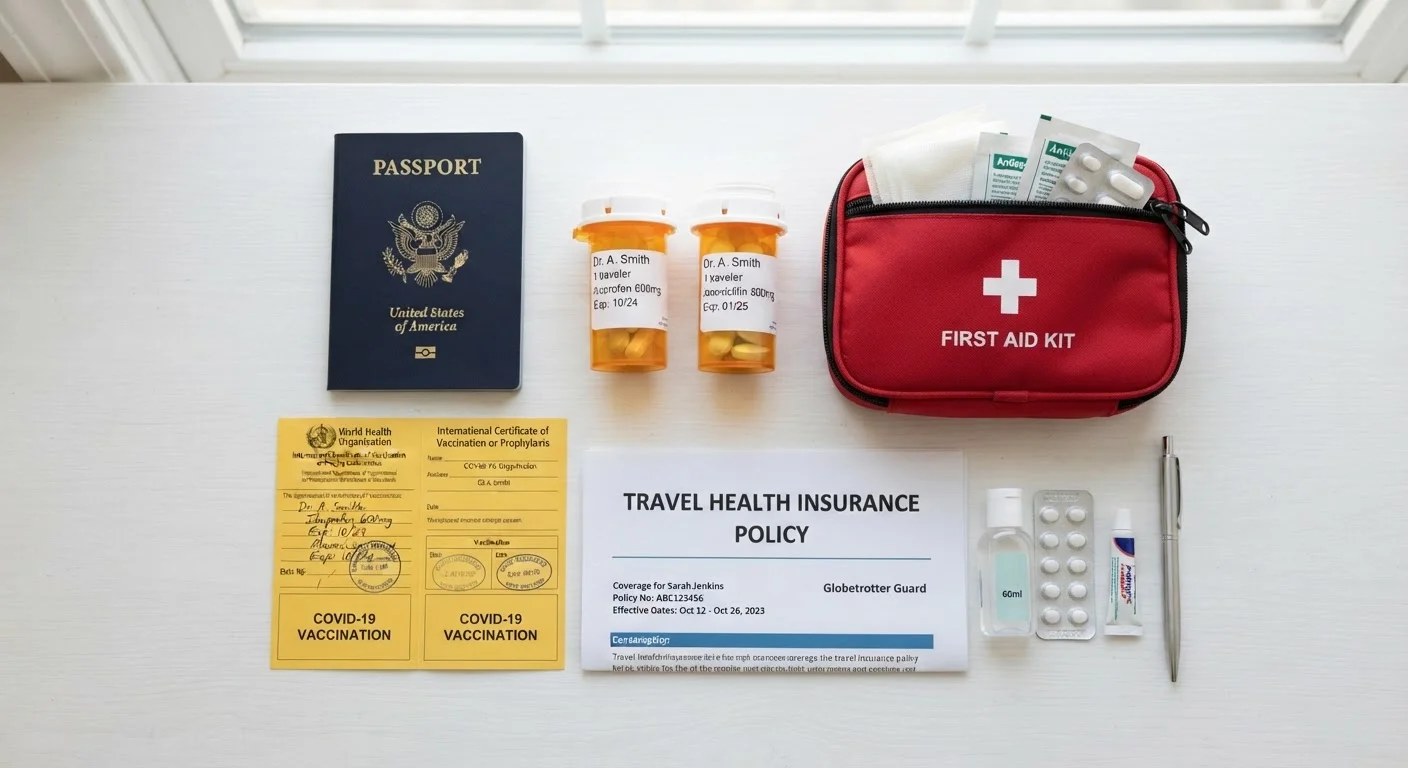
- A one-page medical summary: conditions, allergies, medications (with generic names and dosages), blood type, and emergency contacts
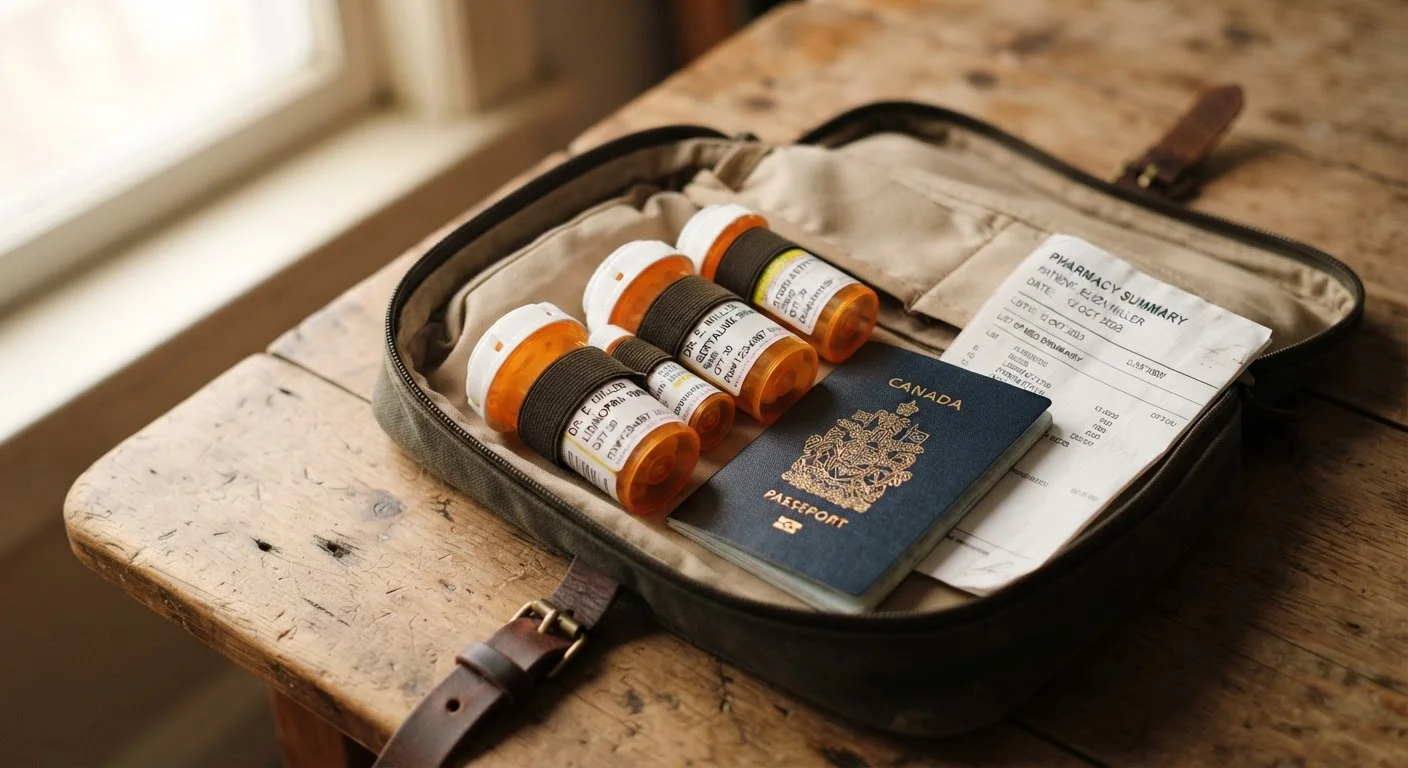
- Copies of prescriptions and a letter from your physician for any controlled substances
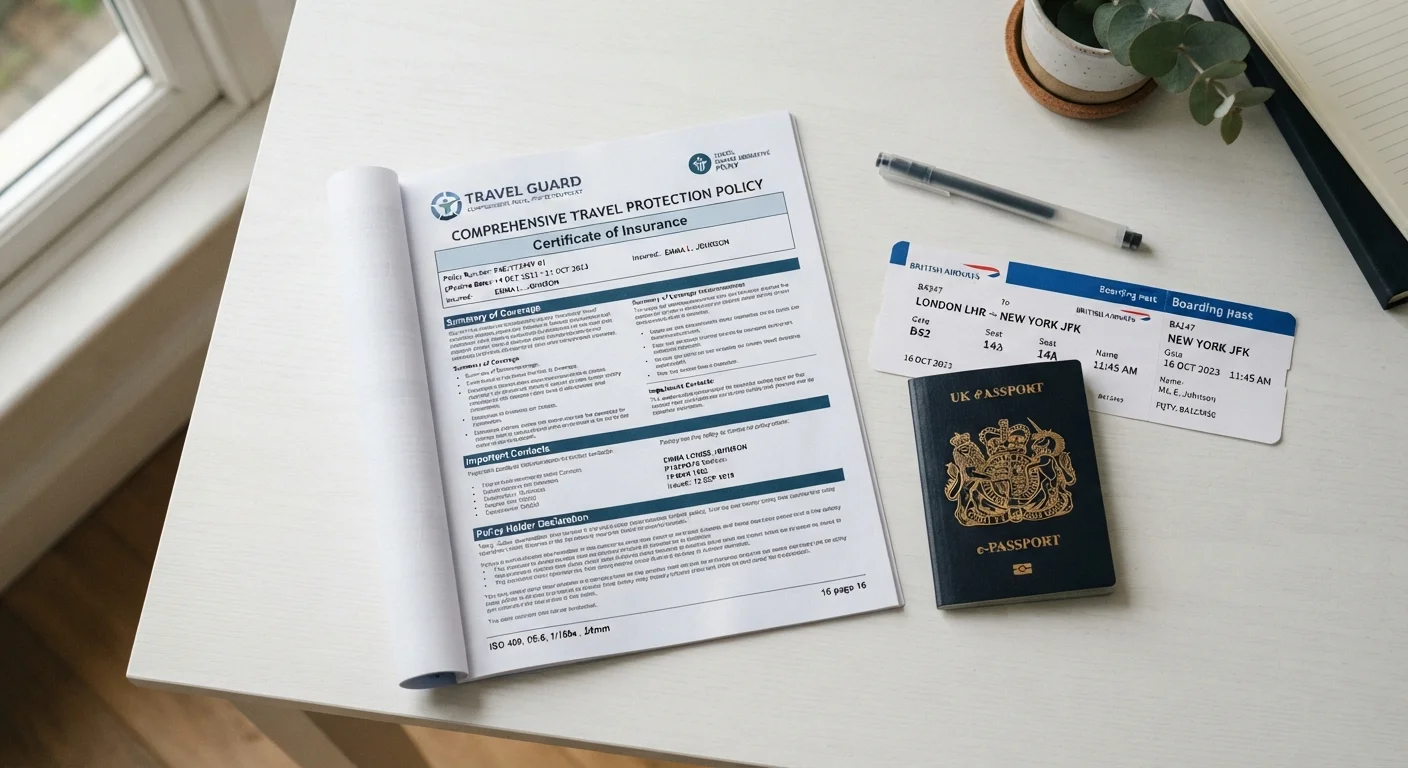
- Your insurance card and policy number, plus the insurer's international assistance hotline
- Copies of your passport (separate from the original)
- Vaccination records, particularly for destinations requiring proof of immunization at entry
- Contact information for the nearest U.S. embassy or consulate at each destination
Store copies in both a cloud-accessible location (email or a secure app) and a physical folder. For a broader framework on pre-trip contingency planning, including contacts and protocols, the travel emergency plan guide provides a step-by-step structure.
This article provides general travel health information for educational purposes only. It is not a substitute for professional medical advice, diagnosis, or treatment. Consult a qualified healthcare provider before traveling, particularly if you have existing health conditions. Verify entry requirements, health regulations, and coverage details with official government sources and your insurance provider before your trip.