
Why Medication Travel Risks Are Frequently Underestimated
Most travelers pack their prescriptions without a second thought - they're legal, they're needed, and they're coming along. What many don't realize is that crossing an international border with medication introduces a separate set of rules that has nothing to do with a US prescription's validity. Controlled substances, certain stimulants, and even some common pain relievers are classified differently country by country. What your doctor prescribed legally in the US may be a restricted or prohibited substance at your destination.
This isn't a rare edge case. Travelers have had medications confiscated, faced fines, and in serious situations encountered legal trouble - often because they simply didn't check. The good news is that most of these situations are preventable with straightforward preparation. Part of that preparation belongs on your pre-departure checklist alongside documents and bookings.
Assuming a valid US prescription makes a medication legal to carry internationally.
Why it happens: Travelers conflate domestic legality with international permissibility, which aren't the same thing.
Traveling without a physician's letter or official prescription documentation.
Why it happens: Many travelers assume the pill bottle label is sufficient proof, but customs officials in many countries require more formal documentation.
Storing temperature-sensitive medications in checked baggage or a hot car.
Why it happens: Travelers focus on not losing medications but don't think through the physical conditions those medications will experience in transit.
Packing only the exact quantity needed without any buffer supply.
Why it happens: Travelers pack to match their itinerary, not accounting for delays, theft, or the difficulty of obtaining a refill abroad.
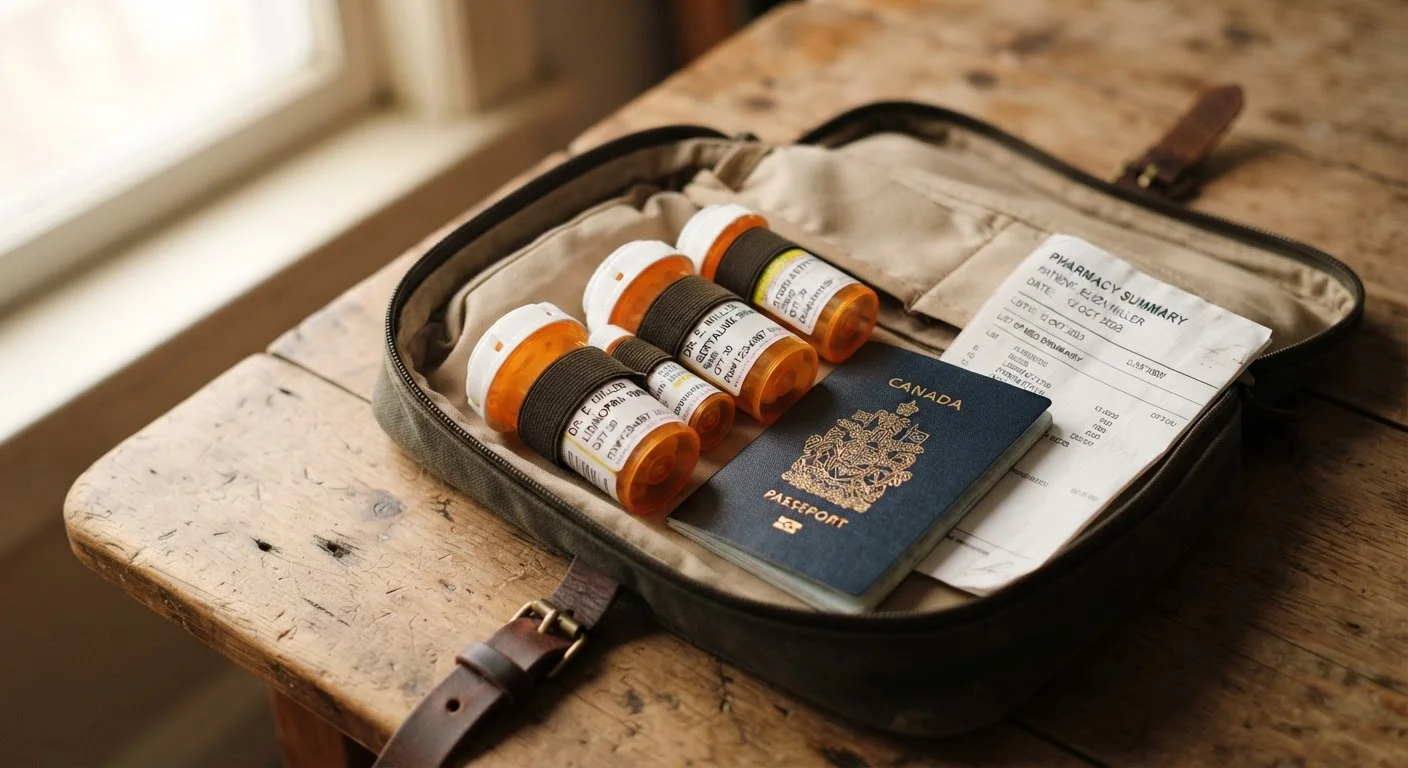
Removing medications from their original pharmacy-labeled containers.
Why it happens: Travelers consolidate medications into travel pill organizers for convenience, which makes sense logistically but creates problems at customs.
Not accounting for medication timing across time zones.
Why it happens: Travelers focus on logistics and forget that medications requiring precise timing - such as certain hormonal treatments or psychiatric medications - can be disrupted by significant time zone shifts.
Practical Steps to Protect Yourself Before You Leave
The single most reliable source for country-specific medication rules is the destination country's embassy or consulate website. For US travelers, the State Department's country information pages also flag known medication restrictions. Check these sources - not travel forums - because regulations change and anecdotal information goes stale quickly.
Controlled Substances Face the Strictest Scrutiny
Medications classified as controlled substances in the US - including certain painkillers, stimulants used for ADHD, and benzodiazepines - are subject to import restrictions or outright bans in many countries. Japan, the UAE, and several Southeast Asian nations are frequently cited examples where travelers have encountered serious legal consequences. Verify the specific status of any controlled substance with the destination country's embassy well in advance of travel.
If you're managing a chronic condition and need to plan for what happens if something goes wrong abroad - medication lost, stolen, or unusable - building those contingencies in advance is essential. Our guide on building a travel emergency plan covers how to document your health needs and establish backup contacts before departure. For a broader view of how to handle medical situations if they arise, see our overview of navigating medical care abroad.
Documentation should travel with your medication, not just in your checked bag. Keep a physician's letter, a copy of the prescription, and - where relevant - an official translation in your carry-on. For guidance on how to store and back up these documents, paper vs. digital document storage is worth reviewing before you finalize your packing strategy.
This article provides general travel information only and is not medical or legal advice. Always consult your prescribing physician and verify current regulations with official government sources before traveling with prescription medication.