
What Pet Food Labels Are Required to Show
In the United States, pet food labels are regulated by the AAFCO model regulations and, at the federal level, by the FDA. Every commercially sold pet food must display six mandatory elements: product name, net weight, manufacturer name and address, ingredient list, guaranteed analysis, and a nutritional adequacy statement. Understanding each panel gives you a clearer picture of what you're actually feeding your pet.
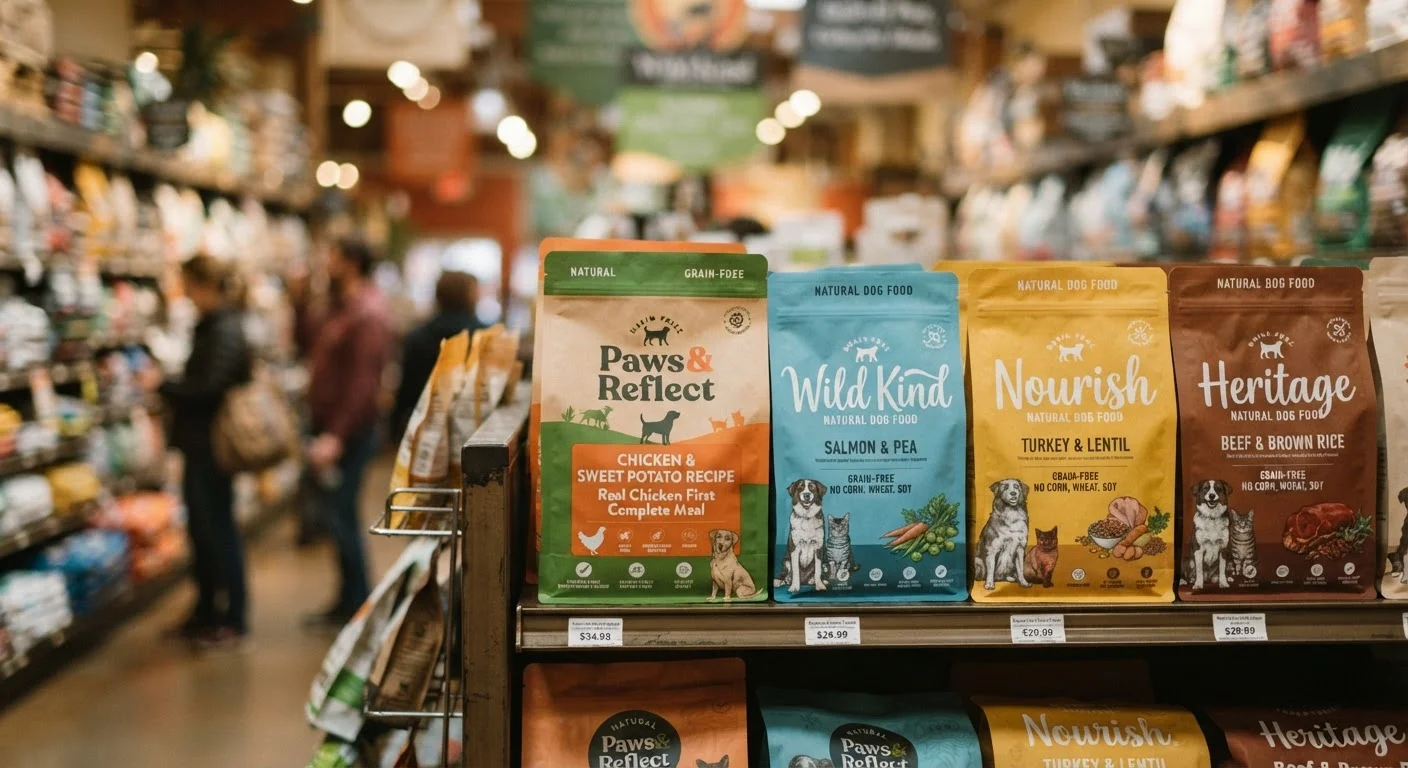
The product name itself carries regulatory weight. Terms like "chicken dog food" require chicken to make up at least 95% of the total weight (excluding water). "Chicken dinner" or "chicken entrée" only requires 25%. The word "with" - as in "with chicken" - sets the bar at just 3%. These naming rules are set by AAFCO and are consistent across member states, though enforcement varies. For a deeper look at how these standards work in practice, see what pet food labels actually tell you.
| Minimum protein displayed as | Crude protein (% minimum) (AAFCO model regulations) |
| "Chicken" product naming threshold | 95% of total weight (excluding water) (AAFCO ingredient naming rules) |
| "With chicken" naming threshold | 3% of total weight (AAFCO ingredient naming rules) |
| Mandatory label elements | Product name, net weight, manufacturer info, ingredients, guaranteed analysis, adequacy statement (FDA and AAFCO model regulations) |
| "Senior" life stage definition | No official AAFCO definition exists (AAFCO Official Publication) |
| Ingredient list ordering basis | Pre-processing weight (heaviest first) (AAFCO and FDA labeling requirements) |
The Ingredient List: Order, Grouping, and Common Confusions
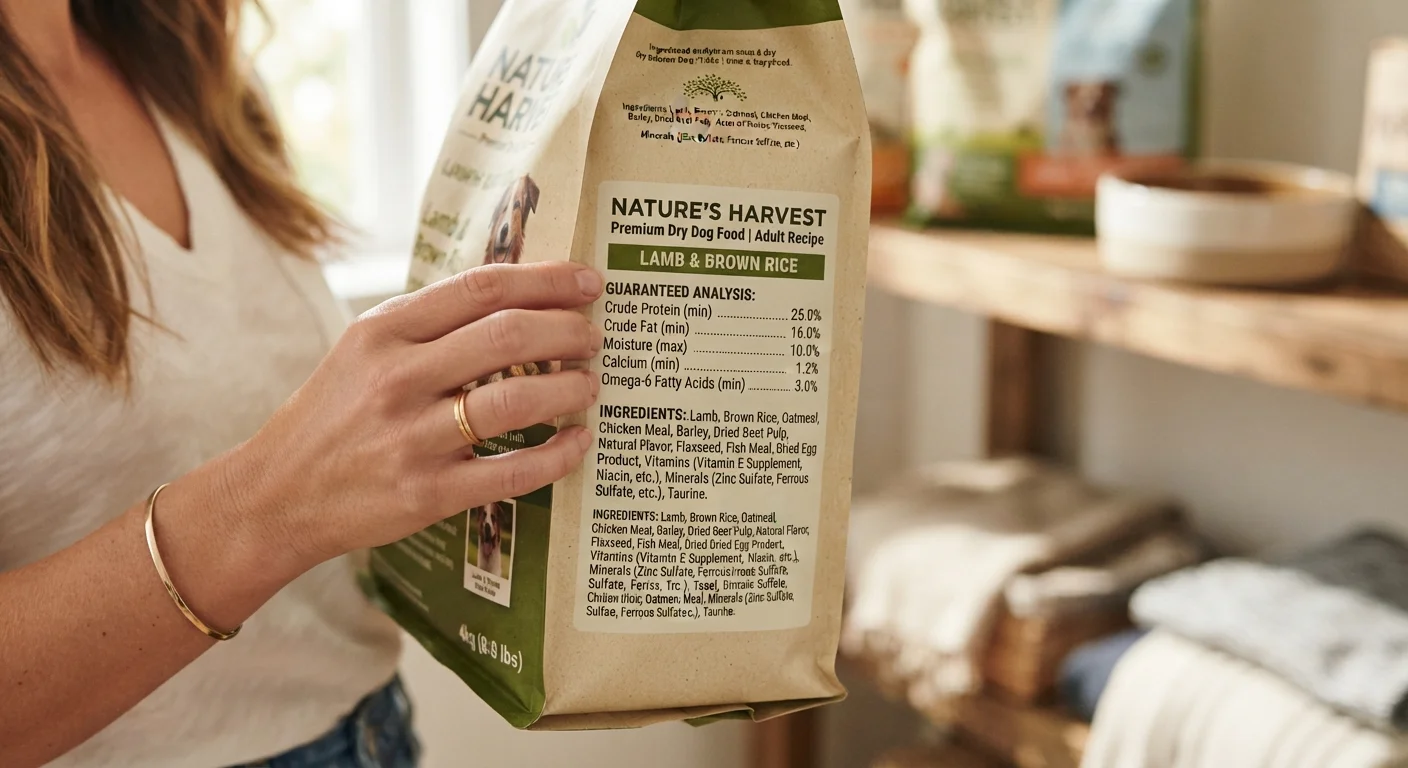
Ingredients are listed by weight before processing - called pre-processing weight. This means a fresh meat listed first may weigh less than a grain listed fourth once moisture is removed during cooking. This doesn't make one ingredient superior or inferior; it's simply how the regulation works.
Ingredient splitting - where a single ingredient is divided into multiple forms (e.g., "ground corn," "corn gluten meal," "corn bran") - can push each entry lower on the list individually, even though corn in aggregate may outweigh the first-listed protein. This is a legal practice, not necessarily a sign of poor quality, but it's worth recognizing. For context on marketing language that sometimes accompanies these practices, see pet food marketing myths that confuse even careful owners.
"Meal" ingredients - such as chicken meal or salmon meal - are concentrated protein sources from which water has already been removed. They often provide more protein by weight than their fresh counterparts listed ahead of them. Neither form is inherently better; both can support a nutritionally complete diet.
Guaranteed Analysis
A mandatory label panel showing minimum crude protein and fat, and maximum fiber and moisture percentages. These are legal minimums and maximums, not averages, and do not reflect digestibility or ingredient quality.
AAFCO Nutritional Adequacy Statement
A label statement indicating whether a food meets AAFCO nutrient profiles through formulation or through actual feeding trials. It also specifies the life stage the food is appropriate for.
Ingredient Splitting
The practice of listing multiple forms of the same ingredient separately (e.g., corn flour, corn gluten meal) so that each appears lower on the ingredient list individually, even if the ingredient is abundant overall.
Dry Matter Basis
A method of comparing nutrients across foods with different moisture levels. It removes the effect of water content, allowing fair comparison between wet and dry pet foods.
Crude Protein
A measure of total nitrogen content in a food, used to estimate protein. It includes protein from all sources - both highly digestible and less digestible - and does not indicate protein quality or amino acid completeness.
Feeding Trial
A real-world test in which a food is fed to animals under AAFCO protocols to verify it supports life and health. Foods validated this way can make stronger nutritional adequacy claims than formulation-only foods.
The Guaranteed Analysis Panel
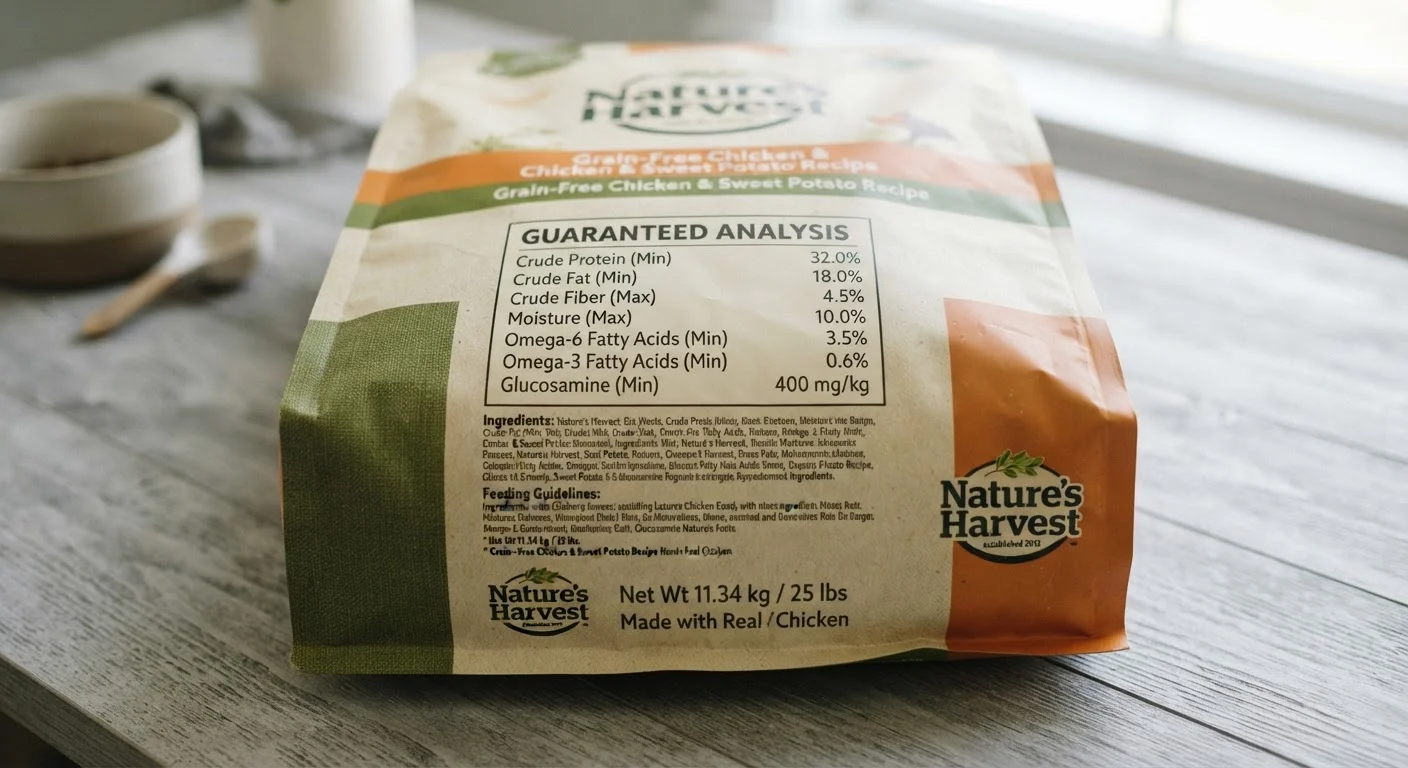
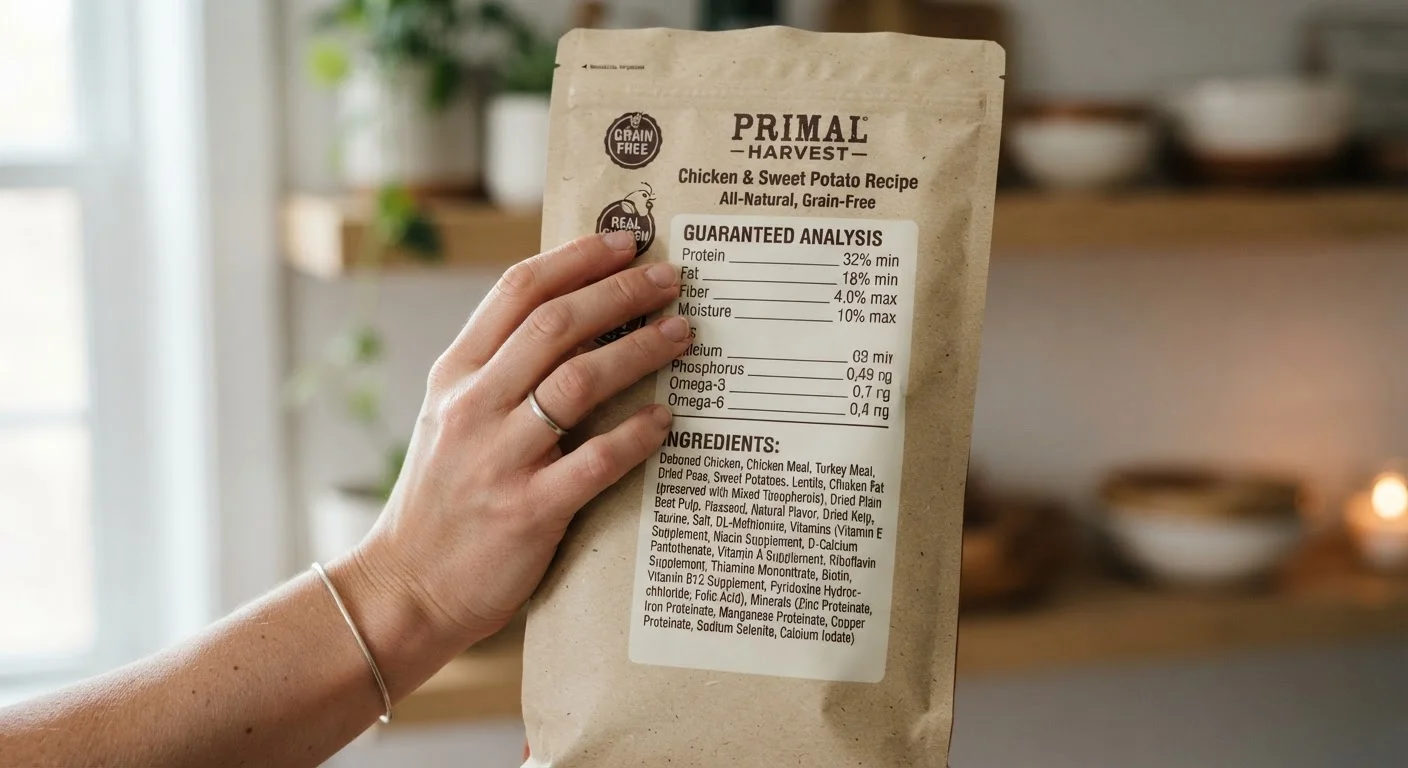
The guaranteed analysis lists minimum percentages of crude protein and crude fat, and maximum percentages of crude fiber and moisture. These are legal guarantees, not precise averages - actual values may differ. Manufacturers may voluntarily add other nutrients like omega fatty acids or calcium.
A critical limitation: the guaranteed analysis does not tell you about ingredient quality, digestibility, or bioavailability. Two foods with identical protein percentages may differ significantly in how much of that protein a pet can actually absorb and use. For a detailed walkthrough of comparing these numbers across food types, the guaranteed analysis panel guide provides a useful reference.
When comparing wet and dry foods, the moisture content makes direct comparison misleading. Converting to a dry matter basis - by dividing the nutrient percentage by the percentage of dry matter (100 minus moisture) - gives a more accurate comparison.
25%
Minimum named ingredient for "dinner" or "entrée" claim
Per AAFCO naming rules, a product called "Chicken Dinner" must contain at least 25% of the named ingredient by weight, excluding water.
3%
Minimum for "with [ingredient]" label claim
AAFCO rules allow the "with" designation - e.g., "with real salmon" - when that ingredient makes up as little as 3% of total product weight.
Nutritional Adequacy Statements and Feeding Guidelines
The nutritional adequacy statement - often called the AAFCO statement - tells you whether a food is formulated to meet AAFCO nutrient profiles or has passed a feeding trial. "Formulated to meet" means a nutritional calculation was done; "animal feeding tests" means the food was fed to animals under protocol. Neither method is perfect, but feeding trial statements reflect real-world performance data.
Look also for the life stage the food was designed for: "growth," "adult maintenance," "all life stages," or "senior" (note: "senior" has no AAFCO definition and means different things across manufacturers). A food labeled "all life stages" meets the higher nutritional requirements for growth and reproduction, making it suitable for puppies and kittens but potentially higher in calories than an adult pet needs. To understand the meaning of "complete and balanced" on a pet food label in full detail, that dedicated guide is worth reviewing.
Feeding guidelines on packaging are general starting points based on average animals. Your pet's actual caloric needs depend on age, activity level, body condition, and health status. Always work with your veterinarian to calibrate portions, particularly for pets managing weight or a health condition.
When you're ready to apply this knowledge to a specific food decision, run through the practical checklist for evaluating a new pet food before committing to a new diet.
This article is for general informational and educational purposes only and is not a substitute for advice from a licensed veterinarian. Always consult your vet before making significant changes to your pet's diet.