
The Five Required Elements Every Label Must Have
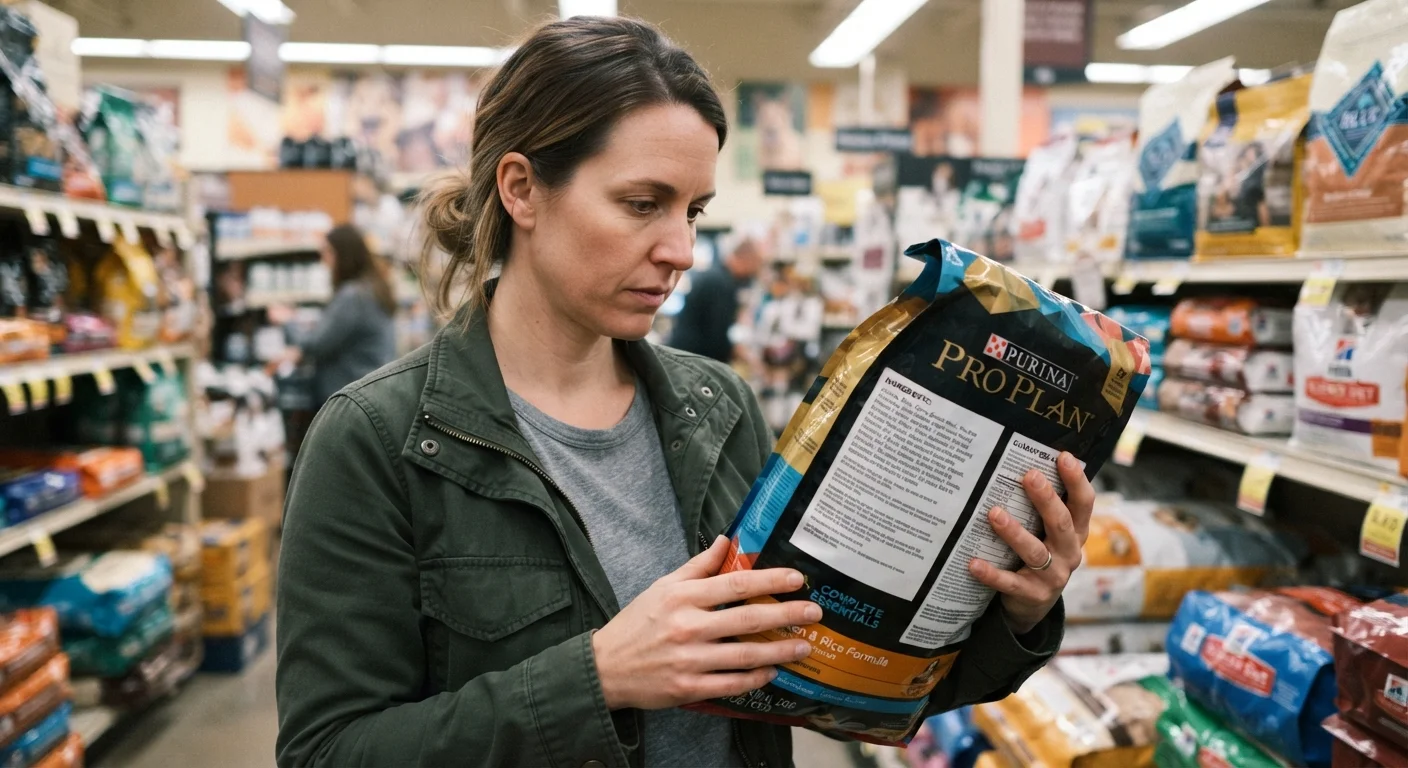
Pet food sold in the United States must include five core label elements regulated under AAFCO model guidelines and state feed laws. Understanding each one helps you cut through the marketing noise on the front of the bag and focus on the information that actually matters.
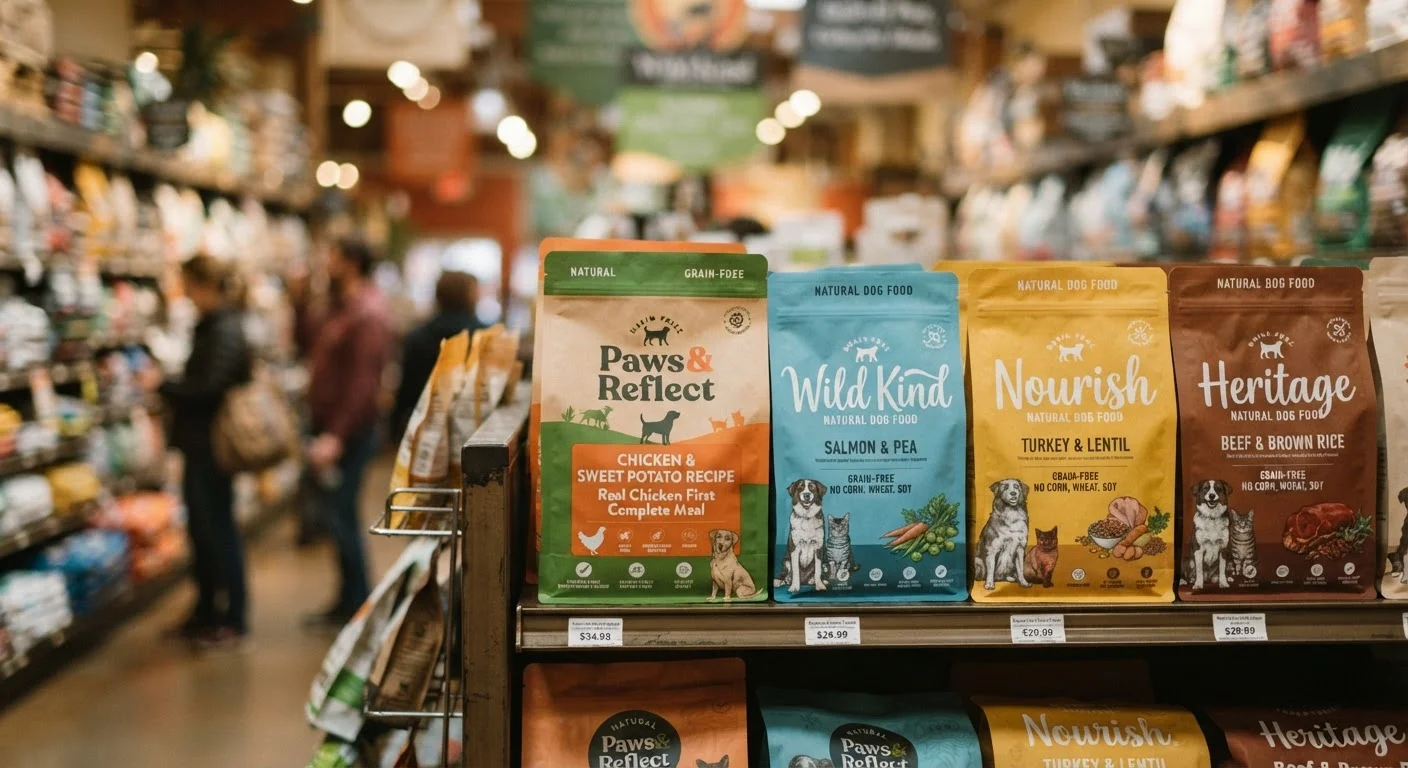
- Product name: Regulated by specific naming rules. If chicken is 95% or more of the food (excluding water), the product can be called "Chicken for Dogs." If it's 25-94%, the label must use a qualifier like "dinner" or "entrée." If chicken is 3-24%, the label may only say "with chicken." Less than 3% allows only a "flavor" designation.
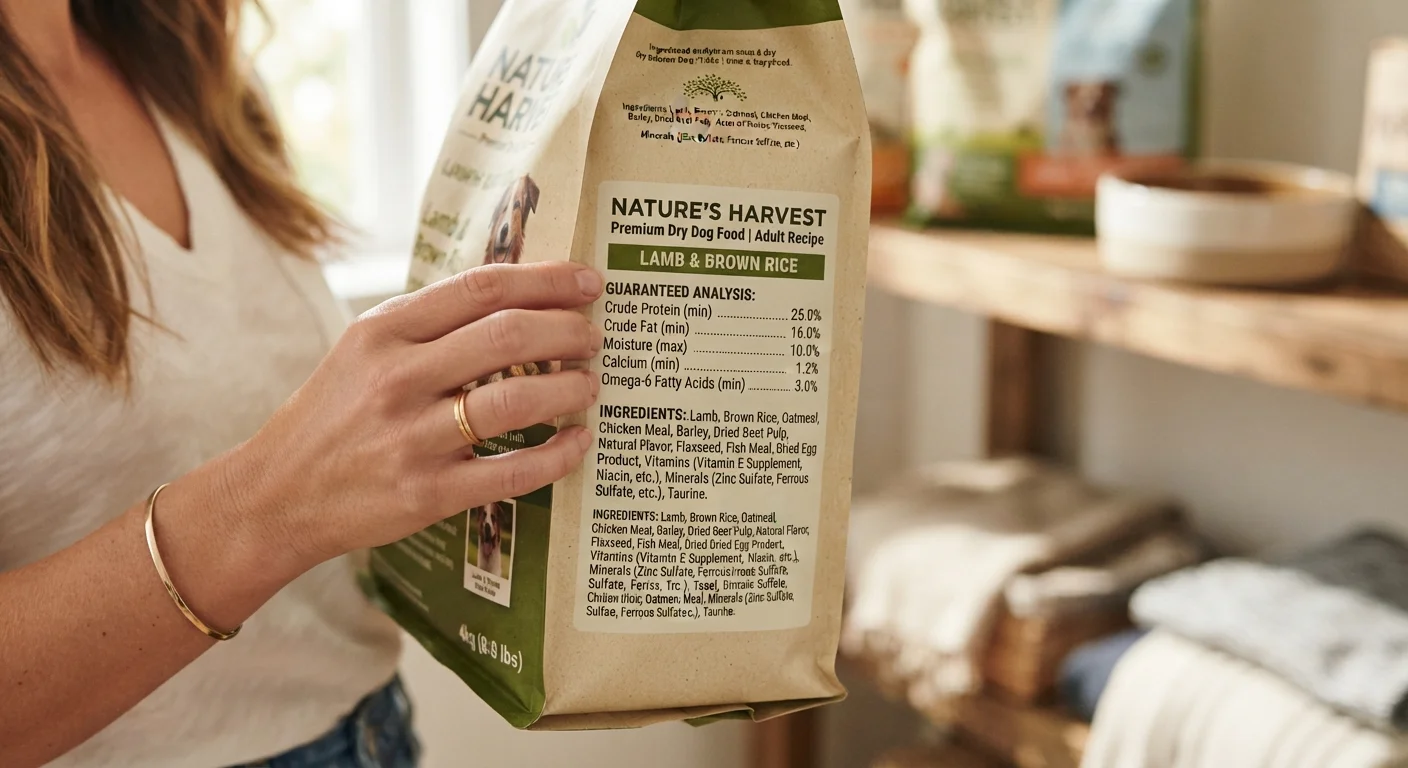
- Ingredient list: Listed in descending order by pre-cooking weight. This means moisture-rich ingredients like fresh meat rank higher, even if their dry contribution is modest.
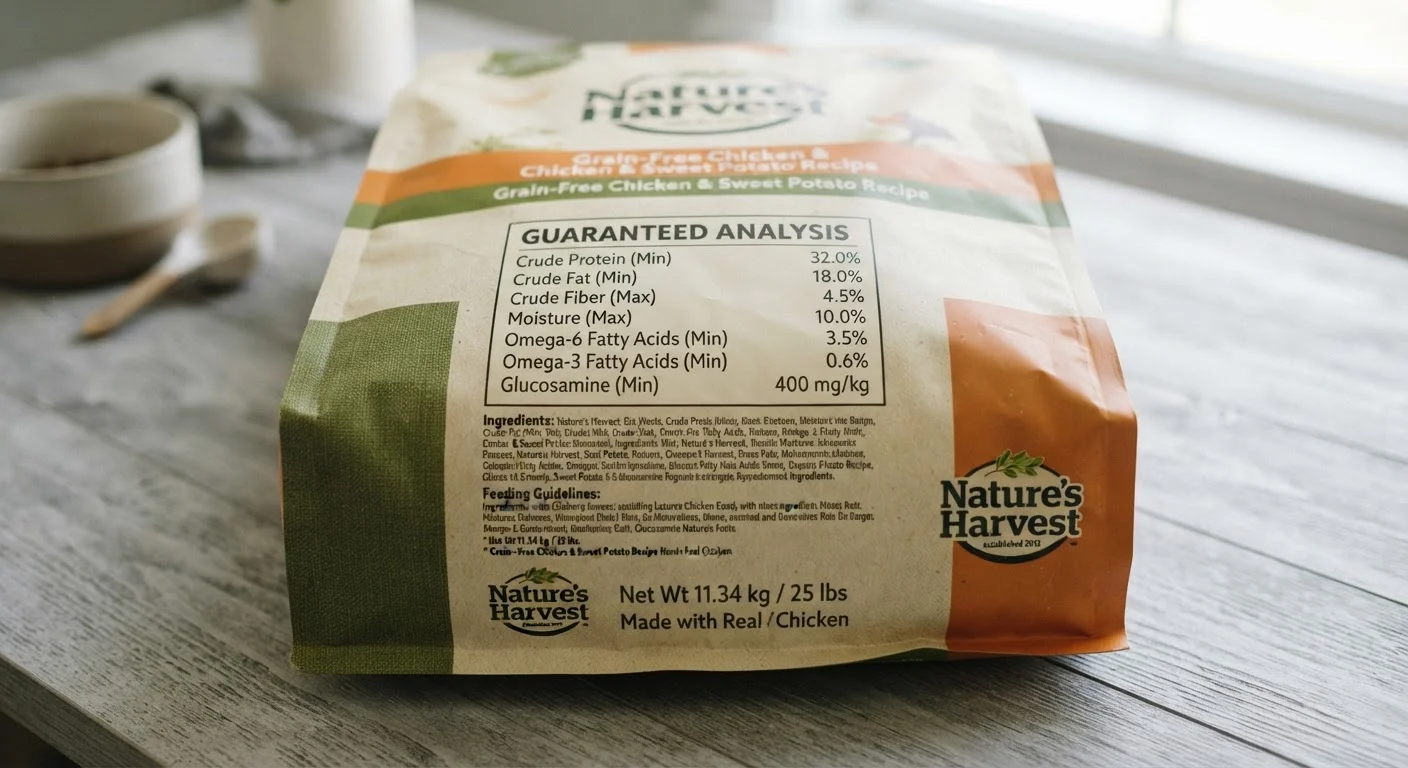
- Guaranteed analysis: Shows minimum percentages of crude protein and fat, and maximum percentages of crude fiber and moisture. These are floors and ceilings, not exact values.
- Nutritional adequacy statement: Indicates whether the food is complete and balanced for a specific life stage, and how that was determined - by formulation or feeding trial.
- Feeding guidelines: General recommendations based on body weight. These are starting points only.
For a deeper look at marketing language that surrounds these required elements, see our article on pet food marketing myths.
What the Ingredient List Can - and Cannot - Tell You
The ingredient list is often the first place owners look, and it is genuinely informative - with important caveats. Ingredients are listed by pre-cooking ("as-fed") weight, so fresh chicken, which is roughly 70% water, may appear first even if its post-processing protein contribution is smaller than the grain listed fourth.
95%
Minimum named-ingredient threshold for a single-ingredient product name
Under AAFCO naming rules, a product called simply 'Beef for Cats' must contain at least 95% beef (excluding water used in processing), making the product name itself a meaningful data point.
3%
Minimum threshold to claim 'with' an ingredient
AAFCO's '3% rule' means a food labeled 'with real chicken' may contain as little as 3% chicken - a substantial difference from a food whose name leads with chicken as the primary ingredient.
2
Methods to substantiate an AAFCO adequacy claim
Manufacturers may support a 'complete and balanced' claim either by formulating to AAFCO nutrient profiles or by conducting AAFCO-protocol animal feeding trials - two methods with meaningfully different evidence standards.
Watch for ingredient splitting: a practice where one ingredient appears in multiple forms (e.g., "ground corn," "corn gluten meal," "corn flour") spread across the list. Individually, each item ranks lower; combined, they might outweigh the first ingredient. This is not illegal, but it warrants scrutiny.
The ingredient list also does not tell you the actual amount of each ingredient, the bioavailability of the nutrients, or the quality of the sourcing. Two foods with identical ingredient lists may differ considerably in digestibility and nutritional value depending on processing methods and ingredient sourcing - information not required on labels.
Focus on the Bottom of the Label First
Most meaningful regulatory information - the AAFCO nutritional adequacy statement, manufacturer contact details, and guaranteed analysis - appears in smaller print near the bottom or back of the package. Train yourself to read there before engaging with front-of-bag marketing claims. The required elements are where the substantive information lives.
The Nutritional Adequacy Statement: The Most Overlooked Line on the Label
Tucked near the bottom of most labels, the AAFCO nutritional adequacy statement is arguably the most meaningful single piece of information on the packaging. It tells you two critical things: whether the food is formulated to be complete and balanced, and which life stage it covers.
There are two ways a manufacturer can substantiate this claim:
- Formulated to meet AAFCO nutrient profiles: The recipe was calculated to include required nutrients at required levels. No animal feeding was required to make this claim.
- Substantiated by AAFCO feeding trials: The food was fed to actual animals under controlled conditions and demonstrated it could sustain health. This is a higher bar of evidence, though it is not universally required.
A label that says "for intermittent or supplemental feeding only" is explicitly telling you the food is not complete and balanced. It should not be used as a sole diet without veterinary guidance. For a practical framework on evaluating new foods using these statements, see our pet food evaluation checklist.
For broader context on keeping your pet nutritionally healthy, the Pet Health & Wellness hub covers nutrition alongside veterinary care fundamentals.
“The nutritional adequacy statement is the single most important thing on a pet food label. It tells you whether a food was designed to be a complete diet or not - everything else is secondary to that.”
— Lisa Freeman, Board-certified veterinary nutritionist and researcher in clinical nutrition
What Labels Are Not Required to Tell You
Regulatory requirements set a floor, not a ceiling - and there is meaningful information no label is required to disclose. Owners should be aware of these gaps when assessing a food:
- Exact ingredient percentages: The ingredient list shows order, not proportion. You cannot determine from the label alone whether chicken constitutes 40% or 8% of the formula.
- Ingredient sourcing or origin: Whether a protein is domestic or imported, and the conditions under which it was raised or processed, are not required disclosures.
- Digestibility: A food could meet all nutrient minimums on paper while being poorly absorbed. Digestibility data is rarely published and not required on labels.
- Recall history: A clean label tells you nothing about a brand's manufacturing safety record. Checking the FDA's pet food recall database separately is advisable when evaluating a brand.
- Processing methods: High-temperature extrusion (the process behind most dry kibble) can reduce certain heat-sensitive nutrients. Labels are not required to disclose processing temperatures or methods.
Terms like "holistic," "premium," "gourmet," and "human-grade" - frequently featured prominently on packaging - carry no mandatory regulatory definitions in AAFCO's model guidelines. They are marketing language, not nutritional standards.
This article is for general informational and educational purposes only and does not constitute veterinary or nutritional advice. Consult a licensed veterinarian for guidance tailored to your individual pet's health and dietary needs.