

Why These Concepts Matter
Nutrition information is abundant - and often contradictory. Knowing what terms like dietary fibre, protein timing, or ultra-processed foods actually mean - and what the evidence says about them - helps you cut through noise and make more grounded everyday choices. This reference guide covers the concepts most relevant to adults trying to build consistent, realistic habits.
For a broader look at how these building blocks fit together, see our macronutrients explainer and the micronutrients reference guide.
Dietary Fibre
The indigestible portion of plant foods that passes through the digestive system largely intact. It includes both soluble fibre (which dissolves in water and can slow digestion) and insoluble fibre (which adds bulk and supports regularity).
Ultra-Processed Foods (UPFs)
Foods manufactured using industrial processes and formulations that go beyond basic cooking, typically containing additives such as emulsifiers, artificial flavours, and preservatives. The NOVA classification system is a widely cited framework for identifying them.
Protein Timing
The distribution of protein intake across meals throughout the day. Evidence suggests spreading protein more evenly across meals - rather than consuming most at one meal - may better support muscle protein synthesis, particularly in older adults.
Glycaemic Response
The rise in blood glucose that occurs after consuming carbohydrate-containing foods. Foods higher in fibre and protein generally produce a slower, lower glycaemic response compared with refined carbohydrates eaten alone.
Gut Microbiome
The community of trillions of microorganisms living in the human digestive tract. Diet - particularly fibre intake and food variety - is one of the most significant modifiable influences on its composition and diversity.
Circadian Rhythm Alignment
The synchronisation of eating and sleeping patterns with the body's internal 24-hour biological clock. Consistent meal timing is thought to support metabolic processes regulated by this clock.
Macronutrients
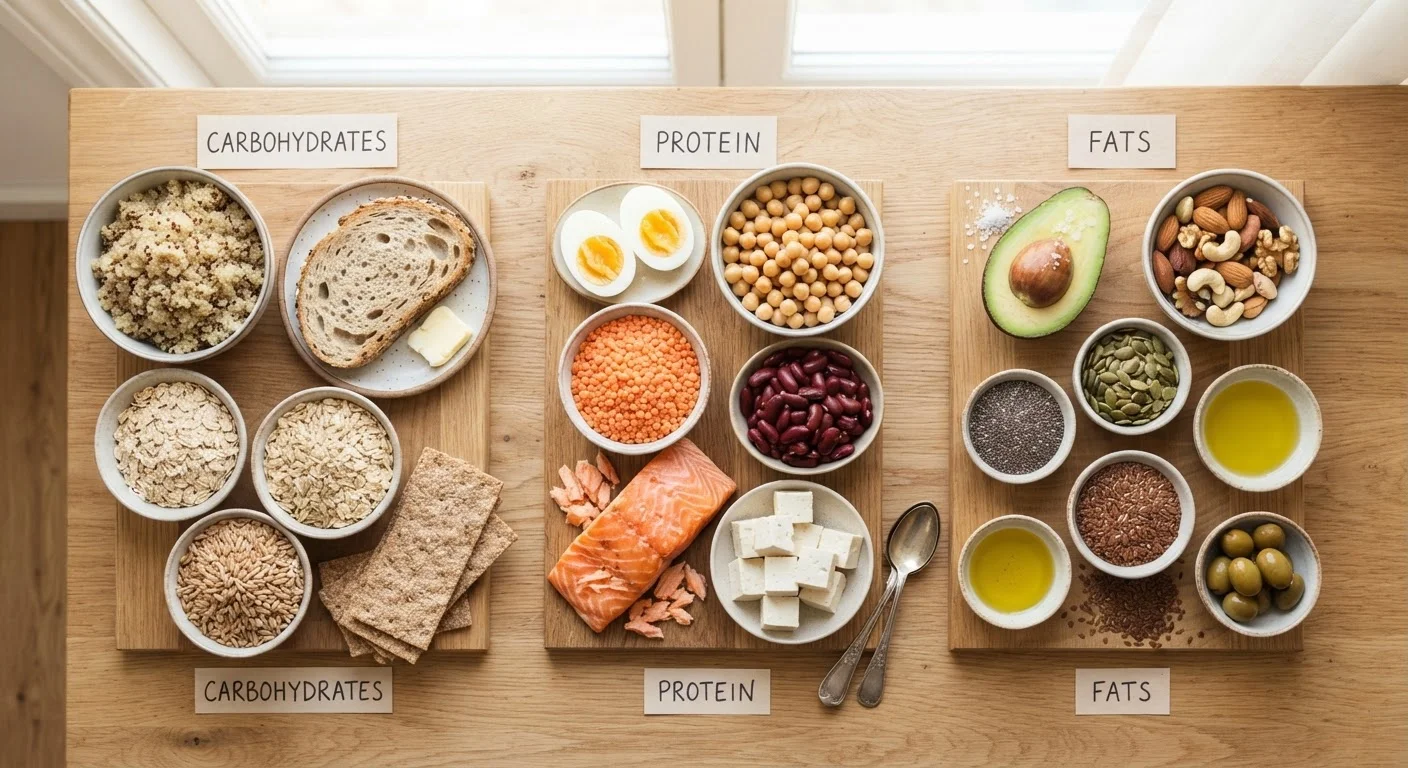
The three main categories of energy-providing nutrients: carbohydrates, protein, and fat. Each plays distinct and overlapping roles in body function, and a balanced diet typically includes all three.
Micronutrients
Vitamins and minerals needed in smaller amounts than macronutrients but essential for a wide range of physiological functions, including immune response, bone health, and energy metabolism.
This article is for general informational purposes only and is not medical or dietary advice. Consult a qualified healthcare professional or registered dietitian for guidance specific to your health needs.
Core Daily Nutrition Habits Explained
The following habits are consistently highlighted in nutritional research as meaningful contributors to long-term wellbeing. None requires perfection - consistency over time matters more than any single meal.
| Recommended daily fibre intake (adults) | 25-38 g/day (Dietary Guidelines for Americans, 2020-2025) |
| Average US adult fibre intake | ~16 g/day (Dietary Guidelines Advisory Committee, 2020) |
| UPFs as share of US adult calorie intake | ~57% (Martínez Steele et al., BMJ Open, 2016) |
| Protein sources recommended | Varied - legumes, dairy, eggs, fish, poultry, meat (Dietary Guidelines for Americans, 2020-2025) |
| Water's role in nutrition | Essential for digestion, nutrient transport, and cognitive function (National Academies of Sciences, Engineering, and Medicine) |
Dietary Fibre Intake
Most US adults consume considerably less fibre than public health guidelines suggest is appropriate. Fibre is found in whole grains, legumes, vegetables, and fruit. It supports digestive regularity, feeds beneficial gut bacteria, and is associated with lower risk of several chronic diseases. Insoluble fibre adds bulk to stool; soluble fibre forms a gel that slows digestion and can help moderate blood sugar responses after eating.
Protein Distribution Across Meals
Research suggests the body's ability to use protein for muscle maintenance and repair is more effective when intake is distributed reasonably across meals rather than heavily concentrated in one sitting. This is particularly relevant for older adults, for whom preserving muscle mass becomes a priority. Good protein sources include legumes, eggs, dairy, fish, poultry, and meat - variety matters as much as quantity.
Meal Regularity and Timing
Eating at broadly consistent times supports circadian rhythm alignment, which has emerging links to metabolic health. Skipping meals - especially breakfast - has been associated in some research with poorer diet quality overall, though individual needs and contexts vary considerably. Meal regularity is a habit, not a rigid rule.
Limiting Ultra-Processed Foods
Ultra-processed foods (UPFs) are industrial formulations containing ingredients rarely used in home cooking - emulsifiers, colour additives, flavour enhancers, and modified starches. Population studies consistently associate high UPF consumption with poorer dietary quality. Reducing UPF reliance, rather than eliminating them entirely, is a more realistic and sustainable goal for most adults. See common nutrition thinking errors for why all-or-nothing approaches often backfire.
Hydration as a Nutrition Factor
Water is often overlooked in nutrition conversations. Adequate hydration supports digestion, nutrient transport, and cognitive function. Plain water is consistently the most evidence-supported choice; the role of other beverages varies by individual context and health status.
For a wider view of how these habits fit into longer-term patterns, see eating patterns that support long-term health. Nutritional needs also shift meaningfully across the lifespan - the nutrition through life stages guide outlines what changes and when.