
Why Currency Exchange Points Are Built to Cost You
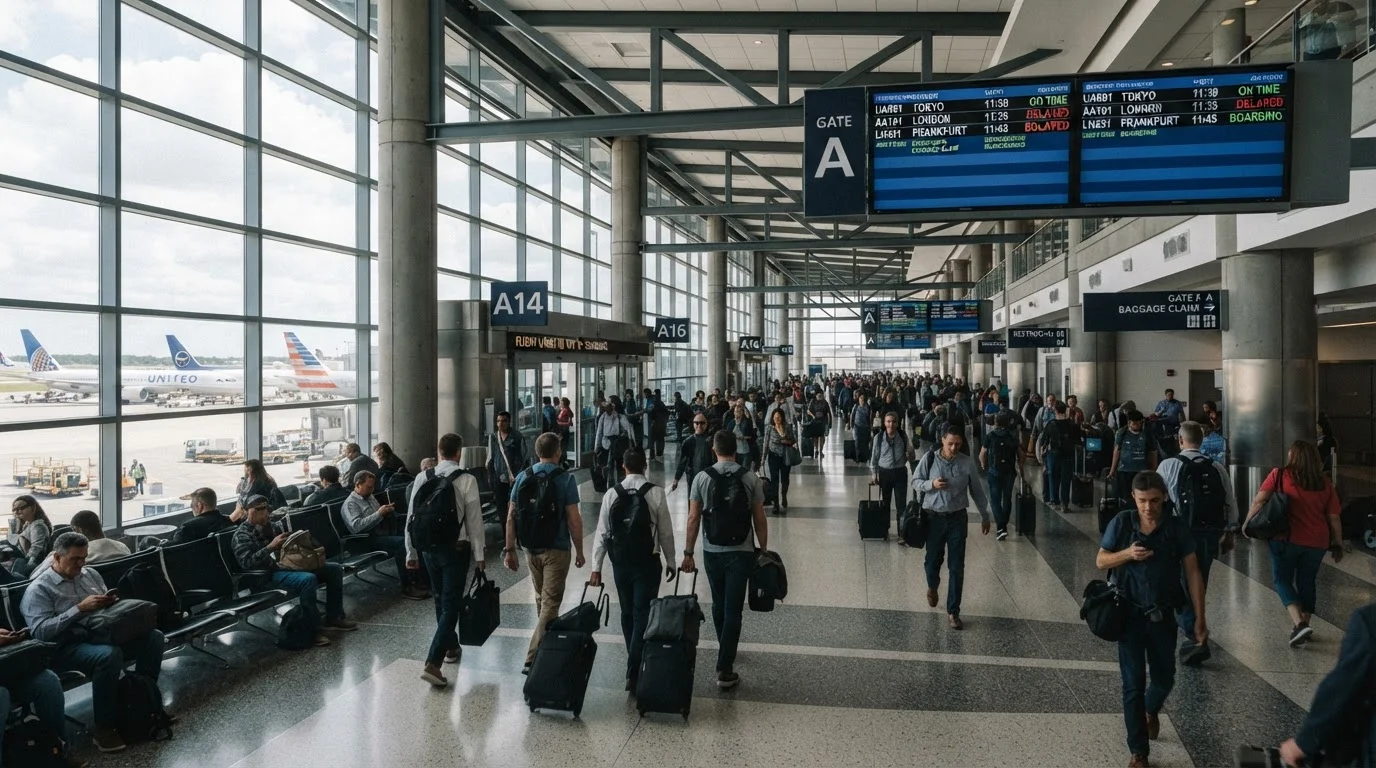
Airports and border crossings are captive environments. Operators know that travelers arriving at these locations often have no immediate alternative, limited time, and sometimes anxiety driving quick decisions. That combination creates conditions where unfavorable exchange rates persist - because they don't need to be competitive to attract customers.
Understanding this dynamic is the first step to not being caught by it. Exchange rate margins are how retail currency services make money, and the less competition around a given location, the wider that margin tends to be. The kiosk at gate 22 faces less competition than a currency office downtown, and prices reflect that. For broader context on how transit logistics affect your overall trip, see how transit decisions ripple through your itinerary.
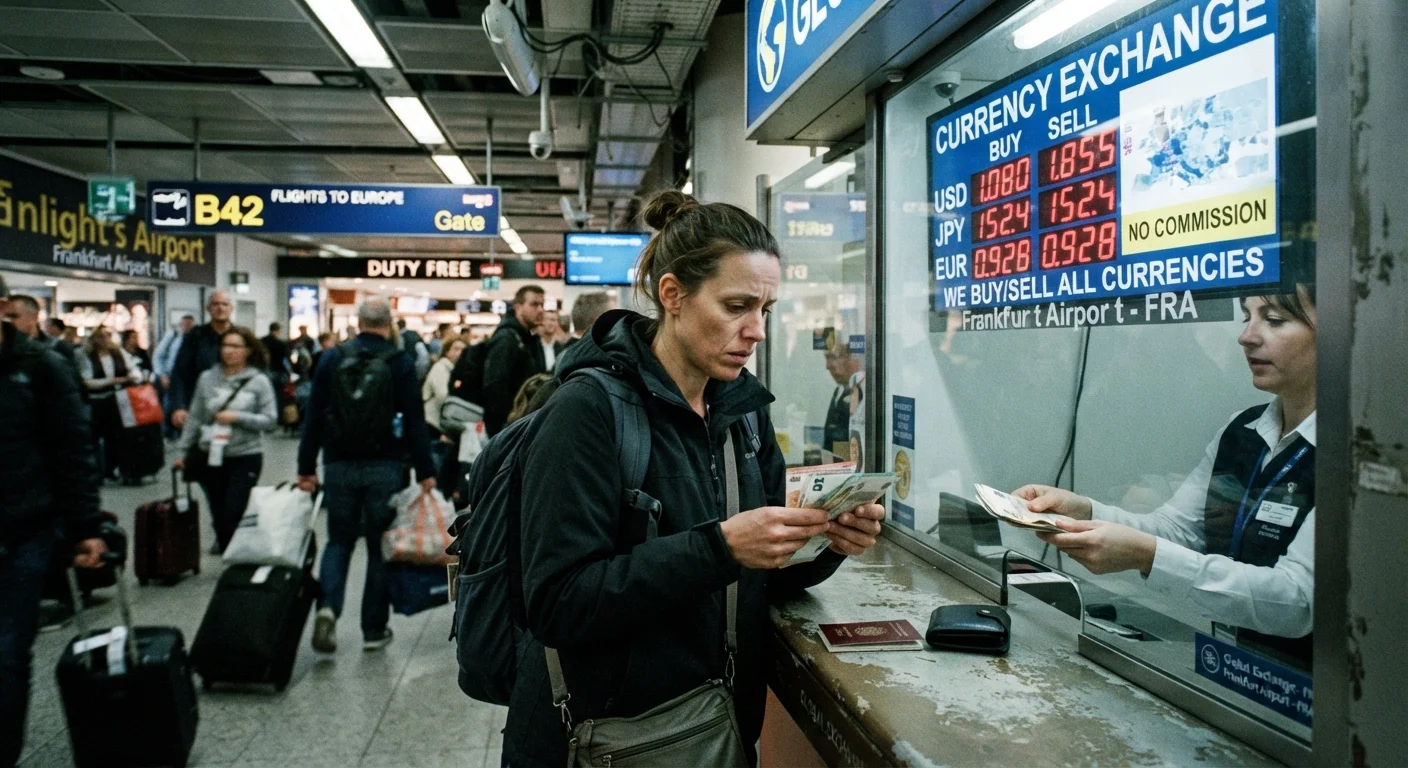
Exchanging a large amount of cash at the first airport kiosk after landing.
Why it happens: Travelers arrive tired, unfamiliar with local currency, and facing immediate transport costs - the kiosk is right there and feels like the obvious solution.
Accepting dynamic currency conversion (DCC) when paying by card abroad.
Why it happens: Merchants and ATMs often phrase it as a convenience - 'Would you like to pay in US dollars?' - which sounds helpful, especially when travelers are unfamiliar with the local currency.
Using a credit or debit card without knowing its foreign transaction fee structure.
Why it happens: Many travelers assume all cards work the same abroad. Foreign transaction fees - typically 1-3% per purchase - can quietly inflate every expense over a trip.
Exchanging currency at a border crossing booth without comparing the offered rate.
Why it happens: Border crossings feel high-pressure - there's a line behind you, transport is waiting, and the booth is the only visible option.
Carrying more foreign cash than needed and reconverting it on departure.
Why it happens: Travelers overestimate how much cash they'll need, then face a second round of exchange fees converting leftover currency back at the departure airport.
Assuming the posted 'no commission' sign means a competitive rate.
Why it happens: 'No commission' is a marketing claim, not a guarantee of a fair rate. The margin can simply be embedded in the exchange rate itself rather than charged as a separate fee.
The Hidden Mechanics of Each Exchange Trap
Currency exchange losses rarely feel dramatic in the moment - a few percentage points here, a small fee there. But across a two-week trip involving multiple withdrawals, card payments, and possibly a border crossing, the cumulative cost can easily reach several hundred dollars for an average traveling couple.
10-15%
Typical airport kiosk margin above mid-market rate
Consumer finance researchers and currency analysts consistently document airport and hotel exchange locations applying the widest margins in the retail exchange market.
3-7%
Extra cost from dynamic currency conversion
The European Central Bank and multiple consumer advocacy organizations have published analyses showing DCC markups in this range versus standard card network rates.
Dynamic currency conversion deserves particular attention because it's framed as a benefit. When a card terminal or ATM abroad offers to show you the charge in your home currency before you approve, that conversion is being done by the merchant or ATM operator - not your bank - at a rate they set. Always decline and choose the local currency. Your card network's rate, while not perfect, will almost always be better.
Always Verify Rates Before Handing Over Cash
The mid-market (interbank) rate is the baseline rate you see on financial data sites. No retail exchange service matches it exactly, but the gap tells you how much you're paying for the service. Before exchanging at any location, check the current mid-market rate on a financial data source so you know the margin you're accepting.
The 'no commission' claim is one of the most persistent travel myths that distort financial decisions. Commission and rate spread are just two different mechanisms for charging you - a business can eliminate one while inflating the other. The number that matters is the final rate you receive relative to the mid-market rate, not how the fee is labeled.
For a fuller picture of how currency costs fit into total trip spending, the broader landscape of airport financial pitfalls is worth reviewing before you depart.
Unofficial Exchangers Carry Serious Risks
Individuals offering exchange in parking lots, outside airports, or via unsolicited approaches are operating outside any regulatory framework. Counterfeit currency, short-counting, and outright theft are documented risks. No exchange rate advantage is worth transacting outside a licensed, regulated facility.