
Why Food Is Your Most Flexible Travel Expense
Flights and accommodation are largely fixed once booked. Food is different - it's a daily decision you can adjust in real time. Unlike a hotel room, you don't commit to your meal budget weeks in advance. That flexibility makes it one of the most powerful levers for cost-conscious travelers.
The problem is that flexibility cuts both ways. Without a loose plan, it's easy to default to tourist-facing restaurants near your accommodation, where prices are padded and the food rarely reflects where you actually are. As we explore in The Real Cost of a Budget Trip, food is one of the categories most travelers underestimate - not because meals are expensive individually, but because unplanned eating adds up fast.
A modest daily food strategy doesn't mean eating badly. It means making deliberate choices about where, when, and how you eat - rather than just responding to hunger wherever you happen to be standing.
Eat your main meal at lunch, not dinner
In many countries, restaurants offer set lunch menus - often the same kitchen, same quality - at significantly lower prices than evening service. This is especially common in Europe and Latin America, where the midday meal is culturally the largest. Shifting your biggest spend to midday lets you eat well while keeping dinner light and inexpensive.
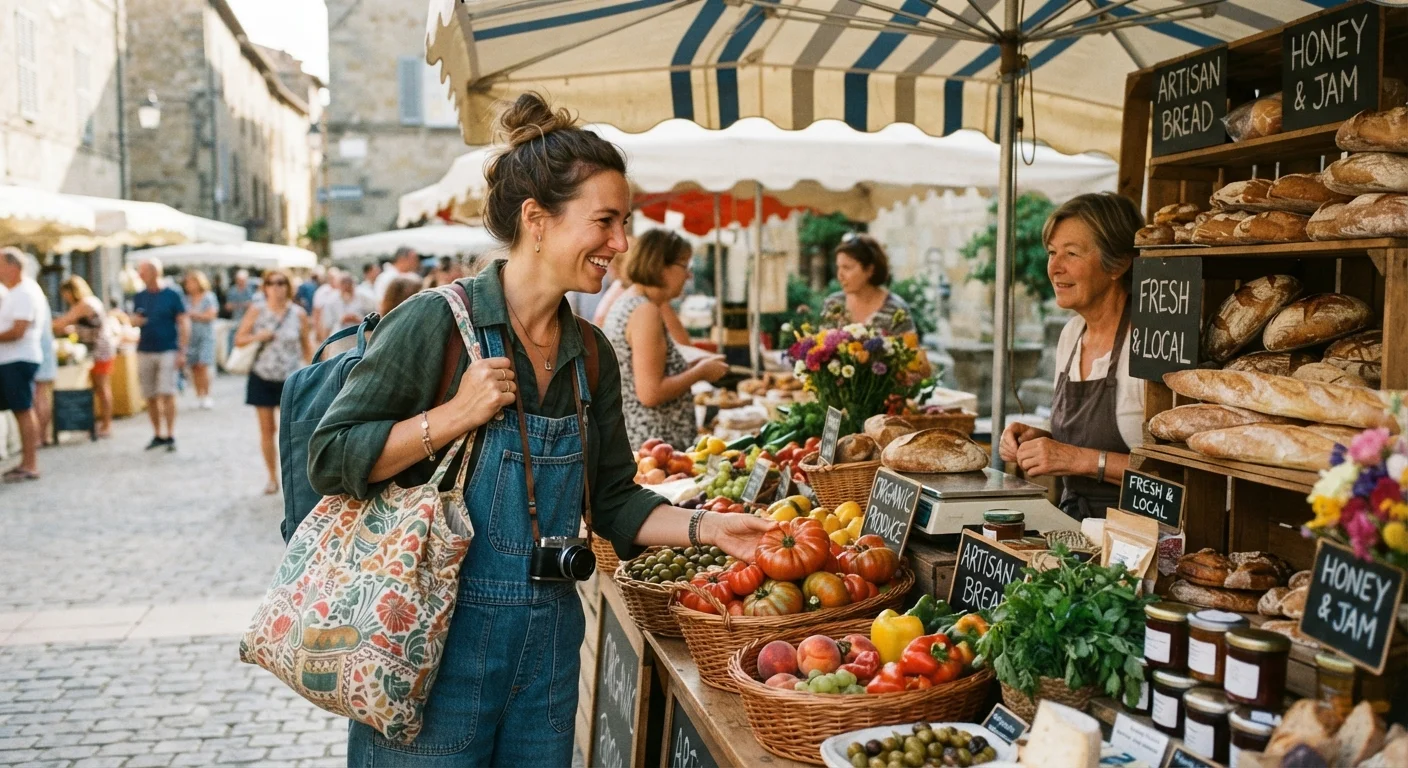
Shop at local markets and grocery stores for at least one meal per day
Markets and supermarkets offer access to fresh, local food at prices no restaurant can match. Even travelers without kitchen access can assemble good meals - bread, cheese, fruit, cured meats, prepared salads - from market stalls. It also forces you to interact with local food culture in a more direct way than any menu does.
Eat where locals eat, not where tourists congregate
Restaurants within a block or two of major tourist attractions are priced for visitors with limited time and high willingness to pay. Walking two or three blocks further typically surfaces local spots with lower prices and more authentic cooking. Visual cues - menus in only one language, no photos on the menu, tables full of locals - are reliable indicators.
Book accommodation with kitchen access when staying more than three nights
Apartments and hostels with shared kitchens allow you to prepare breakfast and some dinners yourself, which eliminates a significant portion of daily food cost. The savings over a week can offset any premium in nightly rate. Kitchen access also lets you store market purchases, extending the value of a single shopping trip.
Use food apps and local knowledge to find neighborhood spots
Translation apps, map reviews filtered to local-language reviewers, and recommendations from accommodation staff often surface places no travel guide covers. Staff at guesthouses and hostels typically eat nearby themselves and give reliable, unsponsored suggestions. This approach consistently outperforms guidebook recommendations for value.
Set a daily food budget and track it loosely
Without any tracking, spending drifts invisibly. You don't need a spreadsheet - a rough mental note or a quick end-of-day tally in your phone's notes app is enough. Knowing you've already spent generously at lunch makes it easier to choose a lighter, cheaper dinner. Awareness alone changes behavior.
Practical Strategies That Actually Work
The approaches below work across a range of destinations and trip styles. Not every tactic applies everywhere - a destination's true affordability affects what's realistic - but most travelers will find at least several of these immediately usable.
Eating Well Without Eating Cheap
Frugal eating on the road isn't about deprivation - it's about calibration. A $4 bowl of noodles from a street vendor or a market lunch can be a genuinely memorable meal. A $30 dinner at a restaurant designed for tourists often isn't. The spending doesn't track the experience.
Think about front-loading: if there's one meal or food experience you genuinely want - a well-regarded local restaurant, a cooking class, a market tasting tour - budget for it deliberately and cut corners elsewhere that week. This approach is covered more broadly in planning a low-cost trip from scratch, where trade-offs across the whole itinerary are discussed.
Also consider the cumulative impact of drinks. Coffee, bottled water, juice, and alcohol can easily match or exceed food costs in many destinations. Carrying a refillable water bottle, making coffee at accommodation where possible, and limiting drinks to meals rather than snacking on them throughout the day makes a measurable difference over a week or two.
Food Safety When Eating on a Budget
Eating at market stalls and local spots is generally safe, but basic precautions help. Look for high turnover - busy stalls with fast-moving food have less sitting time. In destinations where food safety standards vary, cooked-to-order dishes are generally safer than pre-prepared ones. Check government travel health advisories for your destination before departure, and consult a travel health professional about any vaccinations or dietary precautions relevant to where you're going.
For travelers integrating food into a broader daily budget, the Budgeting Basics hub offers useful frameworks for tracking variable daily spending - applicable both at home and on the road.