

How Airline Pricing Actually Works
Airlines don't publish a single fare for a seat - they manage hundreds of fare buckets per flight, each with its own price and availability rules. As seats in a cheaper bucket fill, the algorithm moves remaining inventory into a higher bucket. This is why the same seat can cost $189 on Tuesday and $310 on Friday - demand drove the cheaper buckets to zero.
Understanding this changes how you approach the search. You're not waiting for a sale. You're trying to find a route and a moment when low-demand buckets still have inventory. That's a function of timing, flexibility, and route logic - not luck.
It's also worth knowing that fare classes (the letters like Y, B, Q, or X on an itinerary) determine your upgrade eligibility, mileage earning rate, and change rules. Economy fares sold under different letters can look identical at purchase but behave very differently if plans shift. For a fuller look at how those downstream costs add up, see The Real Cost of a Budget Trip.
Use Explore Tools Before Committing to a Destination
Several flight search platforms offer map-based or open-destination search views that display fares to many cities simultaneously. If your destination is flexible, these views are one of the most efficient ways to surface routes where low-demand buckets still have inventory. Start broad, then narrow once you see where the pricing clusters.
The Mechanics of Finding Lower Fares: Step by Step
The following steps work together as a system. Skipping steps - especially around flexibility and search hygiene - tends to undercut the whole effort.
Open a private or incognito browser window
Flight search engines and some airline sites track repeat searches and may display higher prices to users who've shown repeated interest in a route. Searching in incognito mode prevents cookie-based personalization from affecting the fares you see. This is a simple, zero-cost habit worth making standard.
Start with flexible date search
Before committing to specific travel dates, use the calendar or grid view available in most flight search tools to compare fares across a range of dates. A shift of even one or two days - particularly avoiding Friday and Sunday departures - can produce meaningful price differences. Mid-week travel consistently falls into lower demand buckets.
Compare nearby departure airports
If you live within a reasonable driving distance of more than one airport, price out departures from each. Secondary airports - particularly those served by carriers focused on point-to-point routes - frequently undercut hub prices on the same route. Factor in the actual cost and time of getting to the alternate airport before declaring it cheaper.
Check timing against booking-window norms
For domestic US flights, the generally observed sweet spot for fare searches falls in the one-to-three month range before departure. For international routes, three to six months out tends to produce more favorable prices on average, though this varies by region, season, and airline. See When to Book What for a route-type breakdown.
Search by destination region, not just city
If your destination is flexible - you want to visit a region rather than a specific city - search using the regional or multi-city input many tools offer. Flying into a less trafficked airport in the same region and taking ground transport can substantially lower the flight cost, particularly in Europe, Southeast Asia, and parts of Latin America.
Read the fare rules before purchasing
Every fare carries conditions: change fees, cancellation terms, baggage allowances, and check-in requirements. Basic economy fares on many carriers prohibit seat selection and carry-on bags. Read the full fare rules - usually accessible via a small link on the results or checkout page - before entering payment information. What looks like the cheapest option can become the most expensive after fees.
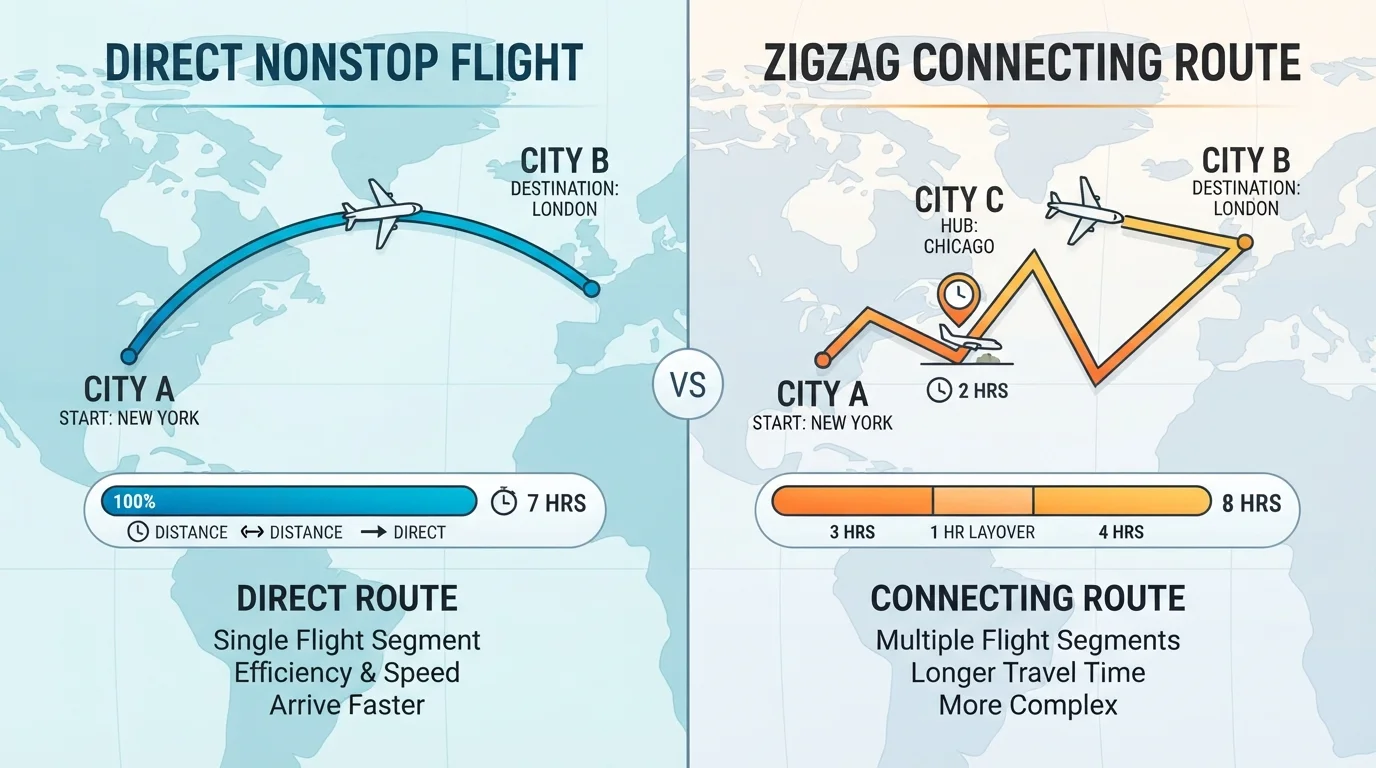
Once you've run this process, cross-reference your shortlist against the layover trade-offs explained in Direct Flight vs. Connecting Flight, and consider whether traveling in shoulder season could open up a cheaper window altogether.
What to Do Once You Find a Fare
Finding a low fare is only half the job. Before you book, verify what the advertised price actually includes. Confirm whether a carry-on bag is included or costs extra, whether the fare class allows changes, and what the cancellation policy is. Budget carriers in particular can layer on fees that close the gap with full-service airlines considerably.
Fares on a given route can oscillate over days, but they don't always recover after a spike. If you've done the research, the route is right, and the total price - including fees - fits your plan, booking promptly is generally smarter than waiting for an unlikely further drop.
Fare Alerts Are Useful - But Not Infallible
Price alert tools notify you when fares on a saved route move up or down, which is helpful for passive monitoring. However, alerts are only as fast as the indexing rate of the tool - some fares at flash-sale prices disappear in hours. Use alerts as a signal to check actively, not as a substitute for checking manually around key booking windows.
For a route-and-budget approach that goes beyond the flight itself, Planning a Low-Cost Trip from Scratch walks through the full trip-building process. And if you're still narrowing down where to go, Why 'Cheap Destination' Is a Moving Target is a useful read before committing.