

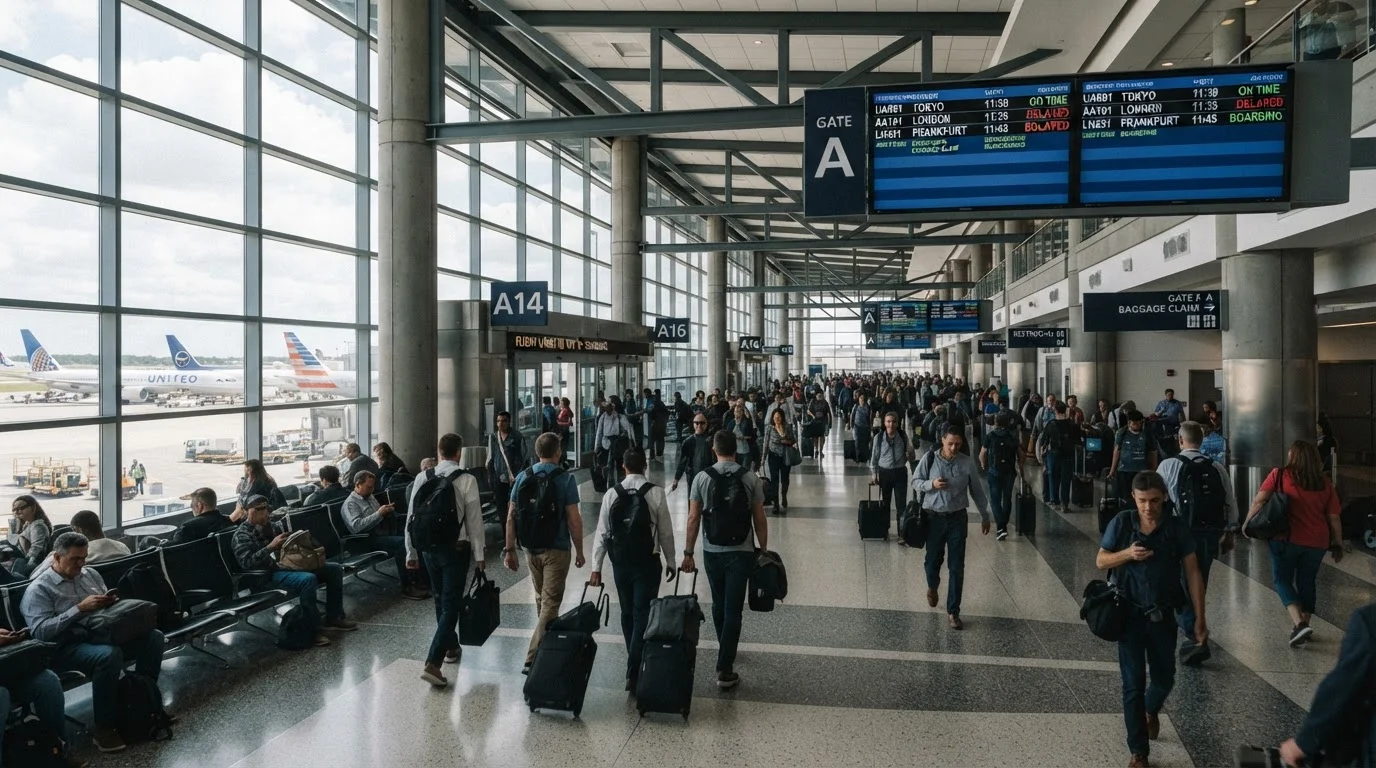
Why Transit Is More Than Just Getting There
Most travelers treat flights, transfers, and layovers as filler - the unavoidable gap between the interesting parts of a trip. In practice, transit is a structural element of your itinerary. The time a flight lands, the distance from the airport to your accommodation, the reliability of local ground transport - each of these determines what your first hours in a destination actually look like.
This is the core idea behind transit logistics: movement has downstream consequences. A 9 p.m. arrival in a city where restaurants close at 10 p.m. leaves almost no margin. A three-hour drive from a regional airport means a half-day of your trip is consumed before you've seen anything. These aren't edge cases - they're predictable outcomes of transit decisions made without enough thought.
See what every solid itinerary actually needs to understand how transit fits within the broader structure of a well-built trip plan.
~20%
US flights delayed in a typical year
The Bureau of Transportation Statistics consistently reports that roughly 1 in 5 domestic US flights arrives delayed, making buffer time a statistical necessity, not just a preference.
45-90 min
Typical airport-to-city transfer time in major destinations
Travel industry research shows ground transfer times vary widely by city, with many major international airports located 30-60 km from city centers, adding substantial time to every arrival and departure.
1 in 3
Travelers who miss a tour or activity due to transit delays
Survey data from travel insurance providers suggests transit disruptions are among the leading causes of missed pre-paid activities, underscoring the cost of under-planned connections.
The Ripple Effect of a Single Missed Connection
Delays and missed connections don't just cost time - they trigger a chain reaction. A missed morning connection can mean an afternoon arrival, which pushes a hotel check-in, which compresses dinner plans, which leaves you starting day two already behind. Travelers who haven't built buffer time into their schedule find that one disruption touches everything that follows.
The variables that make connections risky aren't random. Terminal changes, international customs processing, weather-prone hub airports, and short scheduled minimum connection times all raise the probability of a miss. Researching these factors before booking - not after - is what separates a resilient itinerary from a fragile one.
Check the Airport's Minimum Connection Time
Most major airports publish official minimum connection times (MCTs) - the shortest window the airport considers viable for connecting passengers. Search for your specific airport's MCT before booking any connection. If your layover is at or below this threshold, consider it a risk, not a safety net. Note that MCTs are optimistic benchmarks, not guarantees.
For multi-destination trips, where each leg feeds into the next, this compounding risk is even sharper. Planning a multi-destination trip requires treating every connection as a load-bearing element, not an afterthought.
Ground Transport: The Leg Everyone Underestimates
The flight is booked. The hotel is confirmed. Then travelers arrive and realize the airport is 45 minutes from the city center, the train only runs until 11 p.m., and a taxi in peak hours could take twice as long. Ground transport is consistently the most under-researched transit variable in trip planning.
Different cities have dramatically different airport-to-city dynamics. Some have fast, cheap rail links. Others require a car or transfer service, especially for accommodation outside the city center. Costs vary just as widely. Travelers who haven't looked into this can find themselves making rushed, expensive decisions at arrivals - exactly the environment where airport currency exchange traps and overpriced services thrive.
Research ground transport in both directions - arrival and departure - before you finalize any accommodation booking. The distance from your hotel to the airport, and the time required to cover it at the hour you'll actually be traveling, should inform where you stay, not just how you get there.
Building Transit Time Into Your Itinerary
The practical fix is straightforward: plan transit as explicitly as you plan activities. That means listing travel time to and from airports, accounting for check-in and security windows, scheduling arrival-day rest rather than back-to-back sightseeing, and identifying which bookings are vulnerable if a flight runs late.
Building a realistic daily timeline means treating transit legs as time blocks on your schedule - not gaps between the real plan. A traveler who lands at 7 p.m. and has a dinner reservation at 7:30 p.m. hasn't planned a trip; they've planned a stress test.
Flexibility isn't the same as vagueness. The goal isn't to leave every day open-ended - it's to identify the transit pinch points in your schedule and give them breathing room, while keeping the rest of the itinerary intact. That's how transit logistics stop being a source of friction and start being a source of confidence.