
Why Most Itineraries Break Down Early
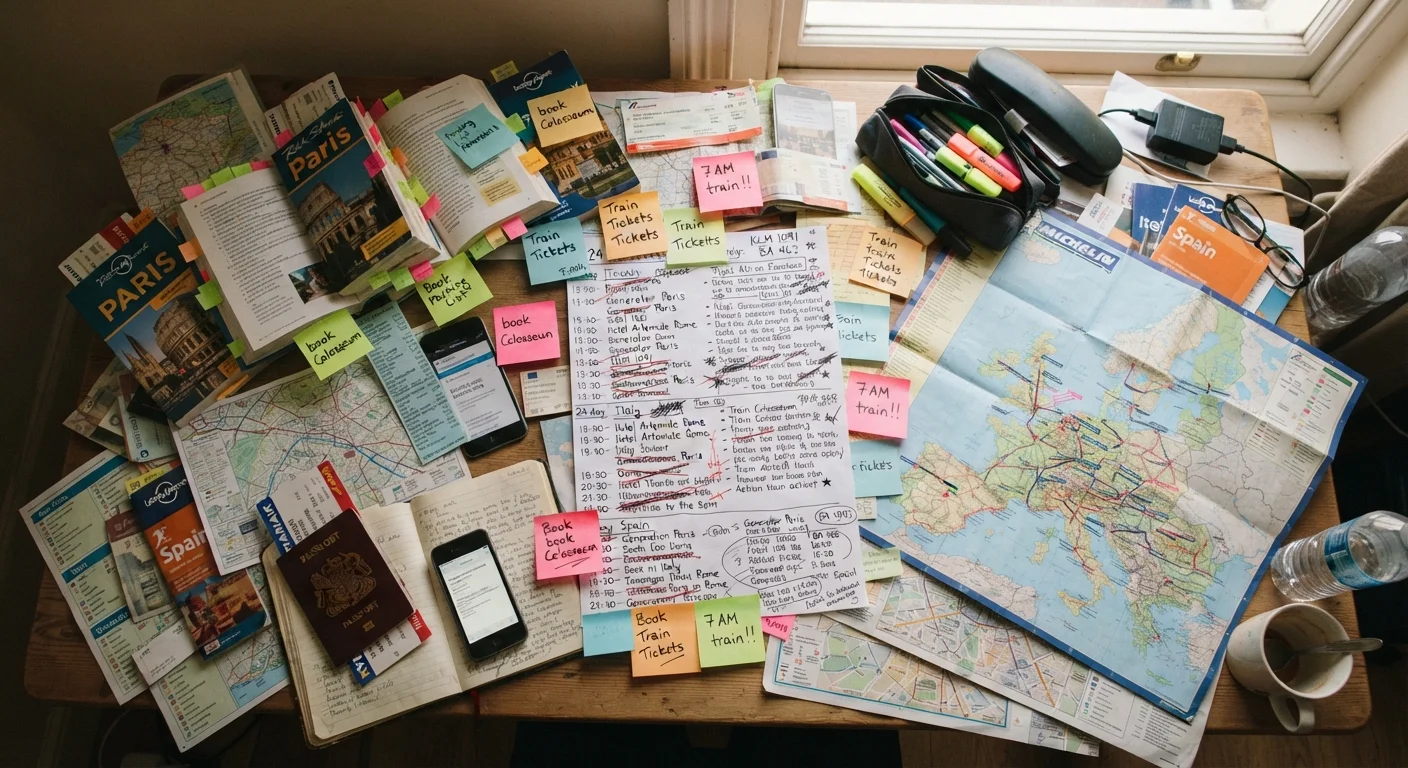
The most common reason a trip timeline falls apart isn't a dramatic problem - it's accumulated small friction. A slower breakfast, a transit line that took longer than expected, an attraction that requires more time than planned. When a schedule has no slack built in, each of those small delays stacks until the whole day is off-track.
If you've already read The Anatomy of a Travel Itinerary, you know what a solid plan needs to include. This guide focuses on the execution layer: how to sequence those components into a daily timeline that can absorb real-world conditions without collapsing.
The two most common structural errors are underestimating transit time and failing to account for rest. Both are fixable before you leave, and the steps below address each one directly.
What you will need
Tools You'll Need
Building a reliable timeline doesn't require specialized software - but it does require the right reference points. Verify operating hours directly with venues rather than relying solely on third-party aggregators, and always cross-check transit estimates against local transit authority schedules where available.
Route-planning app (e.g., Google Maps or local equivalent)
Used to estimate realistic transit times between locations and identify geographic clusters of activities.
Spreadsheet or itinerary doc
Used to lay out the hour-by-hour schedule so gaps and conflicts are visible before you travel.
Destination's official tourism or transit website
Used to verify current operating hours, booking requirements, and transport schedules.
Offline maps app
Used to navigate without mobile data in areas with poor connectivity.
Confirm Bookings Before Locking Your Timeline
A timeline built around unconfirmed reservations is a liability. Before finalizing any daily schedule, verify that entry tickets, tours, and transport bookings are actually secured - not just browsed. Operating hours and availability posted online are not always current; contact venues directly or check official sources close to your travel date.
How to Build the Timeline Step by Step
Work through the following steps sequentially. The order matters: locking in geographic clusters before placing anchors prevents the common mistake of building a schedule that looks full on paper but requires impossible travel between points.
List every activity and assign a realistic duration
Write out every activity, meal, attraction, and transit leg you're planning. Next to each item, estimate how long it actually takes - not the minimum time if everything goes perfectly, but the realistic time including queues, orientation, and getting in and out. A major museum might take two to three hours, not one. A sit-down meal is rarely under 90 minutes.
Map the geography and cluster by proximity
Pull up a map and plot your activities by location. Group items that are walkable or a single transit stop apart into the same half-day block. Avoid scheduling a morning activity on one side of a city and an afternoon activity on the other unless you've factored in the full transit time - including getting back to accommodation mid-day if needed.
Anchor your day around fixed, confirmed bookings
Identify the one or two commitments in each day that have a specific time attached - a timed entry ticket, a guided tour, a dinner reservation. Place those on your timeline first. Everything else - flexible stops, browsing, meals without bookings - gets scheduled around those fixed points. This approach means a delay in one area doesn't automatically cascade into missing a paid booking.
Insert buffer blocks between every major move
After placing your anchors, add a 30-60 minute buffer block between every transit leg or change of activity zone. These blocks absorb the small frictions - a longer lunch, a wrong turn, an unexpected photo stop - that are a normal part of travel. Treat buffers as a structural part of your plan, not wasted time. A day with no buffers is a day waiting to collapse.
Set a hard daily activity limit and protect rest time
Count the total hours your planned activities, meals, and transit will consume. If the number exceeds eight to nine active hours, cut something. Fatigue compounds across a multi-day trip - a day that runs to midnight on day one affects your capacity on days two, three, and beyond. Designate at least one rest window per day, even if it's just 45 minutes back at the hotel or a slow coffee stop with no agenda.
Do a dry-run read-through before you leave
Read your final timeline out loud or walk through it hour by hour the day before you travel. Look for transitions that seem rushed, meals that aren't accounted for, or days that end at 10 p.m. with a 6 a.m. start the next morning. Catching these on paper is far less costly than discovering them on the ground. Make any final adjustments, then save both a digital and printed copy.
Don't Trust Optimistic Transit Estimates
Google Maps and similar tools often show ideal-condition transit times. In practice, getting lost, waiting for connections, navigating luggage, or crossing into unfamiliar neighborhoods routinely adds 20-40% to estimated travel time. Always pad point-to-point moves, especially in cities you haven't visited before.
Keeping the Plan Flexible Without Losing Structure
A good timeline is a framework, not a script. Once you've built a realistic schedule using the steps above, identify which elements are truly fixed (timed bookings, transport departures) and which are flexible (a particular café, a secondary attraction). Flexible items can shift without breaking the day - fixed items cannot.
Use a Backup Activity List
Keep a short list of low-commitment alternatives - a nearby café, a market, a park - that require no booking and minimal transit. When a museum is sold out or a restaurant has a two-hour wait, you'll have a ready answer instead of a frustrating scramble.
For anyone planning a trip across multiple cities or countries, the complexity multiplies significantly. The multi-destination planning guide covers how to manage routing and pacing when you're working across different locations. And if you find yourself consistently over-scheduling, why overpacking your itinerary ruins trips explains the underlying patterns and how to recalibrate.
Finally, always verify entry requirements, local transport schedules, and venue availability through official government and provider sources before you travel - conditions can change, and no timeline survives on outdated information.