

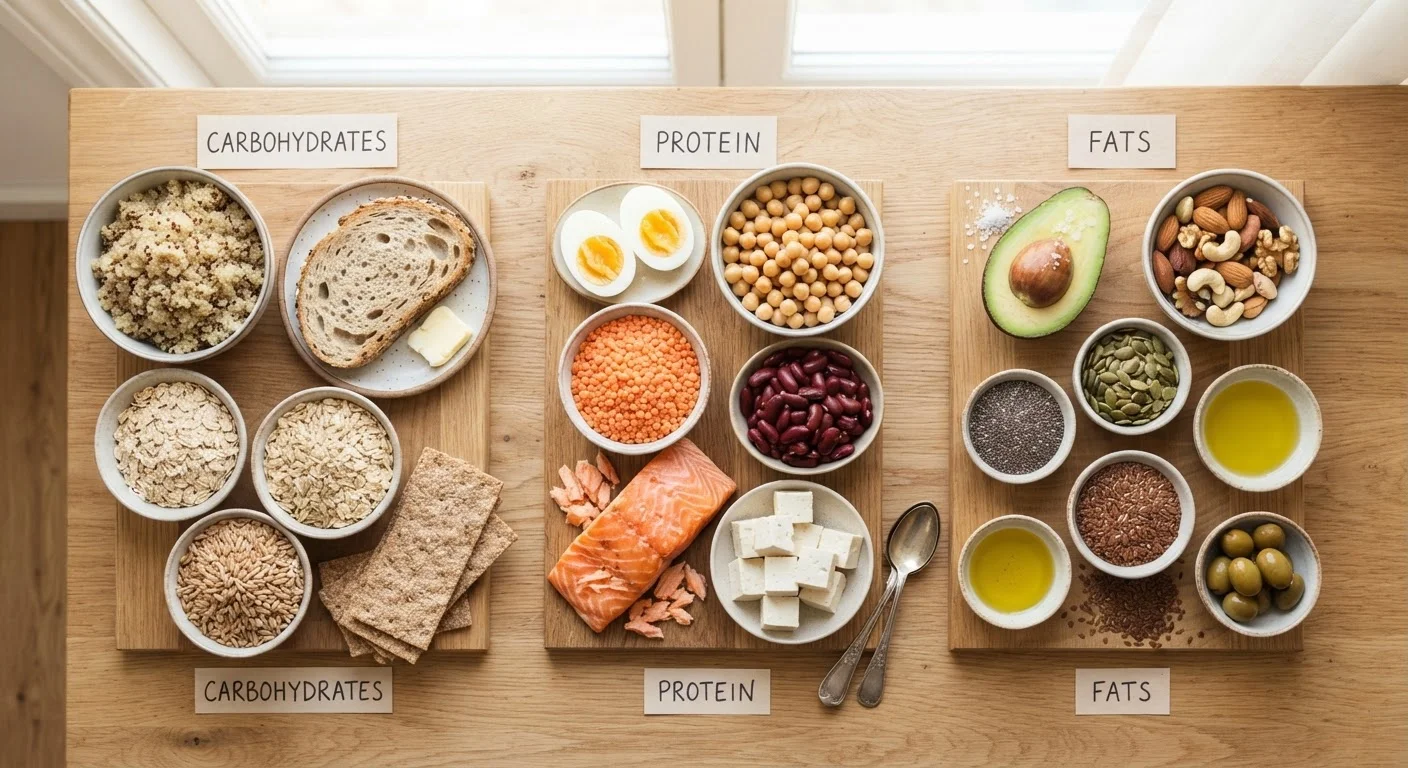
Why Macronutrients Matter
Every time you eat, you're delivering a combination of carbohydrates, protein, and fat to your body. These three macronutrients are the raw materials behind everything from walking upstairs to regulating hormones. Understanding what each one does - without the noise of diet culture - is one of the most practical things you can do for your long-term health literacy.
This article is general nutrition education and is not a substitute for personalised medical or dietary advice. For guidance specific to your health, consult a qualified healthcare professional or registered dietitian.
For a broader look at nutrition concepts that show up in everyday eating, see our daily nutrition reference guide.
45-65%
Recommended calorie share from carbohydrates
According to the U.S. Dietary Guidelines, carbohydrates should make up roughly 45-65% of total daily calorie intake for most adults.
10-35%
Recommended calorie share from protein
The U.S. Dietary Guidelines Acceptable Macronutrient Distribution Range (AMDR) for protein is 10-35% of total daily calories for adults.
20-35%
Recommended calorie share from fat
The AMDR for dietary fat is 20-35% of total daily calories, reflecting fat's essential role in health despite its higher calorie density.
Carbohydrates: Your Body's Preferred Fuel
Carbohydrates are broken down into glucose, which cells use as their primary energy source. The brain, in particular, relies heavily on a steady glucose supply. When you eat carbohydrates, your digestive system converts them to glucose, which enters the bloodstream and is either used immediately for energy or stored in the liver and muscles as glycogen for later.
Not all carbohydrates work the same way. Simple carbohydrates - found in table sugar and refined grains - are digested quickly, producing rapid rises in blood glucose. Complex carbohydrates - found in whole grains, legumes, and vegetables - digest more slowly, providing more sustained energy and, when they contain fiber, supporting digestive health.
The idea that carbohydrates are inherently fattening or harmful isn't supported by the overall body of nutrition research. Food quality and total dietary context matter far more than whether a food contains carbohydrates.
Protein: More Than Just Muscle
Protein is made up of smaller units called amino acids, and its roles extend well beyond muscle building. Your body uses amino acids to repair tissue damage, produce enzymes and hormones (including insulin and thyroid hormones), support immune function, and maintain the structural integrity of skin, hair, and nails.
Of the 20 amino acids involved in human biology, nine are considered essential - meaning the body cannot synthesize them and must obtain them from food. Animal-based proteins (meat, fish, eggs, dairy) typically contain all nine essential amino acids. Most plant proteins are lower in one or more essential amino acids, but eating a varied plant-based diet across the day can meet all essential amino acid needs.
Getting Complete Protein from Plants
If you eat a primarily plant-based diet, you don't need to painstakingly combine specific foods at every meal. Eating a variety of protein-containing plant foods - legumes, whole grains, tofu, nuts, and seeds - across the day provides all nine essential amino acids for most healthy adults. A registered dietitian can help assess whether your current intake is adequate.
Protein is also notably satiating, meaning it tends to reduce hunger more effectively per calorie than carbohydrates or fat - a property that research consistently links to its influence on hunger-regulating hormones.
Dietary Fat: Essential, Not Optional
Fat is the most energy-dense macronutrient, but that density serves important functions. Dietary fat enables the absorption of fat-soluble vitamins - A, D, E, and K - which cannot enter the bloodstream without it. Fat also forms the structural basis of every cell membrane in your body, insulates organs, and is required for the production of steroid hormones including estrogen, testosterone, and cortisol.
The type of fat matters. Research generally supports unsaturated fats - found in foods like olive oil, avocados, fatty fish, and most nuts - as beneficial for cardiovascular health. Saturated and trans fats have a more complex evidence picture. Our guide to fat types breaks down what the science currently shows.
Low-fat diets became popular in the latter decades of the 20th century, often replaced dietary fat with refined carbohydrates - a trade-off that many nutrition researchers now view as poorly conceived. Fat is not the enemy; the overall dietary pattern is what counts.
How the Three Work Together
Macronutrients don't operate in silos. A meal containing all three is generally more satisfying and nutritionally complete than one dominated by a single source. Fat slows digestion, which moderates how quickly carbohydrates raise blood glucose. Protein eaten alongside carbohydrates similarly blunts the glycemic response. This interplay is one reason that whole, mixed foods tend to support steadier energy and satiety compared with ultra-processed foods engineered around isolated ingredients.
When reading a nutrition label, the macronutrient panel gives you a useful starting snapshot - but context matters. Our label-reading guide walks through which figures are actually worth your attention.
Macronutrients are also distinct from micronutrients - vitamins and minerals - which are needed in smaller amounts but are equally critical. For a concise reference on those, see our micronutrients overview.
This article is for general informational and educational purposes only and does not constitute medical or dietary advice. Individual nutritional needs vary based on age, health status, activity level, and other factors. Always consult a qualified healthcare professional or registered dietitian before making significant changes to your diet.