

Why Fat Got a Bad Reputation - and Why That's Changing
For much of the late 20th century, dietary fat was cast as the villain behind heart disease and weight gain. Low-fat products flooded grocery shelves, and "fat-free" became shorthand for healthy. The science has since grown considerably more complex. Researchers now recognize that the type of fat matters far more than the total amount, and that removing fat often means adding sugar or refined starches in its place - a trade that doesn't necessarily improve health outcomes.
Understanding the main categories of dietary fat helps cut through the noise. See our guide to persistent nutrition myths for more on how the low-fat era became one of nutrition science's most consequential oversimplifications.
~70%
Of US adults exceed recommended saturated fat intake
According to data cited in the Dietary Guidelines for Americans, most US adults consume more saturated fat than the recommended limit of less than 10% of daily calories.
~500,000
Annual deaths potentially linked to trans fat globally
The WHO has estimated that partially hydrogenated oils contribute to hundreds of thousands of preventable cardiovascular deaths worldwide each year, motivating international efforts to eliminate them.
30-40%
Of total daily calories from fat in typical US diets
National dietary surveys suggest most Americans obtain roughly this share of their daily energy from fat, broadly in line with the Acceptable Macronutrient Distribution Range but skewed toward less favorable fat types.
Saturated Fat: What the Evidence Actually Says
Saturated fats are solid at room temperature - think butter, coconut oil, and the fat marbled through red meat. Their carbon chains are fully "saturated" with hydrogen atoms, with no double bonds. For decades, saturated fat was directly linked to raised LDL (low-density lipoprotein) cholesterol and cardiovascular disease risk, largely based on mid-20th-century research.
More recent meta-analyses have complicated this picture. While saturated fat does tend to raise LDL cholesterol in most people, not all LDL particles carry the same risk, and what you replace saturated fat with matters enormously. Swapping it for polyunsaturated fats from whole foods appears beneficial; swapping it for refined carbohydrates does not show consistent benefit.
Major health organizations - including the American Heart Association - still recommend keeping saturated fat intake moderate, with an emphasis on the broader dietary context rather than strict avoidance. This aligns with eating patterns supported by long-term health research.
Focus on Fat Source, Not Just Fat Amount
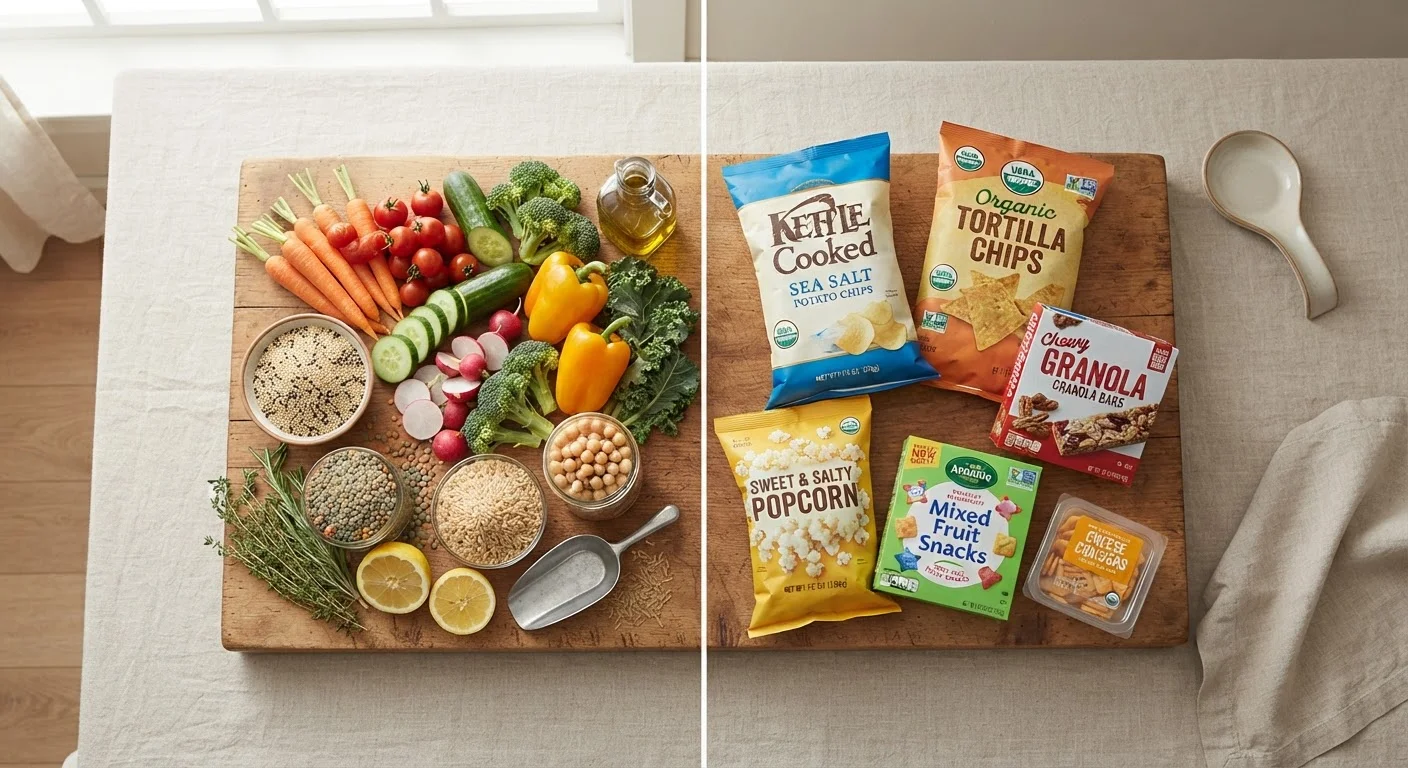
When reviewing your eating habits, consider where your fat is coming from before worrying about total grams. Fatty fish, nuts, seeds, and olive oil provide fats alongside other beneficial nutrients. Processed snacks and fast foods can deliver fats in a context that offers little nutritional value. Shifting sources - rather than drastically cutting total fat - is generally a more sustainable approach.
Unsaturated Fats: The Broadly Beneficial Category
Unsaturated fats contain one or more double bonds in their carbon chains, which makes them liquid at room temperature. They fall into two groups:
- Monounsaturated fats (MUFAs) - found in olive oil, avocados, and most nuts. Diets rich in MUFAs, like the traditional Mediterranean diet, are consistently associated with favorable cardiovascular markers in population studies.
- Polyunsaturated fats (PUFAs) - include omega-3 and omega-6 fatty acids. Omega-3s (found in fatty fish, walnuts, and flaxseed) have the strongest research support for heart and inflammatory benefits. Omega-6s are also essential but are abundant in the typical American diet; balance between the two is considered relevant by many researchers.
Replacing saturated fat with polyunsaturated fat from whole food sources is among the most consistently supported dietary strategies for cardiovascular health in current nutritional science. For context on how whole vs. processed food sources of these fats differ, see our explainer on whole vs. processed foods.
Trans Fats: The Clearest Harmful Category
Trans fats come in two forms. Small amounts occur naturally in ruminant animal products (dairy, beef), where current evidence does not indicate the same harmful effects. The far more consequential type is artificial trans fat, created by partially hydrogenating vegetable oils to extend shelf life and stabilize texture in processed foods.
Artificial trans fats raise LDL cholesterol and lower HDL (high-density lipoprotein) cholesterol simultaneously - a double adverse effect not seen with other fat types. The evidence linking them to cardiovascular disease risk is among the most consistent in nutrition research. This led the FDA to determine that partially hydrogenated oils are no longer generally recognized as safe (GRAS), with US manufacturers required to comply by 2020.
Checking ingredient labels for "partially hydrogenated oil" remains a useful habit, particularly for older packaged products or imported goods. Regulations in other countries differ.
This article is for informational purposes only and does not constitute medical or dietary advice. Please consult a qualified healthcare professional or registered dietitian for guidance tailored to your individual health needs.