
Why Nutrition Needs Change With Age
The human body is not a static machine. From early adulthood onward, hormones fluctuate, metabolism slows, lean muscle mass gradually declines, and the gut's ability to absorb certain nutrients becomes less efficient. These biological shifts mean that the diet supporting you at 25 may leave meaningful gaps by the time you reach 55 or 65.
According to the Dietary Guidelines for Americans, energy needs typically decrease with age - largely because resting metabolic rate and physical activity levels tend to decline. Yet the body's need for several micronutrients holds steady or even increases. This creates a practical challenge: getting more nutritional value from fewer overall calories.
Understanding these shifts is not about following a restrictive regimen. It's about making informed adjustments - gradually and sustainably - as your body's requirements evolve. For a grounding in foundational dietary concepts, see our Beginner's Map to Balanced Eating.
~1%
Annual muscle mass loss after age 40
Research consistently estimates adults lose approximately 1% of skeletal muscle mass per year beginning around the fifth decade of life.
95%
Adults not meeting fiber recommendations
The Dietary Guidelines for Americans identifies dietary fiber as a nutrient of public health concern, with the vast majority of U.S. adults falling below recommended intakes.
1,200 mg
Daily calcium recommendation after age 50 (women)
The National Institutes of Health Office of Dietary Supplements recommends 1,200 mg of calcium daily for women over 50 and men over 70, up from 1,000 mg in younger adults.
Young Adulthood (Ages 18-35): Building the Foundation
This life stage is often the highest point for caloric needs and metabolic rate. Bone density is still actively building until roughly the mid-to-late twenties, making adequate calcium (around 1,000 mg daily for most adults) and vitamin D genuinely consequential - not just standard advice. Habits established here can have lasting effects on bone health decades later.
Iron deserves particular attention during this period, especially for women who menstruate. Inadequate iron intake is one of the more common nutritional shortfalls in this demographic and can contribute to fatigue and reduced cognitive performance. Plant-based iron sources (legumes, tofu, dark leafy greens) are absorbed less efficiently than animal sources, so pairing them with vitamin C-rich foods improves uptake.
Folate is another priority, particularly for anyone who might become pregnant - neural tube development occurs very early in pregnancy, often before a person knows they are pregnant. Public health guidance consistently recommends adequate folate intake from food and, where appropriate, supplementation for those of childbearing age. Always consult a healthcare provider about specific supplementation decisions.
Think of your twenties as your last window to meaningfully build bone density - prioritizing calcium-rich and weight-bearing activity now pays dividends decades later.
Peak bone mass is largely established by the late twenties; higher peak density provides a larger buffer against age-related bone loss later in life.
If you follow a plant-forward diet, pair iron-rich plant foods with a small amount of vitamin C at the same meal - a squeeze of lemon over lentils or bell pepper with spinach meaningfully improves absorption.
Non-heme iron (found in plant foods) has lower bioavailability than heme iron; ascorbic acid (vitamin C) is well documented to enhance its absorption.
Midlife (Ages 35-55): Managing Metabolic Shifts
Resting metabolic rate begins a gradual decline around the mid-thirties, and skeletal muscle mass starts decreasing at roughly 1% per year after 40 - a process called sarcopenia. Both trends mean that protein intake becomes more strategically important, not just as a macronutrient but as a lever for maintaining functional strength.
Research suggests that spreading protein intake across meals - rather than concentrating it in one sitting - may better support muscle protein synthesis in this age group. Whole-food sources such as eggs, fish, legumes, and dairy provide protein alongside other valuable nutrients. For context on how daily eating patterns influence long-term outcomes, see our overview of eating patterns linked to positive health outcomes.
Hormonal changes - particularly perimenopause for women - can affect how the body processes carbohydrates, stores fat, and responds to stress. Fiber intake takes on added importance here: it supports gut health, helps regulate blood glucose response, and is associated with cardiovascular benefit. Most American adults consume far less fiber than recommended.
Calorie Cutting Can Backfire in Midlife
Sharply reducing calories to manage midlife weight gain without maintaining adequate protein can accelerate muscle loss rather than preserve it. Gradual, moderate calorie adjustments combined with sufficient protein and physical activity are generally more effective and safer than aggressive restriction. Speak with a registered dietitian before making significant changes to your caloric intake.
Later Life (Ages 55 and Beyond): Protecting What You Have
After 55, several nutrient needs become more pronounced. Vitamin B12 absorption declines as stomach acid production decreases with age, making deficiency a legitimate concern even when dietary intake appears adequate. The National Institutes of Health notes that many older adults benefit from B12 from crystalline supplements or fortified foods, which are better absorbed than protein-bound B12 in food.
Calcium and vitamin D requirements increase for most adults after 50 as bone remodeling shifts toward net loss. Vitamin D also supports immune function and muscle performance - both significant concerns in older adults. Sun exposure alone is often insufficient, particularly in northern climates and for those with limited time outdoors.
Caloric intake may drop significantly in this stage due to reduced appetite and activity, yet protein, fiber, and micronutrient needs remain high or increase. Nutrient-dense foods - those delivering the most vitamins, minerals, and protein per calorie - become the practical foundation of a sound diet. Hydration also warrants deliberate attention; the thirst mechanism becomes less reliable with age, increasing the risk of under-hydration. For a deeper look at key nutritional concepts that apply at every age, explore our reference guide to daily nutrition habits.
Practical Strategies Across Every Stage
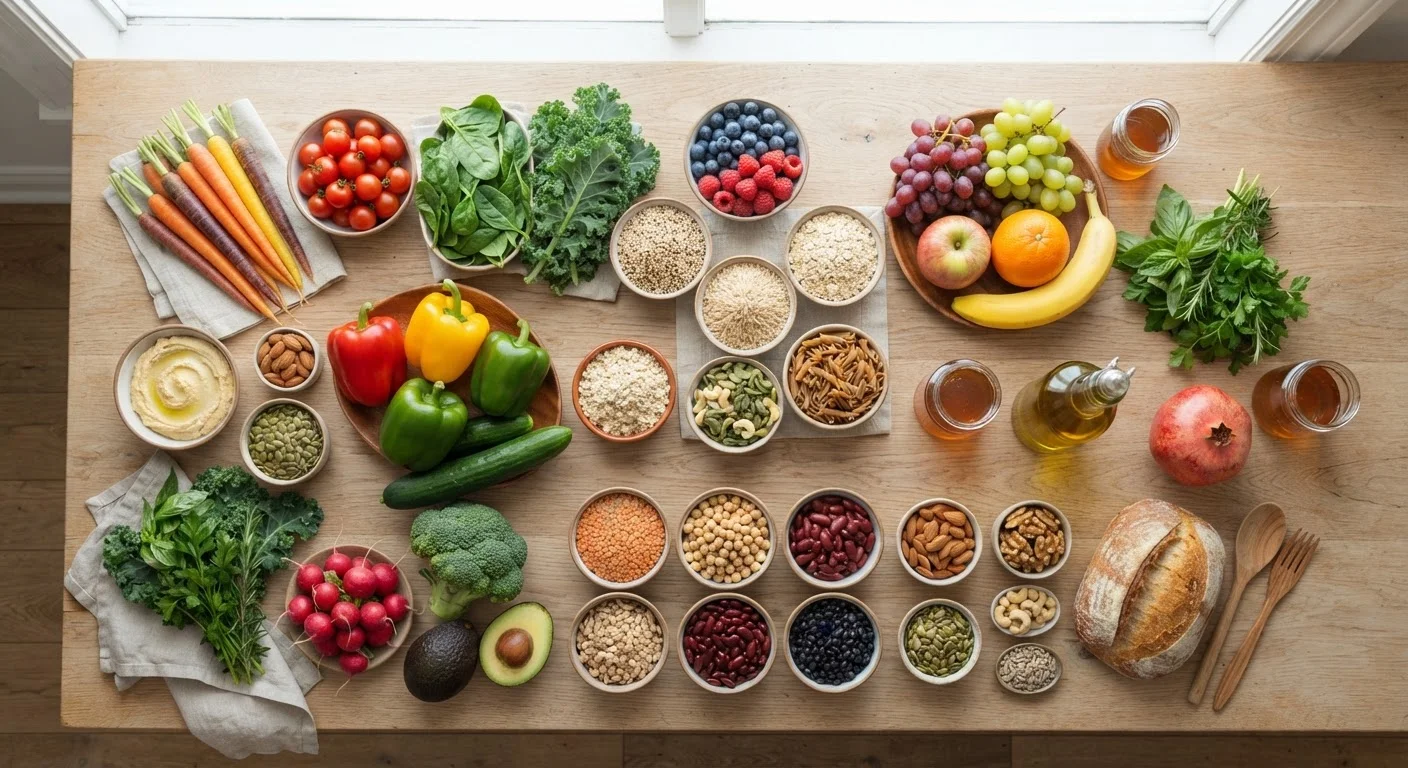
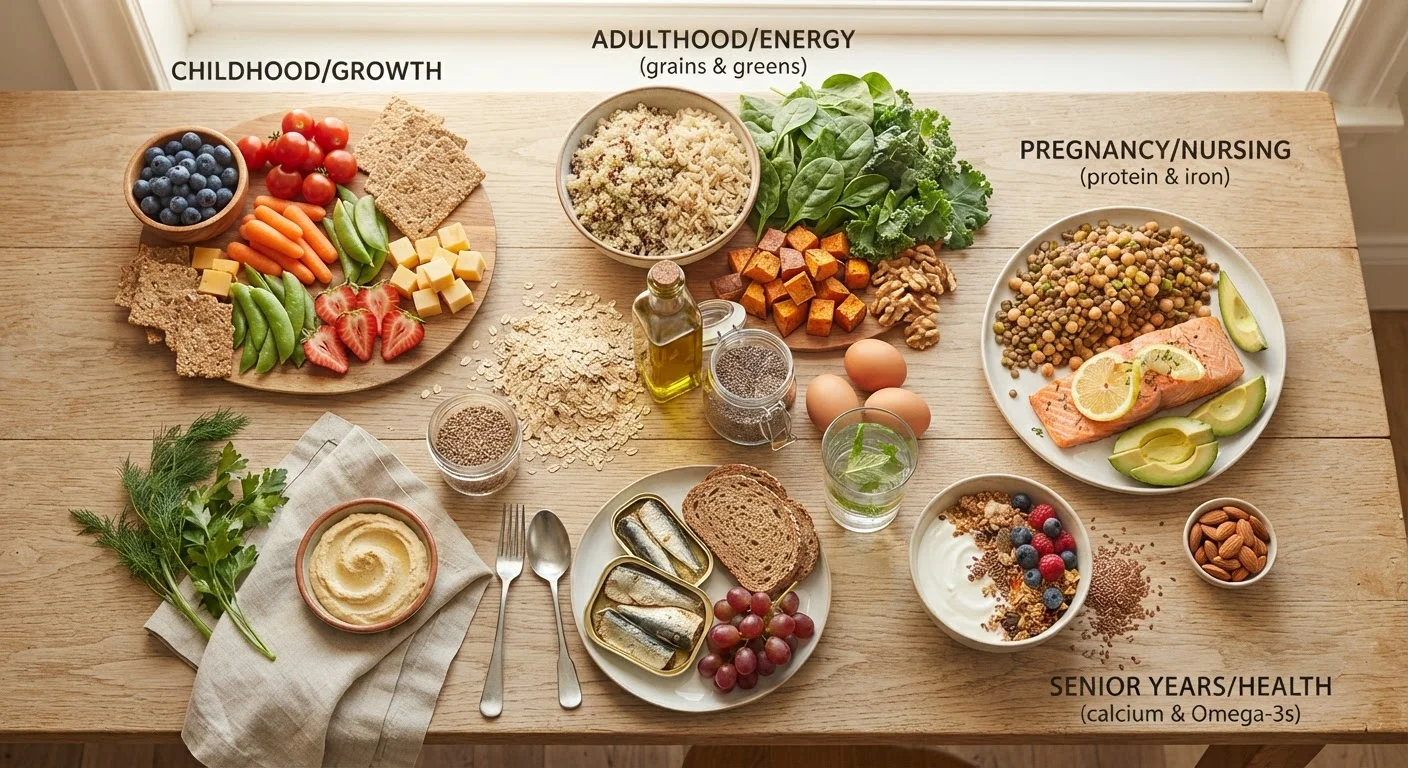
Regardless of life stage, several dietary principles hold up well across the evidence base. Prioritizing whole, minimally processed foods over ultra-processed options provides a reliable framework. Dietary patterns consistently linked to positive outcomes - such as those emphasizing vegetables, whole grains, legumes, nuts, and lean proteins - tend to support health across decades, not just in the short term.
- Audit your protein distribution: Aim to include a meaningful protein source at each meal rather than loading it into dinner.
- Prioritize nutrient density over caloric volume: As caloric needs decrease, the quality of what you eat matters more per bite.
- Don't overlook hydration: Thirst signals weaken with age; building consistent fluid intake habits is worthwhile at any stage.
- Get bloodwork done periodically: Levels of vitamin D, B12, iron, and other nutrients are not reliably estimated from diet alone - periodic testing with a healthcare provider helps identify gaps before they become problems.
No supplement or superfood replaces the cumulative effect of consistent, balanced eating over time. Small, sustainable adjustments made at each life stage are more likely to deliver lasting benefit than dramatic overhauls driven by trends.
This article is for general informational and educational purposes only. It is not a substitute for professional medical or dietary advice, diagnosis, or treatment. Always consult a qualified healthcare provider before making significant changes to your diet or supplementation, particularly if you have an existing health condition or are taking medication.