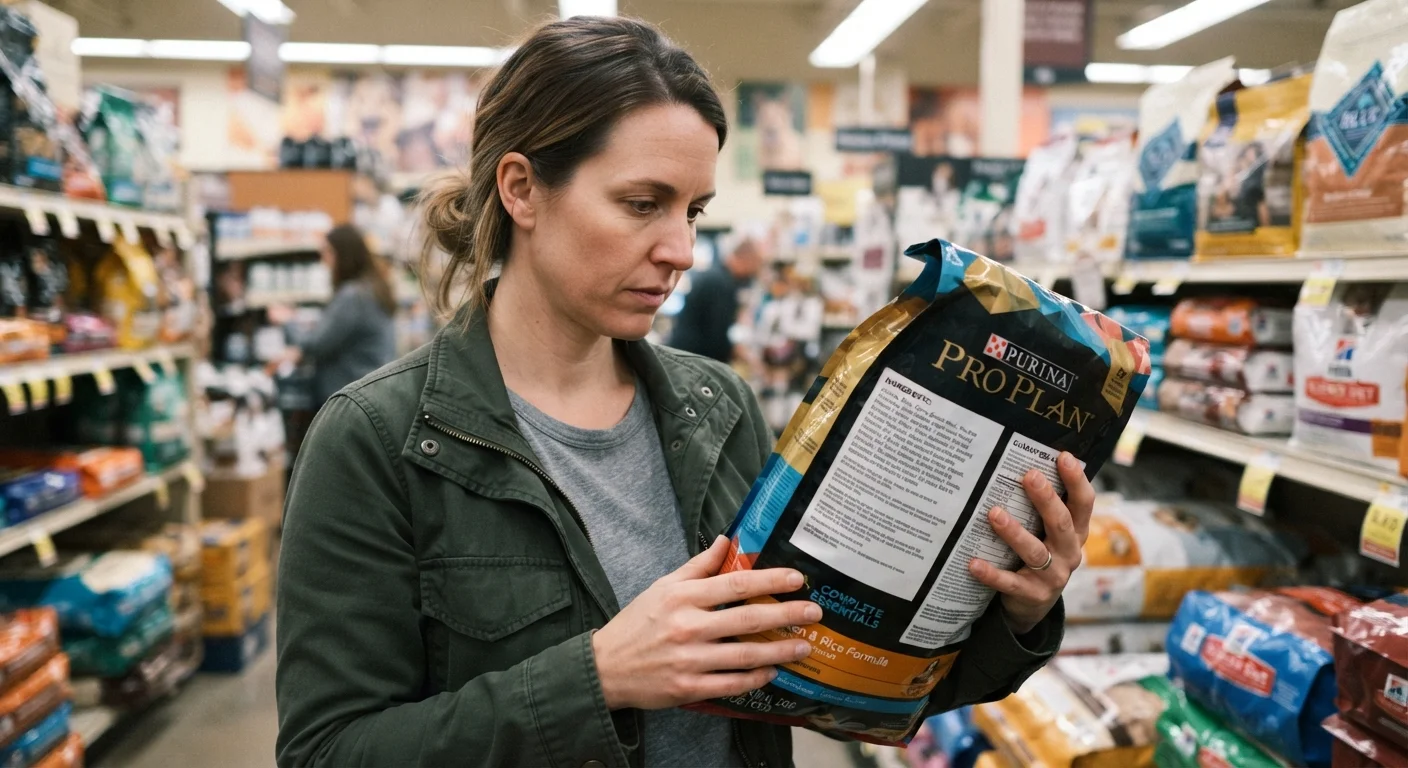
Before you commit to a new diet for your pet, run through these key checks — from ingredient order to AAFCO statements and recall history.
Key Takeaways
The AAFCO nutritional adequacy statement is the single most important line on any pet food label.
Ingredient order reflects weight before processing - context matters more than position alone.
Recall history and manufacturer transparency are legitimate factors when evaluating a brand.
Life stage, species, and health conditions should drive food selection more than marketing claims.
Always consult your veterinarian before switching foods, especially for pets with health conditions.
Why a Systematic Approach Pays Off
Pet food marketing is sophisticated. Words like "natural," "holistic," and "ancestral" are largely unregulated and carry no standardized nutritional meaning. Meanwhile, genuinely important information - the AAFCO statement, the guaranteed analysis panel, the manufacturer's contact details - is printed in small type on the back or side of the packaging.
Without a structured evaluation process, it's easy to be swayed by front-of-bag photography and buzzwords while overlooking the details that actually determine whether a food is appropriate for your pet. This checklist gives you a repeatable framework to cut through that noise.
This article focuses on commercially produced pet foods. If you're weighing homemade diets as an alternative, see our guide to homemade vs. commercial pet food for a balanced look at both approaches. For a deeper dive into interpreting percentages on the label, our article on reading the guaranteed analysis panel is a useful companion resource.
Label Fundamentals
Locate the AAFCO nutritional adequacy statement and confirm it matches your pet's life stage (e.g., "all life stages," "adult maintenance," "growth and reproduction").Must
Verify the statement says the food was "formulated to meet" AAFCO profiles or "animal feeding tests substantiate" nutritional adequacy - the latter reflects actual feeding trials.Must
Confirm the food is labeled for the correct species - cat foods and dog foods have different required nutrient profiles and are not interchangeable.Must
Check that a US-based manufacturer name, address, and contact information appear on the label as required by federal and state regulations.Must
Ingredient List Review
Read the first five ingredients - they make up the largest proportion by weight before cooking and give a realistic picture of the food's primary protein and carbohydrate sources.Must
Look for "ingredient splitting," where a single ingredient (e.g., rice) appears multiple times under different names (brown rice, rice flour, rice bran) to push it lower on the list.Should
Note whether named protein sources (e.g., "chicken," "salmon") appear rather than generic terms (e.g., "poultry," "fish") - named sources provide clearer traceability.Should
Identify any ingredients your pet has previously shown sensitivity or allergy to, and exclude the food if those are present.Must
Guaranteed Analysis Panel
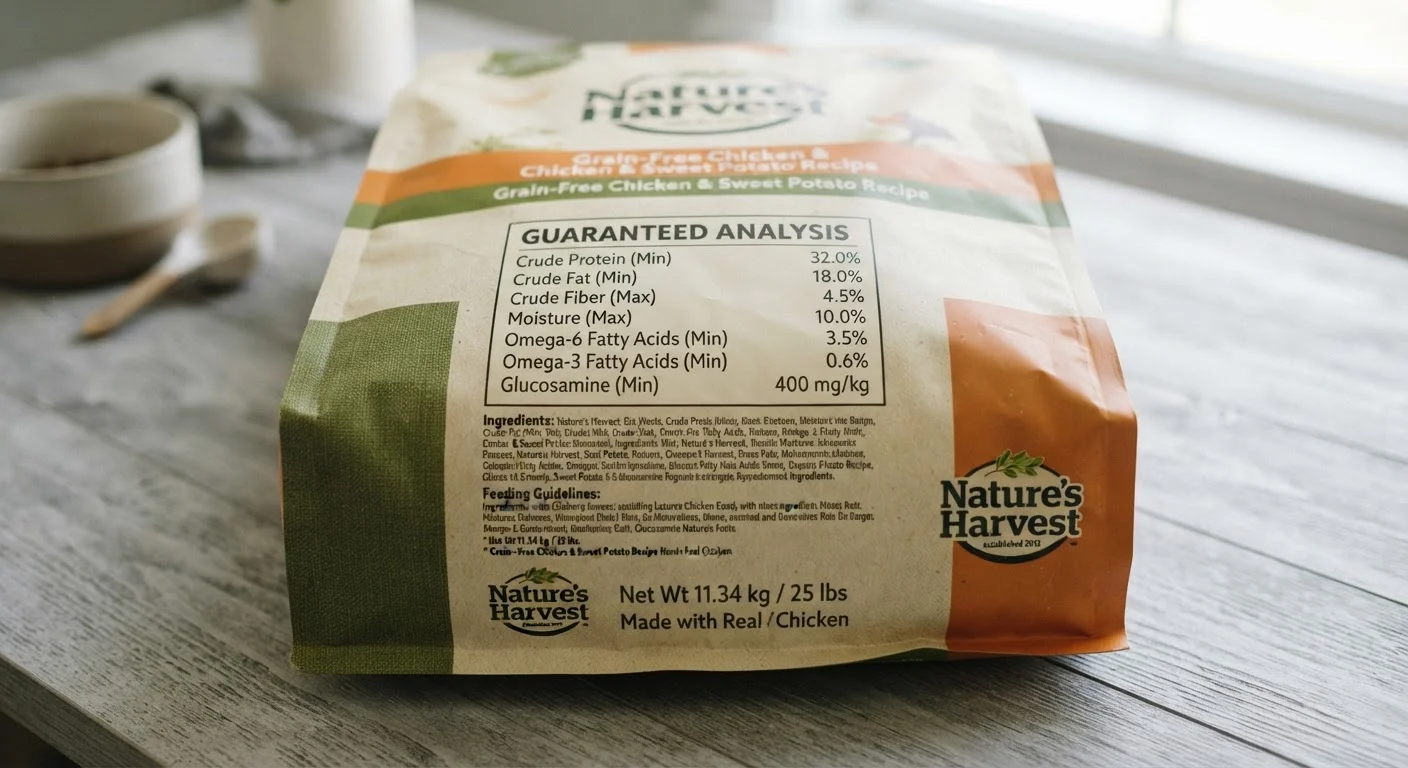
Record the minimum crude protein and fat percentages and the maximum crude fiber and moisture percentages from the guaranteed analysis panel.Must
Convert nutrient percentages to a dry-matter basis before comparing wet and dry foods - moisture content makes direct comparison of as-fed numbers misleading.Should
Cross-check that protein levels are appropriate for your pet's species, life stage, and any diagnosed health conditions (e.g., kidney disease may require protein restriction per veterinary guidance).Must
Manufacturer Transparency
Search the manufacturer's website or call their customer line to confirm where the food is manufactured - in-house production versus third-party co-manufacturing carries different quality-control implications.Should
Check the FDA pet food recall database for any recalls associated with this brand or manufacturer in the past three years.Must
Evaluate whether the company employs a board-certified veterinary nutritionist (DACVN) to formulate or review their diets - this is a meaningful indicator of nutritional rigor.Should
Look for published quality-control standards or third-party testing certifications on the manufacturer's site as an additional transparency signal.Nice to have
Health & Veterinary Fit
Consult your veterinarian before switching foods if your pet has any diagnosed health condition, food allergy, or is on prescription nutrition.Must
Confirm the caloric density (kcal per cup or can, usually on the label or manufacturer website) aligns with your pet's weight management goals.Should
Note any supplemental nutrients or additives (e.g., probiotics, omega-3s) and discuss their relevance with your vet rather than treating them as automatic positives.Nice to have
Tools You'll Want Before You Start
You don't need specialized software to evaluate a pet food, but a few resources will make the process faster and more reliable.
Required
FDA Pet Food Recall Database
Search current and historical pet food recalls by brand, product, or reason at the FDA's official website.
Required
AAFCO Official Website (aafco.org)
Reference the Association of American Feed Control Officials' published nutrient profiles and guidance on label claims.
Optional
Calculator for Dry-Matter Basis Conversion
Convert as-fed nutrient percentages to a dry-matter basis so you can compare wet and dry foods on equal terms.
Required
Your Veterinarian or a Board-Certified Veterinary Nutritionist (DACVN)
Provides species- and individual-specific guidance, especially for pets with health conditions or unusual dietary needs.
After the Checklist: Next Steps
Running through this checklist narrows your options - it doesn't finalize them. If a food passes all the must-do checks and most of the should-do checks, it's a reasonable candidate. But individual pets respond differently to different diets, and paper evaluation has limits.
Don't Rely on This Checklist Alone for Sick Pets
This checklist is designed for generally healthy adult pets whose owners want to make a more informed food choice. If your pet has a diagnosed medical condition - kidney disease, diabetes, inflammatory bowel disease, a confirmed food allergy - dietary decisions should be made in consultation with a veterinarian, ideally one who can refer you to a board-certified veterinary nutritionist. A label-based evaluation is not a substitute for individualized clinical guidance.
Once you've selected a food, don't switch abruptly. A gradual transition over 7-10 days reduces the risk of digestive upset. Our food transition guide walks through a practical approach and describes early warning signs to watch for during the switch.
Monitor your pet's coat, weight, energy, and stool quality over the first 4-6 weeks. Subtle physical changes can indicate that a food isn't the right fit. If anything looks off, our article on physical signs that warrant a vet visit can help you decide when to act. For broader pet wellness context, the Pet Health & Wellness hub is a good ongoing reference.
This article is for general informational and educational purposes only. It is not a substitute for professional veterinary advice, diagnosis, or treatment. Always consult a licensed veterinarian before making significant changes to your pet's diet, especially if your pet has an existing health condition.
Pets & Animal Care Editorial Team is the collective byline for our editorial team and contributor network. Articles published under this byline or an editorial pen name are researched, written, and reviewed according to our editorial standards for clarity, consistency, and independence before publication.
The content provided on our blog site traverses numerous categories, offering readers valuable and practical information. Readers can use the editorial team’s research and data to gain more insights into their topics of interest. However, they are requested not to treat the articles as conclusive. The website team cannot be held responsible for differences in data or inaccuracies found across other platforms. Please also note that the site might also miss out on various schemes and offers available that the readers may find more beneficial than the ones we cover.