
Why This Decision Is More Complex Than It Looks
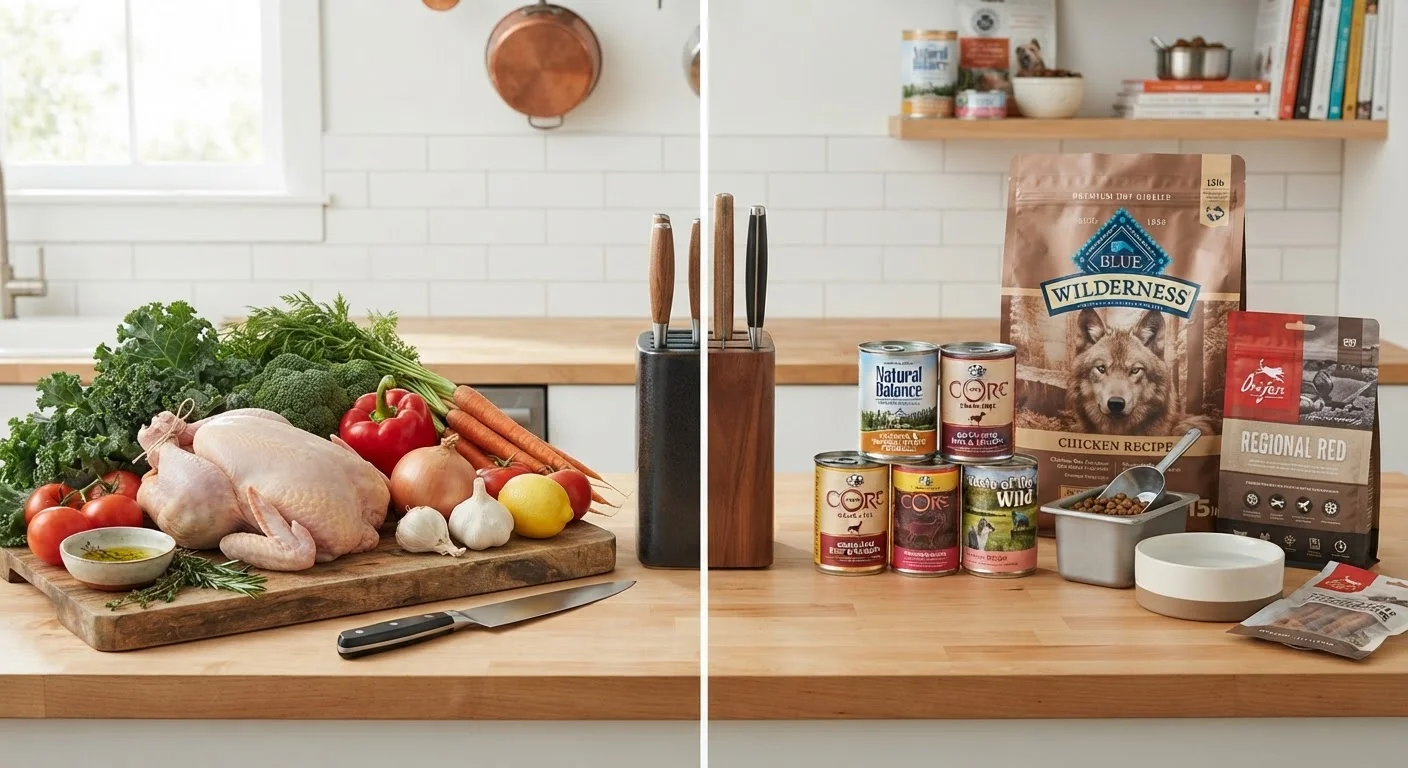
The appeal of homemade pet food is understandable. Fresh ingredients, no preservatives, total control - it sounds like a straightforward upgrade from a bag of processed kibble. But the gap between a wholesome-looking meal and a nutritionally complete one is wider than most owners realize.
Dogs and cats have precise micronutrient requirements that differ significantly from humans. A chicken-and-rice dish might provide protein and energy, but without adequate calcium, phosphorus, iodine, zinc, and a range of vitamins in correct ratios, the diet can cause serious deficiencies over time - even when the pet appears healthy. For a fuller picture of what canine diets specifically need, see nutrients every dog diet should include.
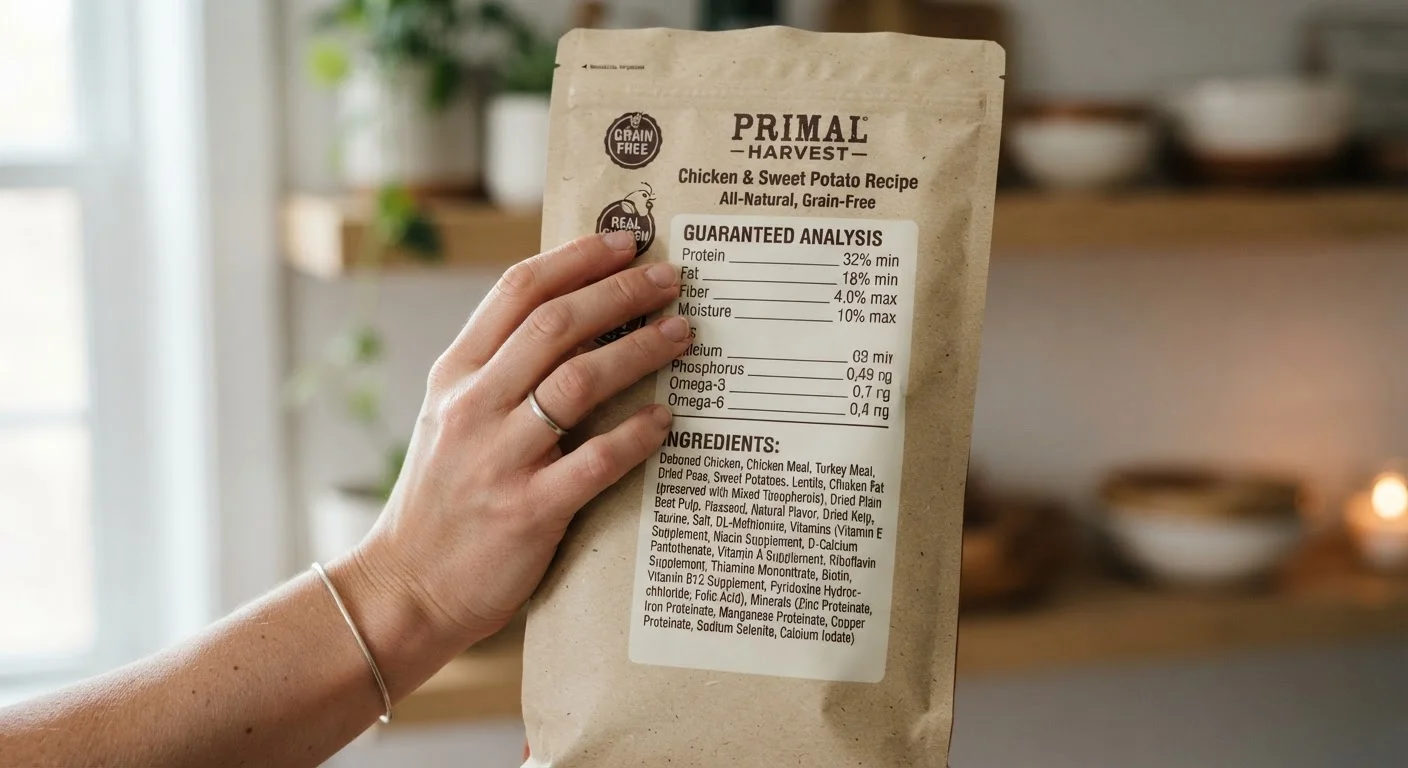
Commercial pet food, meanwhile, carries its own complexity. Label terminology - "natural," "human-grade," "holistic" - is often more marketing than science. Understanding what those labels actually mean is a critical first step. Our guide to decoding pet food labels breaks down the fine print.
The Nutritional Completeness Problem with Homemade Diets
Research consistently finds that the overwhelming majority of homemade pet food recipes - including those published in books and online - fail to meet established nutritional standards. A widely cited study published in the Journal of Nutritional Science found that most recipes for dogs were deficient in multiple essential nutrients, including zinc, copper, and vitamins D and E.
These aren't minor gaps. Chronic calcium deficiency, for example, can lead to metabolic bone disease. Taurine deficiency in cats causes dilated cardiomyopathy - a potentially fatal heart condition. The challenge is that these problems develop silently over months or years.
Work With a Veterinary Nutritionist
If you're committed to feeding your pet a homemade diet, have a recipe professionally formulated rather than relying on generic online sources. A board-certified veterinary nutritionist can account for your specific pet's species, breed, age, weight, and any existing health conditions. Periodic bloodwork helps catch nutritional gaps before they become clinical problems.
If you are committed to a homemade diet, the only responsible path is working with a board-certified veterinary nutritionist (Diplomate of the American College of Veterinary Nutrition) to have a recipe formulated specifically for your pet's species, age, weight, and health status. Generic recipes are not a safe substitute.
What Commercial Pet Food Standards Actually Mean
In the United States, the Association of American Feed Control Officials (AAFCO) establishes nutrient profiles that commercial pet foods must meet to carry a "complete and balanced" claim. Foods can meet this standard through formulation (matching AAFCO nutrient minimums) or by passing feeding trials.
This does not mean all commercial foods are equal. Ingredient quality, digestibility, and manufacturing standards vary. However, a food carrying an AAFCO "complete and balanced" statement has, at minimum, been evaluated against established nutritional benchmarks - something most homemade recipes have not.
| Homemade Pet Food | Commercial Pet Food | |
|---|---|---|
| Nutritional completeness | High risk of deficiencies without expert formulation | AAFCO-compliant options meet established standards |
| Ingredient transparency | Full control over ingredients used | Varies; label reading skills required |
| Time commitment | High - daily preparation required | Low - ready to serve |
| Cost | Variable; often higher with vet formulation fees | Wide range; cost per serving typically lower |
| Safety oversight | Owner-dependent; no regulatory framework | Subject to FDA and AAFCO oversight |
| Suitability for medical conditions | Can be tailored under veterinary supervision | Therapeutic diets available by vet prescription |
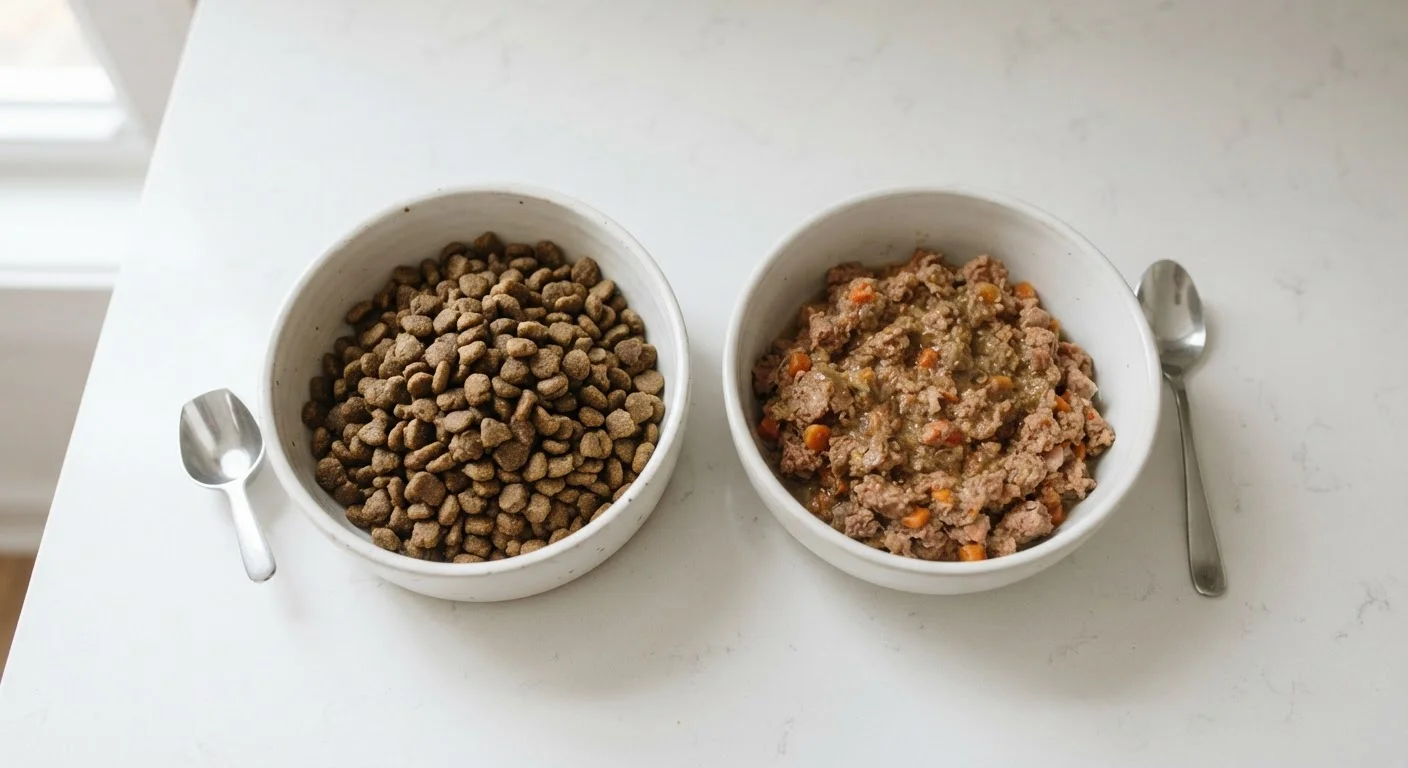
For a closer look at how different commercial formats compare on key nutritional metrics, our article on dry kibble vs. wet food covers moisture, protein, and suitability across life stages. If you're considering switching foods, our pet food evaluation checklist offers a practical starting framework.
Practical Considerations: Time, Cost, and Risk
Homemade diets require daily preparation, careful sourcing of ingredients, and ongoing monitoring - often with periodic veterinary bloodwork to catch deficiencies early. The time and financial investment can be substantial, and that's before accounting for the cost of professional nutritional consultation.
Commercial food offers consistency, convenience, and regulatory oversight. Label transparency is improving, and tools like the guaranteed analysis panel help owners make more informed comparisons between products.
For owners interested in raw feeding - a related but distinct approach - raw diets versus commercial food covers the safety and nutritional tradeoffs in detail. And for those navigating marketing language on packaging, pet food marketing myths cuts through common misconceptions.
Whatever approach you choose, any significant dietary change should be made gradually. See how to transition your pet to a new food for guidance on minimizing digestive disruption during switches.
This article is for general informational and educational purposes only and does not constitute veterinary or medical advice. Always consult a licensed veterinarian before making significant changes to your pet's diet.