
Moisture Content: The Most Significant Nutritional Difference
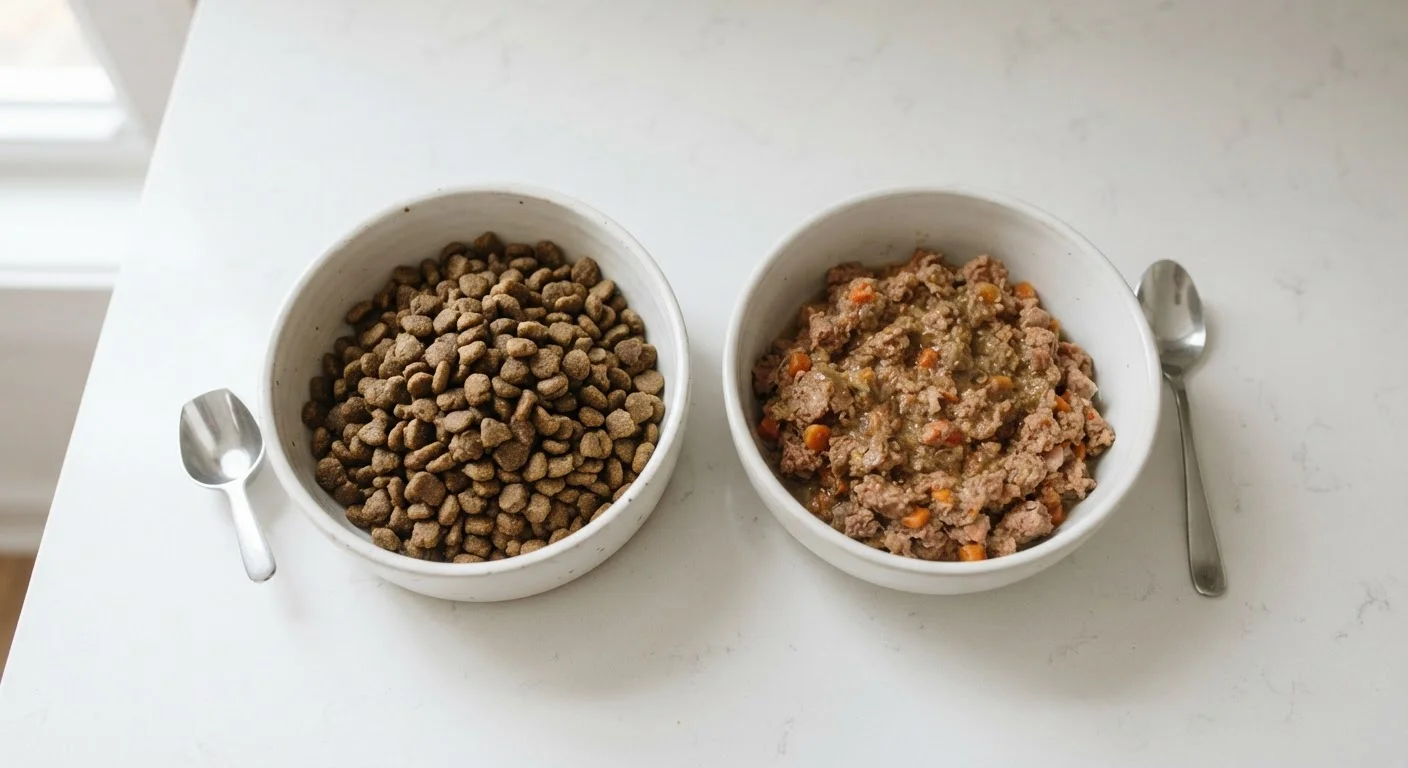
The single most meaningful distinction between dry kibble and wet food is water content. Kibble is manufactured through a process called extrusion that removes almost all moisture, leaving a final product that is typically less than 10% water. Wet food, by contrast, is cooked and sealed with its liquid intact, resulting in a moisture content of 70-80% in most formulations.
This difference has real physiological implications. Cats, in particular, evolved as desert animals with a low thirst drive and are poorly adapted to seeking out supplemental water. A diet based exclusively on dry kibble may leave many cats in a state of mild, chronic under-hydration - a factor that veterinary nutritionists often associate with higher rates of feline lower urinary tract disease (FLUTD). Dogs are somewhat better at self-regulating water intake, but pets with kidney disease, diabetes, or urinary crystal issues may also benefit from the hydration boost wet food provides.
When evaluating nutritional content, it is important to compare foods on a dry matter basis - that is, removing the moisture from the equation. A wet food that appears lower in protein than a kibble may actually be nutritionally comparable once water is excluded from the calculation. Many pet owners miss this when reading labels. For a practical guide on interpreting what labels actually mean, see our article on pet food marketing myths.
| Criterion | Dry Kibble | Wet Food |
|---|---|---|
| Moisture Content | ~10% or less | 70-80% |
| Cost per Calorie | Generally lower | Generally higher |
| Shelf Life (opened) | Weeks (sealed bag) | 1-2 days refrigerated |
| Caloric Density | High - less volume needed | Lower - larger volumes required |
| Palatability | Moderate for most pets | Higher aroma and appeal |
| Dental Health Benefit | Some mechanical plaque reduction | Minimal mechanical benefit |
| Best for Hydration | No - water must be supplemented | Yes - supports fluid intake |
| Ease of Portioning | Simple to measure and store | Requires refrigeration after opening |
Caloric Density, Cost, and Practicality
Dry kibble is considerably more calorically dense than wet food by volume, meaning smaller amounts are needed to meet a pet's daily energy requirements. This contributes directly to its cost advantage: on a per-calorie basis, kibble is almost always less expensive than wet food. Shelf life is another practical benefit - an unopened bag of kibble can last months, whereas wet food, once opened, must be refrigerated and used within a day or two.
Wet food's higher price point reflects both packaging costs and higher water weight. For multi-pet households or owners managing tight budgets, relying on wet food exclusively can become expensive. A common strategy - validated by many veterinary nutritionists - is mixing kibble and wet food. This can improve hydration and palatability while keeping costs manageable, provided both products are complete and balanced as defined by AAFCO (the Association of American Feed Control Officials).
70-80%
Typical moisture content of wet pet food
Compared to less than 10% in dry kibble, making wet food a meaningful source of dietary hydration for cats and dogs.
~50%
Estimated cats fed dry-only diets
Veterinary nutritionists note that many cats on exclusively dry diets may consume less total daily water than is considered optimal for urinary tract health.
3-4x
Approximate cost difference per calorie
Wet food commonly costs several times more per calorie than kibble, a factor that significantly affects long-term feeding budgets, especially for larger dogs.
Before switching formats or combining diets, it is worth consulting your veterinarian and reviewing our practical pet food evaluation checklist to ensure your chosen products meet nutritional adequacy standards for your pet's life stage.
Life Stage, Health Conditions, and When the Choice Matters Most
Neither format is universally superior - context is everything. For kittens and puppies, energy density matters greatly; some wet foods may not provide sufficient calories in small volumes for rapidly growing animals. Most veterinary guidelines recommend life-stage appropriate formulations, whether wet or dry, confirmed by AAFCO nutritional adequacy statements.
Senior pets often benefit from wet food's softer texture, especially if they have dental disease, reduced jaw strength, or diminished sense of smell that makes highly palatable food more appealing. Pets with chronic kidney disease are frequently transitioned to wet food to support kidney function through increased fluid intake - though any dietary change for a health condition should be guided by a veterinarian.
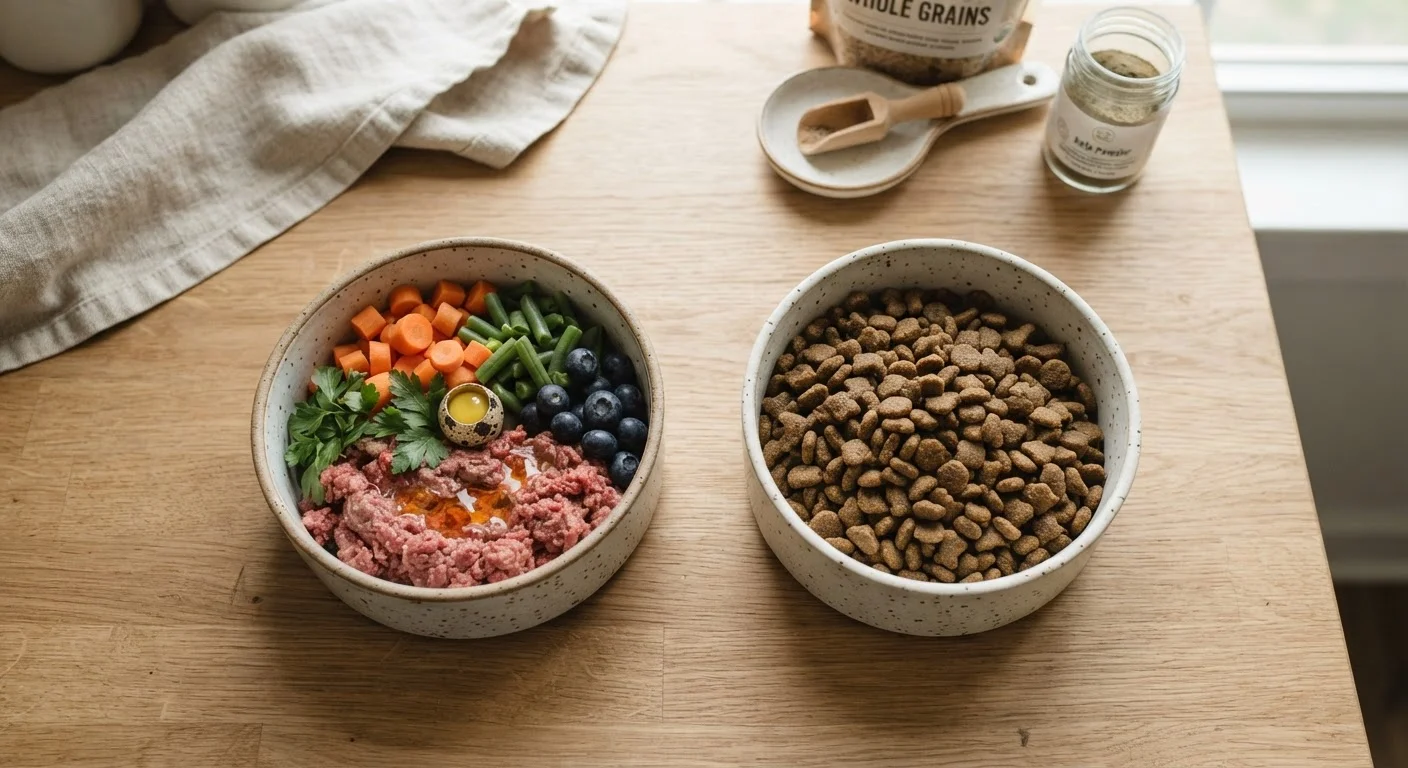
For broader context on how kibble and wet food compare to other feeding approaches, the raw diet versus commercial food comparison and our overview of homemade versus commercial pet food explore the wider landscape of pet feeding options. Our Pet Health & Wellness hub also offers practical guidance for keeping pets thriving at every life stage.
This article is for general informational and educational purposes only and does not constitute veterinary or medical advice. Always consult a qualified veterinarian before making significant changes to your pet's diet, especially for animals with known health conditions.