
What the Guaranteed Analysis Panel Actually Is
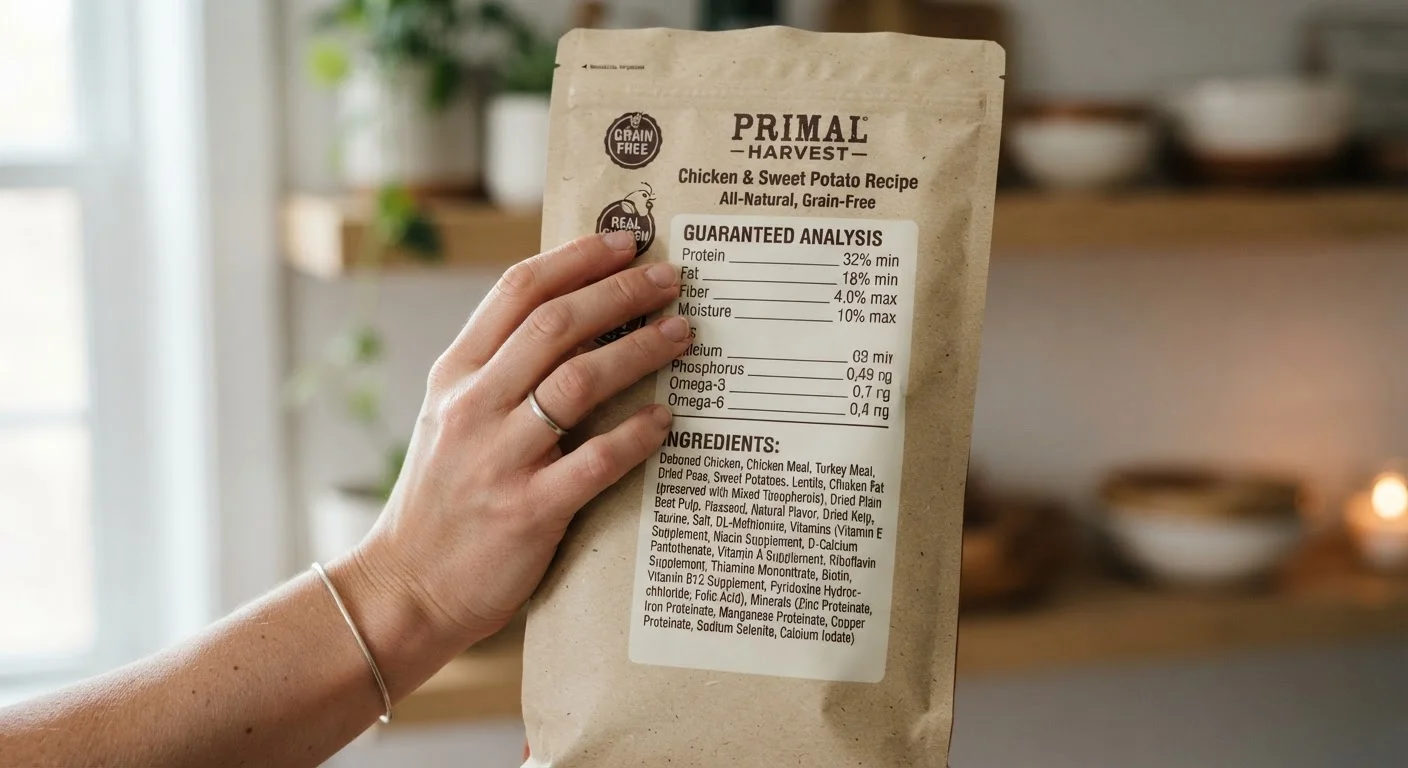
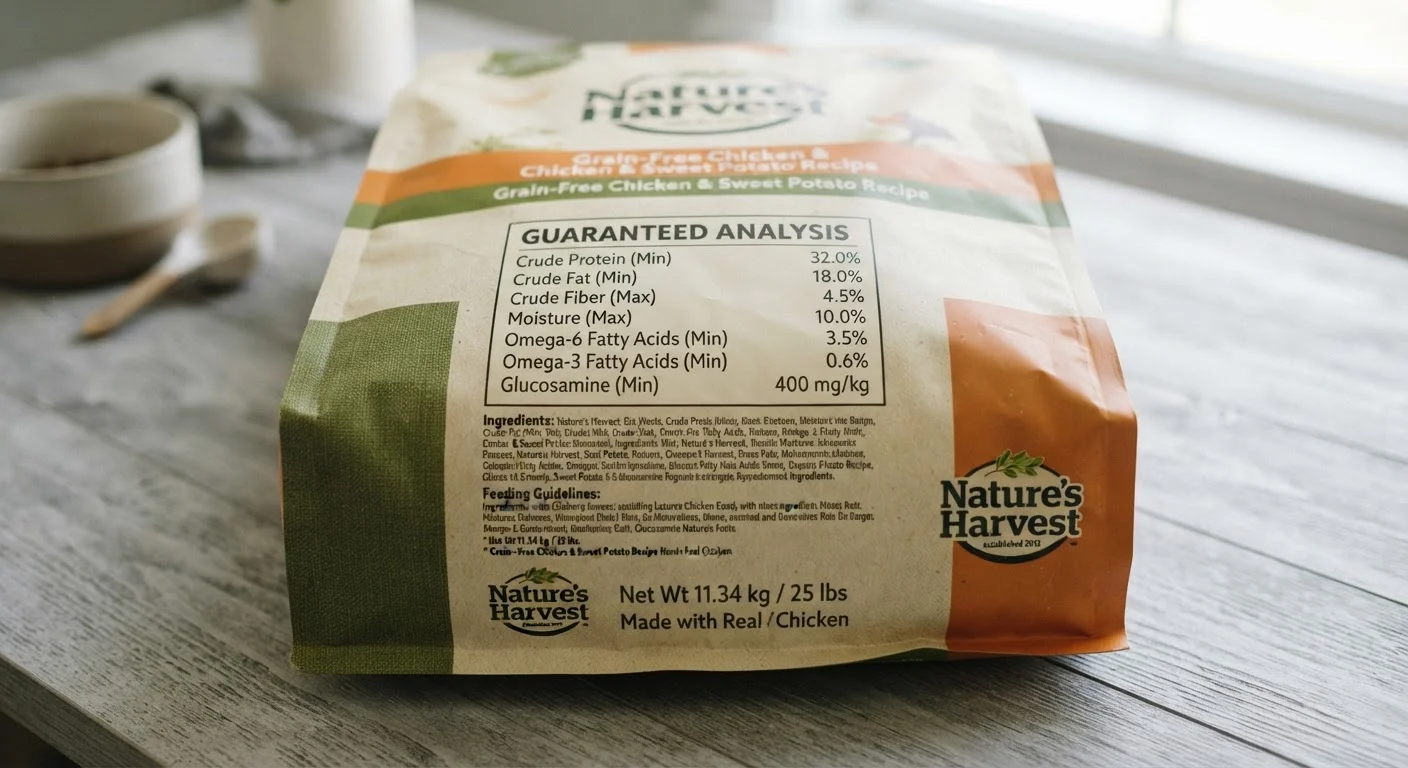
Every commercially sold pet food in the United States must include a Guaranteed Analysis (GA) panel - a standardized section on the packaging that discloses minimum or maximum percentages of four core nutrients: crude protein, crude fat, crude fiber, and moisture. The panel is regulated under guidelines from the AAFCO, the body that establishes model pet food regulations adopted by most U.S. states.
The word "crude" refers to the method of laboratory measurement, not quality. Crude protein, for example, is estimated by measuring total nitrogen content - it does not confirm how digestible or bioavailable that protein actually is. Understanding this distinction prevents common misreadings of the numbers.
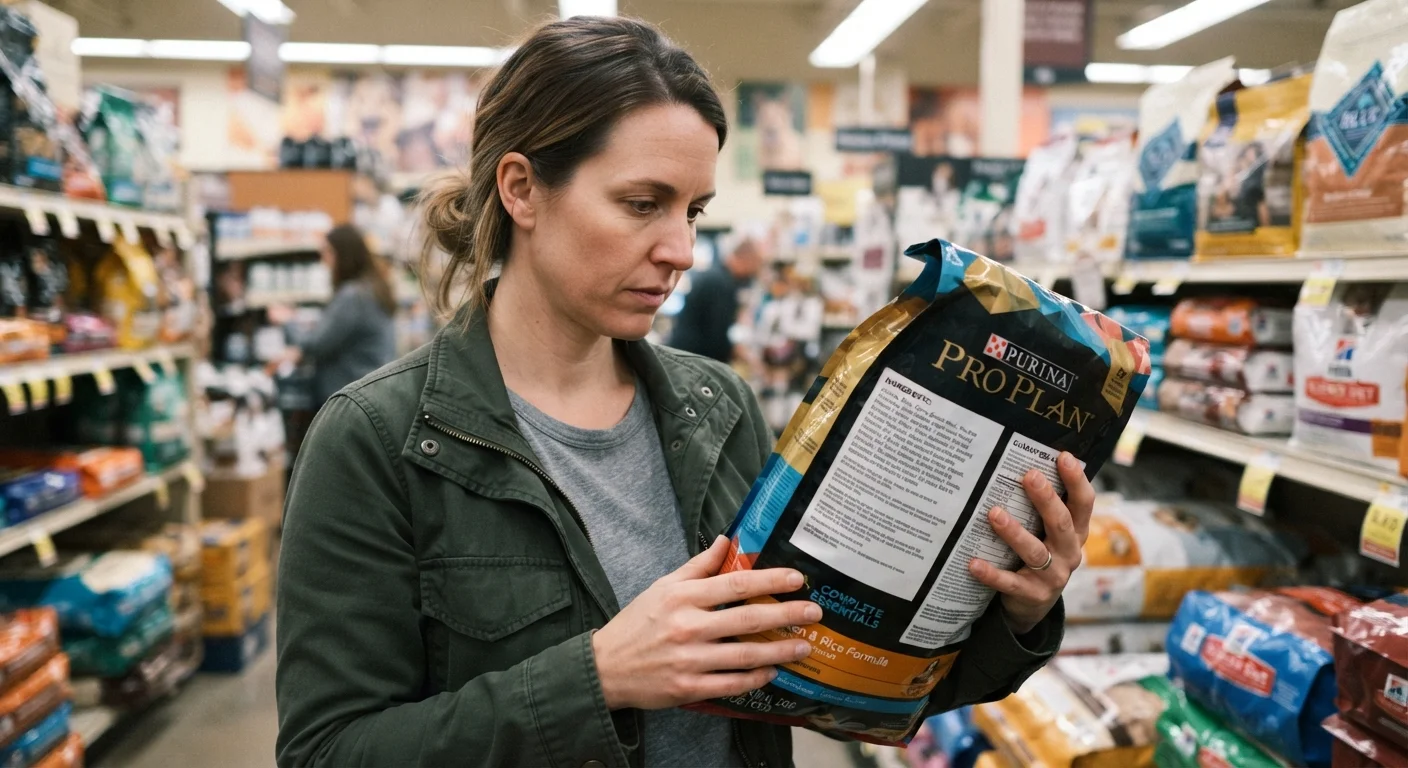
The GA panel works alongside - not instead of - the ingredient list. For a fuller picture of what the label is telling you, see our complete guide to decoding pet food labels.
| Regulated by | AAFCO model regulations (adopted by most U.S. states) |
| Required nutrients listed | Crude protein (min), crude fat (min), crude fiber (max), moisture (max) |
| Typical dry kibble moisture | 10-12% |
| Typical wet food moisture | 75-82% |
| Protein figure type | Minimum (floor) - food may contain more |
| Fiber figure type | Maximum (ceiling) - food may contain less |
Breaking Down Each Guaranteed Nutrient
Crude Protein (minimum %) - A floor value: the food contains at least this much protein. Dogs generally require a minimum of 18% protein on a dry matter basis for maintenance; cats, as obligate carnivores, require higher levels. Protein sourcing matters too - animal-derived proteins typically offer a more complete amino acid profile for carnivores than plant-derived alternatives.
Crude Fat (minimum %) - Also a floor. Fat provides concentrated energy and is essential for fat-soluble vitamin absorption and skin health. High-fat formulas are not inherently superior; the appropriate level depends on your pet's life stage, activity, and health status.
Crude Fiber (maximum %) - A ceiling value: the food contains no more than this much fiber. Note that this figure only captures insoluble fiber and does not reflect prebiotic or fermentable fiber content, which can matter for gut health.
Moisture (maximum %) - Also a ceiling. Dry kibble typically shows 10-12%; wet foods often show 75-82%. This single figure has the largest effect on how all other percentages compare across food types.
Guaranteed Analysis (GA)
A mandatory panel on U.S. pet food packaging that lists minimum or maximum percentages of crude protein, crude fat, crude fiber, and moisture. It is regulated under AAFCO model guidelines.
Crude Protein
A laboratory estimate of total protein content based on nitrogen measurement. The term 'crude' reflects the measurement method, not quality or digestibility.
Dry Matter Basis (DMB)
A calculation that removes moisture from nutrient percentages so foods with different water content - such as kibble versus canned - can be compared on equal terms.
As-Fed Basis
Nutrient percentages as they appear on the label, including all moisture. These figures are useful for feeding calculations but not for cross-format comparisons.
AAFCO
The Association of American Feed Control Officials - a non-governmental body whose model regulations, adopted by most U.S. states, govern pet food labeling, nutrient profiles, and feeding trial standards.
Crude Fiber
A maximum-value measurement of insoluble fiber in a pet food. It does not capture fermentable or prebiotic fiber, which may also influence digestive health.
How to Compare Foods Fairly: Dry Matter Basis
Comparing a wet food at 10% protein to a dry kibble at 28% protein is misleading because wet food contains far more water. To make a valid comparison, convert both to a dry matter basis (DMB) by removing the moisture from the equation.
Formula: Divide the nutrient percentage by (100 minus the moisture percentage), then multiply by 100.
Example: A wet food with 10% protein and 78% moisture has a dry matter protein of: 10 ÷ (100 − 78) × 100 = 45.5% DMB - considerably higher than the as-fed label suggests.
This calculation applies equally to fat and fiber. Always run the math before concluding one food is nutritionally richer than another. For broader context on evaluating a new diet, our practical pet food evaluation checklist walks through the full process.
Calorie Content Is Voluntarily Disclosed
AAFCO recommends - but does not universally require - that pet food labels include a calorie statement expressed as kilocalories per kilogram (kcal/kg) and per common household measure. If caloric density matters for managing your pet's weight, look for this statement near the GA panel or on the manufacturer's website. If it's absent, contact the manufacturer directly.
What the Panel Doesn't Tell You
The GA panel has real limitations. It does not disclose:
- Digestibility - how much of a nutrient your pet can actually absorb and use
- Amino acid profile - whether protein sources supply all essential amino acids in adequate ratios
- Specific fat types - the ratio of omega-3 to omega-6 fatty acids is not captured
- Caloric density - some labels include a voluntary calorie statement (kcal/kg), but it is not required on all foods
- Micronutrient levels - vitamins, minerals, and trace elements are absent from the GA panel entirely
Because the panel is intentionally minimal, marketing claims on the front of the bag often fill the gap - and not always accurately. Our pet food marketing myths explainer covers the most common label claims that don't hold up to scrutiny.
For general pet health and wellness guidance, including how nutrition fits into your pet's overall care, consult a licensed veterinarian or board-certified veterinary nutritionist - especially if your pet has a diagnosed health condition requiring a therapeutic diet.
This article provides general nutritional education and is not a substitute for personalized veterinary advice. Always consult a qualified veterinarian for guidance specific to your pet's health needs.