
Why Abrupt Food Changes Cause Problems
A pet's gastrointestinal tract harbors a complex community of microorganisms - collectively called the gut microbiome - that are calibrated to the specific ingredients, fiber types, and protein sources in their current diet. When the food changes overnight, the microbial population has to rapidly adapt to new substrates, and that adjustment frequently produces gas, loose stools, or vomiting. This is not a sign of a bad food; it is a predictable biological response to change.
Different foods also vary substantially in fat content, fiber levels, and caloric density. A sudden jump from a low-fat senior formula to a higher-fat performance diet, for example, stresses digestive enzyme production in ways a gradual shift would not. Understanding this makes the transition schedule below feel less arbitrary and more like sound physiology.
It is also worth noting that digestive upset from a rushed transition is sometimes mistaken for a food intolerance or allergy, leading owners to cycle through multiple diets unnecessarily. If you are investigating a genuine dietary sensitivity, speak with your veterinarian - a proper elimination diet trial requires a controlled protocol that goes beyond a standard food switch. You may also find it useful to read about well-intentioned habits that can quietly harm your pet's health before making further dietary decisions.
Cats Are Especially Vulnerable to Abrupt Changes
Cats that stop eating entirely - even for two to three days - are at risk for hepatic lipidosis (fatty liver disease), a serious and potentially life-threatening condition. If a cat refuses the new food at any point during the transition, revert immediately to the previous food and consult a veterinarian before proceeding. Never withhold food to encourage a picky cat to accept a new diet.
What You Need Before You Start
A successful transition requires two things above all else: enough of both foods to last the full transition period, and a clear sense of your pet's normal baseline. Know what your pet's typical stool looks like, how enthusiastically they normally eat, and whether they have any pre-existing digestive sensitivities. This baseline is what lets you distinguish a genuine reaction from routine variation.
What you will need
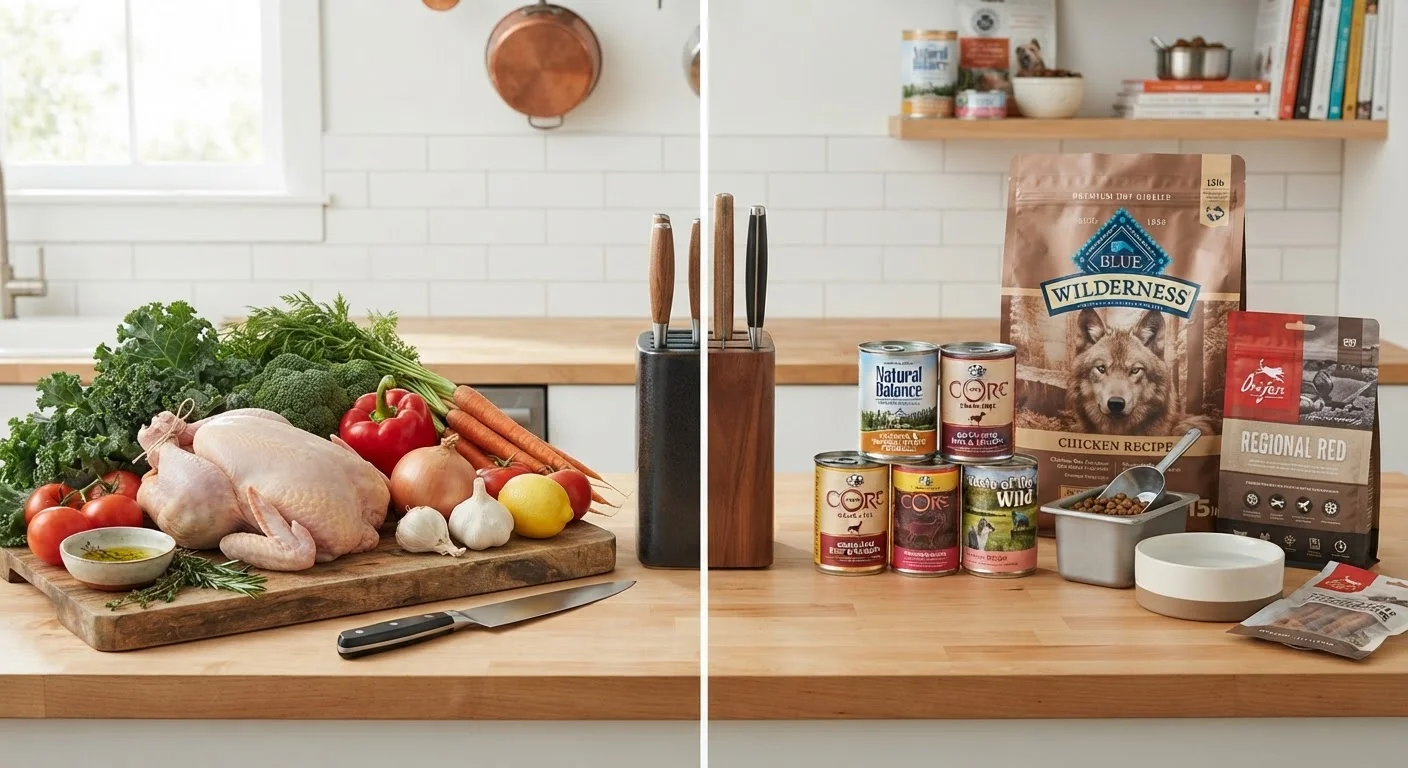
If you are switching because you are exploring a fundamentally different feeding philosophy - such as moving toward raw or home-prepared diets - the nutritional stakes are higher and the planning more involved. Our article on homemade vs. commercial pet food outlines what nutritional completeness actually requires in those contexts.
Digital kitchen scale
Allows precise measurement of old-to-new food ratios by weight, which is more accurate than volume.
Measuring cup (pet-appropriate)
Used to portion out daily food amounts when a scale is not available.
Transition tracking notebook or phone notes app
Records daily ratios and any observed symptoms to help identify patterns or issues.
The 7-10 Day Transition Schedule
The steps below reflect the gradual ratio-based approach that veterinary nutritionists and general practitioners widely recommend for healthy adult dogs and cats. Puppies, kittens, seniors, and pets with health conditions may need a slower, extended version of this protocol - ask your vet for specific guidance.
Verify the New Food Is Appropriate for Your Pet
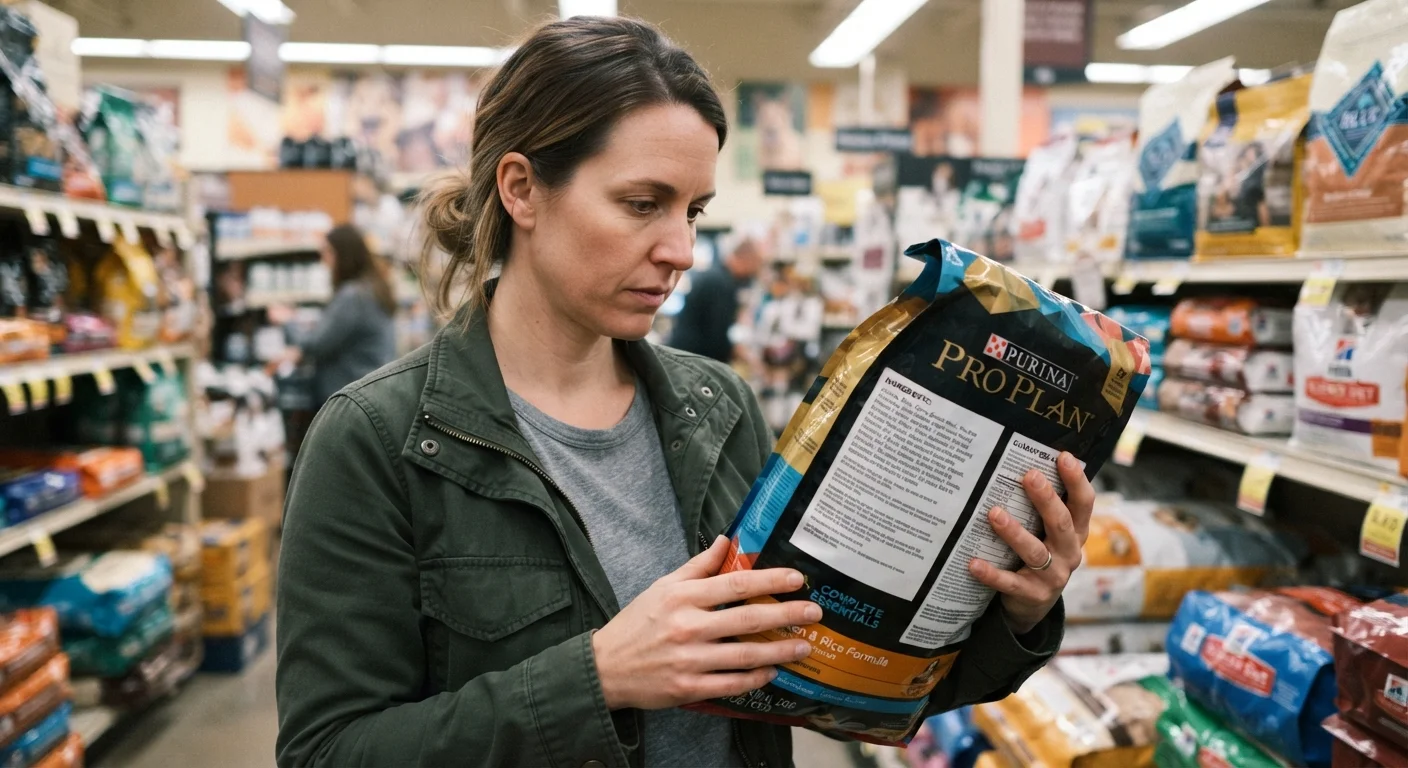
Before mixing a single kibble, confirm the new food carries an AAFCO nutritional adequacy statement appropriate for your pet's life stage - puppy or kitten, adult, senior, or all life stages. Check that the protein sources, caloric density, and formulation match your pet's size, breed, and any health considerations your vet has flagged. Our practical checklist for evaluating a new pet food walks through these label checks in detail before you commit to a purchase.
Establish Your Baseline Portion
Measure your pet's typical daily feeding amount using a scale or measuring cup. This total becomes your working figure for calculating transition ratios. Avoid estimating by eye - even a consistent 10-15% overpour each meal adds up to meaningful caloric excess over a week, which can confuse your assessment of how well the transition is going.
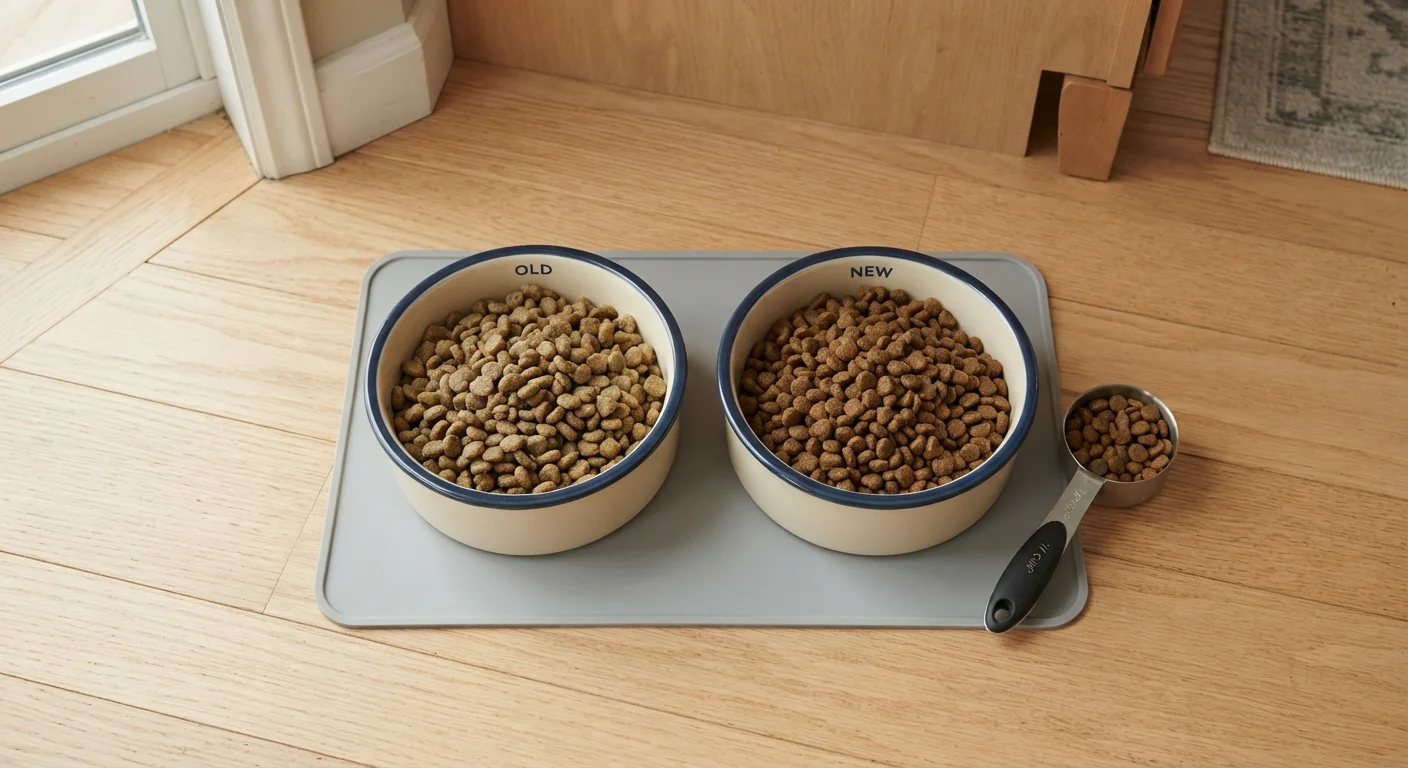
Days 1-3: Start at 75% Old, 25% New
For the first three days, mix approximately three-quarters of the daily portion from the current food with one-quarter from the new food. Serve this ratio at every meal - consistency across meals matters more than hitting an exact percentage. Monitor stool quality: well-formed stools with no significant change from baseline suggest your pet is tolerating the shift well.
Days 4-6: Move to 50% Old, 50% New
If your pet showed no adverse signs in the first phase, shift to an equal split. This midpoint is often where mild digestive changes - slightly softer stools or brief flatulence - first appear. These are generally normal as gut bacteria adjust. If symptoms are mild and improving, continue at this ratio. If they worsen or persist beyond 48 hours, hold at this ratio for an additional two to three days before moving forward.
Days 7-9: Shift to 25% Old, 75% New
With successful tolerance at the halfway mark, reduce the old food to roughly a quarter of the daily portion. Continue monitoring stool consistency, energy levels, and appetite. A healthy pet at this stage should show minimal digestive disruption. Pets with known sensitive digestion may benefit from spending an extra two to three days at this ratio before completing the switch.
Day 10 Onward: Feed 100% New Food
By day 10, the transition to the new food is complete for most healthy adult pets. Continue observing stool quality, coat condition, energy, and body weight over the following two to four weeks, as some nutritional differences - particularly in fat or fiber content - take time to fully manifest. If your pet's condition raises any concerns, consult your veterinarian rather than reverting on instinct; what looks like a food problem may sometimes have another cause. For ongoing guidance on your pet's overall health, the Pet Health & Wellness hub covers a wide range of monitoring and care topics.
Keep a Simple Transition Log
Jot down the daily ratio of old to new food and note any changes in stool consistency, appetite, or energy. A brief written record - even just a few notes on your phone - makes it far easier to identify exactly when a problem started and gives your vet useful information if you need to call for advice.
Recognizing When the Transition Isn't Working
Mild, transient digestive changes are expected and usually self-resolve within a day or two at any given ratio. The signals that warrant pausing or reversing are more persistent or severe: vomiting that occurs at multiple consecutive meals, diarrhea lasting more than 48 hours, visible blood in stool or vomit, significant lethargy, or a complete refusal to eat.
When to Stop and Call Your Vet
If your pet experiences bloody stool, persistent vomiting lasting more than 24 hours, lethargy, or complete food refusal for more than two days, stop the transition and contact your veterinarian promptly. These symptoms go beyond normal adjustment and may indicate an underlying condition, a food intolerance, or an ingredient that does not agree with your specific animal. Do not try to push through severe symptoms without professional guidance.
Skin reactions - increased scratching, redness, or hives - appearing within days of starting the new food can suggest an ingredient sensitivity and should be evaluated by a veterinarian. These are distinct from digestive symptoms but equally worth taking seriously. Our guide on physical changes in pets that warrant a vet visit can help you determine which observations need prompt attention.
This article is for general informational purposes only and is not a substitute for personalized veterinary advice. Always consult a qualified veterinarian regarding your individual pet's health, diet, and medical needs.