
Where the Phrase Comes From
When you see 'complete and balanced' on a pet food package, it reflects a specific regulatory standard - not a manufacturer's opinion. The claim is governed by guidelines developed by the AAFCO, a nonprofit organization whose model regulations are adopted (with variations) by individual U.S. states. AAFCO does not directly approve or certify individual products, but it publishes the nutrient profiles that qualifying foods must meet.
The phrase must appear alongside what's called a nutritional adequacy statement - a sentence on the label that specifies which life stage the food is appropriate for and how the manufacturer substantiated the claim. Without that statement, a food cannot legally carry the 'complete and balanced' designation in states that have adopted AAFCO guidelines.
For a broader understanding of how this fits into everything else on a label, see what pet food labels actually tell you.
The Two Paths to the Claim
Manufacturers can qualify for the 'complete and balanced' designation through one of two routes:
- Nutrient profile formulation: The food is formulated on paper to contain nutrients at or above AAFCO's minimum levels (and below any established maximums). Lab analysis is typically used to verify the finished product. This is the most common approach.
- Feeding trial: The food is fed to a group of animals for a defined period following AAFCO protocols. Animals are monitored for health markers such as weight, coat condition, and blood values. Foods that pass carry a statement referencing 'animal feeding tests.'
Feeding trials are generally considered a more rigorous real-world test - but they are shorter in duration than a pet's lifetime and involve relatively small animal groups, so they don't capture every possible nutritional inadequacy. Neither method is a guarantee of optimal nutrition for every individual pet.
~26 weeks
Duration of an AAFCO feeding trial
AAFCO's feeding trial protocol requires animals to consume the test food for a minimum of 26 weeks - a fraction of a typical pet's lifespan.
8 animals
Minimum group size for a dog feeding trial
AAFCO protocols require a minimum of eight dogs at the start of a feeding trial, with at least six completing it - a small sample by epidemiological standards.
Majority
Homemade recipes found nutritionally deficient
Multiple peer-reviewed studies evaluating published homemade pet food recipes have found that the majority are deficient in one or more essential nutrients.
What the Claim Does Not Tell You
Meeting AAFCO nutrient minimums is a floor, not a ceiling. The standard confirms that measurable nutrients are present in sufficient quantities, but it does not address:
- Bioavailability: A nutrient can be present in a food yet poorly absorbed. The source and form of a nutrient influence how well a pet's body actually uses it.
- Ingredient quality: Two foods can both be 'complete and balanced' while using very different ingredient sources. The claim is agnostic about quality.
- Long-term health outcomes: AAFCO feeding trials run for 26 weeks - not a pet's full lifespan. Subtle deficiencies or excesses may not manifest within that window.
- Individual variation: Pets with medical conditions, breed-specific predispositions, or unusual metabolism may have needs that differ from population-level nutrient profiles.
Understanding these gaps helps put the label in proper context. For a detailed walkthrough of other label elements, decoding pet food labels covers guaranteed analysis, ingredient order, and feeding guidelines.
Check the Nutritional Adequacy Statement
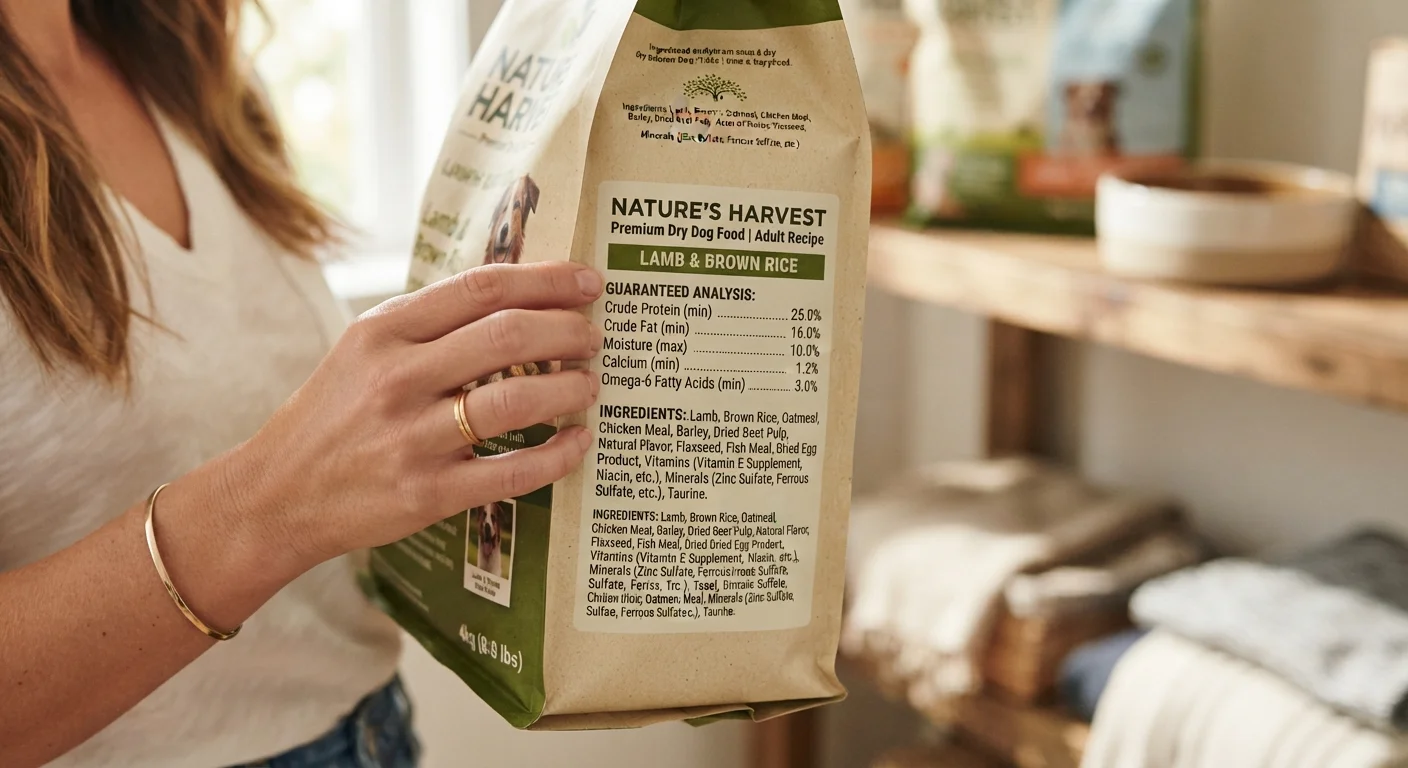
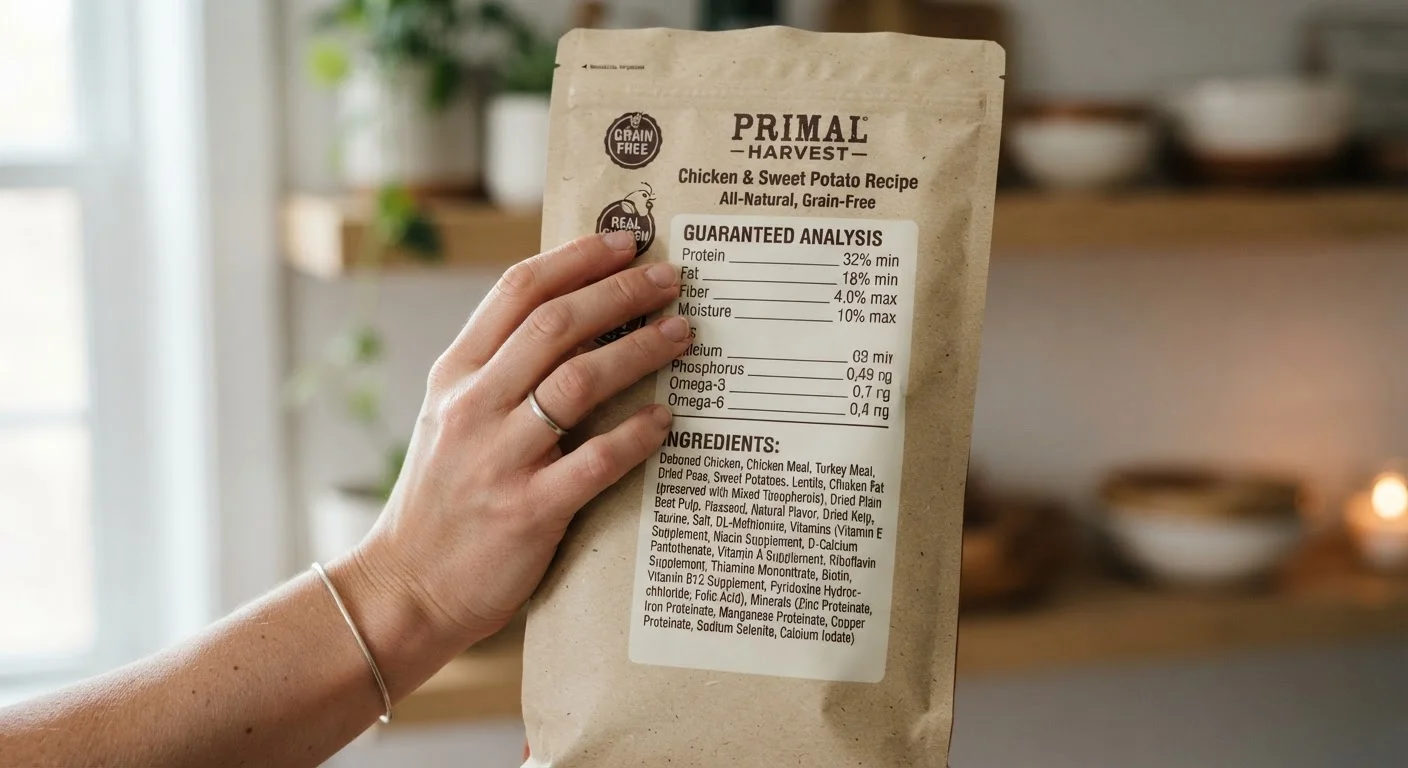
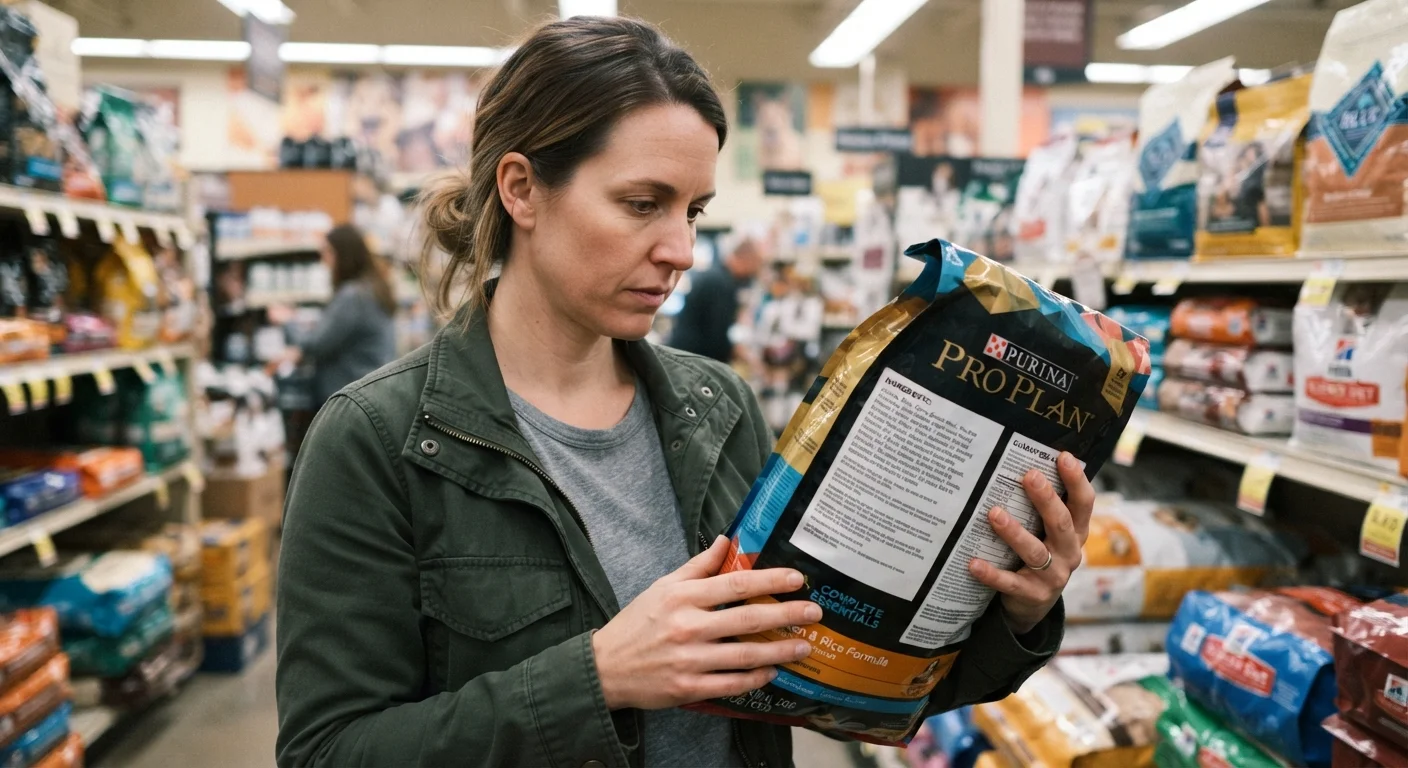
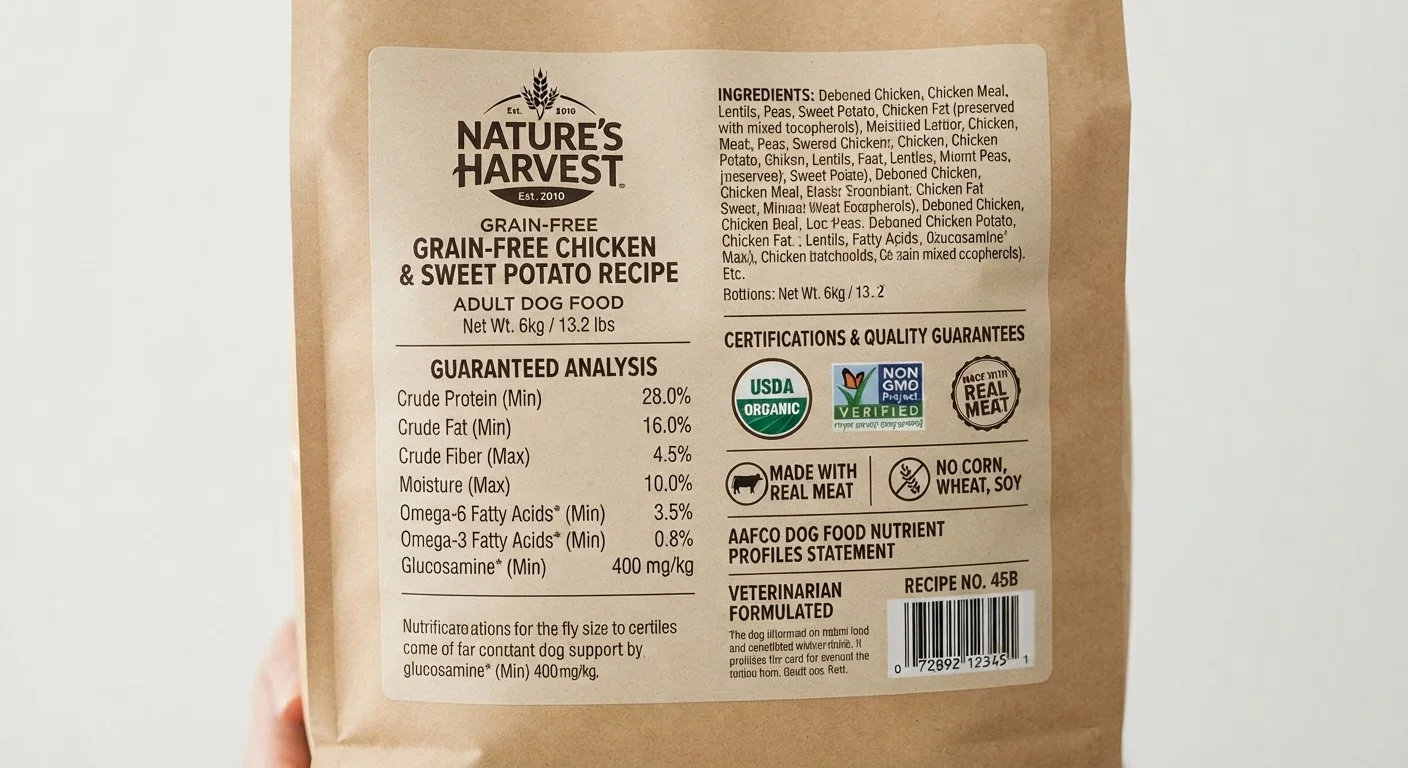
Look for the full nutritional adequacy statement on the back or side panel of any pet food - not just the front-of-pack claim. It tells you the life stage the food is intended for and whether it was substantiated by feeding trial or nutrient-profile formulation. This single sentence is one of the most informative lines on the entire label.
Life Stage Matters - So Does Context
Every 'complete and balanced' claim must specify a life stage. AAFCO currently recognizes two main categories for dogs and cats: growth and reproduction (which includes pregnancy, lactation, and the young animal stage) and adult maintenance. A food labeled for adult maintenance is not nutritionally appropriate for a growing puppy or a pregnant animal - the minimum nutrient thresholds are different.
Foods labeled 'for all life stages' meet the growth and reproduction standard, which is the most nutrient-dense profile. This makes them technically suitable for any life stage, though they are not inherently superior to a properly formulated adult maintenance diet for a healthy adult pet.
Life stage labeling is one of the most practical checkpoints when evaluating a new food. For a structured approach, see the practical checklist for evaluating a new pet food.
Homemade diets, which rarely carry any AAFCO-backed nutritional adequacy statement, present a particular challenge. Most recipes - even those from seemingly reliable sources - are nutritionally incomplete. Homemade vs. commercial pet food explores what owners need to understand before going that route. And if you've encountered trends like grain-free or raw feeding framed as superior alternatives, pet food marketing myths addresses the evidence behind those claims directly.