A comprehensive checklist covering documents, bookings, insurance, packing, and logistics to verify before you leave home.
Key Takeaways
Confirming documents, bookings, and insurance at least 72 hours before departure prevents last-minute scrambles.
Travel insurance gaps and expired documents are among the most avoidable causes of disrupted trips.
Home security, pet care, and financial access are easy to overlook until something goes wrong abroad.
Splitting critical documents between digital and physical copies adds a practical safety layer.
Health preparation - prescriptions, vaccinations, emergency contacts - deserves its own dedicated review.
Why a Pre-Departure Checklist Pays Off
Most travel disruptions trace back to something that could have been caught before leaving home - an expired passport, a missed visa requirement, a booking confirmation left on a home computer, or a bank card blocked by a fraud alert. A structured pre-departure review eliminates that category of problem almost entirely.
This checklist is designed for everyday travelers doing their own planning. It covers the six areas where oversights are most common: documents, bookings, insurance and finances, health and safety, packing, and home logistics. Work through it at least 72 hours before departure, not on the morning of your flight.
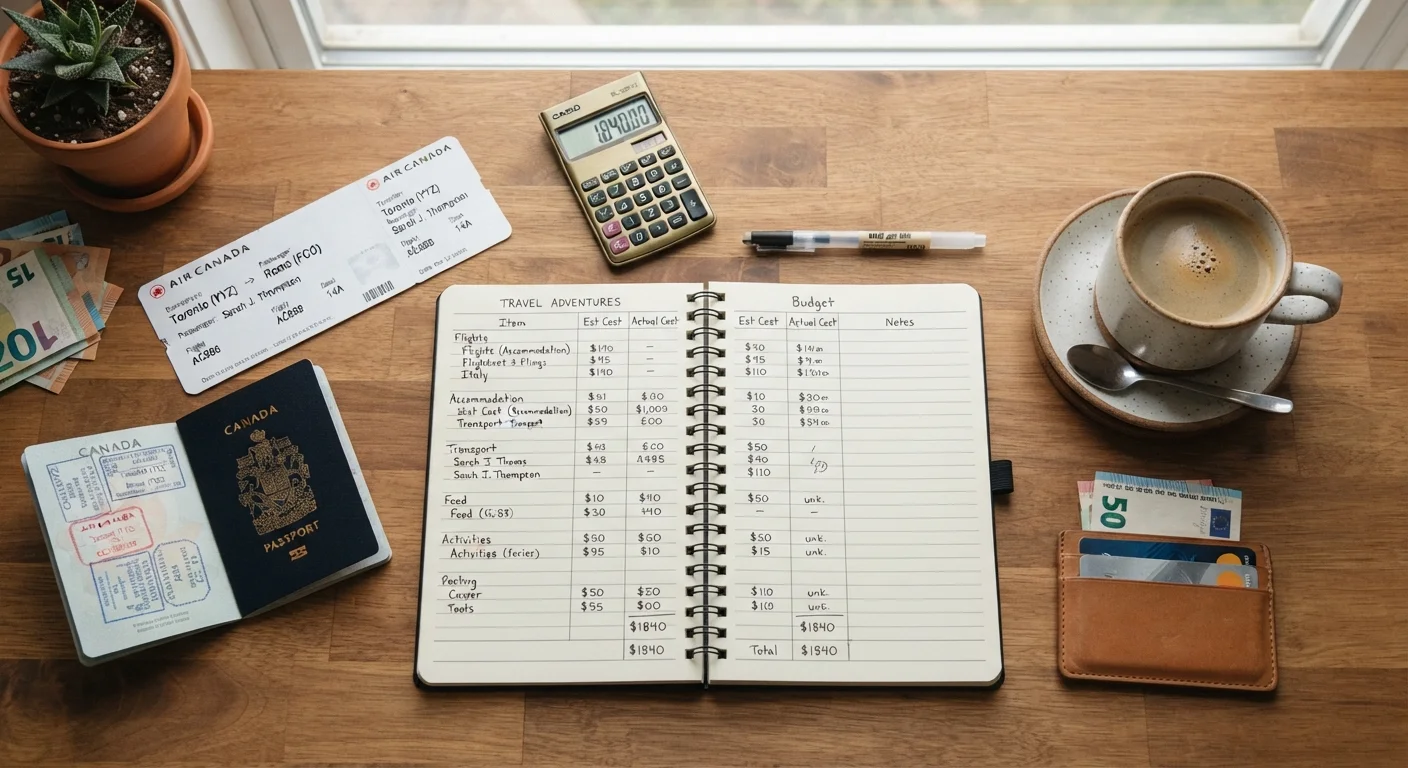
If you're still in the planning phase and want to make sure your budget is solid before committing to bookings, see our pre-trip budget checklist first. For health-specific preparation - vaccinations, prescriptions, and medical records - the pre-trip health prep checklist covers that ground in detail.
Do This 72 Hours Before Departure
The 72-hour window before departure is your last realistic opportunity to fix problems. Reconfirm all bookings, check your passport expiry, verify your travel insurance is active, and ensure someone at home has your itinerary and emergency contact list. Issues discovered at the airport check-in desk are far harder - and often far more expensive - to resolve.
What to Check and When
The six checklist groups below are ordered by how early you should address each category. Documents and bookings should be reviewed well in advance - ideally a week out - since fixing problems like visa applications or seat assignment errors takes time. Packing and home logistics can wait until 24-48 hours before departure.
Required
Official Government Travel Advisory Portal
Check current safety advisories and entry requirements for your destination before departure.
Required
Airline Mobile App
Access real-time flight status, gate changes, and mobile boarding passes without relying on printed documents.
Optional
Password Manager or Encrypted Notes App
Securely store digital copies of documents, policy numbers, and emergency contacts accessible offline.
Optional
Luggage Scale
Weigh bags at home to avoid overweight fees before reaching the airport check-in counter.
Use the priority labels as a triage guide: must items are non-negotiable and should be completed first; should items are strongly recommended and catch most of the remaining risk; nice-to-have items add convenience but won't make or break your trip.
Documents & Identity
Verify your passport is valid for at least six months beyond your return date - many countries enforce this rule at the border.Must
Confirm visa requirements for every country on your itinerary and apply or print approvals well in advance.Must
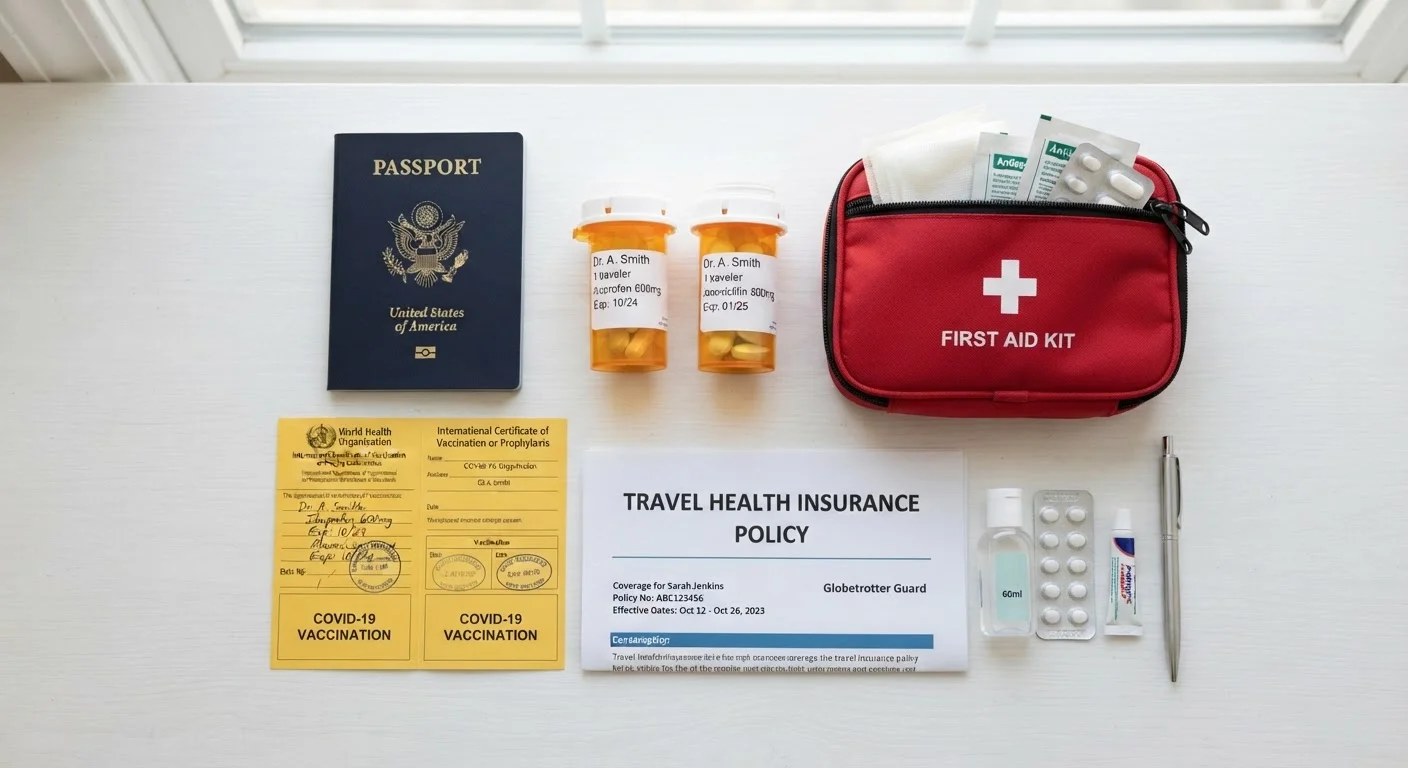
Make physical and digital copies of your passport, visa, travel insurance policy, and itinerary, and store them separately from the originals.Must
Check whether your destination requires an International Driving Permit if you plan to rent or drive a vehicle.Should
Bookings & Confirmations
Download or print confirmation emails for flights, hotels, tours, and transfers - do not rely solely on spotty roaming data.Must
Recheck flight times for any schedule changes issued after your original booking.Must
Confirm your seat assignments and any special meal requests are still reflected in your booking.Should
Verify hotel check-in times and cancellation policies in case your arrival is delayed.Should
Reconfirm any pre-booked tours, excursions, or transport connections, especially those with strict departure windows.Should
Insurance & Finance
Review your travel insurance policy to confirm it covers medical emergencies, trip cancellation, and baggage loss for your specific itinerary.Must
Notify your bank and credit card issuers of your travel dates and destinations to prevent fraud blocks on your accounts.Must
Carry a small amount of local currency for arrival expenses before you can access an ATM.Should
Identify the emergency contact numbers on the back of each card you're bringing in case of loss or theft abroad.Should
Check whether your credit card offers built-in travel protections - some cover rental car damage or delayed baggage at no extra cost.Nice to have
Health & Safety Prep
Pack enough prescription medication to cover your full trip plus several buffer days, and keep it in your carry-on.Must
Confirm required or recommended vaccinations for your destination are current - check with a travel health provider if unsure.Must
Save emergency contact numbers - including your country's nearest embassy or consulate - offline on your phone.Must
Pack a basic first-aid kit with pain relievers, antidiarrheals, antiseptic, and any personal health supplies.Should
Packing Essentials
Check baggage weight and size allowances for every flight segment - budget carriers often have stricter rules than the outbound flight.Must
Pack all liquids, gels, and aerosols in compliant containers and place them in a clear, resealable bag for security.Must
Bring the correct power adapter and voltage converter for your destination's outlets.Should
Pack a change of clothes and critical toiletries in your carry-on in case checked luggage is delayed.Should
Label luggage inside and out with your name, email address, and phone number.Nice to have
Home & Logistics
Arrange for mail collection, package holds, or a trusted neighbor to monitor your home while you're away.Should
Set lights and security systems, or ask someone to vary the appearance of your home to deter opportunistic break-ins.Should
Confirm pet care, plant watering, and any recurring house tasks are assigned and confirmed with whoever is covering.Must
Unplug non-essential appliances and check that stove, iron, and faucets are off before leaving.Should
Download offline maps, translation apps, or travel guides so they are accessible without mobile data.Nice to have
Visa Rules Change - Always Verify Officially
Visa requirements, processing times, and entry rules can change with little notice. Do not rely on third-party travel blogs or last year's information. Always check the official embassy or government immigration website for your destination country - and do so close to your departure date, not just when you first start planning.
Travel Insurance Fine Print Matters
Not all travel insurance policies cover the same events. Common exclusions include pre-existing medical conditions, adventure sports, and civil unrest. Read the policy document before you travel - not after something goes wrong - and call the insurer directly if any coverage area is unclear.
Once you're on the road, your preparation work continues. Our travel emergency plan guide walks through contingency protocols - contacts, document protocols, and decision frameworks - for when things go wrong abroad. And if your trip involves a long drive to the airport or a road trip component, the pre-drive safety check is worth running through separately before you get behind the wheel.
Travel Smarter Editorial Team is the collective byline for our editorial team and contributor network. Articles published under this byline or an editorial pen name are researched, written, and reviewed according to our editorial standards for clarity, consistency, and independence before publication.
The content provided on our blog site traverses numerous categories, offering readers valuable and practical information. Readers can use the editorial team’s research and data to gain more insights into their topics of interest. However, they are requested not to treat the articles as conclusive. The website team cannot be held responsible for differences in data or inaccuracies found across other platforms. Please also note that the site might also miss out on various schemes and offers available that the readers may find more beneficial than the ones we cover.