

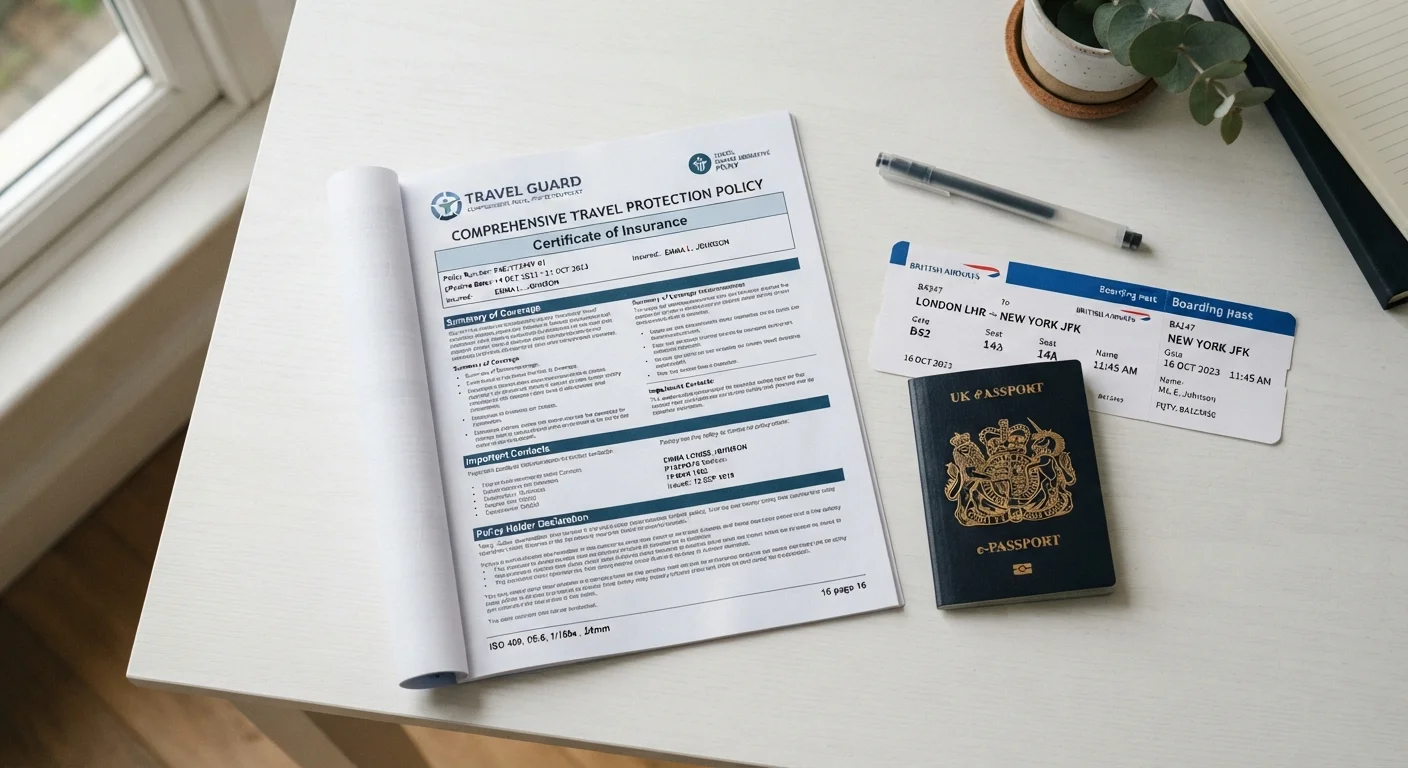
What Travel Insurance Is Designed to Do
Travel insurance exists to limit the financial damage when something specific goes wrong before or during a trip. It is not a catch-all safety net - it is a contract that pays out under defined circumstances. Understanding that distinction is the foundation for using it effectively.
Most comprehensive travel plans bundle several types of protection together:
- Trip cancellation and interruption: Reimburses prepaid, non-refundable costs if you cancel or cut a trip short for a covered reason.
- Emergency medical coverage: Pays for treatment when you're injured or fall ill abroad and your domestic health plan doesn't cover international care.
- Medical evacuation: Covers emergency transport to a suitable hospital or back home - often the most expensive risk travelers underestimate.
- Baggage loss or delay: Compensates for lost, stolen, or significantly delayed luggage up to the policy limit.
- Travel delay: Reimburses meals, lodging, and rebooking costs when a covered delay exceeds the policy's minimum hours threshold.
For a deeper look at what to expect when a medical situation arises abroad, see our practical guide to medical care abroad.
$50,000+
Typical cost of an international air ambulance
Medical evacuation costs vary widely by distance and destination; industry estimates frequently cite figures in the $50,000-$200,000 range for long-haul transports.
~30%
Travelers who purchased travel insurance pre-pandemic
US Travel Insurance Association data has historically indicated that roughly one in three leisure travelers purchased some form of travel protection before widespread disruptions increased awareness.
14-21 days
Typical window to buy pre-existing condition waiver
Most US travel insurers require the waiver to be purchased within 14 to 21 days of the initial trip deposit to be eligible; exact windows vary by policy.
Common Exclusions You Need to Know
The exclusions section of a travel policy is where most claim disputes originate. Insurers are specific about what they will not pay for, and the list is longer than most travelers expect.
Pre-existing Medical Conditions
A condition for which you sought treatment, received medication, or had symptoms within the policy's look-back period - typically 60 to 180 days - is generally excluded. A pre-existing condition waiver can override this, but it must be purchased promptly after your first trip deposit and only applies when the policy is bought within the insurer's specified window.
Change of Mind and Fear of Travel
Standard cancellation benefits do not cover deciding you no longer want to go, being nervous about a destination, or a travel advisory that falls short of a formal government warning at the level required by the policy. Cancel For Any Reason (CFAR) upgrades address this gap at an additional premium and with partial reimbursement caps.
Alcohol and Substance Use
Injuries or incidents that occur while a traveler is under the influence of alcohol or drugs are explicitly excluded by virtually every standard policy.
High-Risk and Adventure Activities
Motorized racing, mountaineering above certain elevations, skydiving, and similar activities are routinely excluded. If your trip involves adventure sports, verify whether the insurer offers a rider that covers the specific activities planned.
Known Events Before Purchase
If a hurricane has already been named or a political situation has already escalated before you buy your policy, coverage for those events will not apply. Insurance is designed to protect against unknown future risks, not events already in motion.
Buy Your Policy Early - Not at the Airport
Purchasing a policy close to your departure date dramatically reduces its usefulness. Time-sensitive benefits - including pre-existing condition waivers and Cancel For Any Reason upgrades - typically require purchase within days of your first trip payment. Buying early also ensures you're covered if something disrupts the trip before you even leave home.
How to Read a Policy Before You Buy
The summary of benefits is a marketing document. The policy certificate - sometimes called the certificate of insurance - is the legal contract. These two documents do not always tell the same story.
When reviewing a policy, focus on four specific sections:
- Definitions: Terms like "family member," "traveling companion," and "covered reason" have precise meanings that determine claim eligibility.
- Covered reasons: For cancellation and interruption benefits, these are explicitly listed. If your reason isn't on the list, the claim won't be paid under a standard policy.
- Exclusions: Read the full exclusion list, not a summary version. Note any exclusion that applies to your specific health history or planned activities.
- Coverage limits and sublimits: A policy may advertise $50,000 in medical coverage but cap evacuation at $20,000 or limit electronics claims to $500 per item.
It's worth noting that the belief travel insurance covers everything is one of the most common and costly travel safety myths travelers hold. Reading the actual contract closes that gap. For guidance on prioritizing coverage when budget is a factor, see what coverage actually matters on a budget.
When and How to File a Claim
Filing a successful claim is largely a documentation exercise. Insurers require evidence that the covered event occurred, that the loss is quantifiable, and that you followed the required notification procedures.
Build the habit of saving everything in real time: receipts, screenshots of delay notifications, hospital discharge paperwork, police reports for theft, and written confirmation from airlines. Many claims are denied not because the event wasn't covered, but because the traveler couldn't provide sufficient documentation after the fact.
Notification timelines also matter. Most policies require you to notify the insurer - or their 24-hour assistance line - promptly when a covered event occurs, particularly for medical situations. Seeking treatment first and notifying the insurer weeks later can complicate or void a claim.
This article provides general information about travel insurance concepts and is not a substitute for reading your specific policy documents or consulting a licensed insurance professional. Coverage terms, exclusions, and claim requirements vary by insurer and policy. Verify all entry requirements, health recommendations, and travel advisories with official government and provider sources before traveling.