
Decision-Making: Speed vs. Consensus
When you plan a trip alone, every decision is yours. You pick the destination, set the dates, choose accommodation, and adjust the itinerary in real time without consulting anyone. That autonomy compresses planning time considerably - a solo traveler can go from idea to booked flights in an afternoon.
Group planning introduces a consensus layer at every step. Agreeing on a destination among four or five people with different budgets, vacation calendars, and preferences can take weeks. A decision that takes a solo traveler ten minutes may require a group poll, follow-up messages, and a compromise nobody loves. If you're coordinating with more than three people, budget extra time for this phase - it's consistently where group trips stall. For a structured way to move through these stages, see our complete starter's walkthrough.
| Solo Trip Planning | Group Trip Planning | |
|---|---|---|
| Decision speed | Fast - one person decides | Slow - consensus required |
| Booking lead time needed | Shorter window viable | Earlier commitment required |
| Accommodation cost per person | Higher (single occupancy) | Lower when split across group |
| Itinerary flexibility | High - adjust anytime | Low - changes affect everyone |
| Coordination overhead | Minimal | Significant - grows with group size |
| Documentation complexity | Simple personal records | Shared docs essential |
| Conflict risk | None between travelers | Budget and preference clashes common |
Booking Windows and Flexibility
Solo travelers can book closer to departure with less risk. If a flight price drops, you can act immediately. If plans change, you're only renegotiating with yourself. This flexibility is genuinely valuable - it lets you time purchases around fare fluctuations and adjust for work or personal changes.
Group bookings require locking in dates earlier because availability for multiple seats, connecting rooms, or rental vehicles narrows faster. A group of six trying to book economy seats together on a popular route may find that window has closed by the time everyone confirms. The practical rule: the larger the group, the earlier you need to commit. This also affects accommodation - securing rooms that accommodate a group often means booking weeks or months out, particularly for vacation rentals that require minimum-night stays.
Lock In a Group Decision Deadline
Set a firm date by which all group members must confirm dates and destination - and communicate it clearly upfront. Open-ended group decisions tend to drift indefinitely, causing you to miss better availability and pricing windows. Two to three weeks is a reasonable window for most domestic trips; international trips may warrant more lead time given passport and visa considerations.
Costs: Who Pays What and When
Cost dynamics are where solo versus group planning diverge most sharply. Solo travelers pay single-occupancy rates, which are frequently higher per-night than shared rates. Transportation costs fall entirely on one person. There's no built-in mechanism to offset expenses.
Groups can split accommodation, transportation, and sometimes meals - reducing individual costs in categories where solo travelers pay full freight. A vacation rental divided among four people often costs less per person than a hotel room for one. However, that math only works if everyone pays on time and agrees on the split upfront. Money disagreements are among the most common sources of group travel friction, so establishing a shared payment method or cost-tracking document before booking is worth the effort. For broader budget structuring, our low-cost trip planning walkthrough covers how to structure expenses before you spend anything.
Itinerary Design: Personal Pace vs. Group Compatibility
A solo itinerary is built around one person's energy, interests, and pace. You can over-schedule a day or leave it blank without affecting anyone else. Overpacking your itinerary is still a risk, but recovering from it only requires your own recalibration.
Group itineraries must account for varying energy levels, different interests, and the physical reality that moving a group takes longer than moving one person. Buffer time - already important in solo travel - becomes non-negotiable in groups. Someone will be late, someone will need a longer lunch, and not everyone will want to do the same activity at the same hour. Building slack into each day isn't pessimism; it's how group trips stay enjoyable. See our guide on what every travel itinerary needs for a breakdown of the structural components that apply to both formats.
Communication and Documentation
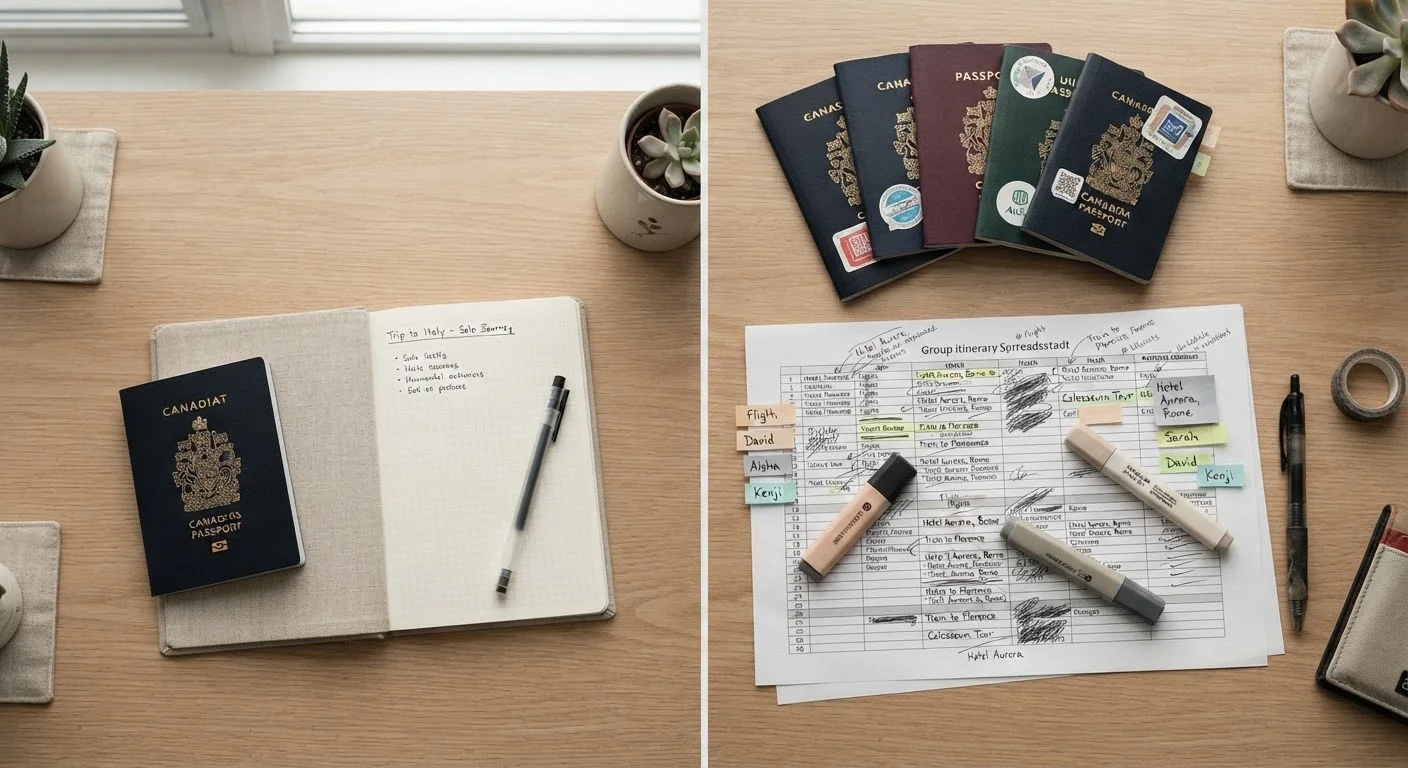
Solo travelers maintain their own records - one document, one calendar, one person responsible. Organization tools like spreadsheets or apps are helpful but optional. Our breakdown of digital vs. paper planning approaches covers what works for different travelers regardless of group size.
For groups, shared documentation is effectively required. Booking confirmations, payment records, packing lists, and emergency contacts need to be accessible to everyone - not just the person who organized the trip. A shared folder or collaborative document removes single points of failure and ensures that if the organizer's phone dies at the airport, the group still has what it needs. Assigning one person as the primary coordinator while distributing document access to all participants is a structure that tends to reduce friction without creating confusion about who's responsible for what.
Solo travelers planning independently should also consider safety documentation - sharing itineraries with a trusted contact at home is a straightforward habit worth building. For more on this, see solo travel safety habits that reduce risk without limiting the experience.