
The Core Items Every Travel Kit Needs
A travel first aid kit isn't about preparing for every conceivable emergency - it's about handling the minor issues that are statistically likely to happen: blisters, cuts, headaches, stomach upset, and minor allergic reactions. Build around those, then layer in destination-specific extras.
Wound Care
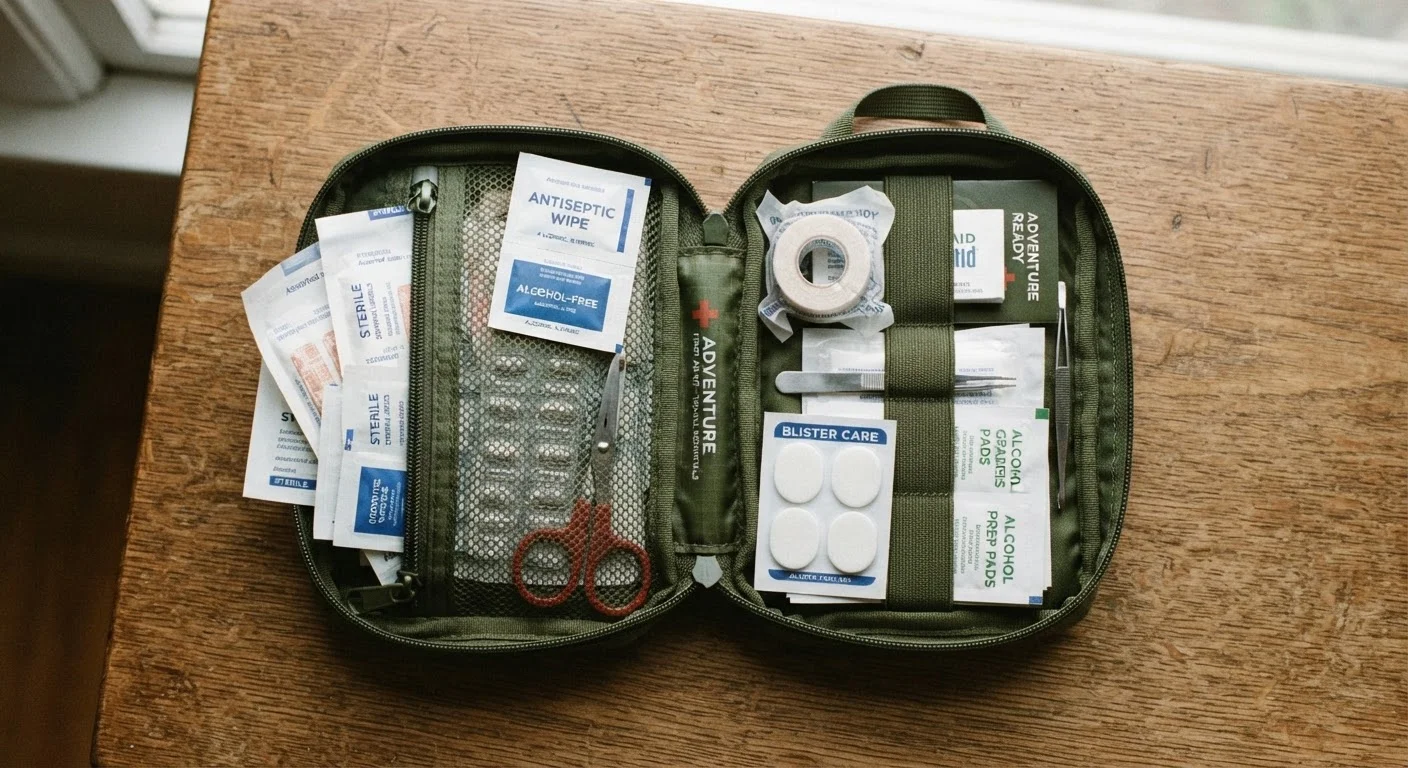
- Adhesive bandages in multiple sizes - blisters and minor cuts are the most common travel injuries
- Sterile gauze pads and medical tape for larger scrapes or wounds that need pressure
- Antiseptic wipes or solution (such as benzalkonium chloride or povidone-iodine) to clean wounds before dressing
- Blister treatment pads - foam or hydrocolloid types are notably more effective than standard bandages on friction blisters
Medications
- Pain reliever / fever reducer (acetaminophen or ibuprofen) - confirm appropriate options with your healthcare provider if you have existing conditions
- Antihistamine for mild allergic reactions, insect bites, or hay fever flares
- Antidiarrheal medication - particularly useful for international travel where foodborne illness risk is higher
- Oral rehydration salts (ORS) - underrated and highly effective for dehydration from heat, illness, or exertion
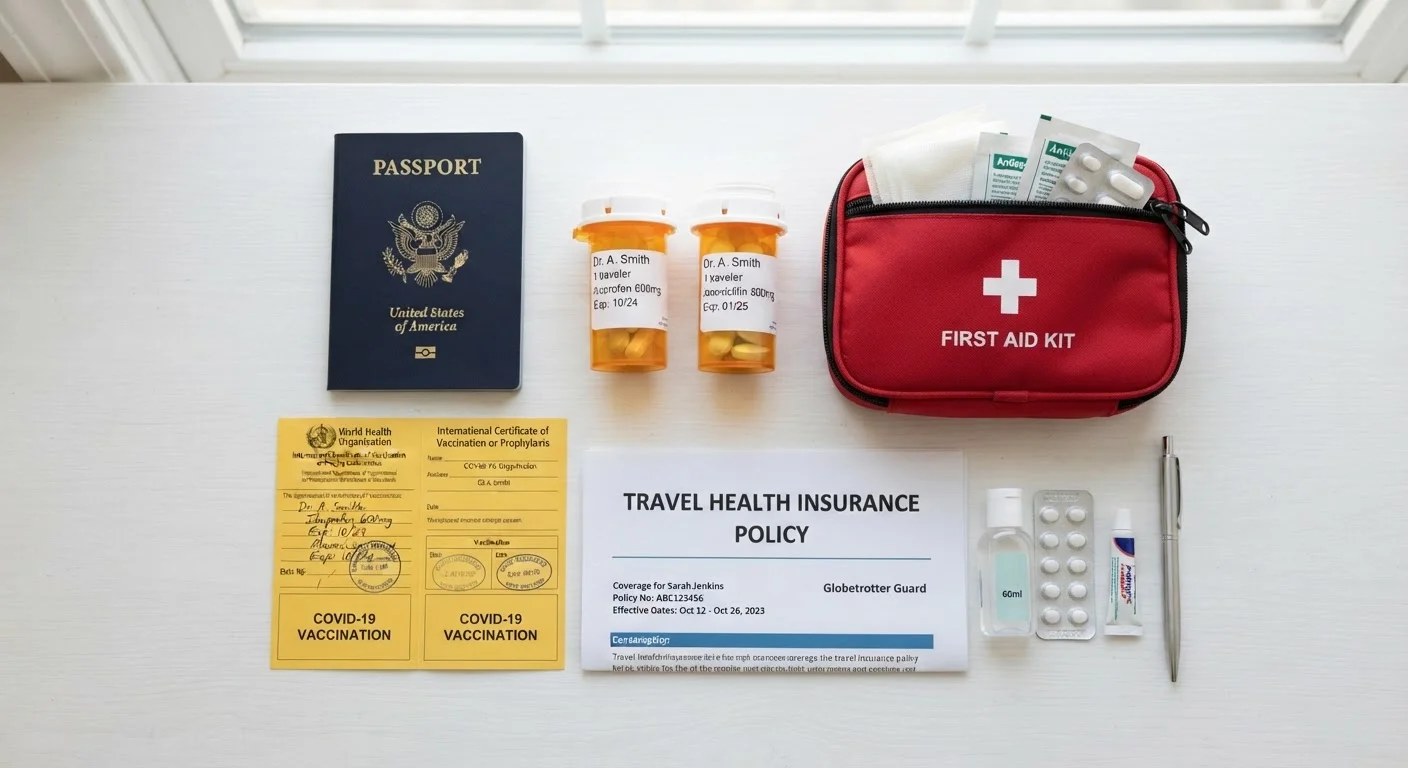
- Any personal prescription medications with enough supply plus a buffer; keep in original labeled containers
Tools and Extras
- Tweezers (splinters, ticks)
- Small scissors or a nail clipper
- Thermometer
- Disposable gloves
- Emergency contact card with relevant medical history
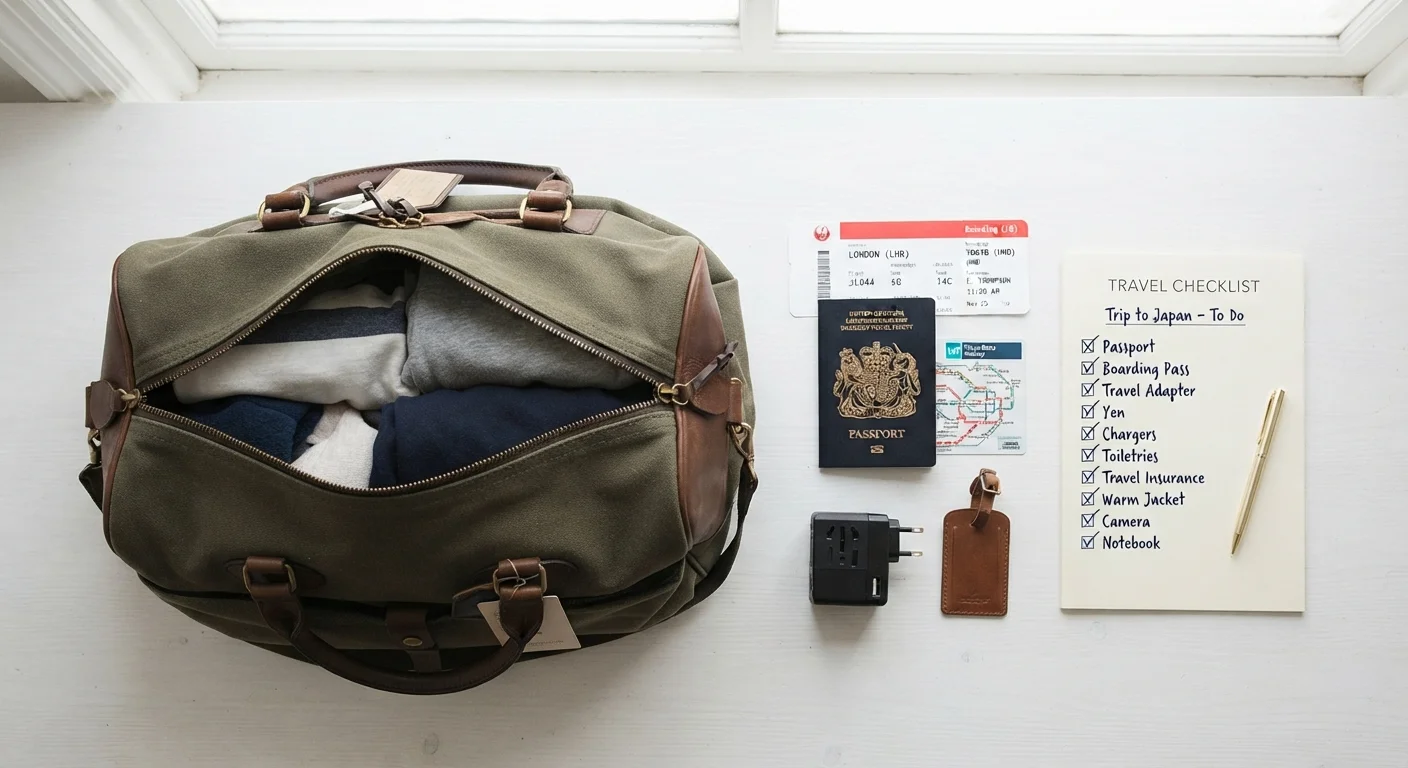
Before you travel, run through the pre-departure checklist to make sure health prep fits into your broader packing and logistics review.
What to Add Based on Trip Type and Destination
Your base kit is a starting point. What you add depends on where you're going, how long you'll be there, and how far you'll be from reliable medical care.
Oral Rehydration Salts (ORS)
A pre-measured mix of electrolytes and glucose dissolved in water to treat dehydration. More effective than plain water when the body has lost fluids rapidly due to illness, heat, or exertion.
Travel Medicine Clinic
A specialized medical practice focused on pre-travel health preparation, including vaccinations, destination-specific disease risk assessment, and standby medication guidance.
Hydrocolloid Dressing
A type of adhesive wound pad that absorbs fluid from blisters or shallow wounds while maintaining a moist healing environment. Generally more effective than standard bandages for friction blisters.
Standby Antibiotic
A prescription antibiotic carried for self-treatment in specific, pre-agreed situations - typically traveler's diarrhea in remote settings - only when prescribed and briefed by a physician before departure.
SAM Splint
A lightweight, malleable aluminum splint used to temporarily immobilize injured limbs in wilderness or remote settings until professional medical care is accessible.
Remote or Wilderness Travel
- SAM splint and elastic bandage for immobilizing sprains or suspected fractures until evacuation
- Water purification tablets or a filter if potable water isn't guaranteed
- Moleskin and foot care supplies - extended hiking multiplies blister risk
- Irrigation syringe to properly clean deep wounds in the field
International Travel to Higher-Risk Regions
- Prescription medications specific to the region - consult a travel medicine clinic well before departure for guidance on items like antimalarials or altitude sickness medication
- Insect repellent with DEET or picaridin
- Water purification backup
Family or Group Travel with Children
- Weight-appropriate fever and pain medications (confirm dosages with a pediatrician)
- Pediatric oral rehydration solution
- Sunscreen appropriate for child skin
For a full framework on health readiness before international trips, the pre-trip health prep checklist covers vaccinations, prescription planning, and medical records you should carry.
What's Usually Unnecessary - and Why
Over-packing a first aid kit is a real phenomenon. Unnecessary bulk means you're less likely to carry it consistently, and more likely to root past what you actually need in a stressful moment.
Skip or Reconsider
- Large volumes of any single supply - you need a few bandages, not 40. Restock locally if a trip runs long.
- Suture kits or skin staples - unless you have clinical training, wounds that need closure need professional care, not field suturing.
- Full prescription antibiotic courses without prior medical guidance - antibiotic selection depends on the specific infection, and self-prescribing can cause harm. Discuss standby antibiotic strategies with a travel medicine provider if your destination and itinerary genuinely warrants it.
- Rigid splints sized for adults on urban trips - your main job in a fracture situation is to immobilize and get to a hospital, not to manage it yourself.
- Expired medications from a previous trip - check dates and replace before departure.
- Heavy diagnostic equipment like blood pressure monitors unless medically indicated for your condition.
A good rule: if you don't know how to use it, or wouldn't confidently use it under stress, it probably doesn't belong in a travel kit. Equipment you misuse can cause harm.
Also worth noting - a first aid kit handles the immediate. For what comes after, see how travel insurance coverage can fill the gap when medical care is needed beyond basic self-treatment, and consider building a broader travel emergency plan before you leave.
This article provides general travel health information for educational purposes only. It is not a substitute for advice from a qualified healthcare professional. Consult your doctor or a travel medicine clinic before traveling, especially for international destinations or trips involving specific health risks.