
What Dedicated Zones Actually Are
At its core, the dedicated zone concept answers one question: where does this category of thing always live? Not where it fits today, or where there happens to be space - but where it belongs, consistently, every time.
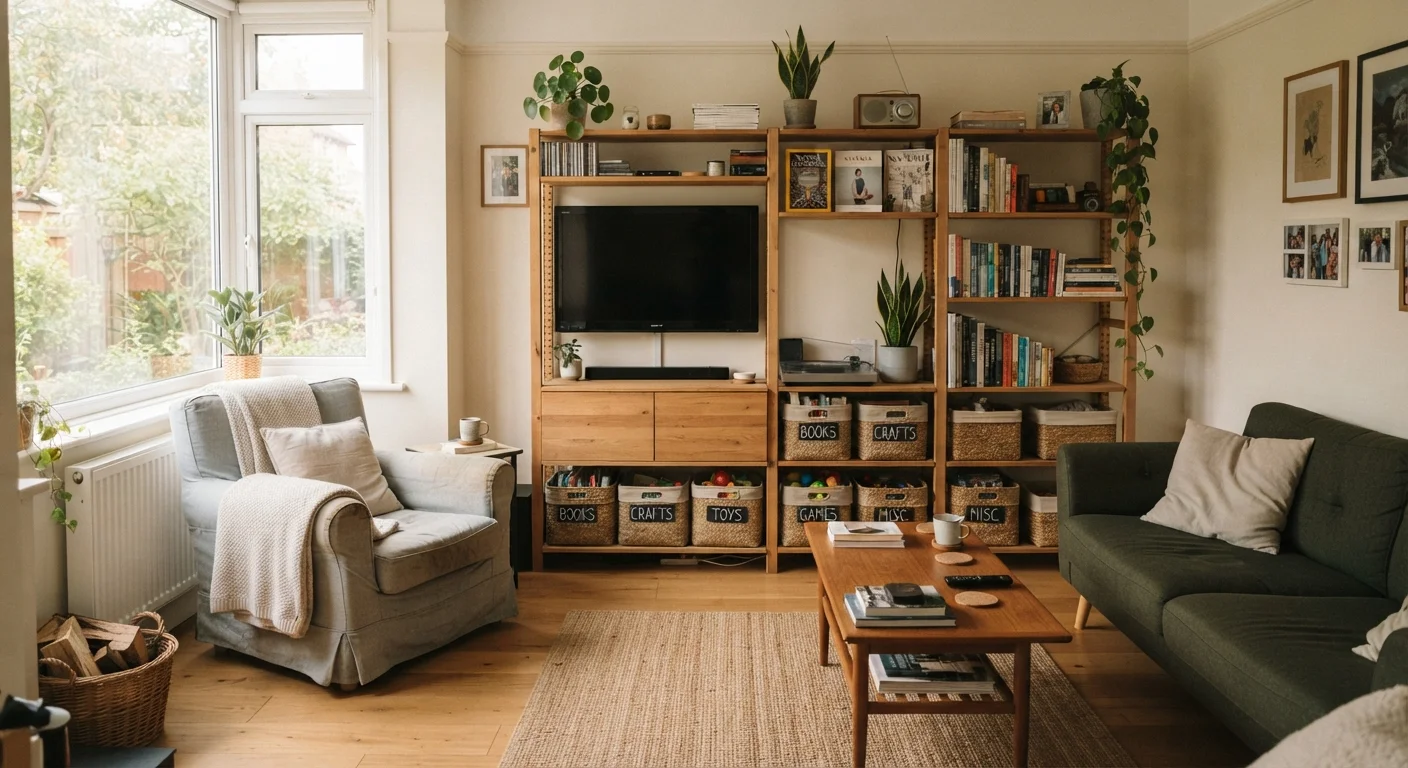
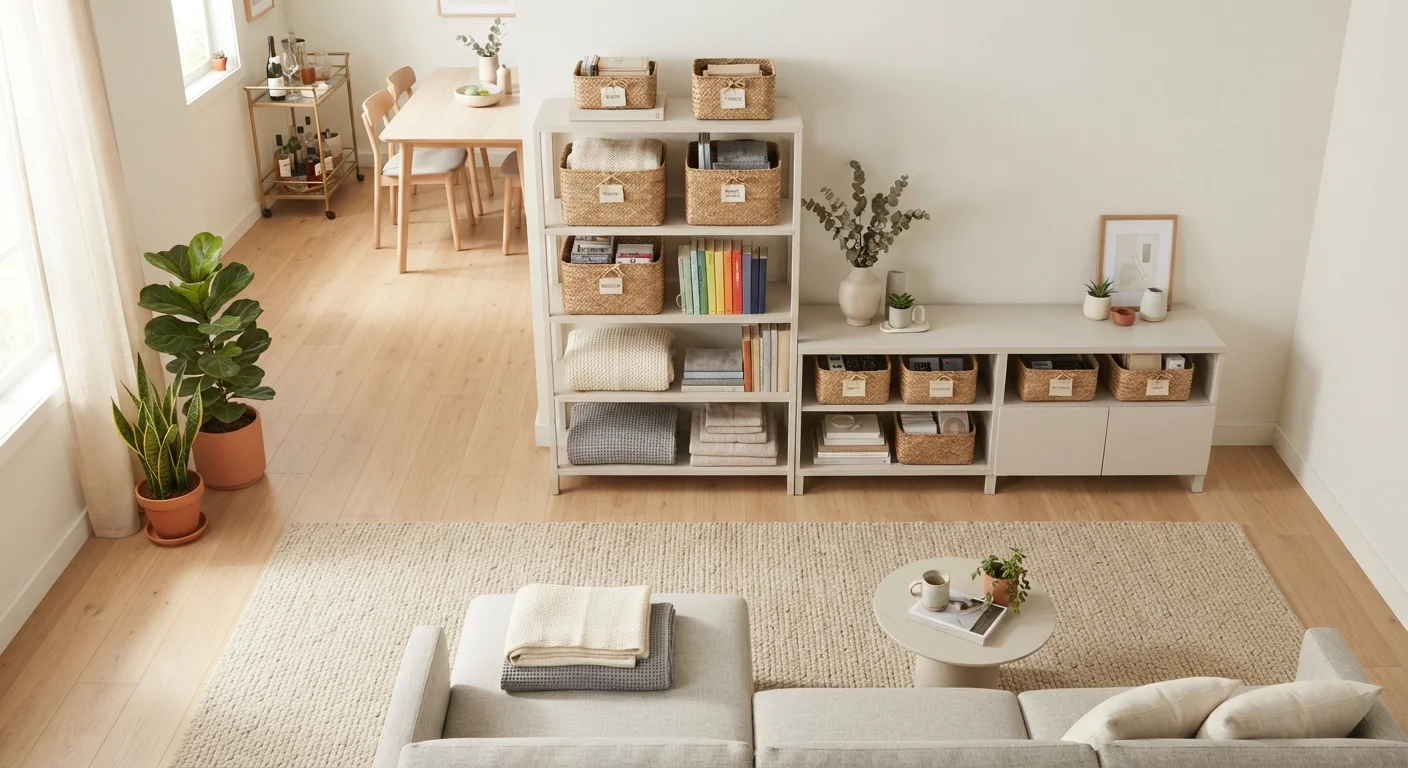
A zone is defined by category, not by the physical container. The medicine cabinet shelf reserved for first-aid supplies is a zone. The kitchen counter strip between the stove and the wall where cutting boards always stand is a zone. A section of a closet shelf dedicated to spare bedding is a zone. The container or boundary reinforces the zone, but the zone itself is the decision you made about category ownership of that space.
This is what distinguishes zoning from generic tidying. Tidying moves things out of sight. Zoning maps where each category permanently resides so that returning an item requires no new decision at all.
If you've ever reached for something and found it exactly where you expected - without having to look - you've experienced a functioning dedicated zone.
Zones Work at Any Scale
A zone doesn't have to occupy an entire room or even an entire piece of furniture. A single shelf segment, one side of a drawer, or a defined surface spot can all function as zones. The size of the boundary matters less than its consistency. Small-space households often find that micro-zones - defined within a single cabinet or drawer - are among the most powerful applications of the concept.
Why the Brain Responds Well to Zones
Every time you ask yourself where should I put this?, you're spending a small but real unit of mental energy. Behavioral researchers refer to this as decision fatigue - the cumulative drain of repeated low-stakes choices. In a home without a zoning system, that question fires dozens of times a day.
Dedicated zones eliminate most of those micro-decisions. Once a zone exists, the question is already answered. You don't choose where the scissors go - they go in the stationery zone, same as always. That consistency frees attention for tasks that actually need it.
~2.5 hrs
Time spent weekly searching for misplaced items
Estimates from professional organizing studies suggest the average household loses roughly this much time weekly to locating misplaced belongings.
80%
Of clutter is due to lack of a home, not excess stuff
Professional organizers frequently cite this figure to illustrate that most visible clutter stems from undefined placement, not necessarily overabundance of items.
Zones also create predictable retrieval paths. When someone other than the person who put something away needs to find it, a zone-based system gives them a reliable starting point. This is especially practical in shared households where each person's organizational instincts may differ.
For more on why organization systems erode without this kind of structure, see why organized homes drift back into chaos.
How to Map Zones in Any Room
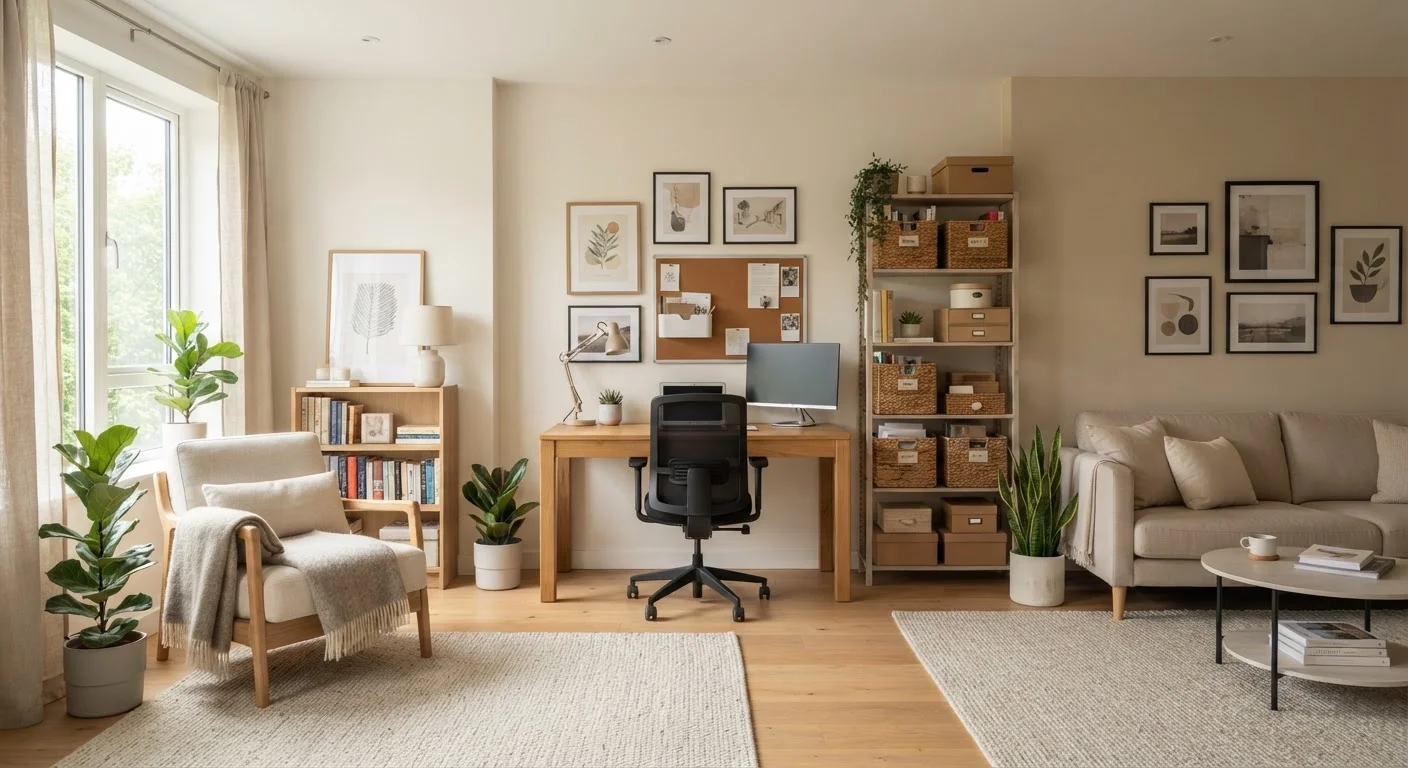
Mapping zones starts with observing behavior rather than reimagining it. Walk through the room and identify what you actually do there, not what you wish you did. A bedroom is for sleeping, getting dressed, and sometimes reading - those activities become the zone anchors.
- List the categories present. Write down every type of item the room holds, grouping loosely (e.g., reading materials, charging cables, medication, sleep accessories).
- Match categories to activity areas. Sleeping-adjacent items belong near the bed; grooming items belong near the mirror. Let usage patterns guide placement, not available space alone.
- Set physical boundaries. A tray, a shelf, a drawer, or even a labeled section of a surface can mark a zone. The boundary doesn't have to be elaborate - it has to be consistent.
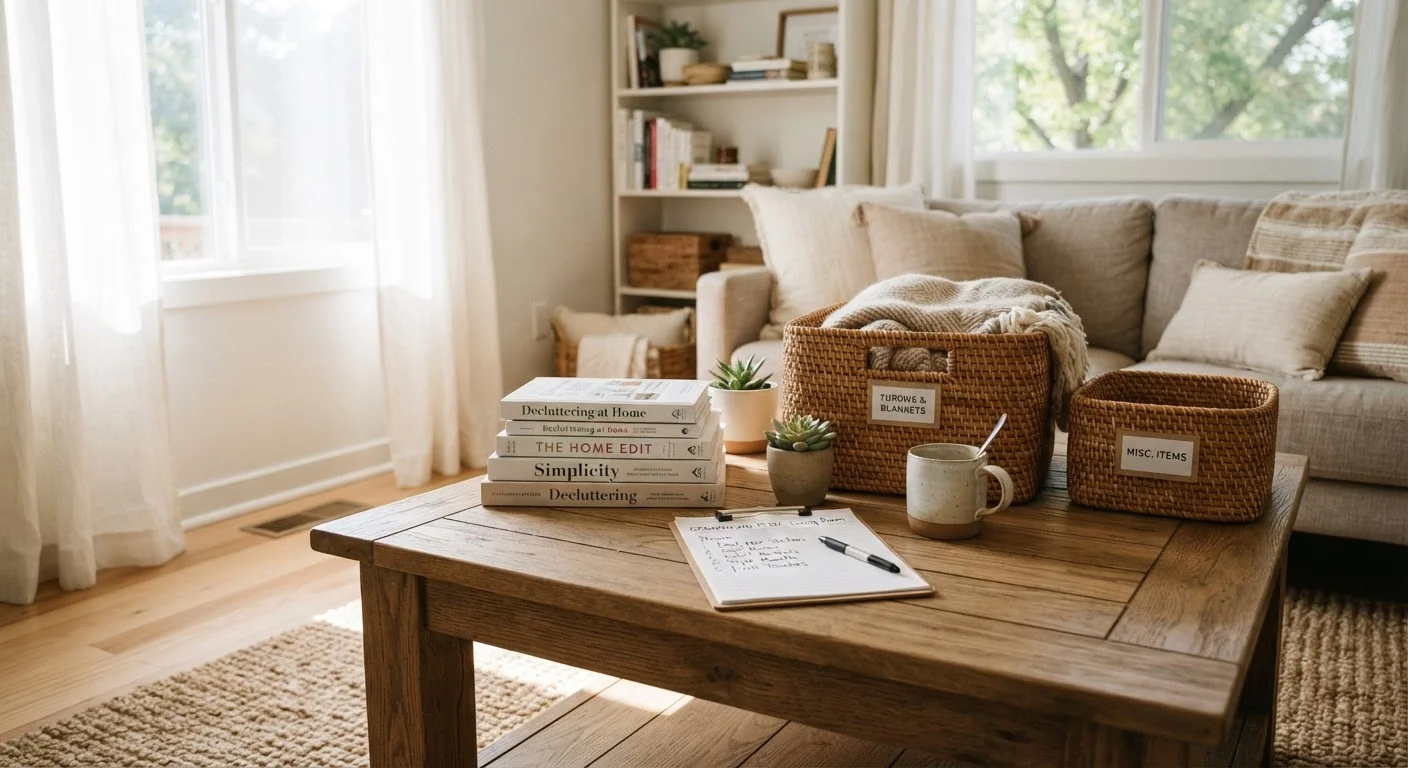
- Name the zone. Labeling matters more than it feels like it should. A label converts an informal habit into a legible system that others can use and that you'll maintain under pressure.
For a room-by-room application of these principles, the complete home organization walkthrough works through each space in detail. And if you're new to organizing systems altogether, getting started with home organization offers a practical entry point.
Start With One Problem Zone
Rather than rezoning an entire room at once, identify the single spot that causes the most friction - the drawer you dread opening, the counter that always collects clutter. Define a zone structure for just that area and live with it for two weeks. Once the habit is established there, map the next area. Incremental zone-building tends to stick better than whole-room overhauls done in a single session.
Zones and Other Organizing Approaches
Dedicated zoning isn't a standalone philosophy - it's a foundational concept that complements most organizing methods. The KonMari method, for instance, helps you decide what to keep; zoning answers where the kept items live. The Container Method inherently creates zones, since each container holds one category. FIFO (first in, first out) is a rotation logic that works within a zone.
Understanding this relationship matters if you've tried other methods and found them incomplete. Many organizing approaches focus on editing or categorizing but leave the spatial mapping step implied rather than explicit. Zoning makes the spatial step deliberate. Explore how different organizing philosophies compare to find which approaches suit your household.
Zoning also pairs well with vertical storage strategies. When wall space is treated as its own zone - shelving for books, hooks for bags, pegboards for tools - floor area is freed for movement rather than storage. Vertical storage explained covers how to apply this thinking room by room.