
Why the Legal Line Matters More Than Your Skill Level
Homeowners often assume that electrical DIY is a question of ability - if you can watch a tutorial and follow instructions, you can do it. But that framing misses the point entirely. The real question is: what does your local jurisdiction legally permit you to do?
Electrical work is regulated to protect lives and property. The National Electrical Code (NEC) sets a national standard, but each state and municipality can - and often does - layer on additional requirements, licensing rules, and permit obligations. A task that's homeowner-legal in one state may require a licensed electrician in the next.
The consequences of ignoring these rules aren't just legal. Unpermitted work can complicate or kill a home sale, and insurers can deny claims for fires traced to non-compliant wiring. Understanding the framework before you pick up a wire stripper is not just smart - it's necessary. For a broader overview of how permits and inspections work, see our guide to permits, inspections, and codes.
Renters and Landlords Have Different Rules
The homeowner permissions described in this article generally apply to owner-occupied residences. Renters are typically not permitted to perform any electrical work on a rental property - that responsibility belongs to the landlord or their licensed contractor. Landlords working on rental units often face stricter licensing requirements than owner-occupants, varying by state.
Tasks Most Homeowners Can Legally Handle
Across most US states, homeowners working on their own primary residence are permitted to perform certain low-risk, like-for-like electrical replacements without a permit. These typically include:
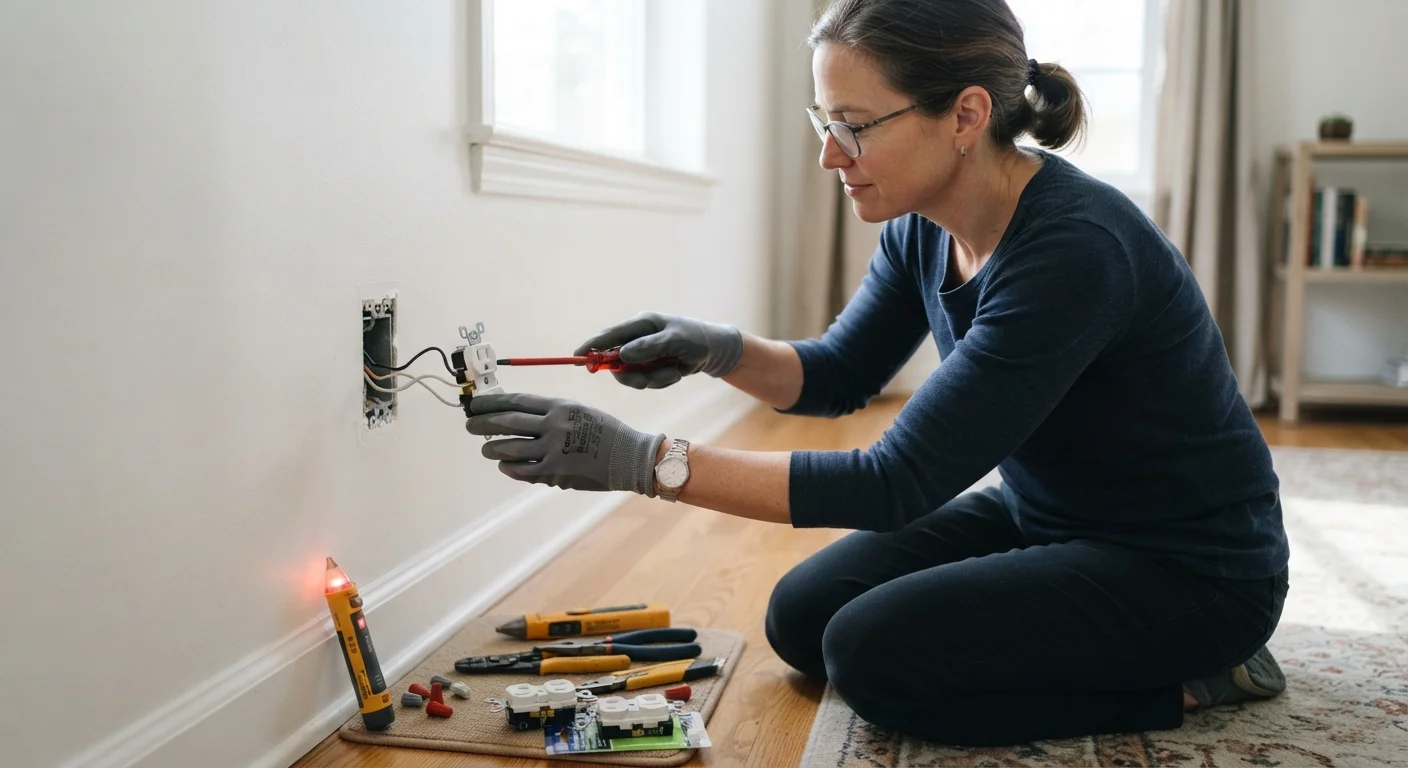
- Replacing a standard outlet or switch - swapping an existing device for an identical or equivalent one on an existing circuit
- Installing a ceiling fan in place of an existing light fixture where the wiring and box already support it
- Replacing a light fixture on an existing circuit with no wiring changes
- Installing plug-in appliances or smart home devices that don't require hardwiring
- Resetting a tripped GFCI outlet or replacing a GFCI outlet in an existing location
Even for these tasks, safety precautions are non-negotiable: always switch off the circuit at the breaker panel, verify the power is off with a non-contact voltage tester before touching any wires, and follow all device manufacturer instructions.
Always Test Before You Touch
Before working on any outlet, switch, or fixture, turn off the circuit at the breaker and use a non-contact voltage tester to confirm the power is off. Never rely solely on the breaker label - panels are sometimes mislabeled. A voltage tester costs under $20 and is one of the most important tools for any homeowner doing electrical work.
Work That Typically Requires a Licensed Electrician
There is a clear category of electrical work that is either legally restricted to licensed electricians in most jurisdictions or requires a permit with professional-standard inspections. Attempting this work without the proper qualifications is dangerous and often illegal:
- Adding or extending circuits - running new wiring through walls, attics, or crawlspaces to new locations
- Upgrading or modifying the electrical panel - adding breakers, upgrading panel capacity, or rewiring subpanels
- Installing new 240-volt circuits for appliances such as electric dryers, EV chargers, or HVAC equipment
- Whole-house rewiring or any work requiring opening walls for new wiring routes
- Outdoor and underground wiring to outbuildings, pools, or detached garages
- Service entrance and meter work - this is utility company territory and must never be handled by a homeowner
This isn't a reflection of a homeowner's intelligence or capability - it's about the reality that these tasks carry high risks of arc faults, fires, and electrocution, and they require equipment, code knowledge, and inspection processes that professionals are trained and licensed to provide.
~51,000
Home electrical fires per year in the US
According to the Electrical Safety Foundation International (ESFI), roughly 51,000 home electrical fires occur annually in the United States, causing nearly 500 deaths and over $1.3 billion in property damage.
~400
Electrocution deaths annually in the US
The US Bureau of Labor Statistics and the ESFI report that approximately 400 people die from electrocution in the US each year, with many incidents involving non-professional electrical work.
Varies by state
Homeowner electrical permit requirements
There is no single national standard - permit and licensing requirements for homeowner electrical work differ by state and even by municipality, making local verification essential before starting any project.
The Permit Process: What to Expect
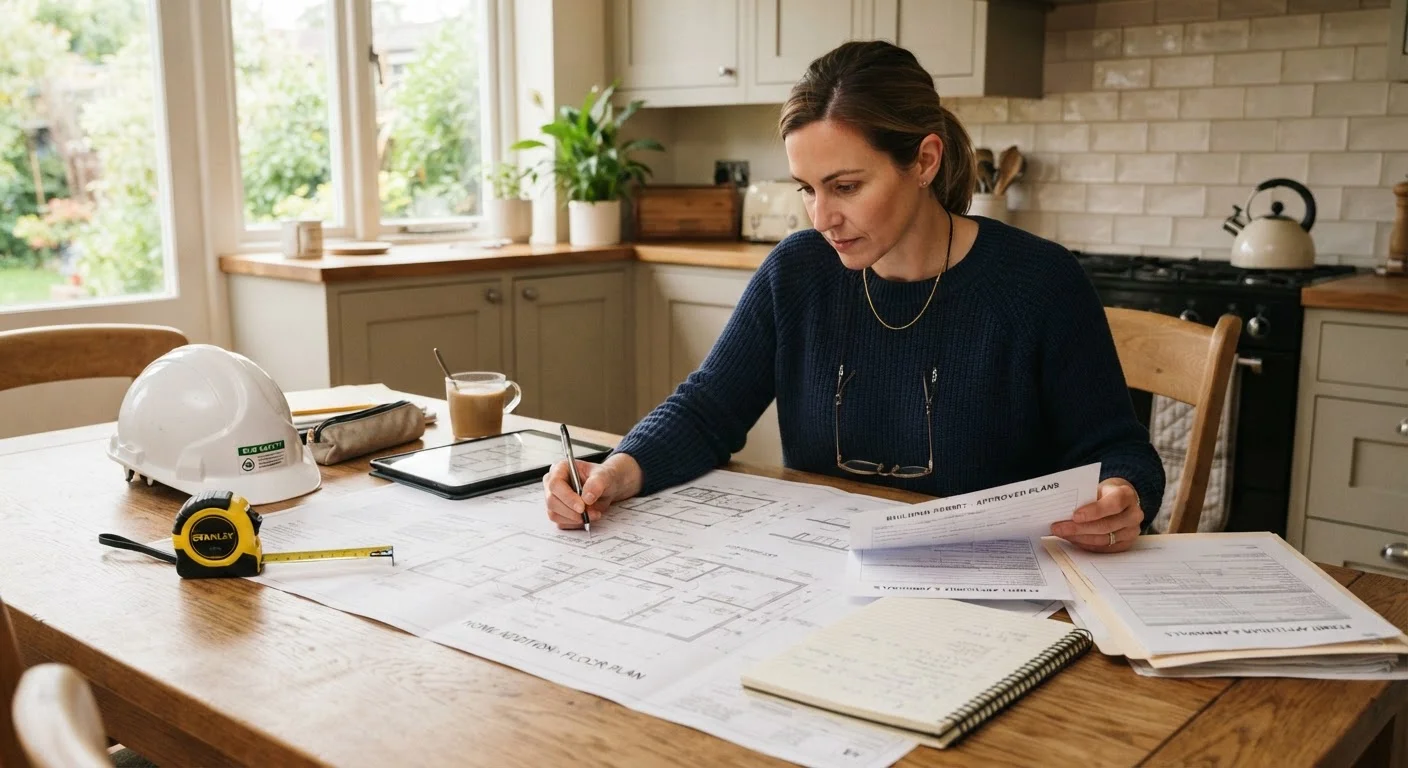
If your project requires a permit, the process is more straightforward than many homeowners expect. You typically apply through your local building department, describe the scope of work, pay a modest fee, and schedule an inspection upon completion. The inspector verifies the work meets code - protecting you, future occupants, and buyers.
Skipping this step to save time or money is a short-term decision with long-term costs. Unpermitted electrical work is a red flag on any home inspection report and can delay or derail a sale. It can also mean tearing open finished walls to show work that's already done - an expensive lesson.
Just as with deciding which car maintenance tasks to hand to a mechanic versus doing yourself, the calculus here is about risk management, not just cost. See our guide on DIY vs. professional car maintenance for a similar framework applied to vehicles.
This article is for general informational purposes only and does not constitute legal or professional electrical advice. Electrical codes and homeowner permissions vary significantly by location. Always verify requirements with your local building department and consult a licensed electrician for work beyond simple device replacement.