
Start with a Room Audit, Not a Shopping Trip
The most common organizing mistake is buying bins and baskets before deciding what actually needs storing. A room audit - cataloguing what you own and deciding what to keep - is the essential first step that most guides skip. Without it, you're organizing clutter rather than eliminating it.
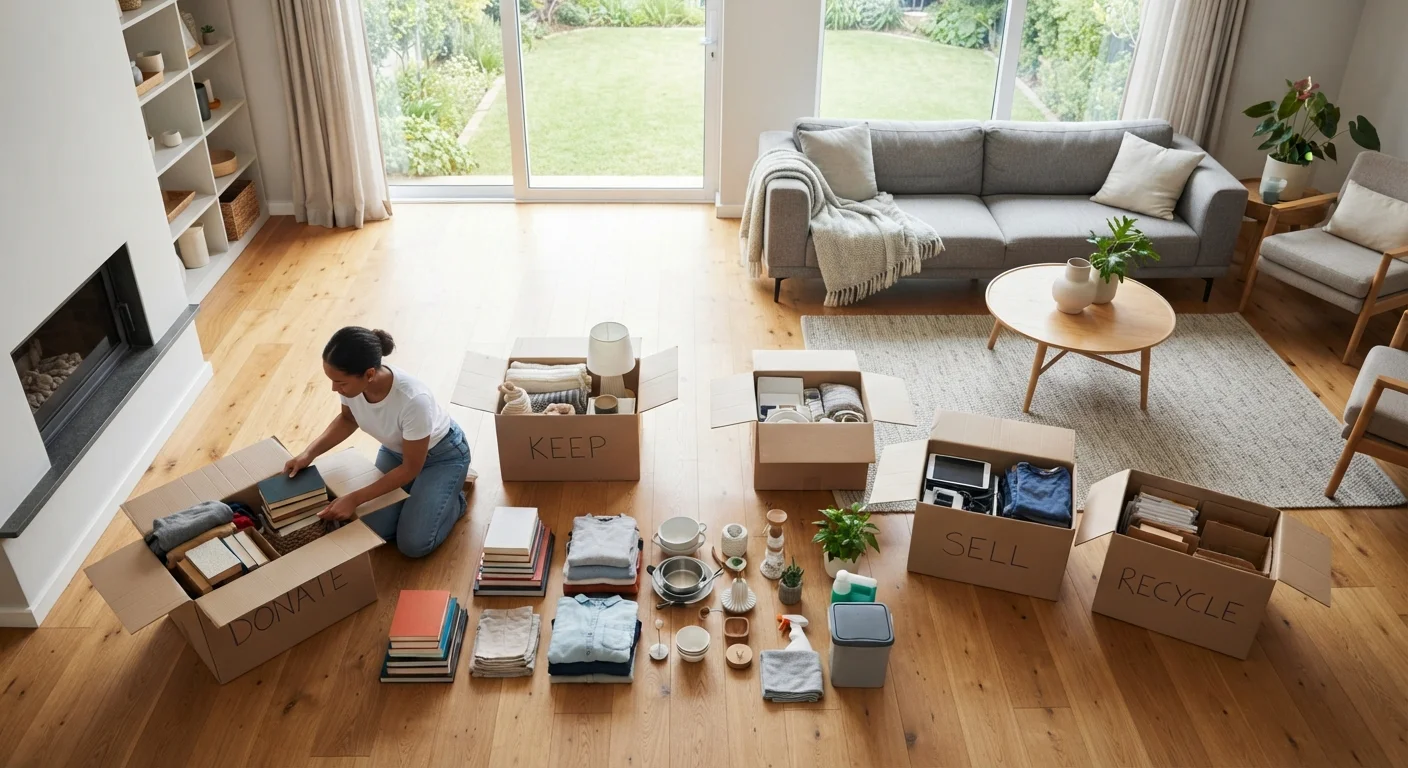
Walk each room and sort items into three categories: keep, donate/sell, and discard. Be honest about frequency of use. Items used less than once a year rarely justify prime storage space. Our room audit checklist gives you a systematic way to work through this process room by room without second-guessing yourself mid-pile.
Once you know what you're keeping, measure your actual storage spaces before purchasing anything. This prevents the all-too-common scenario of buying containers that don't fit the shelf - or worse, buying storage you simply don't need.
Audit Before You Accumulate
Before purchasing a single storage product, spend 30 minutes writing down every category of item in the room and roughly how many you own. This inventory step surfaces redundancies - duplicate tools, expired products, items that belong in a different room entirely - and gives you the real numbers to shop against. You'll almost always buy less than you originally planned, and what you do buy will actually fit.
Kitchen: Taming Counters, Cabinets, and That Junk Drawer
Kitchens accumulate clutter faster than any other room because they serve so many functions: cooking, eating, paperwork, charging devices, and general household administration. The fix is zoning - assigning specific areas to specific tasks and keeping only the tools for that task within reach.
- Counters: Keep only appliances used at least three times a week on the counter. Everything else goes into cabinets.
- Cabinets: Group by use: baking supplies together, everyday dishes at eye level, rarely used items on high shelves. Stack plates; stand lids vertically using a tension rod or file organizer.
- Pantry: Apply a FIFO (first-in, first-out) principle - newer items go behind older ones. Decanting dry goods into clear containers helps you see quantities at a glance and reduces packaging clutter. For more on methods like FIFO, see our overview of popular organizing approaches.
- The junk drawer: Keep it, but curate it. Limit it to one small drawer, use a simple divider tray, and do a two-minute purge monthly.
When organizing a kitchen, empty every cabinet completely before putting anything back. This one-time reset forces deliberate decisions about placement rather than just shuffling items around.
Reorganizing around existing clutter tends to recreate the same dysfunctional layout. A blank-slate reset surfaces how much space you actually have and allows genuinely logical groupings.
Use the 'one in, one out' rule for any category that consistently overflows its allotted space - for every new item that enters, one leaves.
Most storage problems are volume problems, not container problems. Capping category size at the container's capacity prevents the gradual accumulation that overwhelms even well-designed systems.
Bedroom and Closet: Making Space Work Harder
Bedrooms collect items from every other room - clothes, books, charging cables, paperwork - because they're private and the door closes. Treat the bedroom as a restorative space and apply a strict rule: if it doesn't belong to sleep, grooming, or reading, it doesn't live here permanently.
Closets: Group clothing by category (tops, bottoms, outerwear), then by color within each category. This reduces decision fatigue and makes it immediately obvious when a category is overstocked. Use the full height of the closet - a second hanging rod below short items like shirts can effectively double hanging capacity at minimal cost. Shelf dividers and slim hangers recover surprising amounts of space.
Under-bed storage works well for seasonal items when contained in flat, lidded bins. Label them - unlabeled bins become black holes. The back of the closet door is prime real estate for an over-door organizer holding accessories, shoes, or folded items.
Bathroom: Small Space, High Traffic
Most bathrooms are short on storage relative to the number of products they hold. The priority is eliminating expired or unused products first - medicine cabinets and under-sink areas are notorious for hoarding half-empty bottles. Check expiration dates on medications and dispose of them properly through a local pharmacy take-back program.
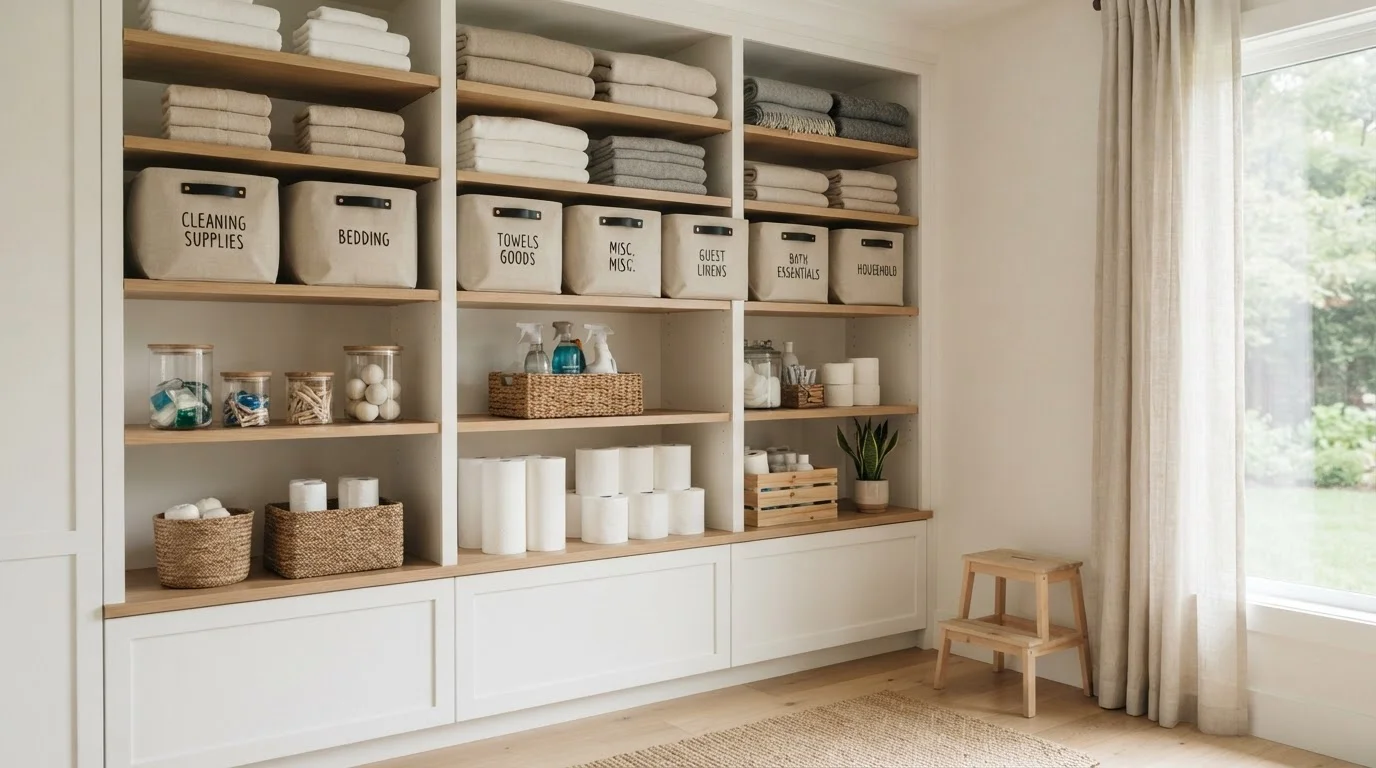
Once you've cleared the excess, maximize vertical space. Floating shelves above the toilet, over-door hooks, and magnetic strips inside cabinet doors for small metal items all add functional storage without structural changes. Keep daily-use items at eye level and within easy reach; backup supplies belong under the sink in clearly labeled bins.
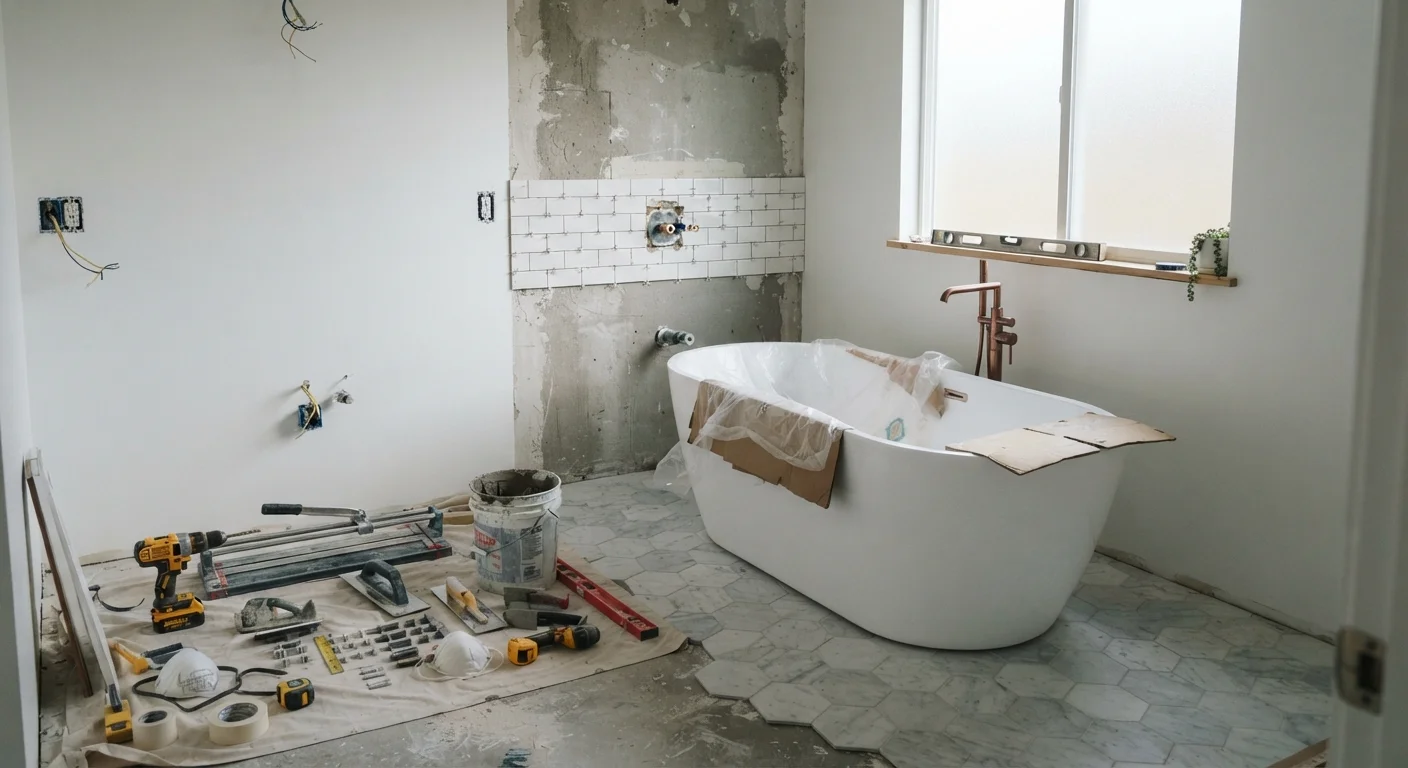
For a broader look at how bathroom layout decisions affect both function and budget, our bathroom renovation planning guide covers the practical trade-offs worth considering if you're thinking beyond organization into full remodeling territory.
Living Areas: Shared Spaces That Stay Functional
Living rooms and family rooms fail organizationally because everyone uses them and no one owns the upkeep. The solution is making it frictionless to put things away - not relying on motivation. Every item that lives in a shared space needs a designated home that's easy to access and return to.
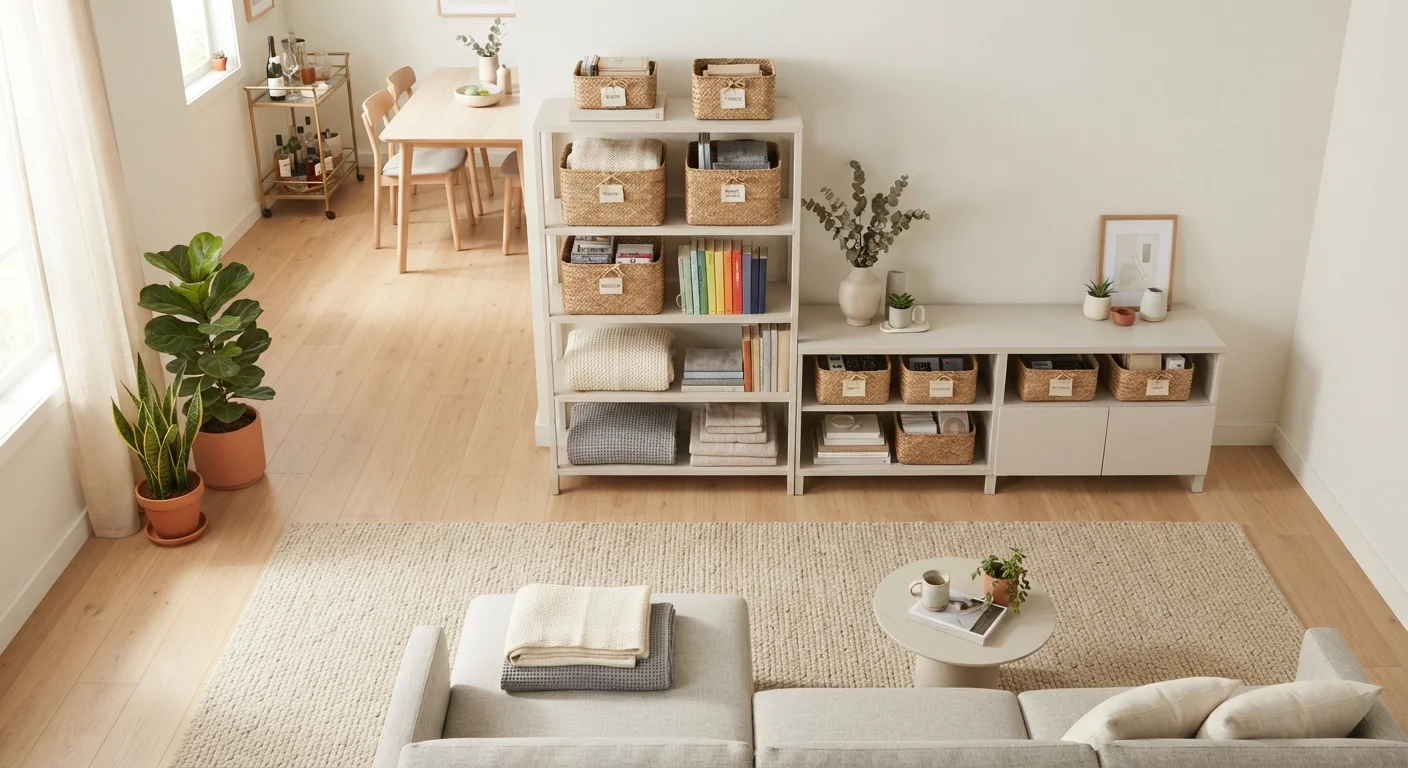
Baskets and ottomans with interior storage handle the inevitable accumulation of blankets, remotes, and kids' items. A tray on the coffee table visually contains loose items without adding another closed container. Bookshelves work better when books are interspersed with a few decorative objects - it prevents the space from feeling like a storage unit while still keeping reading material accessible.
Entertainment media and cables deserve a dedicated pass: use cable management clips along baseboards and label each cable at both ends. It takes twenty minutes and saves hours of future frustration.
25%
of two-car garages can't fit a single car
According to a U.S. Department of Energy study, roughly one in four two-car garages is too cluttered to park any vehicle inside.
40%
of housework attributed to clutter
Research cited by the National Soap and Detergent Association suggested that clutter is responsible for around 40% of the housework in an average home.
Garage and Storage Zones: Building a System That Holds
Garages are where organization goes to die - largely because they receive everything that doesn't fit elsewhere, with no sorting criteria applied. Treat the garage as a real room with real zones: automotive, lawn and garden, tools, sports and recreation, and seasonal storage. Everything outside those zones probably doesn't belong in the garage.
Wall-mounted pegboards and slatwall panels keep tools visible and accessible without consuming floor space. Heavy items go on lower shelves; lightweight seasonal items (holiday decorations, camping gear) go high. Clear bins beat opaque ones in any storage zone - seeing contents without opening saves time and prevents re-buying items you already own.
If your garage doubles as a workshop, a well-curated tool collection stored intelligently is far more useful than a larger, disorganized one. Prioritize tools you reach for regularly; archive specialty tools in labeled containers on upper shelves.
Keeping It Organized: Habits Over Heroics
A single weekend of organizing accomplishes little without the habits to sustain it. The homes that stay tidy long-term aren't maintained by willpower - they're designed to make tidiness the path of least resistance. That means systems simple enough that every household member can use them without instructions.
Two habits make the biggest difference: a nightly five-minute reset (returning displaced items to their homes) and a monthly ten-minute sweep of one zone to catch creeping clutter before it accumulates. These micro-habits prevent the buildup that leads to another full-day organizing marathon. For a deeper look at why organization lapses happen - and how to structurally prevent them - see our guide to breaking the cycle of household chaos.
Finally, when a system isn't working, change the system - not your expectations of yourself. Poor organization is almost always a design problem, not a discipline problem.