
The Color Code: Yellow vs. White
The first thing every driver should internalize is the color rule: yellow separates opposing traffic; white organizes same-direction traffic. This distinction is not decorative - it is a federally standardized system that gives you an immediate read on road geometry before you process any other detail.
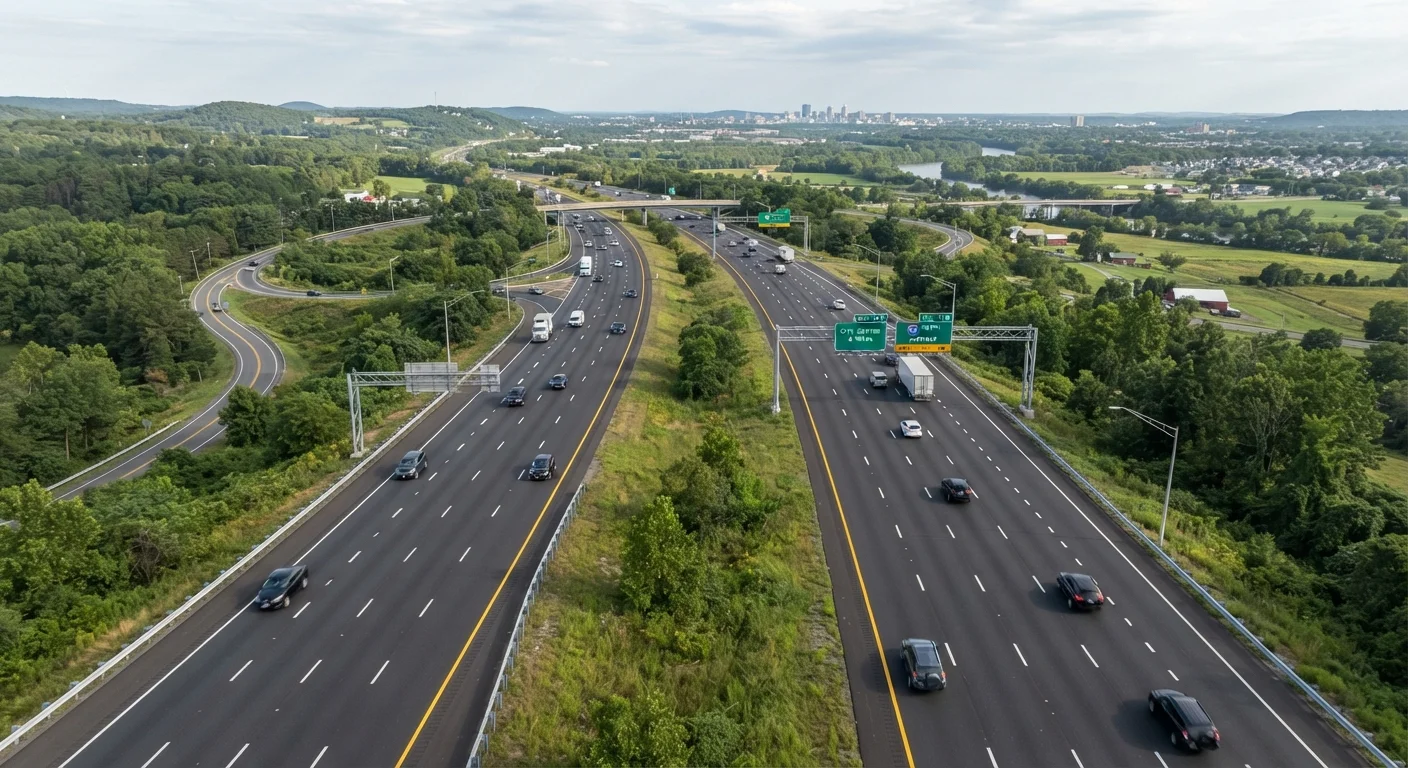
Yellow center lines run down the middle of two-way roads. When you see yellow, traffic is coming toward you on the other side. White lines, by contrast, appear between lanes of traffic flowing the same way, along road edges, at stop bars, and in crosswalks. If you can hold onto just one rule from this article, that color distinction is it.
~26%
Fatal crashes involving lane departure
According to Federal Highway Administration data, roughly a quarter of fatal crashes in the U.S. involve a vehicle leaving its lane - a risk directly addressed by clear road marking compliance.
3,500+
Pages in the MUTCD
The Manual on Uniform Traffic Control Devices - the federal standard governing all U.S. road markings - runs to more than 3,500 pages, reflecting the complexity of standardizing markings nationwide.
49 states
States adopting MUTCD standards
The vast majority of U.S. states have formally adopted MUTCD standards for road markings, ensuring that yellow and white line rules are consistent across most of the country.
Solid Lines: The Lines You Must Not Cross
A solid line - yellow or white - signals a restriction on crossing. The exact prohibition depends on context:
- Single solid yellow: Passing is prohibited from your side. The lane on the other side may or may not have the same restriction, indicated by what line they see on their side.
- Double solid yellow: Passing is prohibited in both directions. This marking appears where sight distances are short, curves are tight, or traffic volumes make overtaking inherently dangerous.
- Single solid white (lane line): Lane changes are discouraged but not always strictly prohibited - however, near intersections and in merge zones, solid white means stay put.
- Double solid white: Do not cross. Commonly marks HOV lane boundaries and protected turn lanes.
For a deeper look at when and where overtaking is legally permissible, see the rules around passing and overtaking.
Dashed Lines: When Crossing Is Permitted
Dashed lines are the road's way of saying you may proceed - if it's safe. The key patterns:
- Dashed yellow center line: Passing is allowed from your side when the road ahead is clear. Longer dashes with shorter gaps indicate you are approaching a no-passing zone - a visual warning to abort any overtaking maneuver.
- Dashed white lane line: Normal lane changes are permitted. These appear on multi-lane highways and urban arterials between lanes of same-direction traffic.
- Wide dashed white line (stop line variant): Marks where to stop at a signal or sign - it is a position marker, not a crossing prohibition.
Use Line Length as a Passing Cue
On two-lane roads, dashes that are visually longer and spaced further apart signal a transition into a no-passing zone ahead. This graduated pattern gives you a heads-up before a solid line appears. If you are mid-overtake when the dashes start lengthening, complete the maneuver quickly and safely or abort and return to your lane.
The word "permitted" never means guaranteed safety. A dashed line grants legal permission; driver judgment determines actual safety. Visibility, speed, and oncoming traffic must all factor into any passing decision.
Pavement Symbols and Edge Markings
Lines are only part of the story. Pavement symbols carry binding instructions:
- Arrows
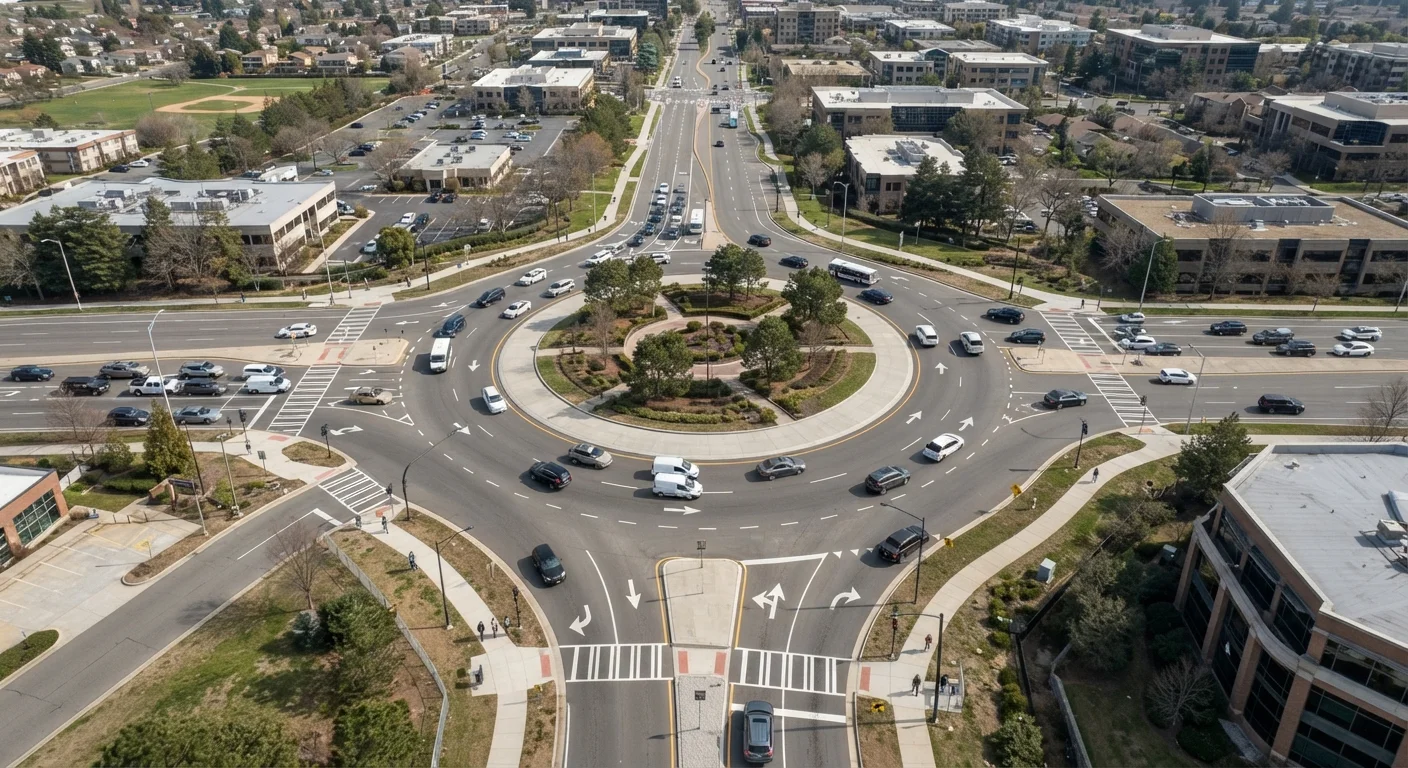
- Indicate the required direction of travel from a lane. A lane marked with a left-turn arrow cannot legally be used to go straight.
- "ONLY" text
- Reinforces an arrow - that lane is restricted to that movement exclusively.
- "STOP" text
- Repeats what the stop sign or signal requires, particularly useful at complex intersections.
- Speed limit numerals
- Posted on the pavement in school zones and work zones as a supplemental reminder.
- Bicycle lane symbols
- Mark a lane reserved for cyclists; motor vehicles must not use or park in them except where explicitly permitted.
Edge lines (solid white on the right, solid yellow on the left of divided highways) define the travel lane boundary. They are especially important at night and in poor weather. On high-speed roads, drifting outside the edge line is one of the primary causes of run-off-road crashes. First-time motorway drivers often underestimate how much these markings anchor lane discipline at speed.
Putting It All Together on the Road
Road markings work as a system. A competent driver reads them continuously, not just at decision points. As you approach an intersection, the lane markings narrow your options well before the signal does. As you enter a curve, the center line pattern signals whether passing is about to become prohibited. At a merge, solid white tells you the window for lane changes is closing.
Understanding these markings also helps at more complex junctions. Priority rules at roundabouts and yield signs make considerably more sense once you can read the lane arrows and edge lines leading into them. And if dashboard symbols are another area of uncertainty, the same interpretive mindset applies - see what your car's warning lights are telling you for a parallel breakdown.
Road markings are not bureaucratic trivia. They encode decades of traffic engineering research into paint on pavement. The more fluently you read them, the more predictable - and safer - your driving becomes.