
Why Passing Rules Trip Up Even Confident Drivers
Passing another vehicle is something millions of drivers do every week, yet the rules governing when it is legal, when it is dangerous, and when it is both are genuinely complex. Driver's education covers the basics, but real-world roads present grey areas that even experienced drivers get wrong - sometimes without realising it.
This reference guide breaks down the core rules, the situations that cause confusion, and the judgements you need to make every time you pull out to overtake. Understanding following distance is foundational here, because a safe pass begins well before you change lanes.
| Minimum sight distance (general guidance) | 1,500-2,000 feet on a two-lane road (AASHTO geometric design standards) |
| Solid yellow line on your side means | No passing permitted (MUTCD (Manual on Uniform Traffic Control Devices)) |
| School bus stop arm - required action | Full stop; all states (NHTSA) |
| Left-lane cruising laws | Illegal in 29+ states when not overtaking (Governors Highway Safety Association) |
| Passing on the right (two-lane roads) | Illegal in nearly all U.S. states (State vehicle codes (varies)) |
| Leading cause of passing crashes | Misjudging speed and gap of oncoming traffic (NHTSA crash data analysis) |
The Legal Framework: Where Passing Is Prohibited
Several situations make overtaking explicitly illegal under U.S. traffic law, though specific statutes vary by state. The following are broadly consistent across jurisdictions:
- Solid yellow center lines: A solid yellow line on your side of the center means passing is prohibited. Double solid yellow lines mean neither direction may pass.
- No-passing zones: Marked by signs and road paint, these zones are placed where sight distance is insufficient - on curves, near crests of hills, and close to intersections.
- School buses with stop arms extended: All traffic must stop; passing a stopped school bus loading or unloading children is a serious violation in every state.
- Within intersections: Most states prohibit overtaking within or immediately approaching an intersection.
- Railroad crossings: Passing within a specified distance of a crossing is illegal in most states.
- Bridges and tunnels: Many jurisdictions restrict passing on narrow bridges where lanes are compressed.
Dashed yellow center lines indicate that passing is permitted when safe - but permitted does not mean obligatory or risk-free.
No-passing zone
A section of road where overtaking is legally prohibited, marked by a solid yellow line on the driver's side and/or posted signs. These zones exist where sight distance is too limited for a safe pass.
Sight distance
The length of road ahead that a driver can clearly see. Adequate sight distance is essential for safe overtaking - it must be long enough to complete the entire pass and return to lane before meeting oncoming traffic.
Closing speed
The combined rate at which two vehicles approach each other from opposite directions. At 60 mph each, the closing speed is 120 mph - meaning gaps disappear roughly twice as fast as drivers often expect.
Dashed center line
A broken yellow or white center line indicating that passing is permitted when conditions are safe. Permission to pass does not guarantee safety - the driver must still judge sight distance, speed, and traffic.
Speed differential
The difference in speed between the overtaking vehicle and the vehicle being passed. A larger differential means less time spent in the oncoming lane; a small differential makes the pass longer and riskier.
The Grey Areas: What the Rules Don't Fully Answer
Legal permission to pass and safe conditions to pass are not the same thing. These are the situations where drivers most often misjudge:
Underestimating closing speed
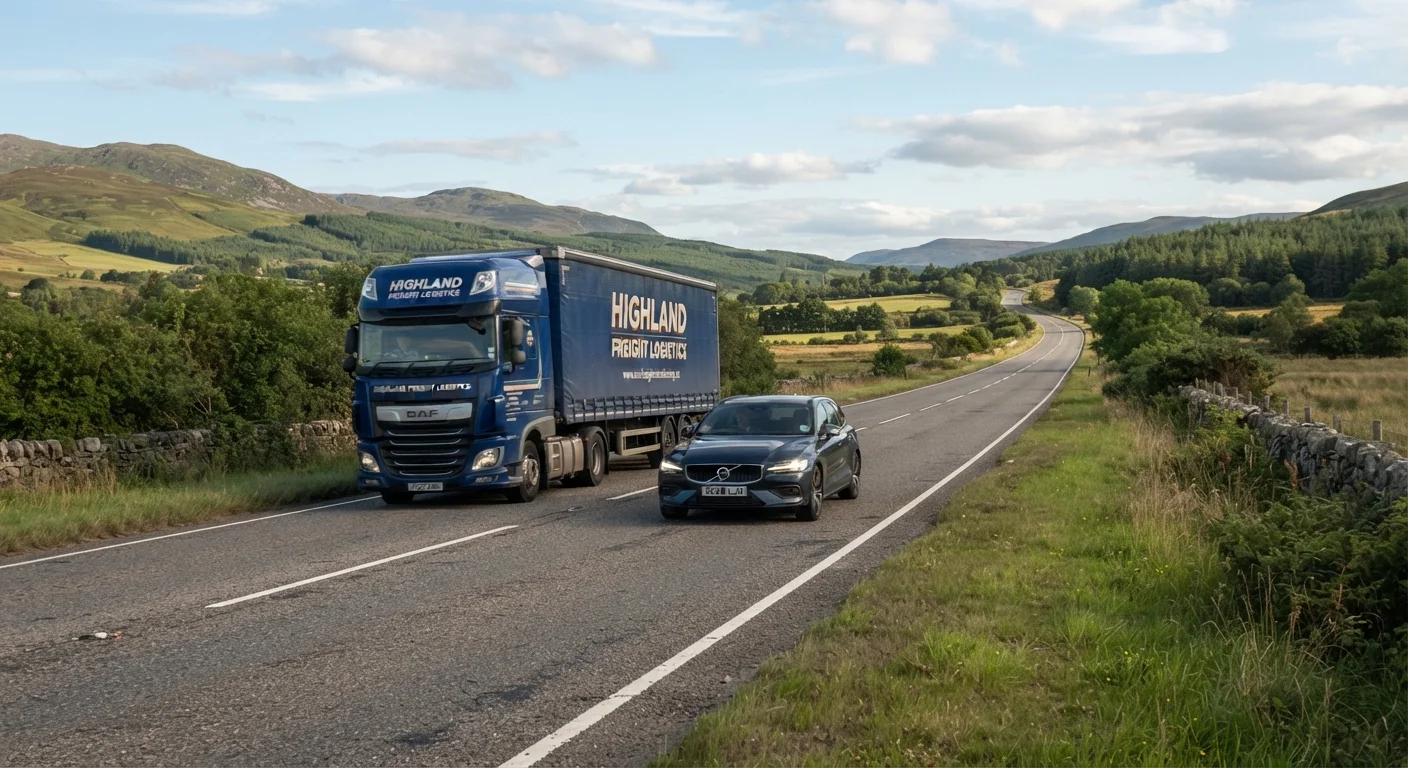
When you pull into the oncoming lane, any vehicle approaching from ahead is closing on you at the combined speed of both vehicles. At highway speeds, a gap that looks generous can evaporate in seconds. The required sight distance for a safe pass is far longer than most drivers intuitively estimate.
Multi-vehicle passing
Attempting to pass more than one vehicle in a single manoeuvre multiplies the distance and time required. Many crashes occur when a driver commits to passing a second vehicle after the first and realises too late they have insufficient room.
The vehicle being passed accelerates
It is not illegal in most states for the vehicle being overtaken to maintain speed, but if they accelerate, you may be trapped in the oncoming lane longer than planned. Anticipating this possibility is part of sound passing judgement.
Passing on the right
On multi-lane roads, passing on the right is generally legal when traffic is moving in the same direction and lane changes are safe. On two-lane roads, passing on the right shoulder is illegal in nearly all states and extremely dangerous. The distinction matters - see also our guide on common right-of-way misconceptions.
Motorway and freeway lane discipline
On multi-lane highways, the left lane is intended for passing, not cruising. Remaining in the left lane when not overtaking is illegal in many states and contributes to dangerous weaving by other drivers. For a deeper look at high-speed lane rules, motorway driving fundamentals covers the dynamics involved.
Rules Vary by State - Always Check Local Law
While the principles in this article reflect broadly shared U.S. traffic law, exact regulations - including specific distances for no-passing zones near intersections, railroad crossings, and bridges - vary by state. When in doubt, consult your state's official driver handbook or department of motor vehicles (DMV) resources for the rules applicable where you drive.
The Practical Checklist Before You Overtake
Before initiating any pass, work through these points:
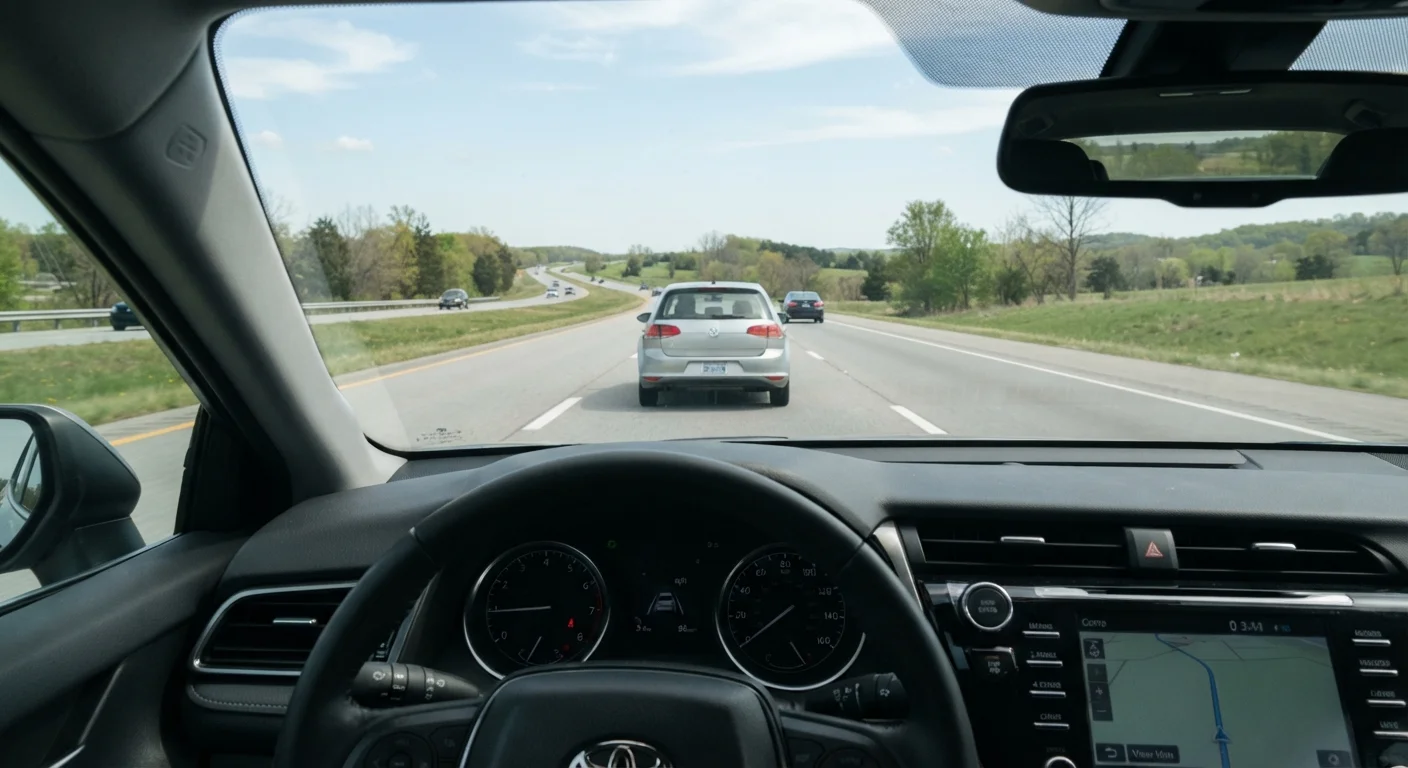
- Is it legal? Check lane markings and signs. If your side shows a solid yellow line, do not pass.
- Is the sight distance adequate? You need to see far enough ahead to complete the entire manoeuvre - including returning to your lane - with a safety margin. If you cannot see that far, do not pass.
- What is the speed differential? The faster you are relative to the vehicle ahead, the shorter your time in the oncoming lane. A small speed advantage means a long, exposed pass.
- Is there oncoming traffic? Assess not just what is visible but what may appear from dips or bends ahead.
- Signal your intent. Use your left turn signal before moving out. This alerts the vehicle behind you and any following driver who may also be planning to pass.
- Check mirrors and blind spot. On multi-lane roads, a vehicle may already be passing you from behind.
- Accelerate decisively. A hesitant, slow pass extends your exposure time. Commit fully or abort.
- Signal and return. When you have cleared the vehicle with a safe gap ahead of it, signal right and return to your lane. Do not cut in sharply.
Sound passing judgement is also closely linked to the driving philosophy you carry behind the wheel. Drivers who approach speed and acceleration with patience tend to make safer decisions about when to overtake - a tension explored in our piece on eco-driving versus performance driving.