
Why a Written Estimate Is Non-Negotiable
Most US states require repair shops to provide a written estimate before beginning work if the total cost will exceed a set threshold - often as low as $50. Even where this isn't legally mandated, a written estimate is your primary protection against scope creep and unexpected charges at invoice time.
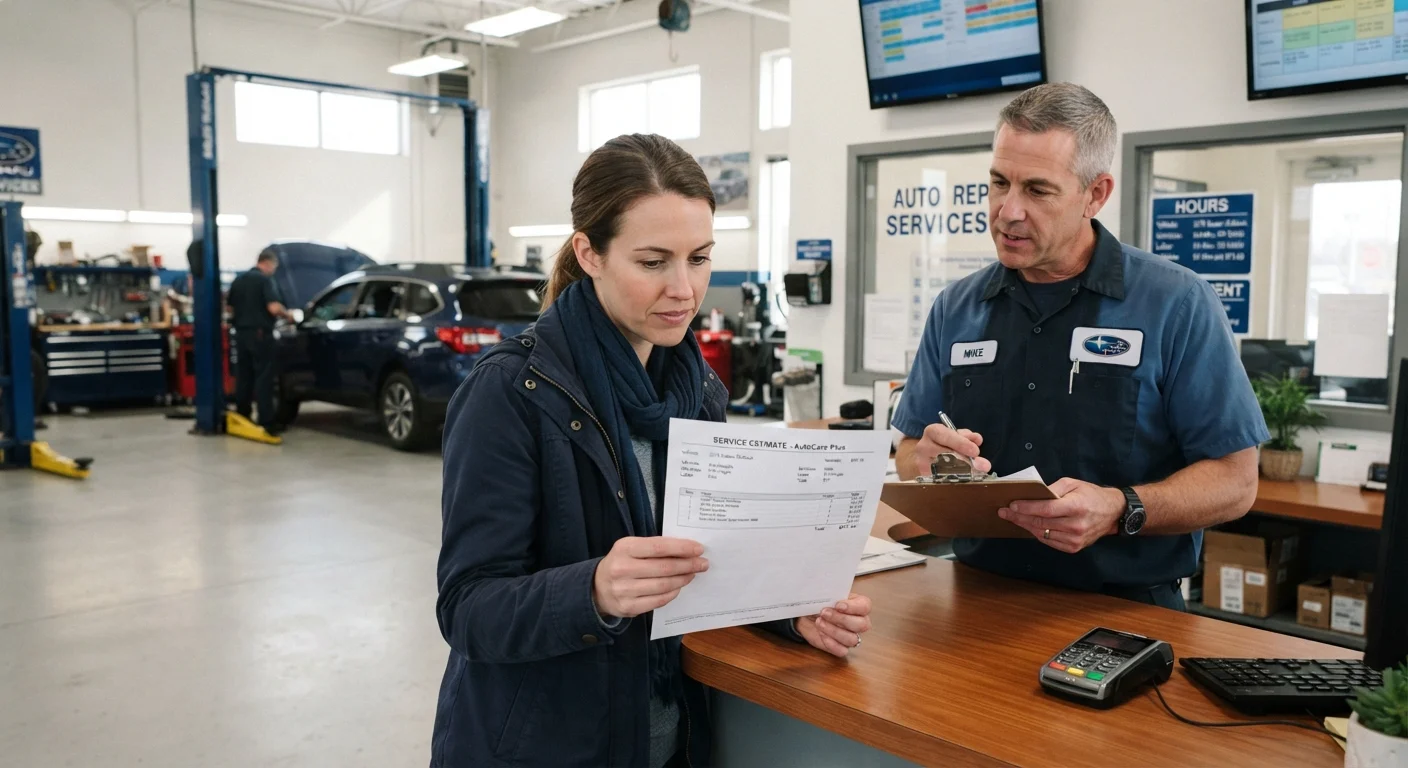
A valid estimate should clearly list every anticipated part by name and part number, the price of each, the number of labour hours expected, and the shop's hourly labour rate. Diagnostic fees - charged when a technician spends time identifying a problem - should appear as a line item, not tucked into the final total. If a shop can only give you a verbal ballpark, treat that as a red flag.
When you sign an estimate, note whether it states a maximum total the shop cannot exceed without calling you first. This clause, sometimes called a not-to-exceed authorisation, is worth requesting explicitly if not already included.
Ask for a Callback Authorisation Clause
Before leaving your car, ask the service adviser to add a note requiring the shop to call you for authorisation if the final cost is likely to exceed the estimate by more than a set amount - commonly $50 or 10%, whichever is lower. This single step prevents the most common source of repair bill shock. Reputable shops include this as standard practice.
What a Repair Order Should Include
Once you authorise work, the estimate transitions into a repair order - the legally binding document that governs the job. Before you leave your car, confirm the repair order contains:
- Your vehicle's year, make, model, and VIN - errors here can mean wrong parts are ordered.
- A clear description of the complaint in plain language, not just a code number.
- Itemised parts costs, distinguishing between OEM (original equipment manufacturer) and aftermarket parts where applicable.
- Labour time quoted in hours or fractions thereof, alongside the shop's flat-rate or actual-time billing method.
- A total not-to-exceed figure and a contact number the shop will use to reach you if additional work is discovered.
Understanding whether a shop bills by flat rate (a standardised time guide) or actual time matters because it affects how overtime or complications are charged. Ask which method applies before signing.
OEM vs. Aftermarket Parts: A Quick Clarification
OEM stands for Original Equipment Manufacturer - parts made to the same specification as those fitted when your vehicle was built. Aftermarket parts are made by third-party suppliers and vary in quality. Remanufactured parts are used components rebuilt to a serviceable standard. None of these categories is inherently inferior, but each carries different warranty terms and price points. Always ask which category applies to any part quoted on your estimate.
Practices That Protect Your Wallet
Getting an accurate estimate is as much about the questions you ask as the paperwork you collect. The practices below are used by informed drivers to keep repair costs predictable and fair.
Request a written estimate before dropping off your vehicle, not after diagnosis begins.
Once a technician has disassembled a component to diagnose it, you may face reassembly fees if you decline the repair. Getting a written scope of work upfront - even a conditional one - limits that exposure. It also gives you something concrete to compare against a second opinion.
Ask for replaced parts to be returned to you at pickup.
Requesting your old parts back is a standard industry practice that serves two purposes: it confirms the work was actually performed, and it lets you or another mechanic verify the parts genuinely needed replacing. Most shops will comply unless the part must be returned to a supplier for a core charge credit.
Get a second estimate for any repair exceeding $300 or for unfamiliar diagnoses.
Labour rates and parts markups vary considerably between independent shops, dealerships, and national chains. A second estimate on a major job can reveal price differences of 20-40% and may surface a different - or simpler - diagnosis altogether. This is a widely accepted consumer practice, not an insult to the first shop.
Clarify whether quoted parts are OEM, aftermarket, or remanufactured before signing.
Parts quality directly affects both repair longevity and warranty coverage. OEM parts generally carry a manufacturer warranty; aftermarket parts vary widely in quality and warranty terms. Knowing which type is specified lets you make an informed value judgement - and prevents surprises on the invoice.
Confirm the shop's labour rate and billing method in writing before authorising work.
A shop charging $120 per hour on flat-rate billing may cost less or more than one charging $95 per hour on actual time, depending on how long the job takes. Understanding how you'll be charged prevents sticker shock, particularly on complex or time-variable jobs like electrical diagnostics.
For broader context on which jobs are worth handing to a professional versus attempting yourself, see our guide to DIY versus shop repairs. Staying on top of your manufacturer's service schedule also reduces the likelihood of surprise repairs - understanding your service schedule explains what each interval typically covers.
Quick Actions You Can Take Today
You don't need an upcoming repair to start protecting yourself. These steps build the foundation for confident workshop interactions.
The same critical thinking applies in other high-stakes estimate situations. If you've ever wondered how to read contractor quotes for home projects, the principles share a lot of common ground - see what contractor quotes are actually telling you for a useful parallel.