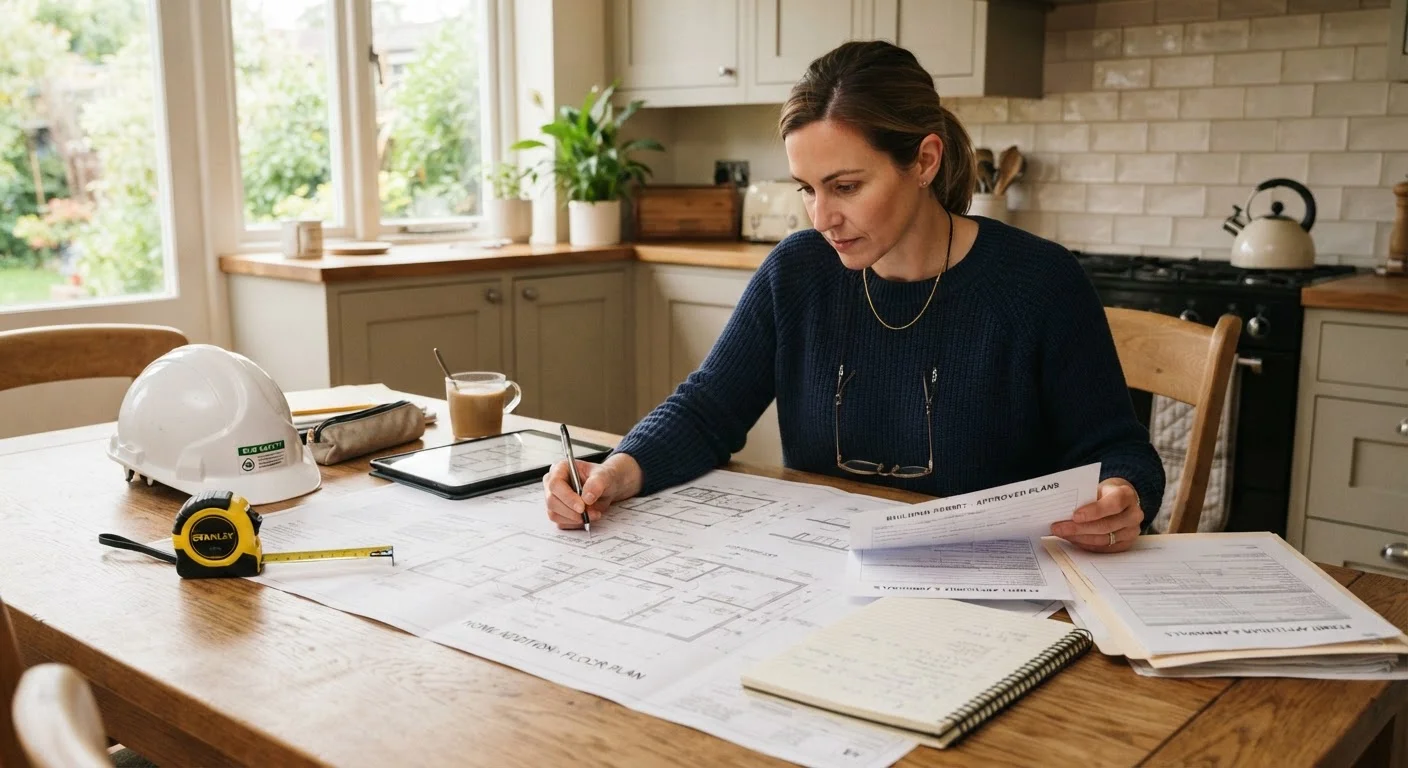


Why Quotes Look So Different From Each Other
You send the same project description to three contractors and receive three quotes ranging hundreds - sometimes thousands - of dollars apart. That gap is rarely random. Contractors make different assumptions about scope, use different material grades, carry different overhead costs, and build in different profit margins. Some also exclude line items that others treat as standard.
Before you can meaningfully compare quotes, you need to understand what each one actually covers. A quote that looks cheap on the surface may be missing debris hauling, permit fees, or a site walkthrough. One that seems high might include a longer warranty period or a more detailed material spec. The total number is only the starting point.
Consider doing a pre-project audit before soliciting quotes - it helps you define scope clearly so contractors are pricing the same job.
3+
Quotes recommended before hiring
Industry guidance from consumer protection agencies consistently recommends obtaining at least three written quotes for any significant home improvement project.
~10-20%
Typical contingency buffer advisors suggest
Home improvement professionals commonly advise homeowners to budget 10-20% above the quoted cost to cover unforeseen conditions or scope changes.
30%
Of renovation disputes involve payment terms
According to general contractor mediation research, unclear payment schedules are among the leading sources of homeowner-contractor disputes.
How to Read Line Items Without Getting Lost
A detailed quote breaks work into discrete line items: demolition, framing, materials, labor, finishing, and so on. This structure is your most useful tool. When one contractor charges significantly more for a specific phase, ask why. When a competitor's quote doesn't list that phase at all, ask whether it's included or excluded.
Watch for these common line-item issues:
- Allowances: Phrases like 'tile allowance: $500' mean the contractor has budgeted that amount, but if you choose materials that cost more, you pay the difference. Clarify what the allowance covers and what happens if you exceed it.
- Labor vs. materials split: Understanding how much of the quote is labor versus materials helps you evaluate whether markup on materials is reasonable.
- Exclusions list: Reputable quotes often include an explicit exclusions section. If yours doesn't, ask what's not covered.
If a contractor provides only a single lump-sum number with no breakdown, request an itemized version before proceeding. This is standard practice, and any professional contractor should accommodate it.
The Language in a Quote That Shifts Risk to You
Certain phrases in contractor quotes are worth slowing down to read carefully, because they transfer financial uncertainty from the contractor to you.
'As needed' - This phrase, attached to a cost or task, gives the contractor discretion to add charges without prior approval. Ask for a defined not-to-exceed amount instead.
'Allowance' - As noted above, allowances are placeholders. If you haven't selected your specific materials yet, get the contractor to provide a realistic range, not just a minimum figure.
'Plus applicable taxes and fees' - Find out which taxes and fees apply and get an estimate, so there are no surprises at invoice time.
'Subject to site conditions' - This is reasonable for some projects, but ask the contractor to walk through potential scenarios so you understand what could trigger additional costs and roughly how much each scenario would add.
Ask for a Written Change-Order Process
Before signing any contract, confirm that all scope changes require written approval from you before work proceeds. Verbal agreements about added work are difficult to dispute later. A contractor who resists this is worth noting - reputable professionals treat change orders as standard practice, not an obstacle.
Questions to Ask Before You Sign
Once you've reviewed the line items and flagged any vague language, a direct conversation with each contractor fills in the gaps. These questions tend to surface the most useful information:
- Are permits included, and who pulls them? Permits are legally required for many projects. Confirm they're in the quote and that the contractor - not you - is responsible for obtaining them.
- What does the payment schedule look like? Milestone-based payments (deposit, mid-project, final) are standard. Large upfront payments before work starts are a caution flag.
- How do you handle unforeseen conditions? Ask for a written change-order process. Any work beyond original scope should require your written approval before proceeding.
- Who is doing the work? Some contractors subcontract portions of a job. Know who will actually be on-site and whether subcontractors are licensed and insured.
- What's the projected timeline? Get a start and estimated completion date in writing.
Approaching contractor quotes with the same scrutiny you'd apply to vehicle pricing - looking past the headline number - puts you in a much stronger position to make a sound decision.