
Why Pricing Myths Are Expensive
Few purchases involve as much misinformation as buying or selling a vehicle. Assumptions passed along through friends, online forums, and outdated advice often cost buyers real money - either by overpaying at the front end or accepting too little when trading in or selling. Before stepping onto a lot or listing a car online, it pays to separate what the evidence shows from what people simply repeat.
The myths below are among the most persistent and financially damaging. Understanding why each one is wrong puts you in a measurably stronger position. For a deeper look at how vehicle values are calculated over time, see how depreciation actually works.
Myth
The sticker price (MSRP) is what a car is actually worth, so any discount is a win.
Fact
MSRP is a manufacturer's recommended starting point, not an independent assessment of market value. It can be above, at, or even below what a vehicle actually sells for depending on supply and demand.
When demand for a particular model exceeds supply - as has occurred during periods of inventory shortage - vehicles routinely sell above MSRP. Conversely, slow-selling trims may move well below sticker. The right benchmark for any vehicle is what comparable units are actually selling for in your local market at that moment, not a number printed on a window card. Independent valuation tools and recent comparable sales data provide a more reliable reference than MSRP alone.
Myth
Dealers only make a small profit, so there's little room to negotiate.
Fact
Dealer margin is more complex than a single front-end markup. Revenue comes from financing, add-ons, service contracts, and manufacturer incentives - meaning advertised margins can understate total dealer economics.
The difference between invoice price and MSRP is visible, but holdback payments from manufacturers, dealer incentives, and back-end products (extended warranties, paint protection, financing rate spread) contribute substantially to dealer revenue. A buyer who focuses only on the sticker discount may still overpay through financing terms or unnecessary add-ons. Evaluating the total out-the-door cost - not just the negotiated vehicle price - gives a truer picture of what a transaction actually costs.
Myth
Invoice price is what the dealer paid, so it's a fair floor for negotiation.
Fact
Invoice price is not the dealer's true cost. Manufacturer holdbacks, dealer cash incentives, and regional allowances typically reduce the effective cost below the published invoice figure.
Holdback - a percentage of MSRP that manufacturers return to dealers after a vehicle is sold - exists across most franchised dealers and is rarely disclosed to buyers. This means a dealer selling at invoice may still be making a profit. Invoice price is a useful reference, but treating it as the dealer's hard floor is a negotiating error. Market transaction data (what similar vehicles have actually sold for nearby) is a stronger anchor than invoice price.
Myth
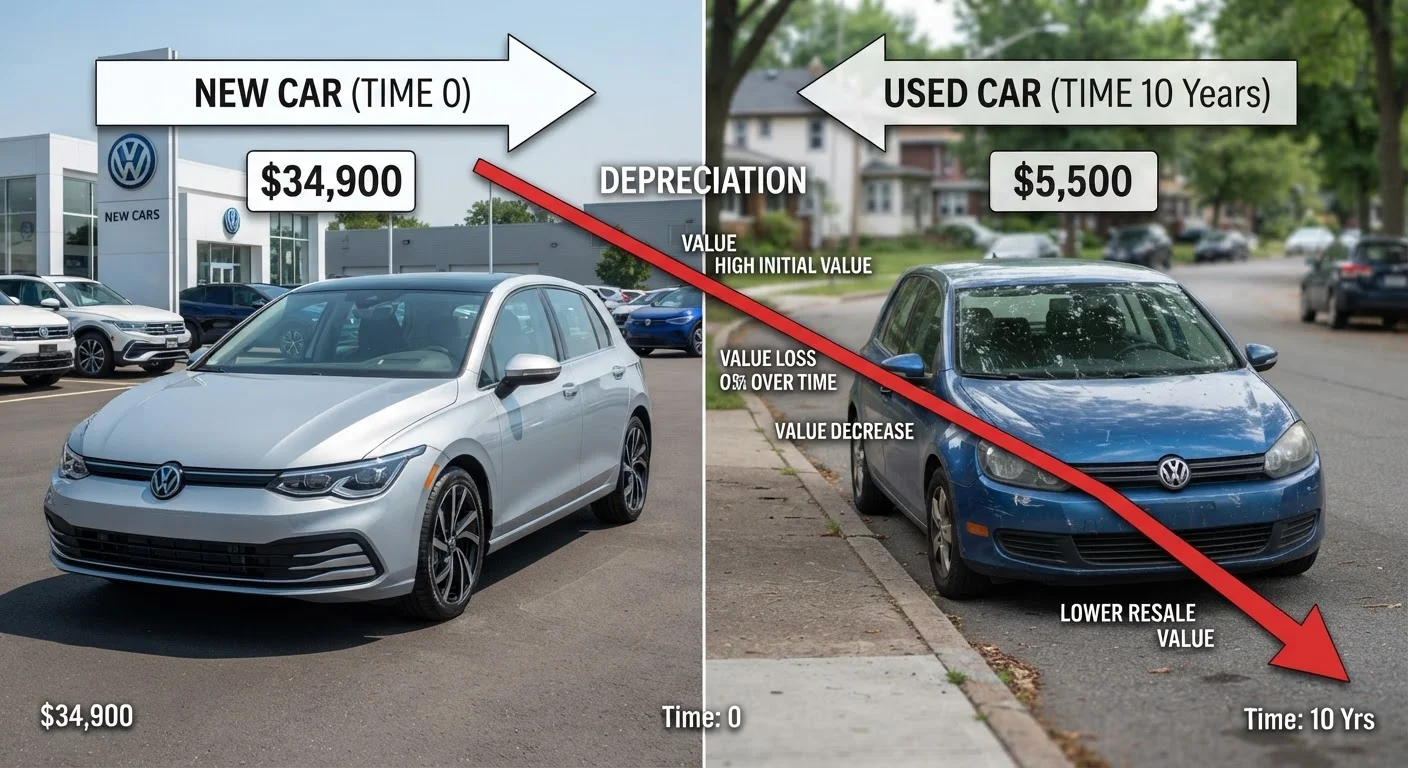
A car loses most of its value the moment you drive it off the lot.
Fact
Depreciation varies considerably by vehicle segment, model, and market conditions. The steepest drop is concentrated in the first few years, but the rate is not uniform across all vehicles.
Certain segments - particularly trucks and SUVs with strong resale demand - have historically depreciated more slowly than entry-level sedans. During periods of tight used-car supply, some nearly-new vehicles have actually held value or appreciated temporarily. While it is accurate that a new vehicle is no longer priced as new once it has been registered, the magnitude of that initial drop depends on the model, trim, and current used-market conditions. Assuming a fixed dramatic loss can cause buyers to pass on genuinely reasonable used deals or sellers to underprice a vehicle that the market values highly.
Myth
Your trade-in should be worth what similar cars are listed for in private sales.
Fact
Trade-in value and private-sale value are different metrics reflecting different buyer pools, risks, and costs. Trade-in prices are almost always lower.
A dealer accepting a trade-in must inspect, recondition, carry, and resell the vehicle - and absorbs the risk of it sitting in inventory. A private buyer purchasing directly does not have those overheads, but takes on more risk. The spread between trade-in value and private-party value commonly ranges from several hundred to several thousand dollars depending on the vehicle. Neither figure is wrong; they serve different purposes. What each route actually costs you outlines how these differences affect total transaction value.
Myth
Certified pre-owned vehicles are priced fairly because they've been inspected.
Fact
CPO certification adds value through warranty coverage and inspection standards, but it does not automatically mean the asking price reflects fair market value.
Certified pre-owned (CPO) programs vary by manufacturer in what they cover and for how long. The premium charged for CPO designation can sometimes exceed the value of the coverage provided, particularly for vehicles with low mileage that may be unlikely to need major repairs in the near term. Buyers should still compare CPO asking prices against current market data for equivalent non-certified vehicles, and evaluate whether the warranty terms genuinely justify the price difference for their specific situation.
What These Myths Have in Common
Each of these misconceptions shares a structural flaw: they treat a single number as a complete truth. MSRP, invoice price, and trade-in value are all data points within a larger market - not authoritative verdicts. The dealers, platforms, and private sellers you interact with know this. Buyers who don't are at an inherent disadvantage.
~20%
Average new-vehicle first-year depreciation
Industry data from vehicle valuation services indicates most new cars lose roughly 15-20% of their value within the first year of ownership, though rates vary significantly by segment.
$1,000-$4,000+
Typical trade-in vs. private-sale spread
Consumer automotive research consistently shows a gap of this range between dealer trade-in offers and private-party market values for the same vehicle.
3-5%
Estimated manufacturer holdback on MSRP
Automotive industry analysts note that holdback payments to dealers commonly represent 2-3% of MSRP, reducing the dealer's effective cost below published invoice price.
Preparation closes that gap. Tools such as independent vehicle valuation services, published market reports, and a pre-purchase inspection from a qualified mechanic give you the context to evaluate any asking price critically. If you're selling rather than buying, selling your car without getting shortchanged covers how to set a defensible asking price and handle the process on your own terms.
Out-the-Door Price Is the Only Price That Matters
Negotiating only on the sticker price while ignoring financing terms, dealer-installed add-ons, documentation fees, and extended warranties is one of the most common ways buyers end up spending more than intended. Always ask for the complete out-the-door cost in writing before agreeing to any deal. Compare that total - not the monthly payment - against your budget and market data.
Understanding why buyers overpay and the patterns that make it happen is equally valuable - pricing myths rarely operate alone. They combine with emotional triggers and negotiation pressure to push final prices higher than necessary. Once you can name the myth, you can resist the tactic built around it. For guidance on putting that knowledge into practice at the table, see negotiating a vehicle price.