
Why Most Negotiations Fail Before They Start
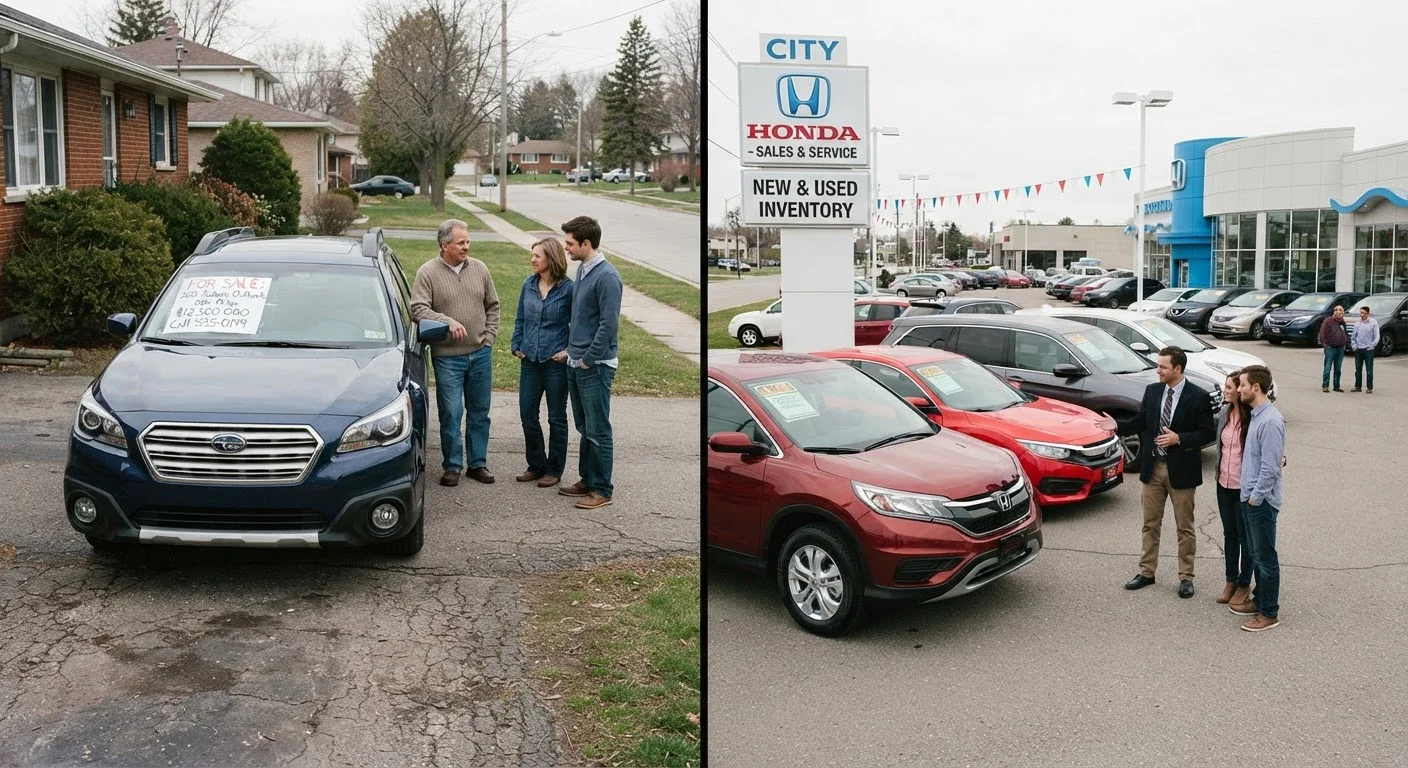
Most buyers lose negotiating ground not at the table, but in the days before they arrive. Walking into any vehicle purchase without independent price research leaves you at the mercy of whoever set the asking price. Sellers - private or commercial - price with their interests in mind, not yours.
Before contacting any seller, use multiple valuation tools (such as Kelley Blue Book or Edmunds) to establish a realistic price range for the specific year, make, model, trim, mileage, and condition you're considering. Print or screenshot that data. Numbers you can reference aloud carry far more weight than vague impressions that a price feels high.
This groundwork also shapes your walk-away number - the ceiling beyond which the deal simply doesn't make financial sense for you. Deciding that figure in advance, rather than under pressure, keeps emotion out of the moment. For a broader look at how purchase channels affect your total cost, see our article on what each route actually costs you.
“The single biggest mistake car buyers make is deciding how much car they can afford based on a monthly payment. That's the dealer's preferred frame, not yours.”
— Philip Reed, Senior consumer advice editor and automotive pricing analyst
Proven Practices That Hold Up Under Pressure
The following approaches are drawn from established consumer negotiation principles and work across both dealership and private-party transactions.
Always negotiate the total out-the-door price, not the monthly payment.
Monthly payment framing allows sellers to obscure the actual purchase price by stretching loan terms or rolling in fees. Focusing on the all-in figure - including taxes, documentation fees, and any add-ons - gives you a clear comparison against market data.
Make your first offer specific and evidence-based, not round.
A precise offer (e.g., $18,450 rather than $18,000) signals that you've done homework and arrived at a figure through analysis, not guesswork. Round numbers read as arbitrary; specific numbers read as informed.
Identify all fees before agreeing to any price.
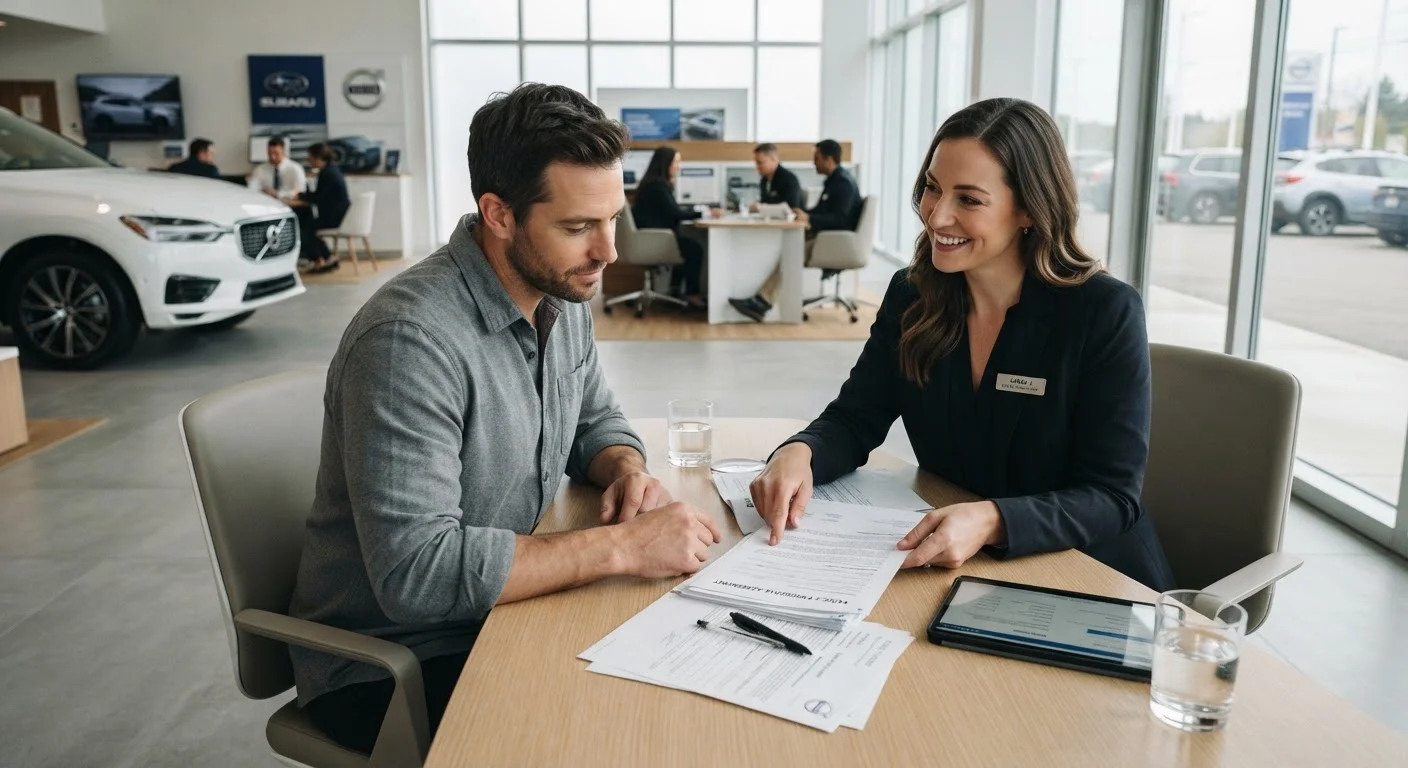
Documentation fees, dealer prep charges, and add-on packages can add hundreds or thousands of dollars after a price appears agreed upon. Knowing these line items upfront prevents a phenomenon sometimes called 'payment packing.'
Get a pre-purchase inspection before finalizing a private-party deal.
A qualified mechanic's inspection (typically $100-$200) can uncover issues that justify a lower offer - or reveal that the asking price is actually fair. It also demonstrates to the seller that you're a serious, informed buyer.
Separate the trade-in negotiation from the purchase price negotiation.
Bundling a trade-in and a new purchase into a single negotiation gives the seller room to give on one number while quietly recouping it on the other. Keeping them as independent transactions maintains clarity.
Timing, Tone, and the Walk-Away Move
When you negotiate matters almost as much as how. Dealerships typically face end-of-month sales quotas, which can create genuine flexibility in the final days of the month. Private sellers who have listed a vehicle for several weeks without interest are often more open to movement than a fresh listing suggests.
Tone is equally strategic. Staying calm and collegial - rather than adversarial - keeps dialogue open. Hostility rarely lowers prices; it more often causes sellers to dig in. Frame your lower offer as a reflection of market data, not personal criticism of the vehicle.
The walk-away is your most credible tool, but only if you mean it. Standing up, thanking the seller, and leaving - or ending the call politely - communicates that you have alternatives. Bluffing this move and immediately returning undercuts every future position you take. If you genuinely cannot afford to walk, that's a budget signal worth heeding before you negotiate at all.
For a full walkthrough of the used-car buying process from research through handover, the end-to-end used-car guide covers every stage in detail. If you're on the selling side, selling your car without getting shortchanged addresses pricing and negotiation from the other direction.