
What You Actually Pay: Price vs. Total Cost
The advertised price is only the starting point. Where you buy determines what gets added - or subtracted - before the transaction closes.
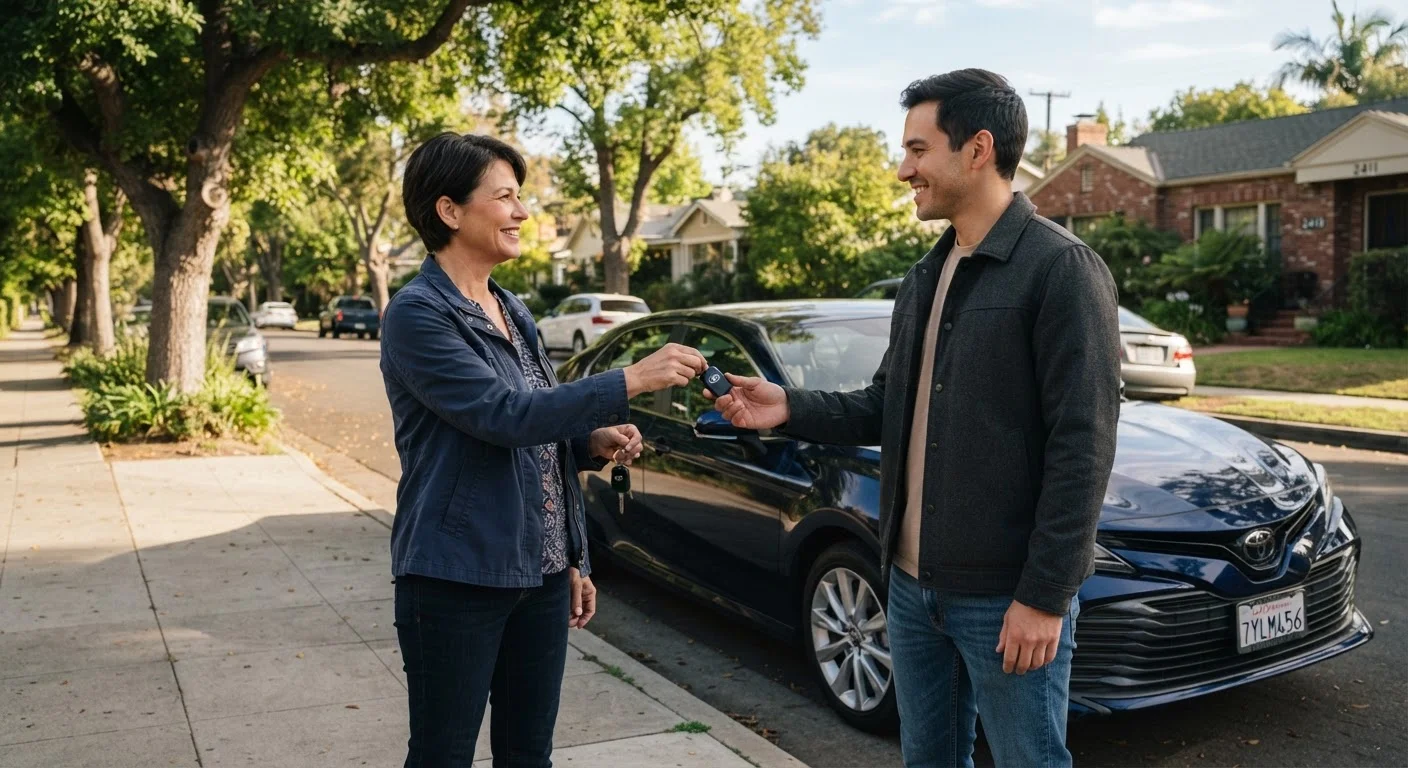
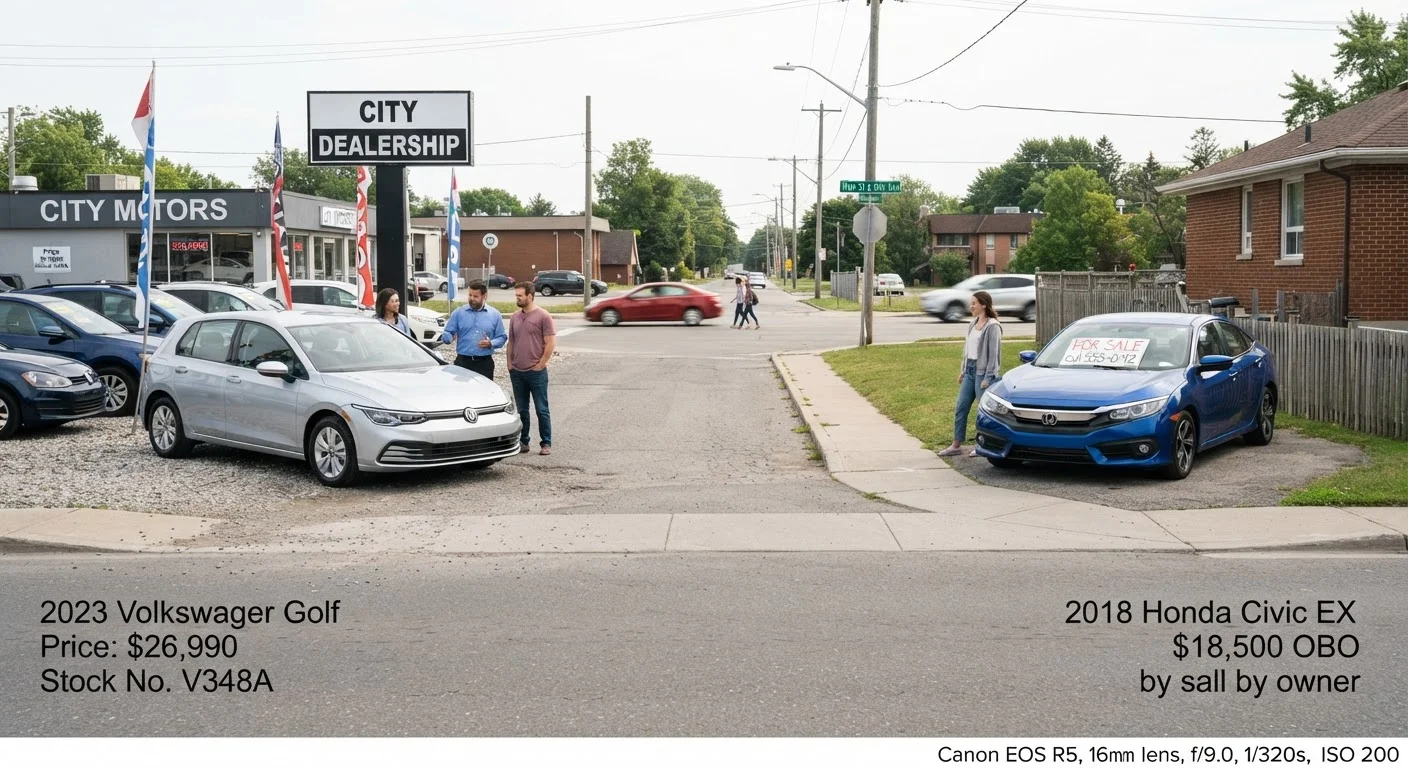
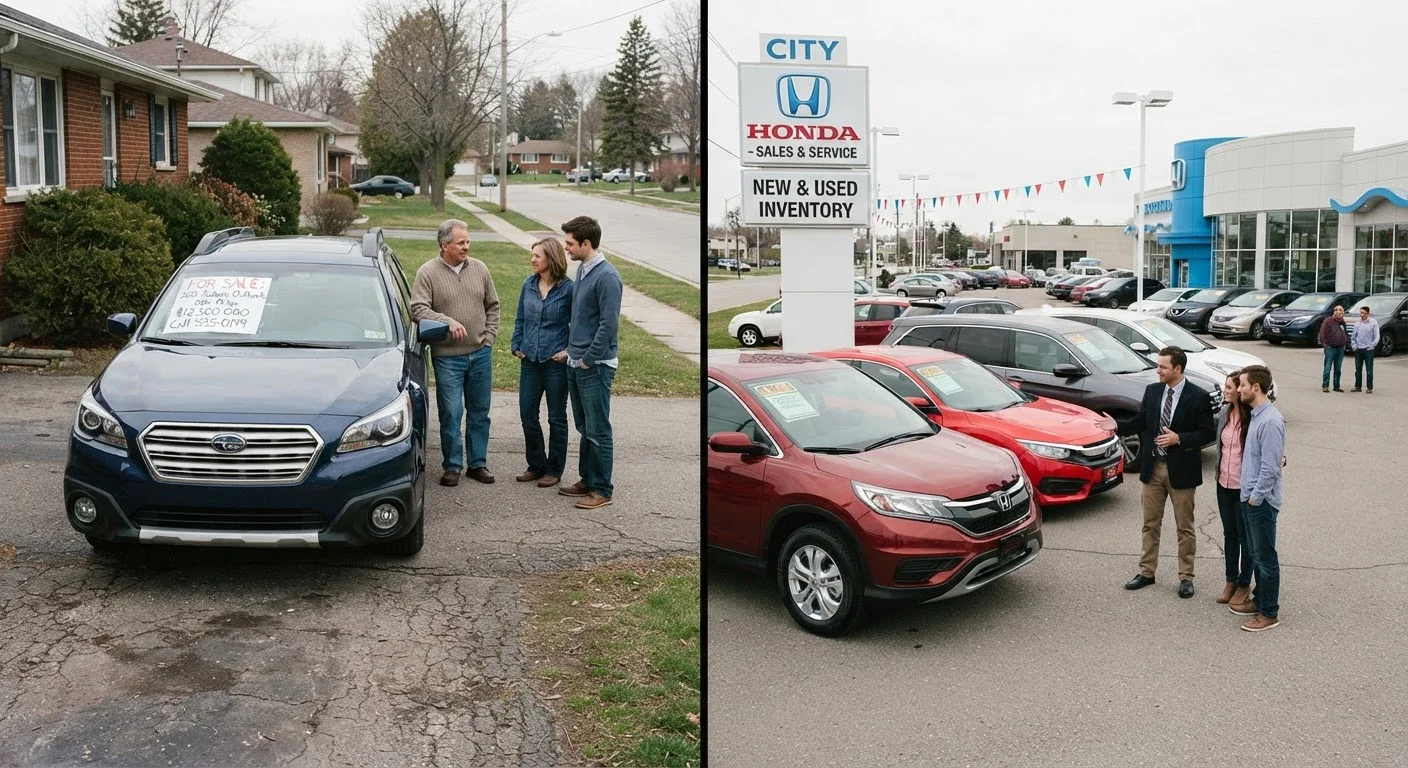
Private sellers typically list vehicles at or below dealer retail because they have no overhead to recover. There is no documentation fee, no dealer preparation charge, and no facility cost built into the price. Negotiation is direct, and a motivated seller may accept considerably less than their asking figure. However, the buyer absorbs every risk: there is no implied warranty, no lemon-law protection in most states for private transactions, and no recourse if a fault emerges the day after the sale.
Dealerships price vehicles to cover their operational costs and generate a margin. On top of the sticker price, buyers routinely encounter documentation fees (commonly $100-$500 depending on the state), dealer preparation fees, and in high-demand periods, market adjustment markups. These are not illegal, but they are negotiable to varying degrees. On the positive side, many dealers offer certified pre-owned (CPO) programs that include limited warranties and multi-point inspections, which carry real value if a mechanical issue surfaces within the coverage window.
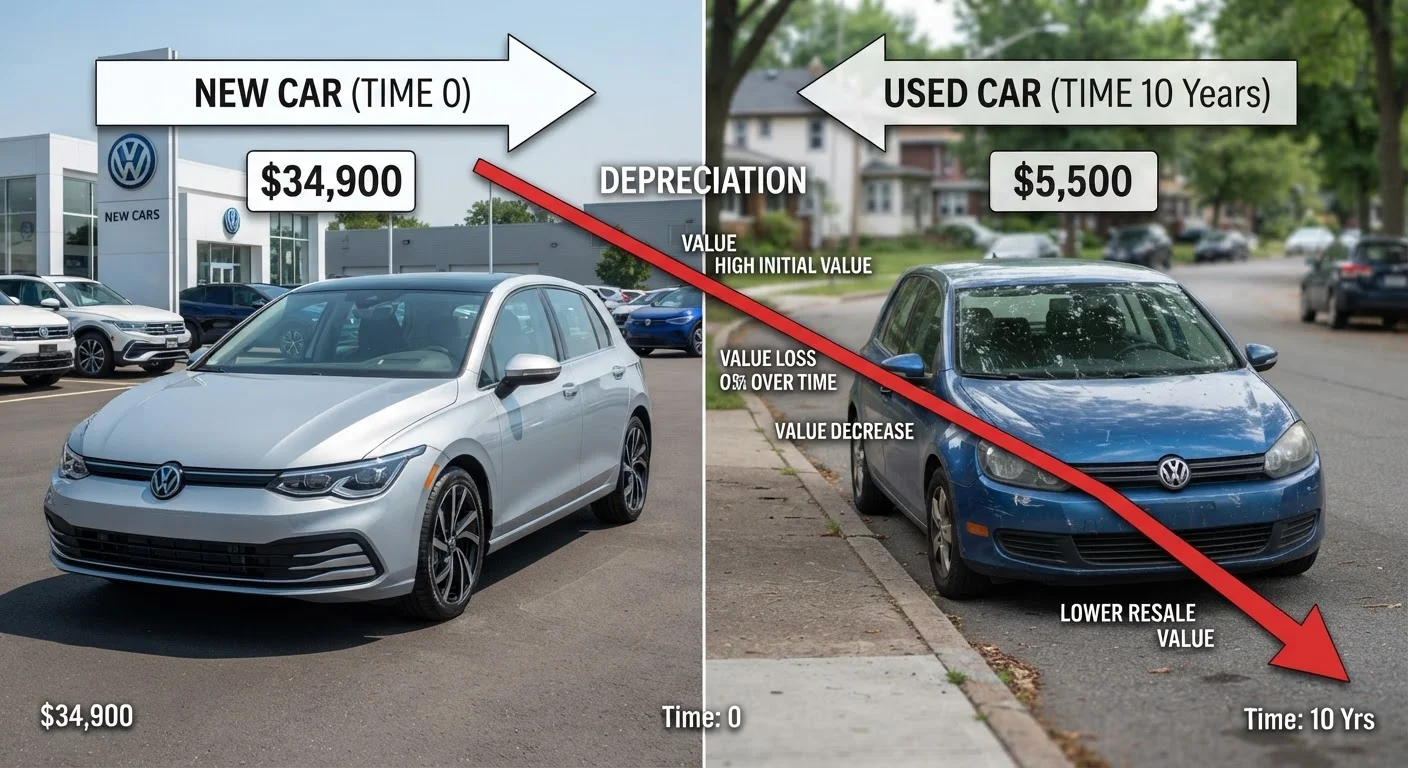
To understand why prices vary so significantly between channels, it helps to know how depreciation works at each stage of a vehicle's life. Our explainer on how depreciation actually works walks through the mechanics.
| Criterion | Private Seller | Dealership |
|---|---|---|
| Typical purchase price | Below dealer retail | At or above retail, plus fees |
| Documentation & dealer fees | None | $100-$500+ depending on state |
| Consumer legal protections | Limited; largely caveat emptor | FTC and state regulations apply |
| Warranty coverage | Typically none (as-is) | CPO or limited warranty available |
| Financing options | Must arrange independently | On-site financing available |
| Title & paperwork handling | Buyer and seller manage independently | Dealer handles transfer and registration |
| Negotiation environment | Direct with owner; informal | Structured; professional sales process |
| Vehicle history transparency | Buyer must obtain independently | Buyers Guide disclosure required by law |
Risk, Protection, and What Happens When Something Goes Wrong
Consumer protection is where the two routes diverge most sharply.
When you buy from a licensed dealership, federal and state regulations apply. The FTC's Used Car Rule, for example, requires dealers to display a Buyers Guide disclosing warranty terms - or lack thereof - on every used vehicle. Many states layer additional protections on top of this. If a dealer misrepresents a vehicle's condition or history, you generally have legal avenues to pursue.
Private sales are largely caveat emptor - buyer beware. The seller is not required to disclose the same information a dealer must, and unless you can prove deliberate fraud, your legal remedies are limited and expensive to pursue. This does not mean private purchases are inherently unwise, but it does mean the burden of verification falls entirely on the buyer.
Title Transfers: A Step Many Buyers Overlook
In a private sale, both parties are responsible for completing the title transfer correctly with their state's motor vehicle agency. Errors or delays can leave the seller liable for the vehicle - including parking tickets and toll violations - after the sale is complete. Before money changes hands, verify your state's exact requirements for title endorsement, bill of sale, and odometer disclosure statements. Your state DMV website is the authoritative source.
Regardless of the route, running a vehicle history report using the VIN and commissioning a pre-purchase inspection from an independent mechanic are the two most effective risk-reduction steps a buyer can take. These steps matter in any transaction, but they are non-negotiable in a private sale.
For sellers, the calculus is different. Private selling means fielding inquiries, arranging test drives with strangers, and managing title transfer paperwork yourself. Dealers handle all of this - but typically pay you less in return. Our companion piece on trading in vs. selling privately compares these trade-offs in detail.
Financing, Negotiation, and Hidden Leverage
Financing access is a practical consideration that often determines which route is even viable for a given buyer. Dealerships can arrange financing on the spot through their lending relationships. Private sales require you to arrive with your own funds - either cash or a pre-arranged personal loan or bank draft. If your credit profile means dealer financing is the only realistic option, that narrows your choices.
Negotiation dynamics differ, too. Private sellers are often emotionally attached to their vehicles and may set aspirational prices, but they are also negotiating as individuals rather than trained sales professionals. Dealers negotiate constantly and use structured processes - however, they also have more flexibility to bundle incentives, adjust trade-in allowances, or modify fee structures in ways a private seller cannot. Our guide on negotiating a vehicle price covers strategies that apply in both contexts.
One underappreciated factor is the assumptions buyers bring to both settings. Common beliefs about fair value and dealer margins frequently do not hold up to scrutiny - a point examined in our piece on vehicle pricing myths that cost buyers real money. Going in with accurate expectations is one of the most cost-effective moves you can make.
~$400
Average US dealer documentation fee
Documentation fees vary widely by state - some states cap them by law, while others impose no limit, making this one of the most variable line items in a dealer transaction.
77%
Used car buyers who financed through a dealership
According to Experian's automotive finance data, the majority of used vehicle purchases involving financing are arranged at the point of sale through the dealership's lending network.
As-is
Legal status of most private vehicle sales
In the absence of a written warranty or proven fraud, vehicles sold by private individuals in most US states are sold as-is, with no obligation on the seller to cover post-sale defects.