
What Each Philosophy Actually Means
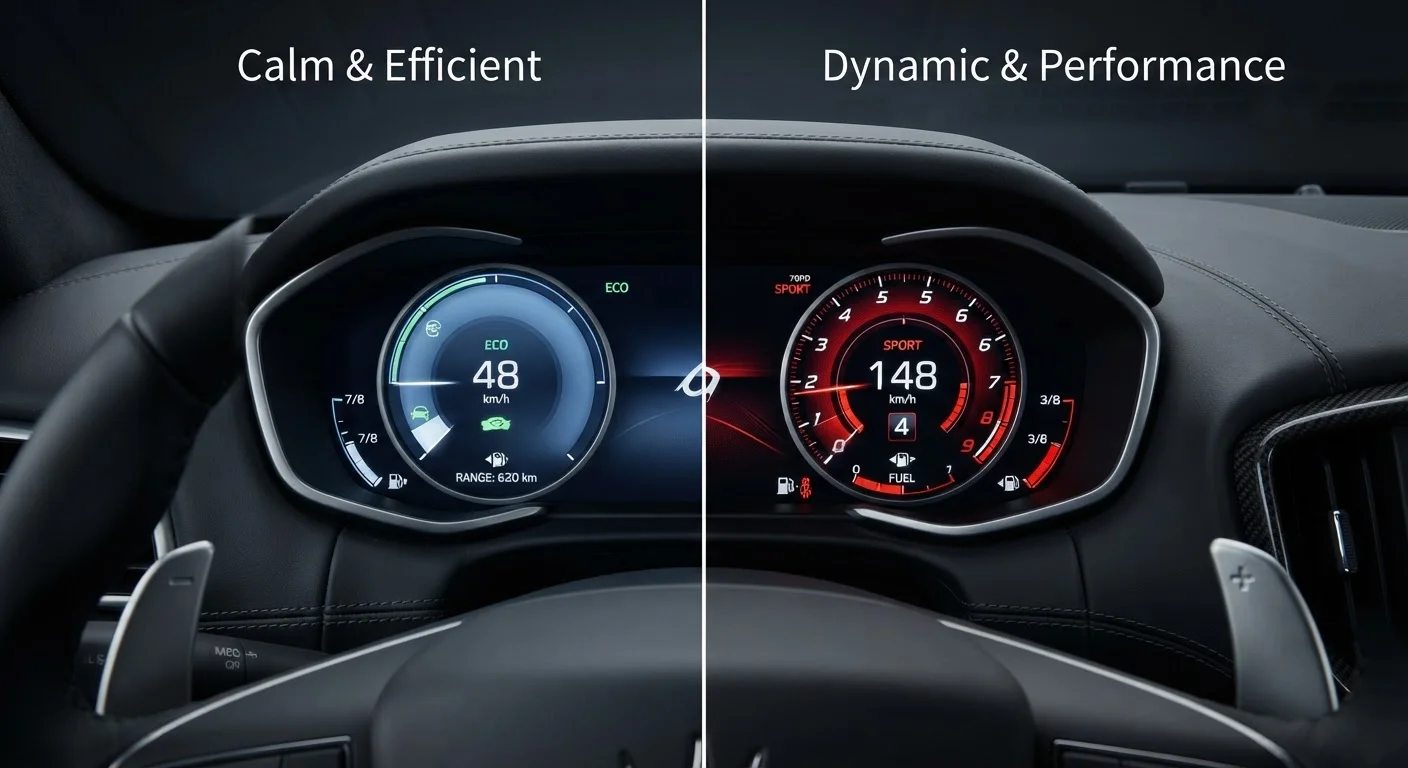
Eco-driving and performance driving are not simply about speed - they represent fundamentally different mental models for operating a vehicle. Eco-driving treats fuel efficiency and mechanical gentleness as the primary goals. Performance driving treats vehicle capability and driver engagement as its core values.
Eco-driving in practice means accelerating progressively, shifting to higher gears early (typically around 2,000 rpm for gasoline engines), reading traffic far ahead to avoid unnecessary braking, and coasting in gear when approaching a stop rather than holding the throttle. The aim is to keep the engine working as little as possible while maintaining smooth, predictable progress.
Performance driving in practice means using the full usable rev range when acceleration is needed, downshifting to match engine speed before corners, braking late but precisely, and understanding how weight transfers across the car under acceleration and braking. It's an active, attentive style - far removed from passive motoring.
Importantly, performance driving as discussed here refers to legal, road-legal technique - not reckless speed. See our comparison of defensive versus reactive driving for how anticipation fits into both styles.
| Criterion | Eco-Driving | Performance Driving |
|---|---|---|
| Primary goal | Fuel efficiency and low wear | Responsiveness and engagement |
| Acceleration style | Gradual, progressive throttle | Decisive use of power band |
| Braking approach | Early, gentle coasting to a stop | Later, firmer and more precise |
| Gear usage | High gears early, low revs | Lower gears held for response |
| Fuel consumption | Lower on most journey types | Higher, especially in urban use |
| Brake and tire wear | Reduced with smooth inputs | Increased under repeated hard use |
| Safety margin built in | Larger buffers by default | Depends heavily on driver discipline |
| Skill ceiling | Moderate - learnable quickly | High - benefits from formal training |
The Real-World Impact on Fuel and Running Costs
The gap between the two styles on your fuel bill is significant. Frequent hard acceleration from a stop - a hallmark of performance-oriented urban driving - consumes substantially more fuel than the gradual approach eco-drivers use. The US Department of Energy has noted that aggressive driving can lower highway fuel economy noticeably compared with steady, smooth technique, though exact figures vary by vehicle and conditions.
Up to 30%
Fuel economy lost to aggressive driving
The US Department of Energy estimates aggressive driving - rapid acceleration and hard braking - can reduce fuel economy by up to 30% on the highway compared with steady, smooth technique.
15-20%
Typical fuel saving from eco-driving habits
Research cited by the European Environment Agency suggests eco-driving techniques can reduce fuel consumption by roughly 15-20% without adding journey time.
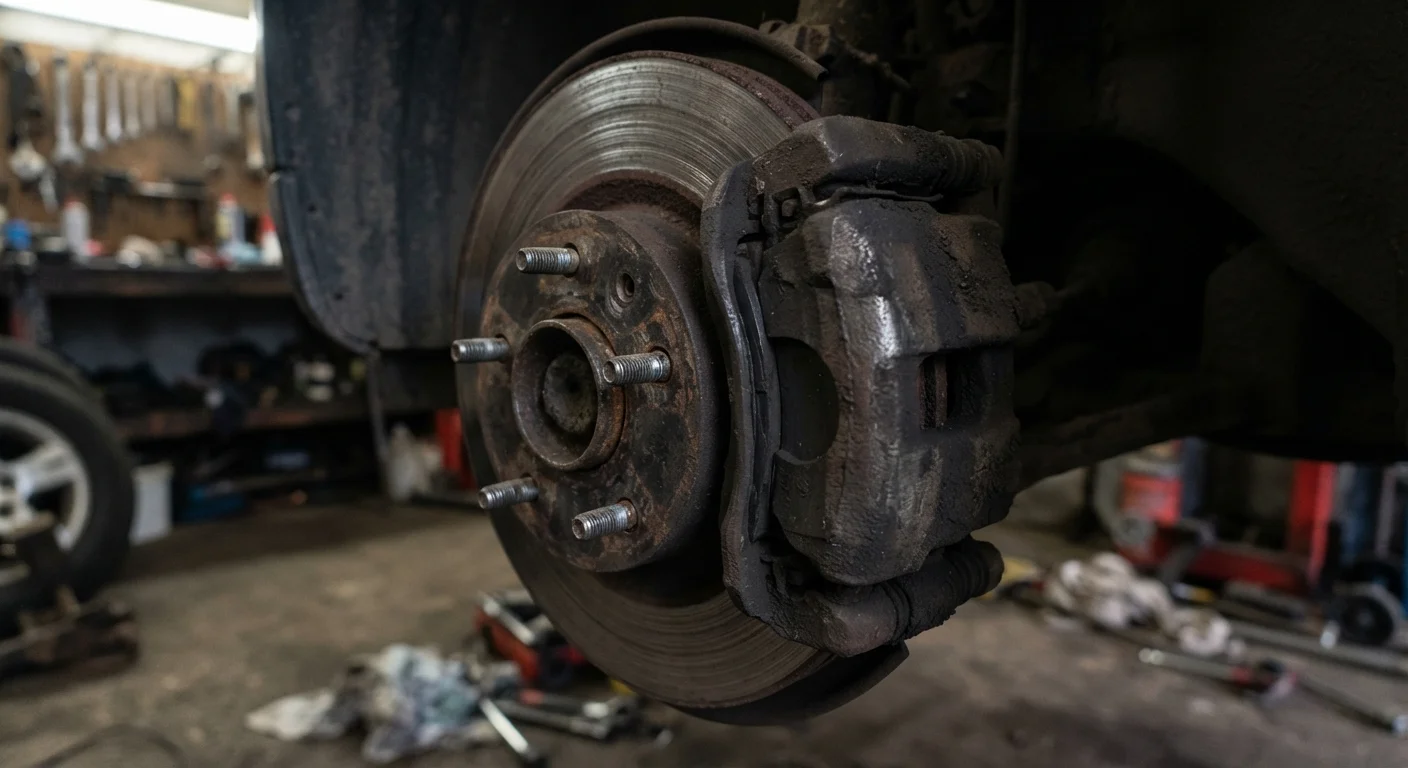
Brakes and tires also tell the story. Late, firm braking converts kinetic energy into heat rather than recapturing it through early deceleration. Over time, this accelerates pad and rotor wear. Similarly, carrying speed into corners and loading tires hard wears rubber faster than eco-driving's measured approach. Our guide on habits that quietly shorten a car's lifespan explains how driving inputs translate directly into mechanical wear.
That said, performance driving is not inherently wasteful on every journey. On a highway cruise or a clear country road, a skilled driver can be surprisingly efficient - holding a high gear, reading the road, and avoiding unnecessary speed changes.
Safety: Where the Two Styles Converge and Diverge
Both philosophies share a critical safety foundation: attentiveness. Eco-drivers must read traffic far ahead to time their coasting correctly; performance drivers must read road surfaces, grip levels, and sight lines to judge their inputs. Complacency is the enemy of both. Our article on habits that quietly erode driver safety over time illustrates how familiarity behind the wheel can breed dangerous inattention regardless of driving style.
Where the styles diverge is in margin management. Eco-driving naturally builds larger following distances and gentler speed profiles, which generally increases the buffer available to react to hazards. Performance driving, when applied without discipline, can shrink those margins - particularly if a driver carries too much speed into an unexpected situation.
Conversely, performance driving skills become genuine safety assets in specific scenarios. Understanding understeer and oversteer, knowing how to brake firmly without locking wheels, and being confident in a decisive overtake all reduce risk when the situation demands action. For context on when overtaking judgement matters most, see our guide to overtaking rules.
Performance Skills Are Not the Same as Reckless Driving
Performance driving technique - such as heel-and-toe downshifting or threshold braking - is taught in licensed advanced driver training programs precisely because it improves vehicle control. The concern is not the skills themselves but applying them at inappropriate times or speeds. Road safety authorities in the US and internationally generally support advanced driving education as a net safety benefit.
Conditions change what's appropriate entirely. On wet or icy surfaces, eco-driving's smooth, low-stress inputs are almost always the safer default. Our article on driving in rain, ice, and fog explains the specific adjustments that override style preference when traction is compromised.
Which Approach Suits Your Driving Life?
For most American drivers, a deliberate blend serves best. Adopting eco-driving habits during stop-and-go commutes, urban streets, and school-zone crawls pays dividends in fuel savings and component longevity. Applying performance driving awareness - weight transfer, braking confidence, smooth cornering - in situations that genuinely demand it, such as highway merges or unfamiliar mountain roads, builds safety rather than undermining it.
New drivers often benefit from learning eco-driving first: it enforces smooth inputs and long-range hazard awareness before developing the muscle memory that underpins more dynamic technique. Experienced drivers who want to sharpen their performance skills should consider a structured advanced driving course rather than using public roads as a practice ground.
Whatever your default style, the most important variable is consistency: erratic driving - lurching between aggressive and gentle inputs - is harder on a car and less predictable for other road users than either philosophy applied steadily. For broader context on keeping a vehicle in good shape, our car maintenance hub covers the mechanical side of the equation.