
Why Right-of-Way Myths Are Dangerous
Right-of-way rules are among the most frequently misquoted sections of any highway code - and the consequences of getting them wrong go beyond a failed driving test. Collisions at intersections, crosswalks, and merges are disproportionately linked to one driver assuming priority they didn't actually have. Overconfidence in a misunderstood rule is, in practical terms, just as dangerous as ignoring the rule entirely.
The myths below aren't fringe beliefs. They're repeated by experienced drivers, passed down from driving instructors who oversimplify, and reinforced by habits that happen to work - until they don't. Understanding where these ideas go wrong is a genuine safety exercise, not a trivia exercise.
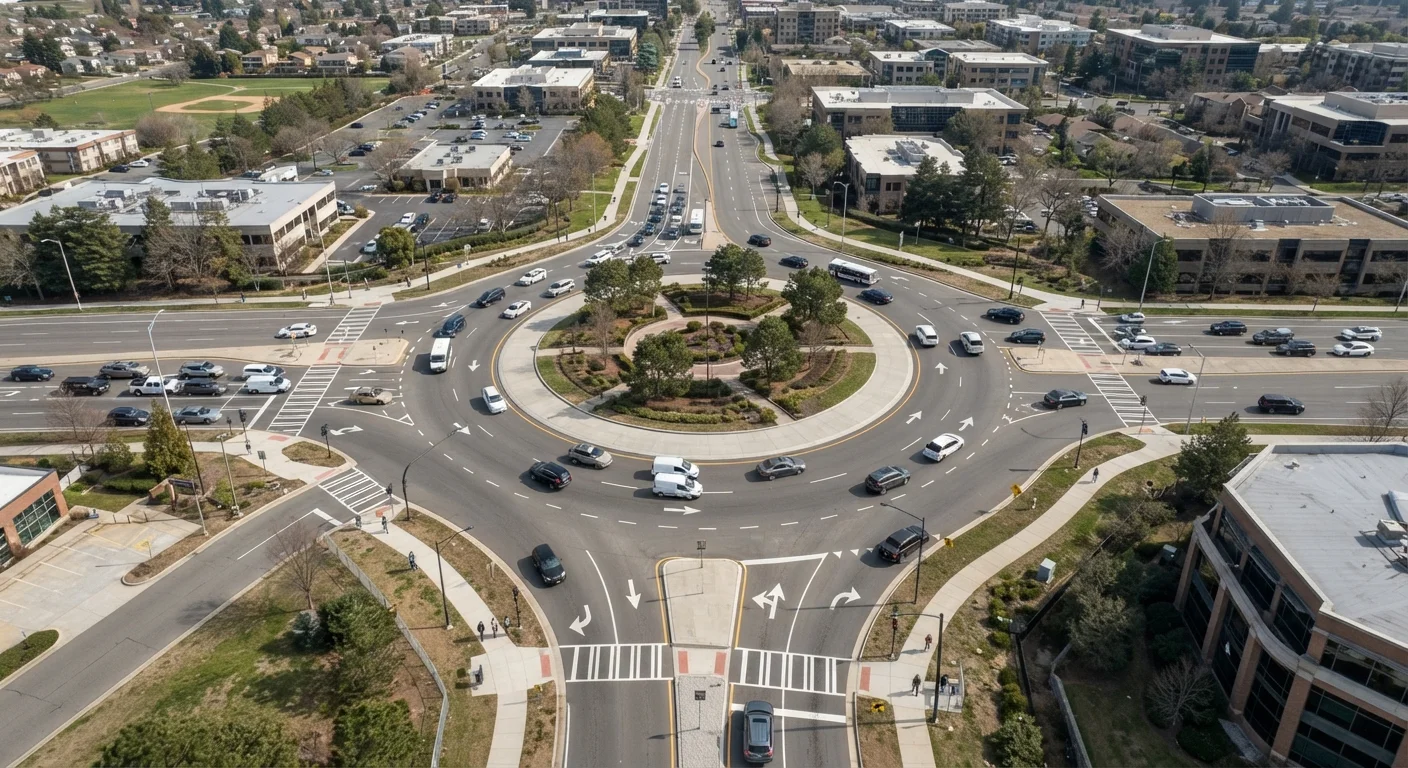
For a deeper look at how priority plays out at specific road features, see our guide to roundabouts, yield signs, and priority roads.
Myth
Pedestrians always have the right of way, no matter where they are.
Fact
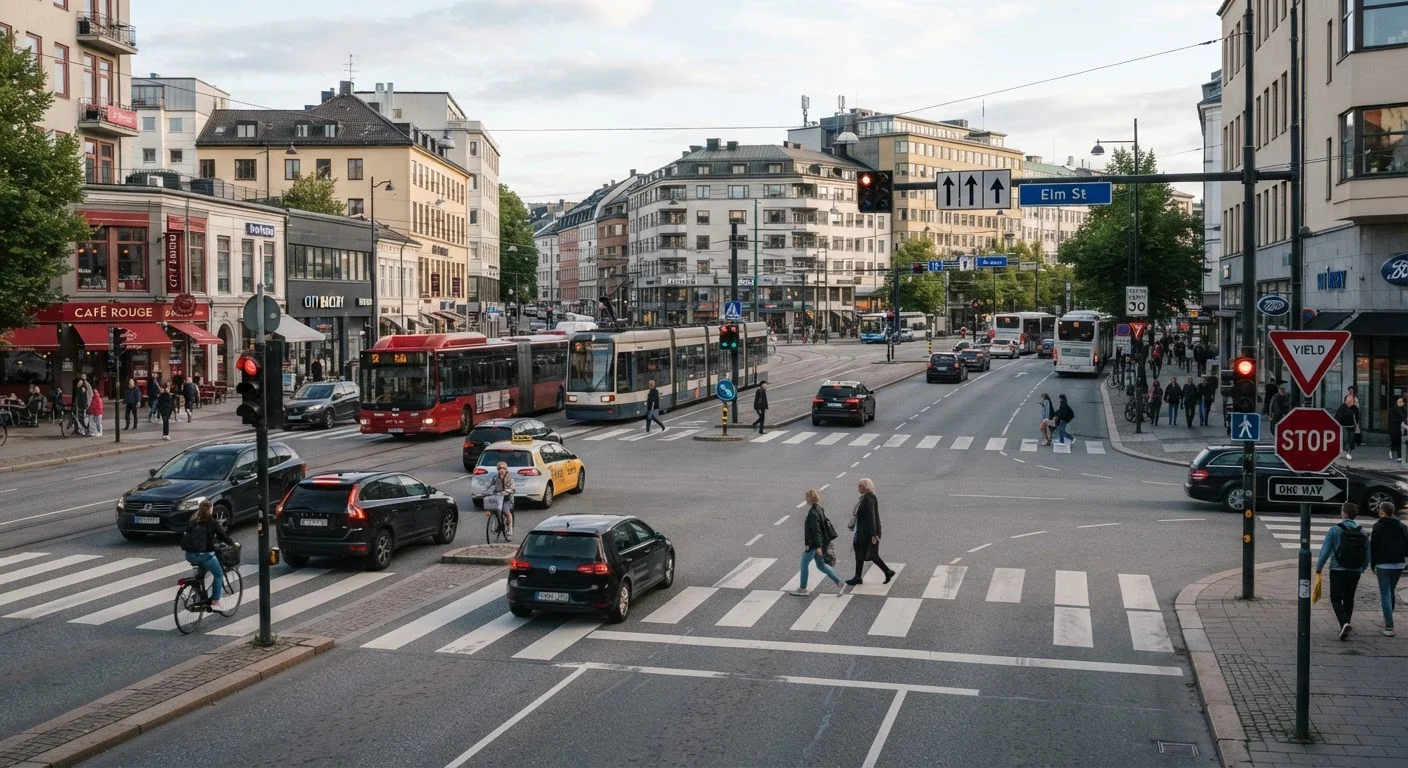
Pedestrians have protected priority at marked crosswalks and when signals indicate - not at every point on the road.
This is the most commonly repeated oversimplification in driving culture. Pedestrians do have strong legal protections at designated crossings - drivers are required to yield at marked crosswalks when a pedestrian is present or waiting. However, a pedestrian who steps into a road mid-block, darts between parked cars, or crosses against a signal does not automatically hold right of way. Shared responsibility is a core concept in traffic law: both drivers and pedestrians are expected to act with reasonable care. That said, drivers are held to a high duty of care, and striking a pedestrian - regardless of fault - carries serious legal and ethical weight. Never assume that because a pedestrian is technically in the wrong, they will move.
Myth
If you have a green light, you have the right of way over everyone.
Fact
A green light permits you to proceed - it does not guarantee the intersection is clear or override all other road users.
Green means go when it is safe to do so. Drivers must still yield to emergency vehicles displaying lights and sirens, even mid-intersection on a green. They must also allow pedestrians who are already lawfully crossing to finish doing so. And a green light won't protect you from a red-light runner. Traffic signals grant legal permission; they don't suspend the obligation to scan and proceed with awareness. Treating a green as an unconditional guarantee is a known factor in serious intersection crashes.
Myth
The driver who arrives at a stop sign first always goes first.
Fact
Arrival order matters, but tie situations, road type, and local rules all modify who actually yields.
At a four-way stop, arrival order is the starting principle - but drivers arriving simultaneously must apply a secondary rule. In the US, when two vehicles reach the intersection at the same time, the driver on the left yields to the driver on the right. When three or more vehicles arrive together, the situation requires negotiation, eye contact, and caution. Additionally, some jurisdictions add specific rules for T-intersections and uncontrolled crossings. "First in, first out" is a reasonable default but not an absolute law.
Myth
When merging onto a highway, the highway traffic must yield to you.
Fact
Merging drivers must yield to traffic already on the highway - not the other way around.
This misconception sometimes stems from a misreading of "zipper merge" guidance, which applies when two lanes of moving traffic must combine - not when an on-ramp feeds into a highway. On an on-ramp, you are entering an established flow of traffic and must adjust your speed to merge safely without forcing other drivers to brake or swerve. Established highway traffic has right of way. That said, highway drivers who have the opportunity to move over and facilitate a safe merge are generally encouraged to do so - but they are not legally required to in most states.
Myth
You can always turn right on a red light after stopping.
Fact
Right turns on red are permitted in most US states after a full stop - but numerous exceptions apply.
While right-on-red is a broadly available option after a complete stop in the US, it is not universal. Posted "No Turn on Red" signs - common near schools, busy pedestrian zones, and complex intersections - prohibit it entirely. Some cities, including New York City, ban right-on-red at most intersections by default. Even where it is permitted, drivers must yield to crossing pedestrians and oncoming traffic before turning. A rolling stop doesn't count; the law requires a full, complete stop before assessing whether the turn is safe and legal.
Myth
Right of way is something you can take - if you're fast enough, you have it.
Fact
Right of way is yielded by others, not seized. Forcing it creates liability, not priority.
This may be the most consequential misunderstanding on the list. Right of way is a legal framework designed to prevent conflict - it is not a physical race. A driver who forces their way into a space is not exercising priority; they are creating a hazardous situation. If a collision results, the driver who forced entry is typically found at fault, regardless of who "got there first." Traffic law is also clear that no driver should insist on right of way if doing so risks a collision. In other words, even when you have right of way, you are still obligated to avoid a crash if you can.
The Rules That Trip Up Even Experienced Drivers
Many of the myths below feel intuitive, which is exactly why they persist. Driving behavior is largely habit-driven, and a rule that seems to have worked for years rarely gets questioned - even when it was never correct to begin with.
40%
Of US traffic crashes occur at intersections
The Federal Highway Administration has consistently identified intersections as the location of approximately 40% of all reported crashes, with failure to yield among the top causes.
#1
Failure to yield: a leading crash cause
According to NHTSA data, failure to yield right of way is one of the most frequently cited driver errors in crash reports across all age groups.
The practical takeaway: right of way is always situational. It is shaped by road markings, signals, road type, speed, and the behavior of other road users. No single rule applies universally. If you're also working to sharpen motorway habits, our first-time motorway driving guide covers priority situations specific to high-speed roads. And for a broader look at how familiarity can quietly undermine safe driving, this article on habits that erode driver safety is worth your time.
Having Right of Way Doesn't Eliminate Your Duty of Care
Even when the law grants you priority, you are still legally and ethically required to avoid a collision if one is preventable. Courts and insurers regularly examine whether a driver with legal right of way still had an opportunity to act. "I had the right of way" is not a complete defense if evidence shows you could have braked or taken evasive action. Drive to the conditions, not just to your technical priority.