
How Roundabouts Actually Work
Roundabouts trip up drivers more than almost any other road feature - partly because older traffic circles used different rules, and partly because the U.S. adopted modern roundabouts relatively recently compared to Europe.
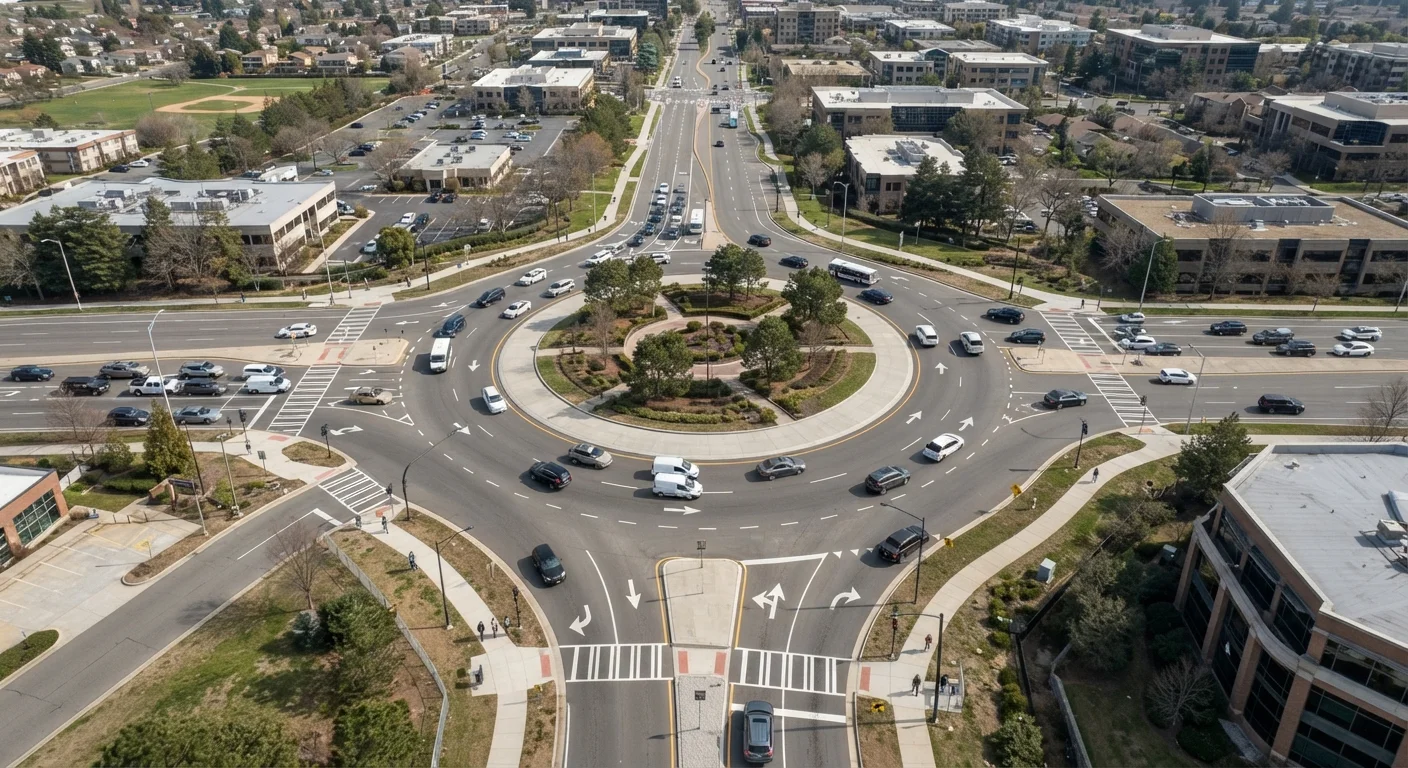
The rule is straightforward: traffic inside the roundabout has priority. When you approach the entry point, you'll typically see a yield sign and dashed white lines on the pavement. You must slow, check for vehicles already circulating from your right, and only enter when it's safe to do so.
Common mistakes include entering without yielding because no one is immediately visible, or stopping inside the roundabout to let others in - which is wrong and creates a hazard. Once you're in the circle, keep moving. Signal your exit to help other drivers anticipate your path. Road markings at the entry - including the dashed yield line - reinforce this priority rule visually.
Roundabouts vs. Traffic Circles: Not the Same
Modern roundabouts are engineered intersections designed for slow-speed entry with clear yield rules. Traditional traffic circles (found in older U.S. cities) are larger, faster, and may operate under different priority rules - sometimes giving priority to entering vehicles. Always check local signage rather than assuming roundabout rules apply everywhere.
Yield Signs vs. Stop Signs: Not the Same Thing
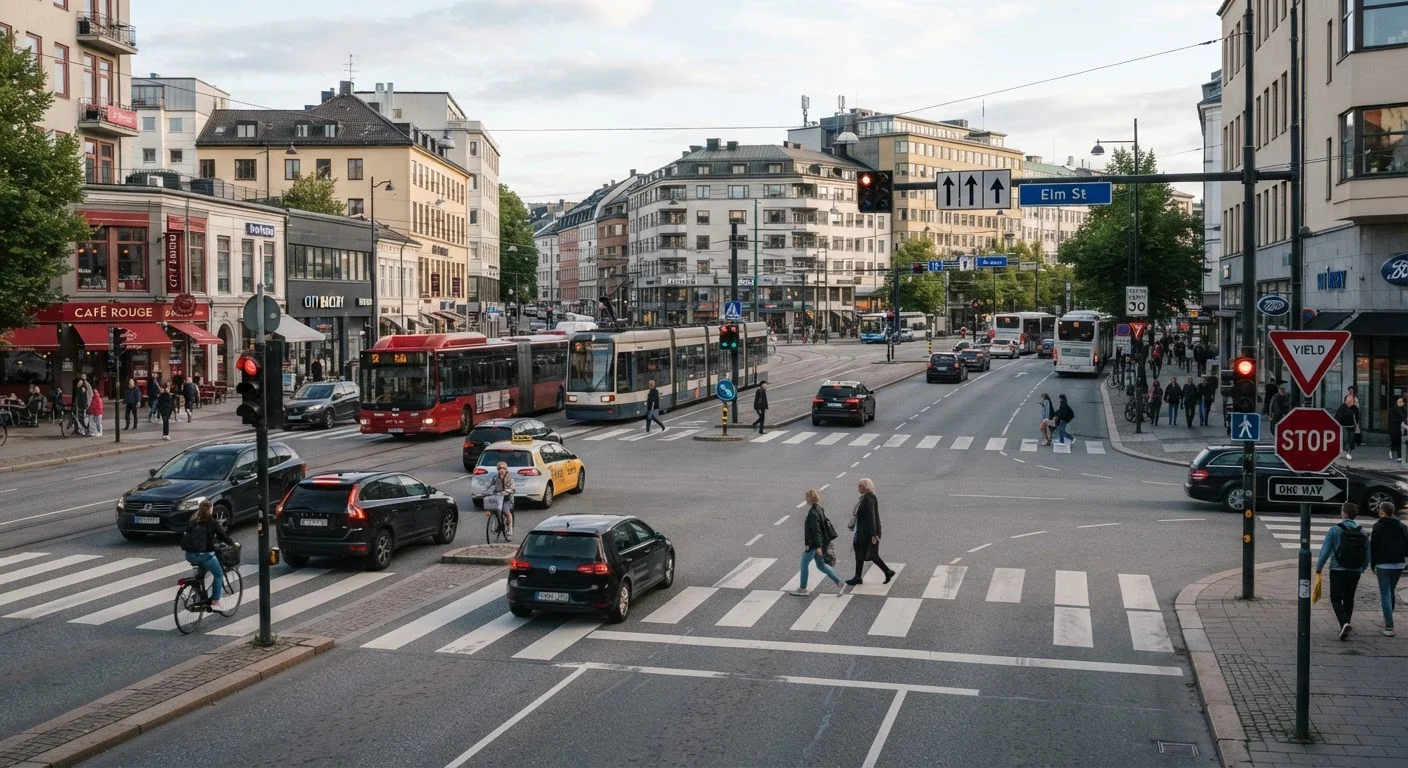
A yield sign (the downward-pointing red and white triangle) is frequently misread as a suggestion rather than a legal instruction. It means: slow down, assess the situation, and give way to conflicting traffic. You only stop if traffic is actually present and entering would be unsafe.
A stop sign, by contrast, requires a complete stop every time - regardless of whether any other vehicles are visible. Rolling through a stop sign is a moving violation in every U.S. state.
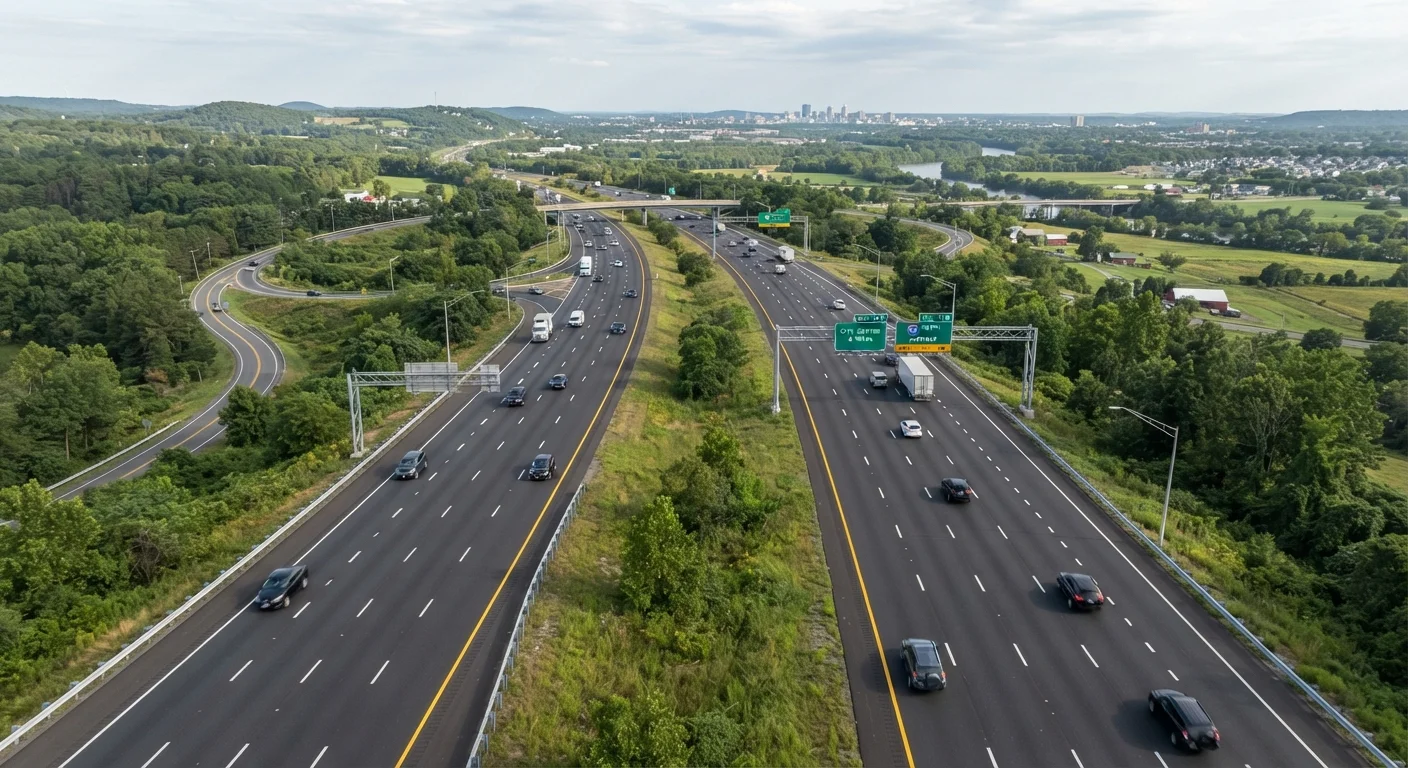
Yield signs are commonly placed at roundabout entries, freeway on-ramps, T-intersections where a minor road meets a main road, and some pedestrian crossings. The key distinction: a yield sign puts the judgement call on you. If you enter and cause a collision after misreading the situation, you are likely at fault.
At yield signs, slow first - always
Even when the road looks clear, reduce your speed enough that you could stop if a vehicle appears. Yield signs are placed where sight lines are often limited. Treating every yield sign as a potential stop keeps you compliant and safe.
Four-Way Stops and Uncontrolled Intersections
Four-way stops require every driver to stop, then take turns based on arrival order and position. The hierarchy works like this:
- First to arrive, first to go. The vehicle that reaches the stop line first proceeds first.
- Simultaneous arrival - yield to the right. If two vehicles arrive at the same time, the driver on the left yields to the driver on the right.
- Facing vehicles - straight traffic first. If two drivers face each other and one wants to turn left, the left-turning driver yields to the driver going straight or turning right.
At an uncontrolled intersection - no signs, no signals - the same yield-to-the-right rule applies. These are more common in residential areas and parking lots. Proceed cautiously, make eye contact where possible, and never assume the other driver knows the rule.
For a broader look at common misunderstandings around priority, see what drivers most often get wrong about right of way.
~40%
Of U.S. traffic crashes occur at intersections
According to the Federal Highway Administration, intersection-related crashes account for approximately 40% of all crashes in the United States.
75%
Reduction in serious injury crashes at roundabouts
The Insurance Institute for Highway Safety (IIHS) has found that converting conventional intersections to roundabouts can reduce serious injury crashes by roughly 75%.
Priority Roads: When One Road Outranks Another
In the U.S., the concept of a formal "priority road" (common in Europe, where a yellow diamond sign designates it) isn't widely used as a distinct legal category. Instead, priority is communicated through yield signs, stop signs, and traffic signals placed on the subordinate road.
In practice, the effect is the same: if you're on a minor road approaching a main road with a yield or stop sign, you are the one who must give way. The major road has functional priority. Drivers on the main road are not required to slow, signal, or adjust their speed to accommodate you.
This trips up drivers who assume that because traffic is light on the main road, they have an informal right to merge. They don't. Priority rules exist precisely because informal assumptions cause crashes. Always look for signs and markings before entering any intersection - see our guide on what road lines and markings actually mean for help decoding what's on the pavement.
If you're also curious about overtaking rules on priority and main roads, passing and overtaking rules covers the legal and practical boundaries in detail.
This article provides general information about road rules for educational purposes. Traffic laws vary by state and jurisdiction. Always consult your state's official driver handbook or a qualified legal source for rules that apply in your specific location.