
Set a Realistic Budget Before You Browse
The most expensive mistake first-time buyers make isn't overpaying for a car - it's underestimating what car ownership actually costs. Before you open a single listing, calculate your total cost of ownership, not just the purchase price.
Add up: estimated insurance premiums (get quotes before you buy), your state's sales tax and registration fees, fuel costs based on the vehicle's EPA rating, and a maintenance reserve. A reasonable rule of thumb is to set aside at least $500-$1,000 annually for routine maintenance on a used vehicle, more if it's older or has high mileage.
Total cost of ownership
The full ongoing expense of owning a vehicle, including purchase price, insurance, fuel, taxes, registration, and maintenance - not just the initial sale price.
Vehicle history report
A document compiled from reported data sources that shows a vehicle's accident history, title status, number of owners, and odometer readings over time.
Clean title
A vehicle title with no outstanding liens, legal holds, or designations like salvage or rebuilt - meaning ownership can transfer without complications.
Pre-purchase inspection (PPI)
An evaluation of a used vehicle performed by an independent mechanic before the buyer commits to purchase, aimed at identifying mechanical or structural problems.
As-is sale
A transaction in which the buyer accepts the vehicle in its current condition, with no warranty or seller obligation to cover problems discovered after the sale.
Lien
A legal claim a lender holds against a vehicle until a loan on it is fully repaid. A vehicle with an active lien cannot have its title cleanly transferred to a new owner.
If you're financing, remember that a longer loan term lowers your monthly payment but raises total interest paid. Paying cash eliminates interest entirely but may stretch your savings thin. For a fuller picture of navigating every stage of the buying process, see our end-to-end used-car buyer's guide.
Private Seller vs. Dealership: What the Difference Really Means
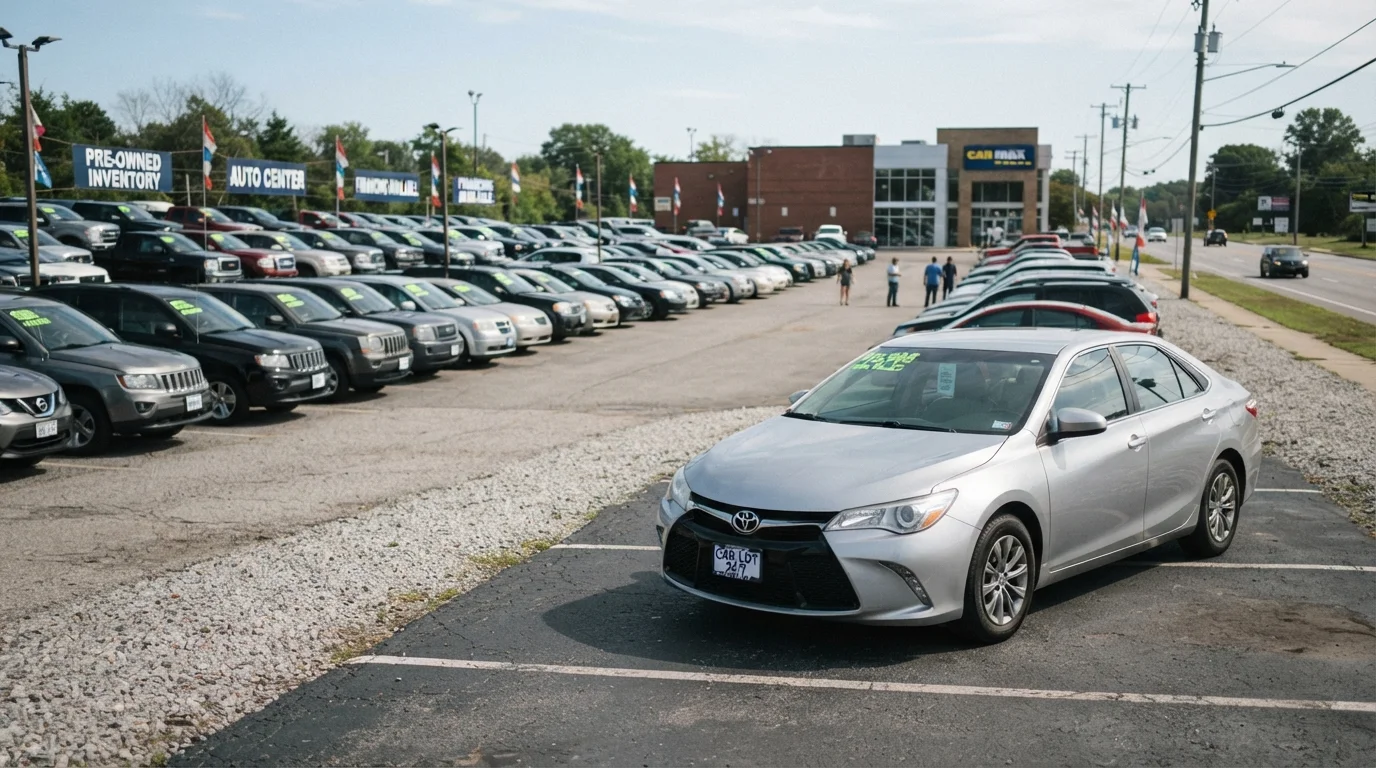
Both options have genuine trade-offs, and neither is universally better. Private sellers typically list vehicles below dealer prices because they have no overhead. However, sales are almost always "as-is" - once you sign, you own any problems that come with the car. Your legal recourse after purchase is limited.
Licensed dealerships must comply with state consumer protection laws and Federal Trade Commission used-car rules, including displaying a Buyers Guide disclosing warranty terms. Some offer limited warranties or certified pre-owned programs. Prices are usually higher, but so is accountability.
Bring a Knowledgeable Friend or Advisor
If you're not confident evaluating a car on your own, bring someone with mechanical knowledge or experience buying used vehicles. A second set of eyes - even a non-expert - can help you stay objective and notice details you might overlook when excited about a car.
Whichever route you choose, research the seller. For private sales, verify the seller's ID matches the name on the title. For dealerships, check their standing with your state's Department of Motor Vehicles and the Better Business Bureau. If you're eventually thinking about the other side of this transaction, our guide on selling a car without getting shortchanged explains how sellers approach pricing and negotiation.
The Inspection Step Most Buyers Skip
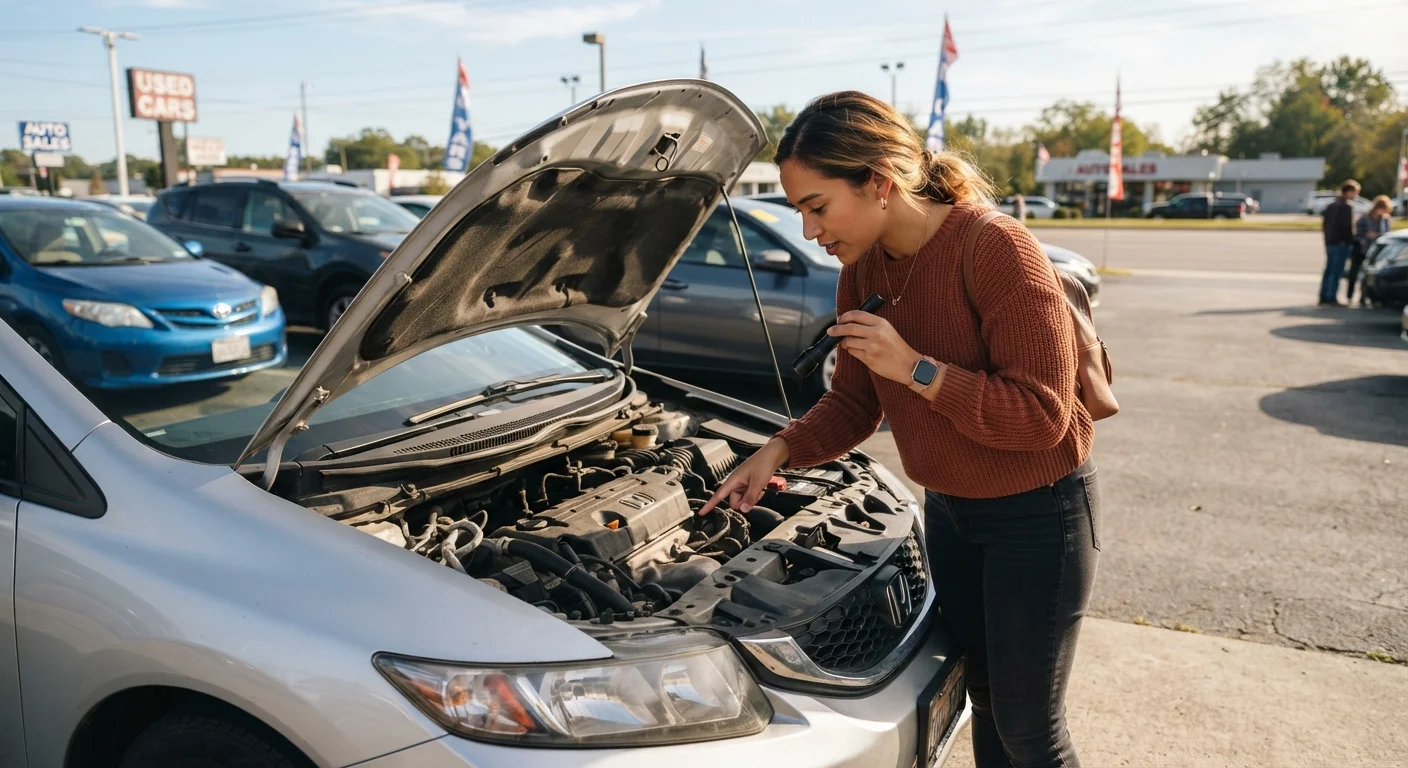
A vehicle history report is a starting point, not a finish line. It only captures incidents that were formally reported - plenty of accidents, flood damage, and mechanical failures never appear in any database. What actually protects you is a pre-purchase inspection (PPI) by an independent, qualified mechanic.
A thorough PPI covers the engine, transmission, brakes, suspension, tires, fluid levels, frame integrity, and any active diagnostic trouble codes. Expect to pay a modest fee - typically $100-$200 depending on your area and the shop - but consider it insurance against a far costlier mistake. To understand exactly what a PPI should cover, read what a pre-purchase vehicle inspection actually covers.
Before the inspection, use the 17-character VIN to pull a history report and confirm it matches what's stamped on the dashboard and door jamb. Discrepancies are an immediate red flag. For a structured walk-through of the full inspection and test-drive process, our buyer's checklist covers each step in order.
Paperwork, Title, and Registration: Don't Wing It
Title problems are among the most common - and costly - traps in used-car sales. Before any money changes hands, verify that the title is clean (no liens, no salvage or rebuilt designation unless disclosed) and that the seller's name matches their government-issued ID.
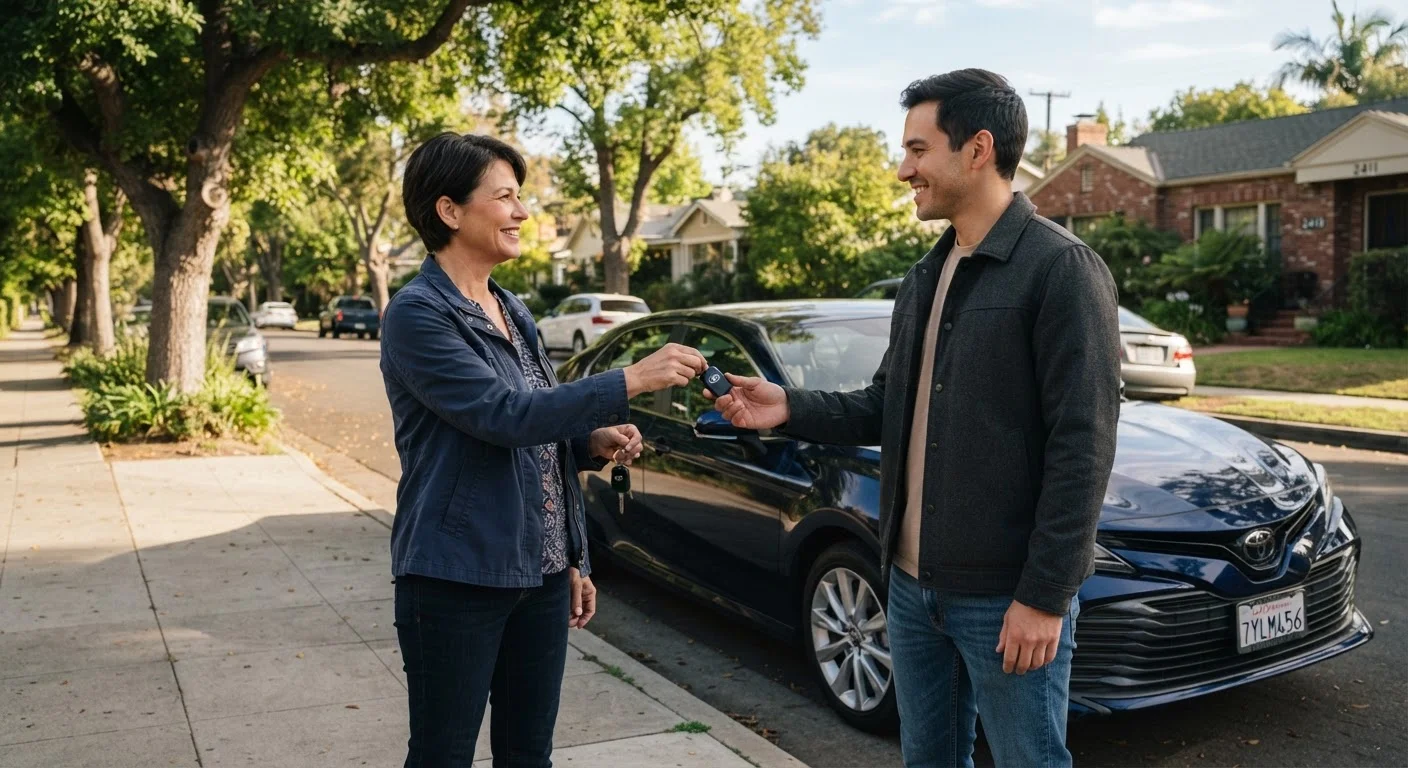
In a private sale, you'll typically need: a signed title transferring ownership to you, a bill of sale documenting the price and date, an odometer disclosure statement (required federally for most vehicles under ten years old), and proof of insurance before driving off the lot. Some states also require a smog or safety inspection certificate. Check your state DMV's website - requirements vary significantly.
Never Pay Before the Title Is in Hand
Paying cash or transferring funds before you physically hold a verified, signed title is one of the most common ways buyers lose money to fraud. Confirm the title is clean and correctly signed over to you before any payment is made - this is non-negotiable regardless of how trustworthy the seller seems.
Once title and payment are sorted, you generally have a set window - often 10 to 30 days depending on your state - to register the vehicle and pay any applicable sales tax. Missing this deadline can result in late fees. Keep every document from the transaction in a dedicated folder; you'll need them for registration, insurance, and potentially future resale. Once you own the car, staying on top of upkeep protects your investment - explore our car maintenance hub for practical guidance.
Questions First-Time Buyers Forget to Ask
Most buyers ask the price and mileage. Fewer ask the questions that reveal the real story of a vehicle:
- How many owners has it had? Multiple owners in a short period can signal recurring problems.
- Does the odometer match the service records? Gaps in the maintenance history or an odometer that seems low for a vehicle's age deserve scrutiny.
- Was it ever used for rideshare, delivery, or as a rental? These use cases put significantly more wear on a vehicle than typical personal use.
- Have any major components been replaced? Knowing about a recent transmission or engine repair - and who did the work - matters.
- Why is it being sold? Not always revealing, but worth asking. Inconsistencies in the answer are informative.
Asking these questions calmly and directly is your right as a buyer. A seller who becomes defensive or evasive in response is giving you useful information. Taking your time and staying dispassionate is one of the most effective tools a first-time buyer has.
This article is for general informational and educational purposes only. It does not constitute legal, financial, or professional advice. Consult qualified professionals for guidance specific to your situation.