
Why Cats Are Obligate Carnivores
Unlike dogs or humans, cats are obligate carnivores - meaning their bodies are biologically designed to derive nutrition almost exclusively from animal tissue. This isn't a preference; it's a metabolic reality shaped by millions of years of evolution. Cats lack certain enzymatic pathways that allow omnivores to synthesize key nutrients from plant sources.
Practically, this means a cat cannot convert beta-carotene into vitamin A, cannot produce sufficient arachidonic acid from plant fats, and cannot synthesize taurine in meaningful quantities from precursor amino acids. All of these must come preformed from animal-based ingredients. Understanding this single fact reframes nearly every feeding decision you'll make as a cat owner. For broader context on how cats differ behaviorally and physiologically from other pets, see how cats differ from dogs in learning and biology.
Essential Nutrients Every Cat Needs
Several nutrients deserve particular attention for first-time cat owners:
- Taurine: An amino acid found almost exclusively in animal tissue. Deficiency leads to dilated cardiomyopathy (an enlarged, weakened heart) and retinal degeneration - both serious and potentially irreversible. All commercial cat foods sold in the U.S. must contain taurine, but quality matters.
- Arachidonic acid: An omega-6 fatty acid cats cannot synthesize adequately themselves. Found in animal fat; essential for inflammation regulation, skin integrity, and reproduction.
- Vitamin A (preformed): Cats must get retinol directly from animal sources. Plant-based vitamin A precursors (like beta-carotene) are nutritionally useless to cats.
- High-quality animal protein: Cats have a higher baseline protein requirement than most mammals and use dietary protein as a primary energy source, not just for tissue maintenance.
- Niacin: Cats have limited ability to synthesize niacin from tryptophan, making dietary sources critical.
Obligate carnivore
An animal that must eat meat to survive because its body cannot synthesize certain essential nutrients from plant sources. Cats are the classic domestic example.
Taurine
An amino acid found almost exclusively in animal tissue that cats cannot produce on their own in sufficient amounts. It is critical for heart and eye health.
AAFCO
The Association of American Feed Control Officials - a U.S. organization that sets the nutritional standards commercial pet foods must meet to be labeled 'complete and balanced.'
Dry matter basis
A way of comparing the nutrient content of wet and dry foods by mathematically removing moisture from the calculation, so the numbers reflect actual nutrient concentration.
Life stage formulation
A food designed to meet the specific nutritional needs of a cat at a particular phase of life - kitten, adult, or senior - rather than an average across all ages.
Ingredient splitting
A labeling practice where a single ingredient appears in multiple forms on a list (e.g., corn flour and corn gluten), effectively lowering its apparent position while remaining a large overall component.
Life stage matters significantly. Kittens need more protein, fat, and calories to support rapid growth. Senior cats may require adjusted phosphorus levels to support kidney health. Choosing food labeled for your cat's specific life stage - backed by an AAFCO adequacy statement - is a sound starting point.
Wet Food, Dry Food, and Hydration
Cats evolved as desert-adapted animals with a naturally low thirst drive. In the wild, they obtained most of their water from prey. Domestic cats on dry-only diets frequently exist in a state of mild chronic dehydration, which over time may contribute to urinary tract problems and kidney stress.
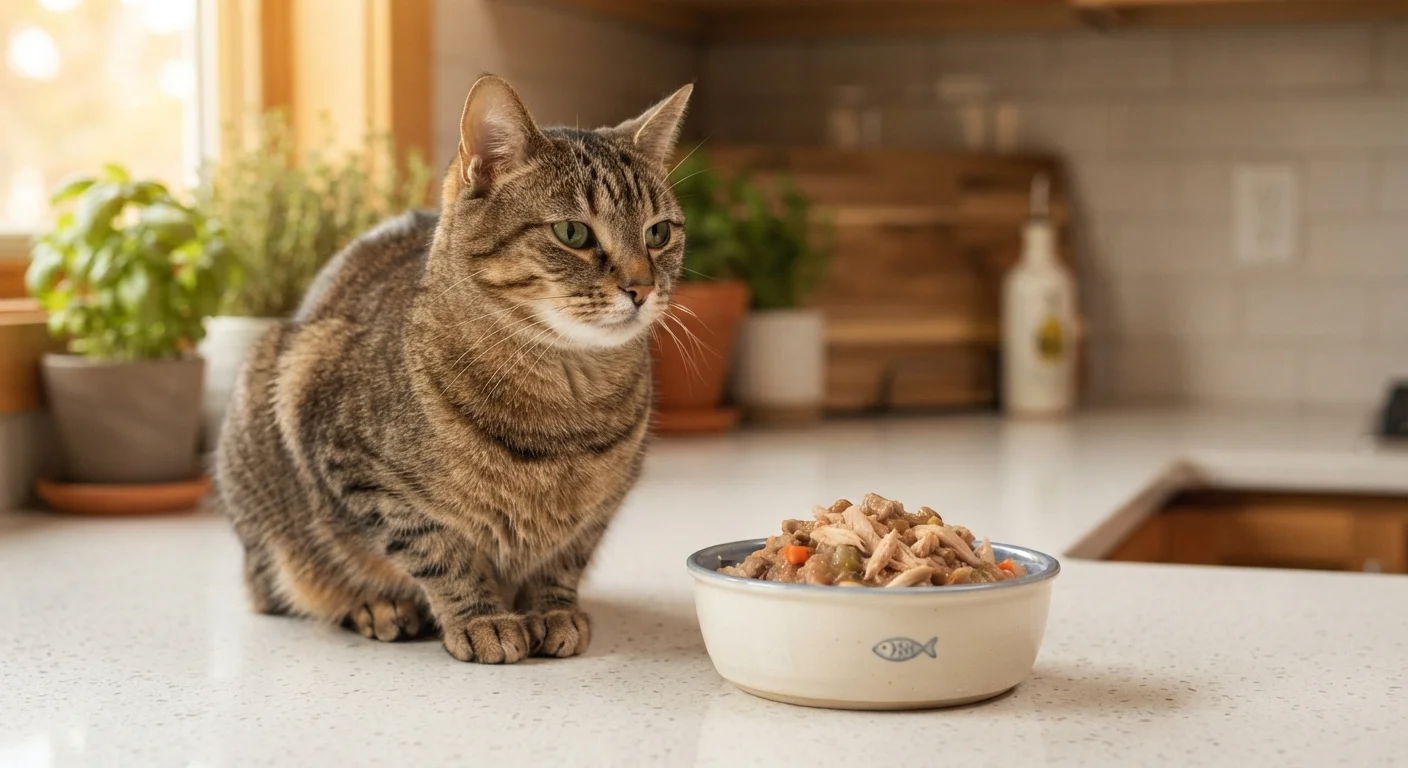
Wet food typically contains 70-80% moisture, closely mimicking the water content of prey. Dry food contains roughly 6-10% moisture. This doesn't mean dry food is inherently harmful - many cats thrive on it - but owners relying solely on dry food should pay close attention to their cat's water intake and consider whether adding wet food to the rotation makes sense.
Try a Multi-Location Water Setup
Place at least two water sources in different rooms and keep them away from your cat's food bowl. Cats instinctively avoid drinking near where they eat, likely a survival behavior to prevent prey contamination of water. A pet water fountain can further encourage drinking by keeping water oxygenated and fresh-tasting.
Cats are also notoriously sensitive to water freshness. Many cats prefer running water, which is why pet water fountains often encourage better drinking habits than static bowls. Placement matters too - cats generally avoid drinking water placed directly next to their food bowl.
For a deeper look at how diet format choices interact with portions and weight management, see portion sizes and feeding frequency basics.
Reading a Cat Food Label Without Getting Lost
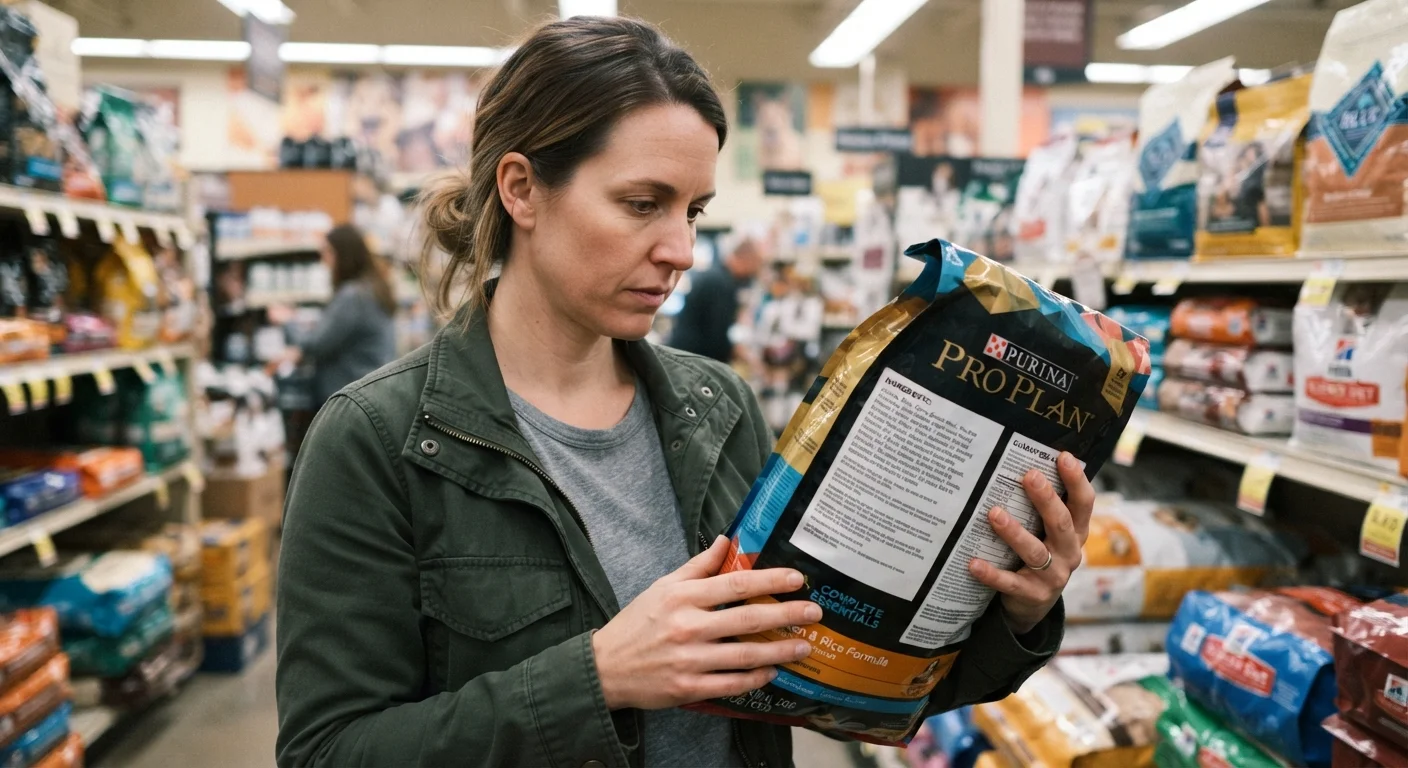
Pet food labeling in the U.S. is regulated by the AAFCO and the FDA, though the rules are more permissive than human food standards. Here's what to focus on:
- AAFCO Nutritional Adequacy Statement: Look for a statement confirming the food is "complete and balanced" for your cat's life stage. This is the single most reliable quality signal on the label.
- Ingredient list order: Ingredients are listed by pre-cooking weight. A named animal protein (e.g., "chicken," "salmon") appearing first is a positive indicator. Be cautious of ingredient splitting, where a single ingredient like "corn" appears in multiple forms (corn flour, corn gluten) to push it lower on the list.
- Guaranteed Analysis: Shows minimum protein and fat percentages and maximum fiber and moisture. These figures are useful for comparing foods on a dry-matter basis - especially when comparing wet and dry foods directly.
- "Natural" and "holistic" claims: These terms carry limited regulatory meaning on pet food labels and should not be used as primary quality indicators.
For a structured walkthrough of evaluating any new food, the practical cat food evaluation checklist covers each check in detail. If you're weighing homemade diets against commercial options, homemade vs. commercial pet food explains why nutritional completeness is harder to achieve than it appears.
When to Talk to Your Veterinarian
Good nutrition is foundational to your cat's overall wellbeing, and it connects directly to the broader goal of keeping your pet healthy and thriving. While the principles above give you a solid starting framework, individual cats vary considerably in their needs based on health status, weight, age, and medical history.
Reach out to your veterinarian if:
- Your cat has been diagnosed with a chronic condition such as kidney disease, diabetes, or hyperthyroidism - all of which have specific dietary implications.
- You notice unexplained weight changes, poor coat quality, or digestive irregularities that persist beyond a food transition period.
- You are considering a homemade, raw, or unconventional diet.
- You're unsure whether your kitten's growth is on track or whether your senior cat's current food is appropriate.
A veterinarian or board-certified veterinary nutritionist can provide guidance tailored to your specific cat - something no label or general guide can fully replace.
This article is for general informational purposes only and is not a substitute for personalized veterinary advice. Always consult a qualified veterinarian regarding your cat's specific health and nutritional needs.