
Why Cats and Dogs Learn Differently at a Biological Level
The most common frustration cat owners report is that their pet seems indifferent to training. This is rarely about stubbornness - it reflects a meaningful divergence in evolutionary history. Dogs were domesticated from social pack animals, shaped over millennia to read human body language, seek approval, and cooperate within a group. Cats, by contrast, were domesticated from solitary hunters. Felis silvestris lybica, the wildcat ancestor of the domestic cat, hunted alone and had little biological incentive to defer to group signals.
This difference shows up in neurological research. Studies in comparative cognition suggest that dogs show greater sensitivity to human communicative gestures - such as pointing - than cats do. Cats can follow such cues, but they do so less reliably and with less intrinsic motivation. The upshot for training: cats are not less intelligent, but they are less socially wired to respond to human approval as a reward in itself.
~10,000
Years cats have been domesticated
Archaeological and genetic evidence suggests cats were domesticated roughly 10,000 years ago, far more recently than dogs, and with less intensive selective breeding for human-directed behavior.
2-5 min
Optimal cat training session length
Animal behaviorists generally recommend keeping feline training sessions to two to five minutes to match cats' attention spans and prevent stress-related disengagement.
1-2 sec
Effective reinforcement delivery window for cats
Behavioral science indicates that rewards delivered within one to two seconds of a target behavior create the strongest associative learning in cats.
How Cats Actually Learn: Operant and Classical Conditioning
Both dogs and cats learn through the same core mechanisms - operant conditioning (behavior is shaped by its consequences) and classical conditioning (associations form between stimuli). The difference lies in how these mechanisms play out given each species' motivational profile.
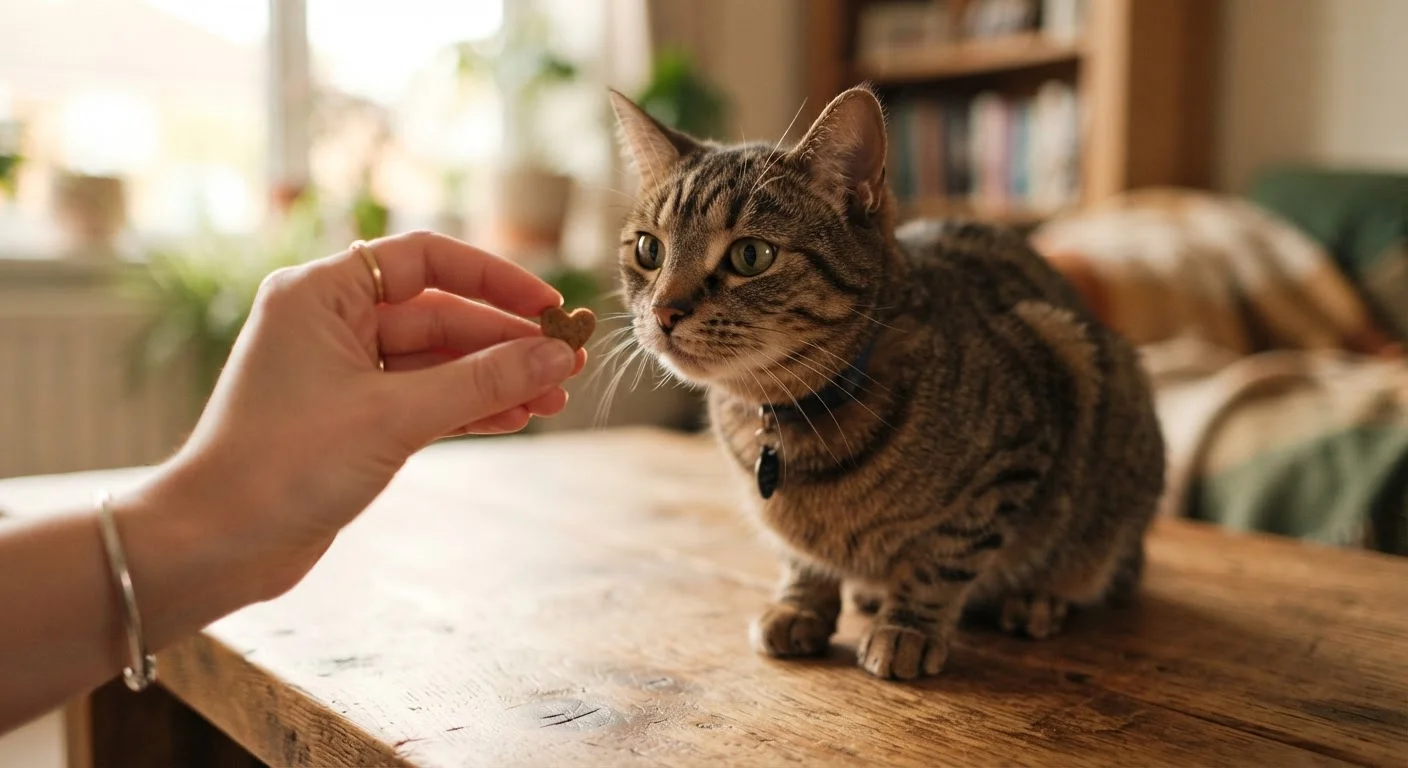
For cats, the most effective training lever is positive reinforcement: pairing a desired behavior with an immediate, high-value reward. Research in animal behavior consistently supports this approach as both the most effective and the most humane. Punishment-based methods are particularly counterproductive with cats - they tend to produce fear and avoidance rather than learning, and can damage the trust essential to any productive training relationship.
Timing is especially critical with cats. The reward window - the interval between behavior and reinforcement - is narrow. Delivering a treat two to three seconds after the target behavior significantly weakens the association. This is where marker training, such as using a clicker or a distinct verbal cue, becomes valuable. See our comparison of clicker training and verbal markers for a deeper look at how each approach works in practice.
The Role of Stress, Environment, and Motivation
A cat's capacity to learn is highly sensitive to its emotional state and environment. A cat that is anxious, in pain, or overstimulated will not engage with training effectively - and pushing through these states can reinforce avoidance behaviors. It's worth noting that cats instinctively mask discomfort, so what looks like disinterest in training may sometimes reflect an underlying issue. Our article on how cats hide pain covers the behavioral cues worth monitoring.
Motivation matters as much as technique. Cats are not uniformly food-motivated - some respond more to play, others to social interaction. Identifying what a specific cat values, and using that as a reinforcer, is foundational to effective training. Keep sessions brief - two to five minutes - and end before the cat disengages. Quitting while the cat is still interested maintains positive associations with the training context itself.
End Every Session on a Win
Before a cat loses interest, ask for a behavior it already knows well and reward it immediately. This ensures the session ends with a positive association rather than frustration or avoidance. Over time, this simple habit makes cats more willing to engage in future training.
Practical Implications for Cat Owners
Understanding feline learning science reframes what "trainable" means. Cats who seem untrainable are often cats whose owners are using the wrong tools: sessions that are too long, rewards that aren't sufficiently motivating, or expectations shaped by dog training norms. Adjusting the approach - not the cat - typically produces results.
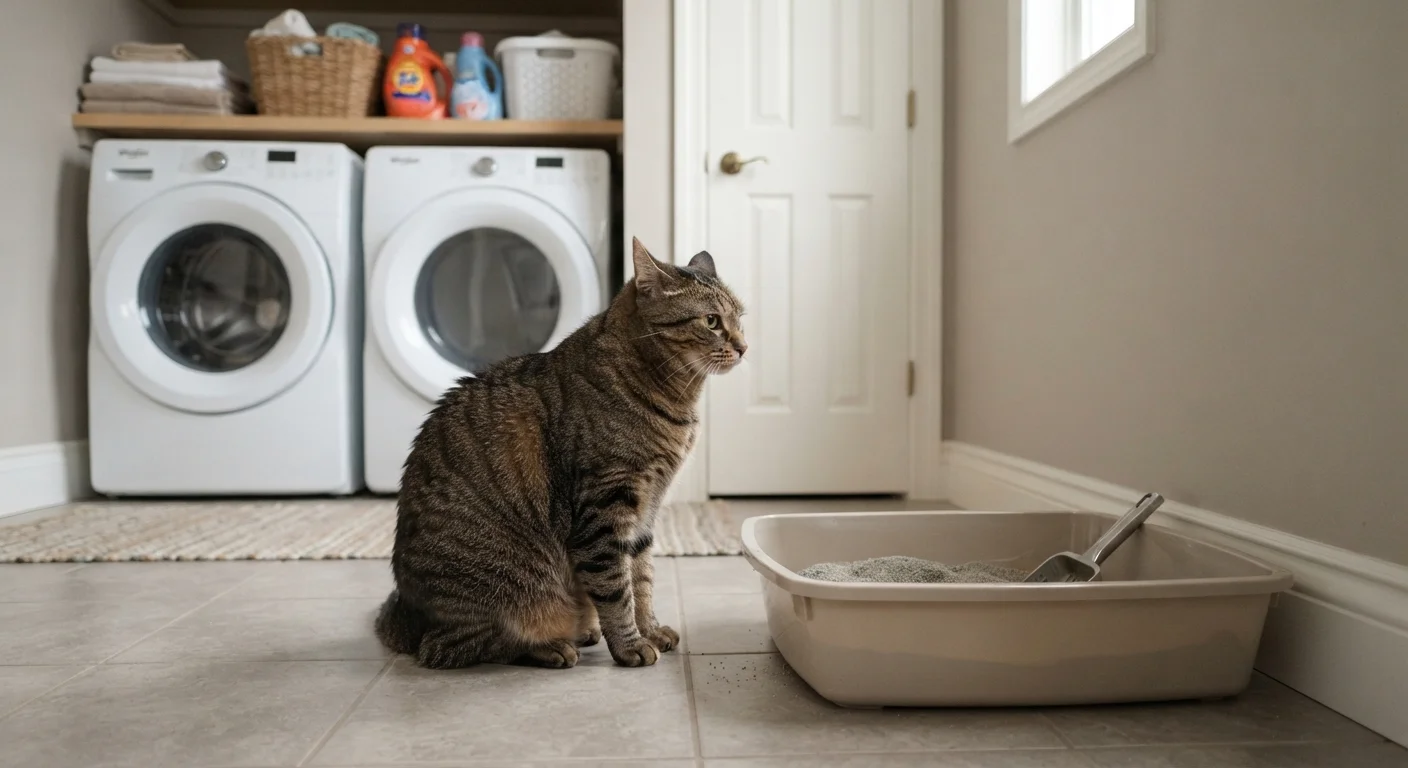
Litter box issues, destructive scratching, and aggression are among the behavioral problems most amenable to conditioning-based intervention. These issues, when not medically driven, often respond well to environmental modification and positive reinforcement. For context on what litter box behavior can signal, see what litter box problems in cats usually indicate.
Building consistent daily routines also reinforces predictable, calm behavior. The habits that strengthen the owner-pet bond are grounded in the same behavioral science that makes training effective - both depend on trust, predictability, and reading the animal's signals accurately.
This article provides general educational information about animal behavior and is not a substitute for guidance from a qualified veterinarian or certified animal behaviorist. If your cat shows sudden behavioral changes, consult a veterinary professional to rule out medical causes.