

Why Portion Control Is Harder Than It Looks
Most pet owners know overfeeding is a problem. Fewer realize how easy it is to do unintentionally. Pet food bags display feeding guidelines by weight category, but these are population-level estimates - often calibrated to the higher end to account for active animals or to encourage faster product consumption. Your specific pet's needs depend on age, breed, activity level, neuter status, and metabolic rate, factors no label can fully account for.
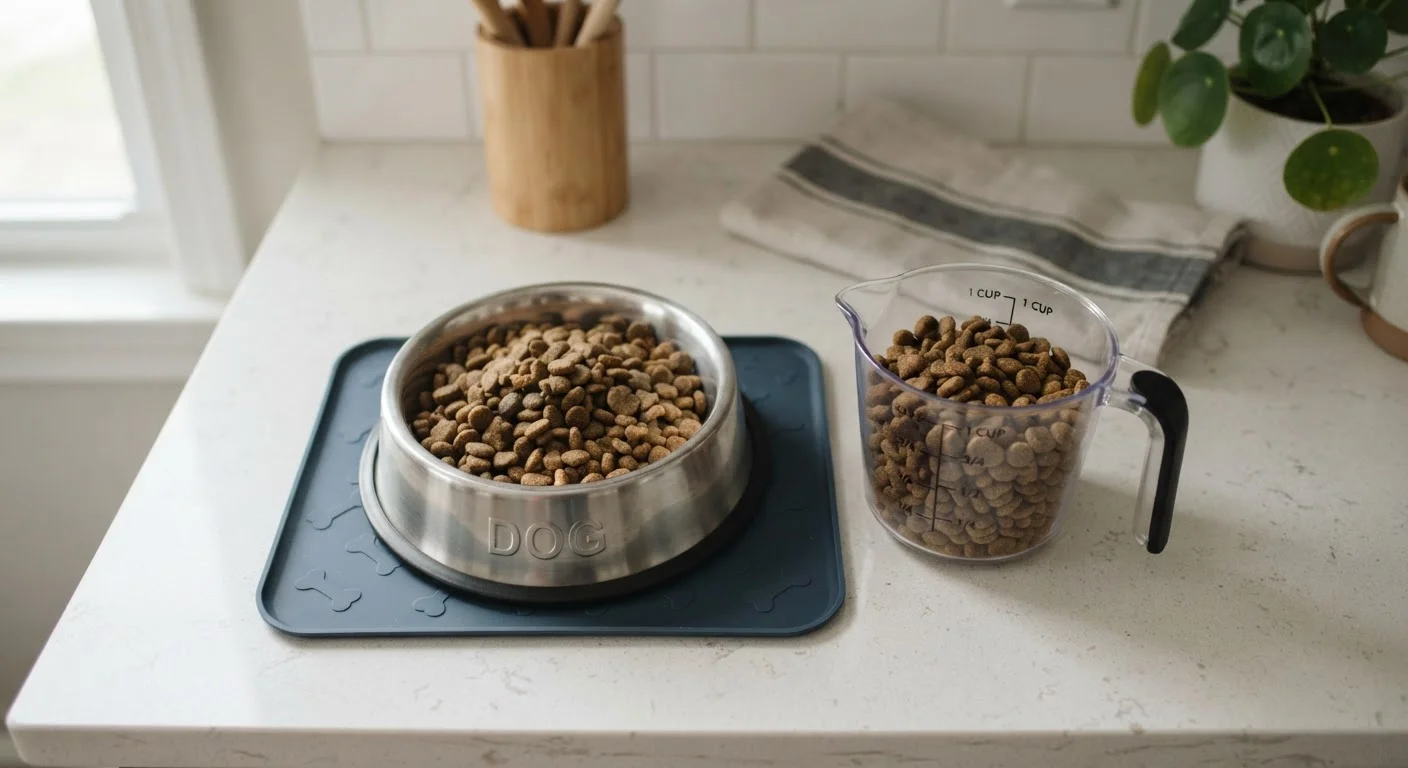
A common mistake is assuming a "cup" is a standard unit. In practice, a loosely scooped cup of kibble can contain 20-30% more food than a leveled, measured cup - a difference that compounds over weeks and months. For context, even a small daily surplus can contribute to gradual weight gain that owners don't notice until a veterinarian flags it.
See our guide to well-intentioned habits that can quietly harm your pet for more examples of how routine choices can have unintended consequences.
Feeding Frequency and Schedule: What the Evidence Supports
Free-choice feeding - leaving food out all day - is convenient but problematic for most dogs and many cats prone to overeating. Scheduled meals give owners direct insight into how much their pet consumes and make it easier to detect changes in appetite, which are often early signs of illness.
For most adult dogs, two meals per day is a well-supported approach. Puppies and some small breeds typically benefit from three or more smaller meals due to their higher metabolic demands and smaller stomach capacity. Cats, as obligate hunters, have historically eaten many small meals, and multiple small scheduled portions or puzzle feeders can align better with their natural patterns than one or two large bowls.
Understanding how nutritional needs shift across a pet's life is equally important - our feeding guide across every life stage covers what changes and why it matters.
The Hidden Calorie Problem: Treats, Toppers, and Table Scraps
Treats are where many weight management plans quietly unravel. A single dental chew, training treat, or table scrap can represent a significant fraction of a small dog's or cat's daily caloric allowance. Veterinary nutritionists generally recommend that treats account for no more than 10% of a pet's total daily caloric intake - yet in practice, this threshold is frequently exceeded without owners realizing it.
Food toppers, wet food mix-ins, and flavored medications add further calories that rarely get factored into feeding calculations. If your pet is on a measured portion plan and still gaining weight, accounting for every non-meal calorie source is a logical first step before assuming the base diet is the problem.
For a broader look at how misleading labeling contributes to these miscalculations, see pet food marketing myths that confuse even careful owners.
Body Condition Scoring: A More Reliable Measure Than the Scale
Scale weight is a blunt instrument. A dog or cat can be within a normal weight range but still carry excess body fat - or conversely, be underweight despite appearing to eat adequately. Body condition scoring (BCS) is a standardized assessment system used by veterinarians to evaluate fat coverage and muscle mass through visual inspection and physical palpation.
Most BCS systems use a 9-point scale. A score of 4-5 is generally considered ideal: ribs are palpable with minimal fat covering, a waist is visible from above, and there is a slight abdominal tuck. Owners can learn the basics of this assessment with guidance from their veterinarian, making it a useful tool between annual exams.
If your pet is already overweight, evidence-based weight management approaches offer a structured framework for safe, gradual reduction - which should always involve veterinary oversight.
This article provides general educational information about pet nutrition and is not a substitute for personalized veterinary advice. Always consult your veterinarian before making significant changes to your pet's diet or feeding routine.