

What Debt Consolidation Actually Means
Debt consolidation is the process of combining multiple outstanding debts - credit cards, medical bills, personal loans - into a single new loan or credit account. The goal is typically to reduce the number of monthly payments you manage and, ideally, to secure a lower interest rate than you're currently paying across your existing accounts.
Common consolidation methods include personal loans (unsecured), home equity loans or lines of credit (secured against your property), and balance transfer credit cards. Each carries different eligibility requirements, cost structures, and risk profiles. For a broader look at how consolidation fits alongside other strategies, see Managing Multiple Debts: Approaches, Priorities, and Pitfalls.
Consolidation Is Not Debt Elimination
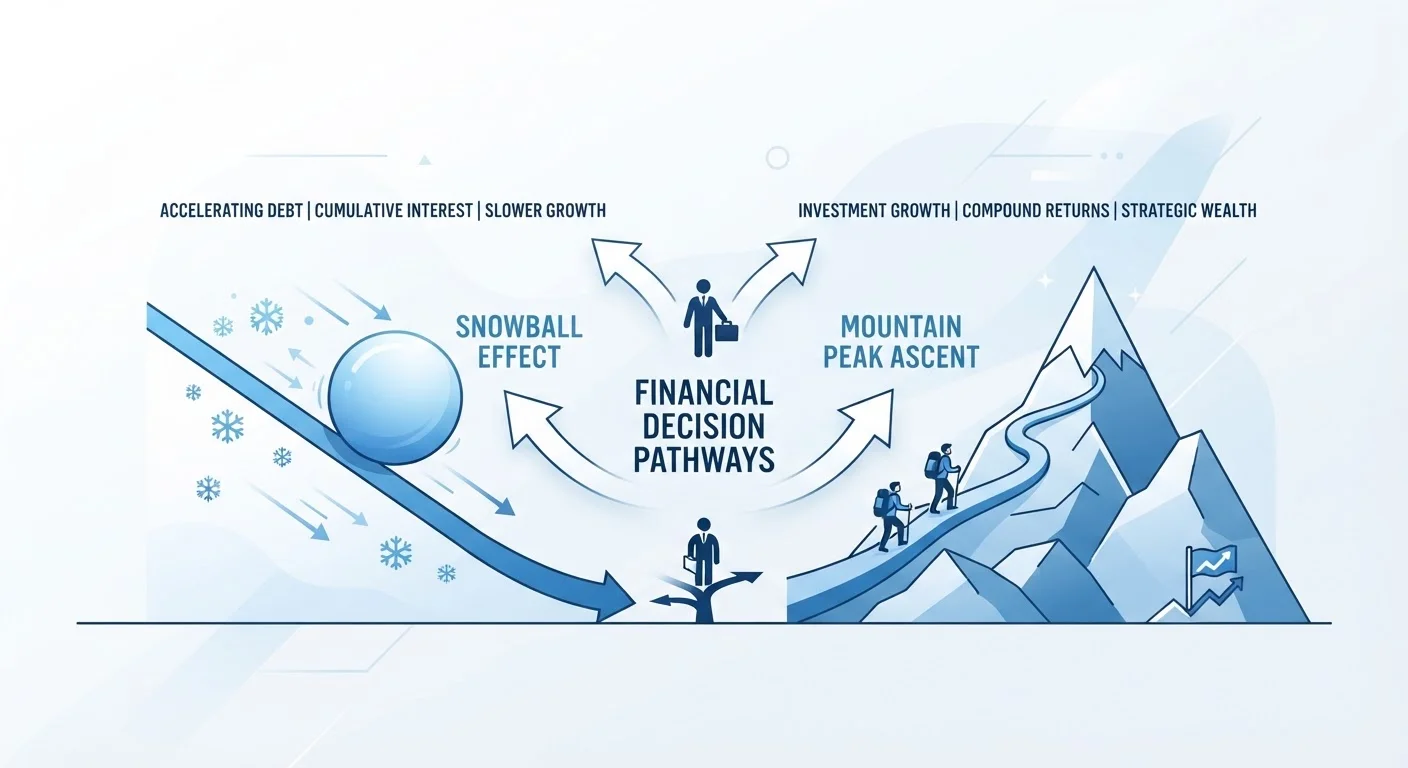
It's easy to confuse simplifying debt with reducing it. Consolidation restructures what you owe - it does not forgive, reduce, or erase the principal balance. The total amount owed remains the same (plus any fees) until you make payments. Treating consolidation as a financial reset without changing repayment behavior is one of the most common pitfalls advisors flag.
The Real Advantages
When the conditions are right, consolidation offers concrete financial benefits worth weighing seriously.
Single monthly payment reduces administrative complexity
Consolidating five credit card payments into one eliminates the risk of missing a due date and simplifies monthly budgeting considerably.
Potential to lower your effective interest rate
Borrowers with solid credit may qualify for a personal consolidation loan at a rate well below what high-interest credit cards charge, reducing total interest costs.
Fixed repayment schedule provides a clear end date
Unlike revolving credit card balances, a consolidation loan has a defined term, giving you a concrete payoff date and predictable payments.
Can reduce monthly payment pressure short-term
For borrowers facing cash flow strain, a lower required monthly payment can free up room in a tight budget - though this benefit must be weighed against total cost.
Simplification alone has value - managing one payment reduces the risk of a missed due date. More meaningfully, if you carry high-interest credit card debt and qualify for a personal loan at a substantially lower rate, you can reduce the total interest paid over the life of your debt. That difference can be significant over three to five years.
The Risks That Often Get Minimized
Consolidation is frequently marketed as a solution, but several structural risks deserve honest attention before you commit.
Longer terms often mean more total interest paid
Extending repayment from three to seven years at even a lower rate can result in paying more total interest than if you had aggressively paid down existing debt.
Secured loans put your home or assets at risk
Home equity loans and HELOCs used for consolidation convert unsecured debt into debt backed by your property - a default could trigger foreclosure.
Origination and balance transfer fees add to cost
Personal loans commonly carry origination fees of 1-8% of the loan amount, which erodes the interest savings if you're consolidating smaller balances.
Does not address the root cause of debt accumulation
Consolidation restructures debt but does nothing to change the spending or income patterns that created it; without behavioral change, balances can rebuild.
Qualification depends on creditworthiness
Borrowers with damaged credit may not qualify for a rate low enough to justify consolidation, and applying for new credit temporarily affects your credit score.
The most overlooked risk is term extension. A lower monthly payment feels like relief, but if your new loan stretches repayment from three years to seven, you may pay considerably more in total interest even at a lower rate. Run the full numbers - total cost, not just monthly payment - before signing. For a comparison of alternative payoff approaches, Debt Avalanche vs. Debt Snowball offers a side-by-side breakdown.
How It Compares to Other Debt-Relief Options
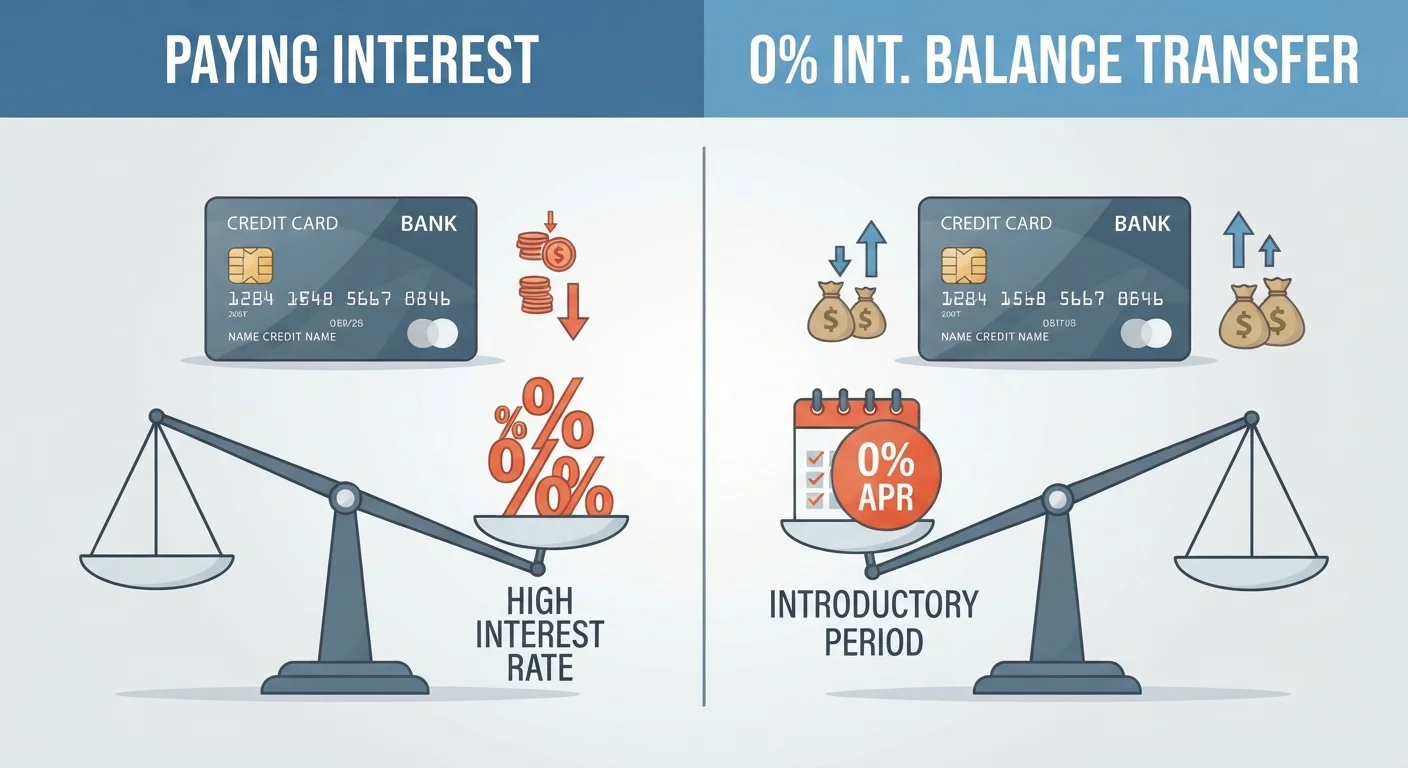
Consolidation is one tool among several. Balance transfers, for instance, can achieve similar interest-rate savings on credit card debt without taking out a new loan - though they carry their own conditions. Situations Where a Balance Transfer Makes Sense - and Where It Doesn't outlines the scenarios where that route is and isn't appropriate.
Debt management plans through nonprofit credit counseling agencies are another alternative, particularly for those who don't qualify for competitive loan rates. These plans negotiate reduced rates directly with creditors without requiring a new loan. The right path depends on the type of debt you hold, your credit profile, and whether your cash flow can support accelerated repayment. Before committing to any strategy, run through a repayment checklist to stress-test your plan.
20%+
Average credit card APR in the US
Federal Reserve consumer credit data consistently shows average credit card interest rates above 20%, illustrating the potential savings when consolidating into a lower-rate loan.
1-8%
Typical personal loan origination fee range
Many lenders charge origination fees that reduce the net benefit of consolidation, particularly on smaller debt amounts - a figure worth factoring into total cost comparisons.
Questions to Ask Before You Proceed
Consolidation is worth pursuing only when you can answer these questions favorably:
- Is the new interest rate genuinely lower - not just a temporary promotional rate?
- What is the total cost of the new loan, including origination fees, compared to paying down existing debt as-is?
- Are you pledging collateral? Home equity products put your property at risk if circumstances change.
- Have you addressed the behavior that created the debt? Consolidating and then running balances back up is a common and costly pattern.
For households weighing whether to build savings simultaneously, Saving vs. Paying Off Debt: Which Should Come First? addresses the sequencing trade-off directly.
This article provides general financial information for educational purposes only and does not constitute personalized financial, tax, or legal advice. Please consult a licensed financial advisor before making decisions based on your individual circumstances.