
How Each Method Actually Works
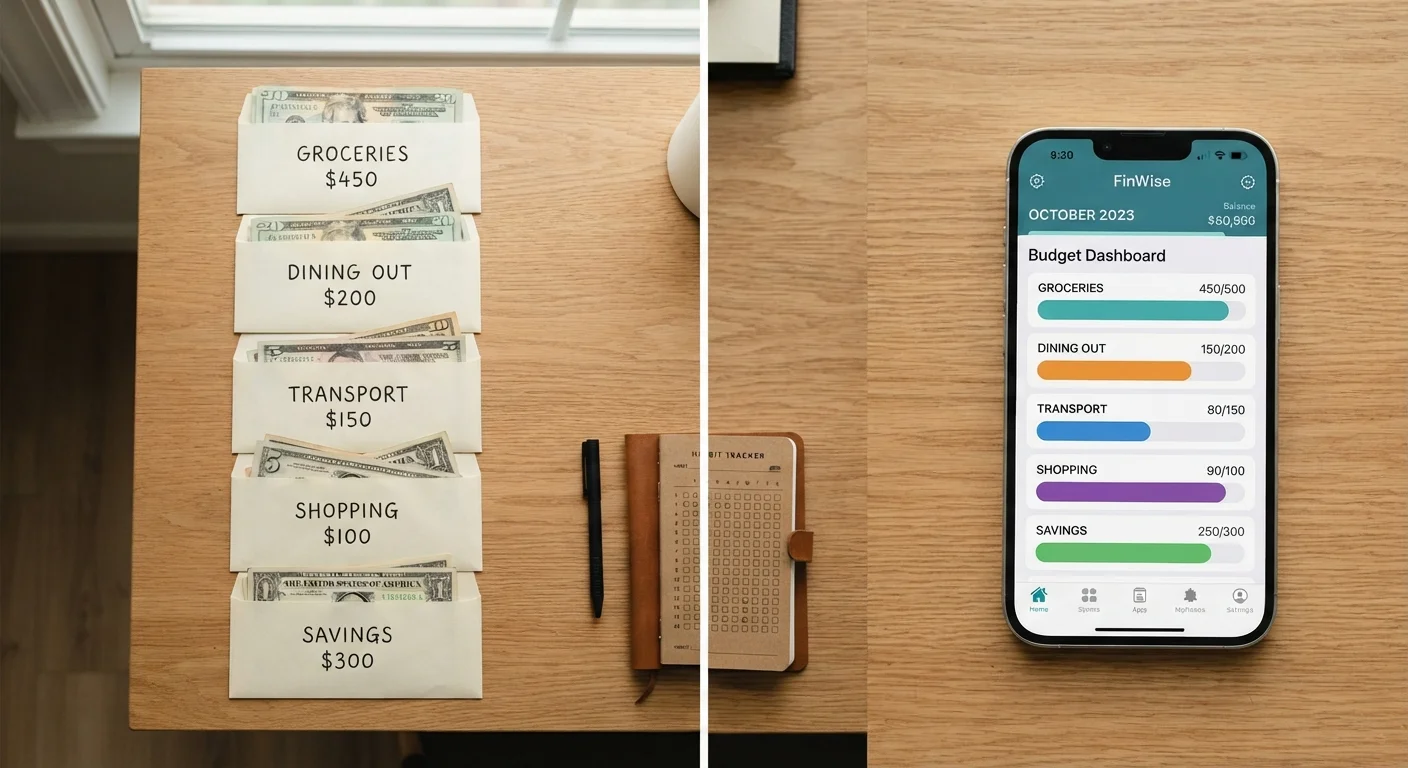
Envelope budgeting is a cash-allocation system. At the start of each budget period - typically monthly or biweekly - you withdraw cash and physically divide it into labeled envelopes: one for groceries, one for gas, one for dining out, and so on. When an envelope runs out, that category is done for the period. No borrowing from next month, no quiet card swipe to cover the gap.
Digital spending limits operate on a different mechanism. Using a budgeting app or your bank's built-in tools, you assign a dollar cap to each spending category. As transactions clear - via debit card, credit card, or linked account - the app deducts each purchase from the relevant category's balance and alerts you as you approach or hit the limit. The constraint is real, but it's enforced by software rather than an empty wallet.
Before either method can succeed, you need accurate baseline data. Our spending audit walkthrough shows you how to gather and interpret that data honestly - a critical first step that both systems depend on.
| Criterion | Envelope Budgeting | Digital Spending Limits |
|---|---|---|
| Core mechanism | Physical cash divided into categories | Software tracks card transactions against caps |
| Spending enforcement | Hard stop - envelope empties | Soft stop - alert requires user action |
| Cash requirement | Yes - cash withdrawals needed | No - works with cards and digital payments |
| Setup effort | Moderate - label envelopes, withdraw cash | Moderate - link accounts, configure categories |
| Ongoing maintenance | Low - cash depletion is self-tracking | Medium - review and correct auto-categorization |
| Security risk | Cash loss is unrecoverable | Data privacy and account security concerns |
| Best for impulse control | Strong - physical constraint is powerful | Moderate - depends on self-discipline |
| Multi-user support | Difficult to coordinate | Many apps support shared access |
The Psychology Behind Each Approach
The most meaningful difference between these two methods isn't logistical - it's psychological. Behavioral economics research, including work by Drazen Prelec and Duncan Simester, has documented what's often called the "pain of paying": the idea that parting with physical cash feels more immediate and emotionally significant than swiping a card. This heightened awareness can naturally dampen impulse purchases in ways that a digital alert simply doesn't replicate.
Digital spending limits, by contrast, depend on the user responding to information rather than a physical constraint. A notification that says "You've reached 90% of your dining budget" is useful data - but it still requires a conscious decision to stop. For many people, that decision is easy to rationalize away in the moment.
~83%
US transactions made without cash
The Federal Reserve's Diary of Consumer Payment Choice found that cash accounted for roughly 17% of US transactions, meaning the vast majority occur via card or digital payment.
Lower spend
Cash vs. card purchase amounts
Multiple consumer behavior studies have found that people tend to spend less per transaction when paying with cash compared to credit or debit cards.
That said, willpower fatigue is real. Cash systems demand that you remember to carry the right envelopes, make exact-change decisions, and handle the social awkwardness of counting bills at a restaurant. Over weeks and months, that friction can erode consistency. Digital tools eliminate most of that friction, which matters for long-term adherence.
Practical Trade-Offs Worth Knowing
Envelope budgeting has limitations that go beyond psychology. Cash isn't accepted everywhere - online shopping, recurring subscriptions, and many service providers require a card or bank transfer. You also carry security risk: lost or stolen cash is rarely recoverable. And if you split expenses with a partner or roommate, coordinating physical envelopes quickly becomes unwieldy.
Digital limits come with their own caveats. Automatic categorization is imperfect - apps frequently miscategorize transactions, and correcting them manually adds a maintenance burden many users underestimate. Credit card users also face a timing lag: a purchase made today may not post for one to three business days, meaning your displayed balance can be misleading in the short term.
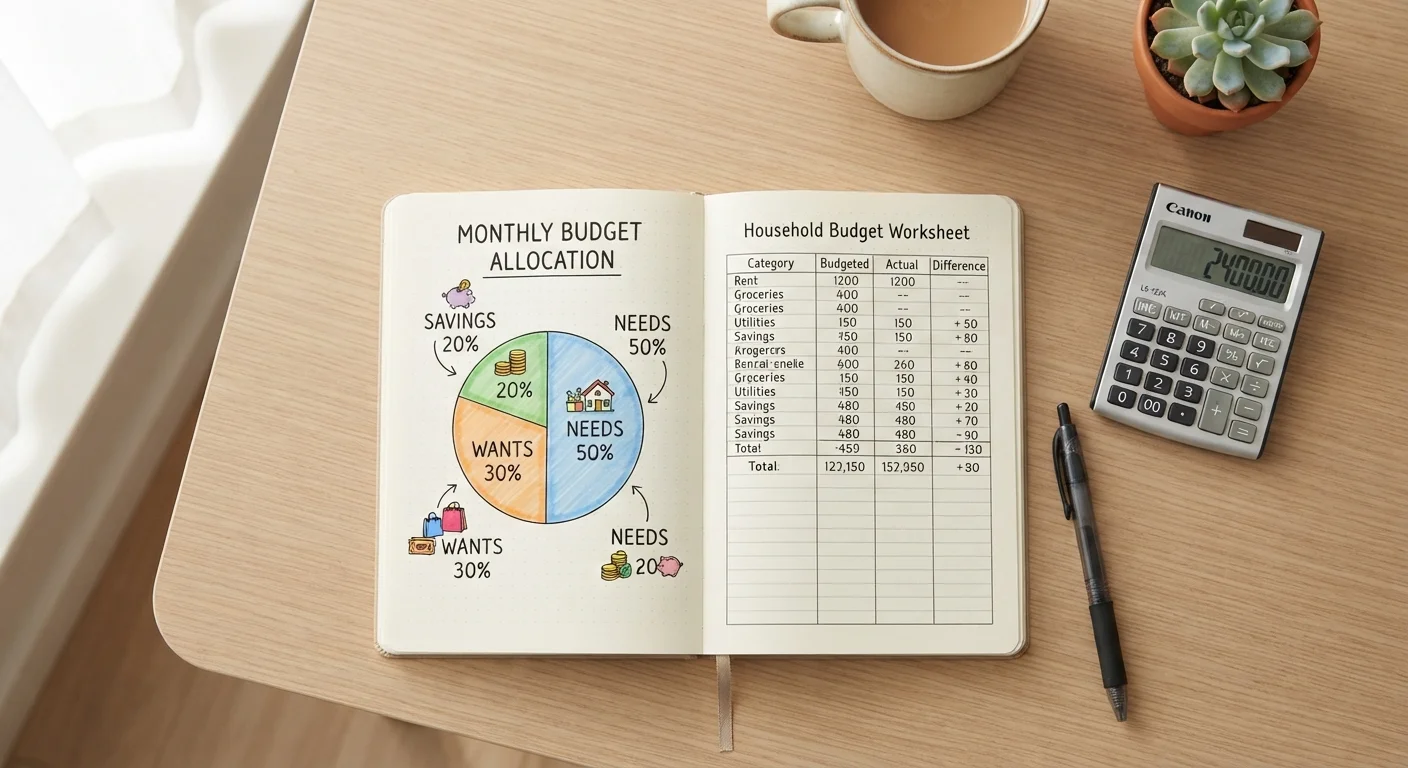
For a broader look at how these methods fit within a wider range of budgeting tools, the comparison of paper budgeting, spreadsheets, and apps is worth reading alongside this one. And if you're considering a more structured framework for your category allocations, the 50/30/20 rule gives you a percentage-based starting point that works with either system.
This article provides general financial education and is not personalized financial advice. Consider speaking with a qualified financial professional about your specific circumstances.