
How Each Strategy Actually Works
Both the debt avalanche and debt snowball share the same core mechanic: you make minimum payments on all your debts, then direct any additional funds toward one targeted debt at a time. Where they differ is in which debt gets that extra firepower.
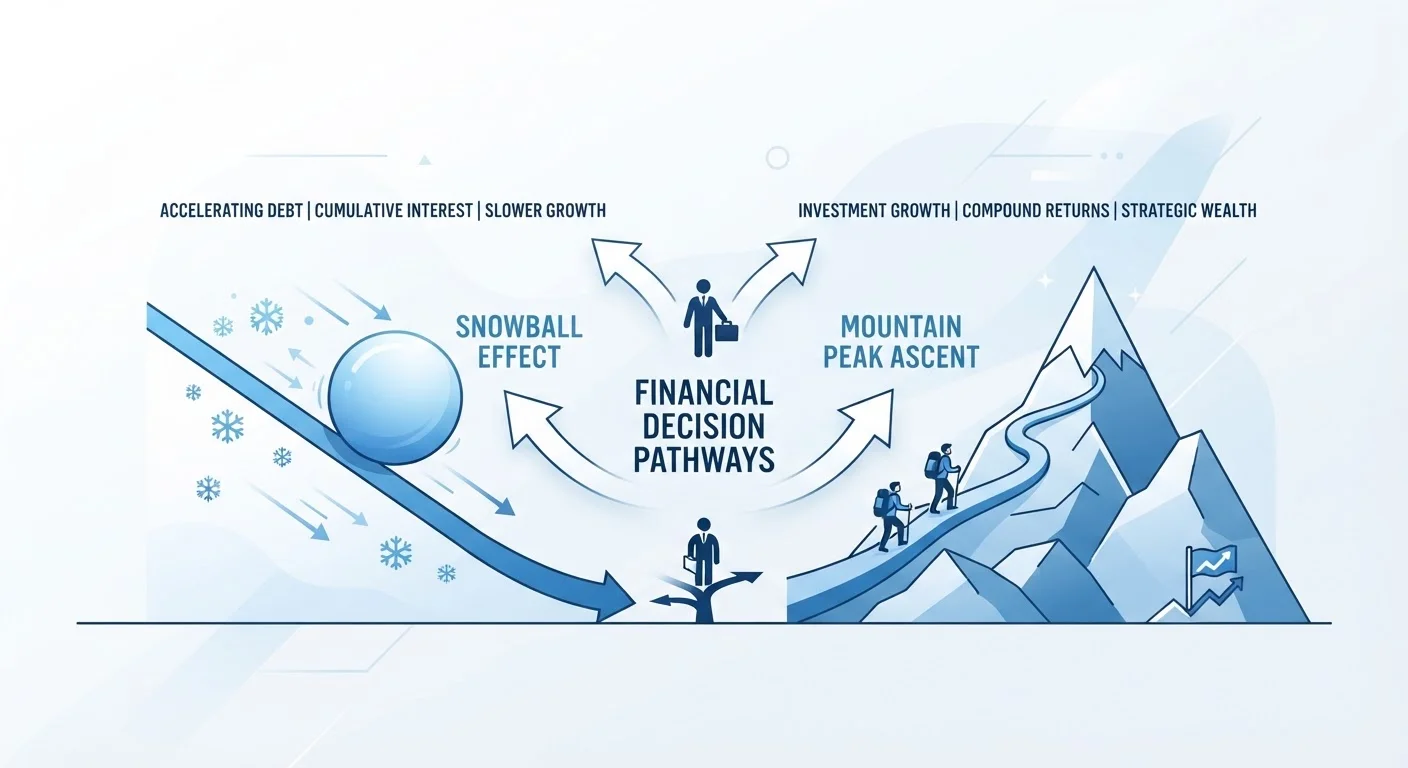
Debt Avalanche: You rank your debts from highest to lowest annual percentage rate (APR) - the true cost of borrowing. All extra payments go toward the highest-rate debt first. Once that balance reaches zero, you roll its payment into the next highest-rate debt, and so on. Because you're eliminating the most expensive debt first, you accrue less interest over the full repayment period.
Debt Snowball: You rank your debts from smallest to largest outstanding balance, regardless of interest rate. All extra payments target the smallest balance first. Once cleared, that payment amount "rolls" into the next-smallest debt. The name reflects how the payment amount grows - like a snowball gathering size - as each eliminated balance frees up more cash.
For a deeper foundation on how debt works before choosing a strategy, see this beginner's guide to debt.
| Criterion | Debt Avalanche | Debt Snowball |
|---|---|---|
| Repayment order | Highest APR first | Smallest balance first |
| Total interest paid | Generally lower | Potentially higher |
| Time to first payoff | Slower if highest-rate debt is large | Faster - smallest balance gone first |
| Motivational structure | Long-term, logic-driven | Short-term wins, momentum-based |
| Best interest-rate scenario | Wide spread between debt APRs | Similar APRs across debts |
| Complexity | Requires tracking APRs carefully | Simple to implement and understand |
| Behavioral risk | Risk of demotivation without early wins | Risk of paying more interest long-term |
The Math vs. The Psychology
In a purely numerical comparison, the avalanche method almost always wins. By attacking high-APR debt first, you stop compounding interest at its most damaging rate sooner. The difference can be substantial when one debt carries an APR significantly higher than the rest - potentially hundreds or even thousands of dollars in interest savings, depending on balances and rates.
But personal finance research consistently shows that humans don't always behave like spreadsheets. Studies in behavioral economics suggest that people who use the snowball method are more likely to eliminate their debt entirely, partly because early wins reinforce the habit of paying extra. A plan abandoned halfway through is worse than an imperfect plan completed.
~$1,000+
Potential interest savings with avalanche method
The exact savings depend on your specific balances and rates, but the gap between methods widens significantly when high-APR debt is large.
Higher
Debt elimination rate linked to snowball users
Behavioral research, including work published in the Journal of Marketing Research, suggests balance-reduction progress - not interest savings - most strongly predicts whether people continue paying down debt.
Neither outcome is guaranteed. The avalanche requires staying motivated while potentially making payments on a large, slow-moving balance for months before seeing it disappear. The snowball may cost more in total interest, especially if your smallest balances happen to carry low rates while larger, high-rate debts compound quietly in the background.
If you're weighing whether to pay down debt at all versus saving first, this comparison of saving versus debt payoff explores the trade-offs involved.
Choosing the Right Method for Your Situation
Several factors should shape your decision beyond the math-versus-motivation debate.
Your interest rate spread
If your debts have widely varying APRs - say, a 24% credit card alongside a 6% auto loan - the avalanche's advantage is significant. If rates are clustered within a few percentage points of each other, the financial difference between methods shrinks, and psychological factors may reasonably take precedence.
Your debt count and balance sizes
Someone with five small balances and one large one may find the snowball clears four debts quickly, simplifying their financial picture, while the avalanche would have them focused on that one large balance for an extended period. Simplification has its own value - fewer accounts to track reduces the risk of missed payments and fees.
Your track record with commitment
Honestly assess your history with financial goals. If previous repayment attempts stalled, the snowball's built-in reward structure may be the more pragmatic choice. If you tend to follow through when you understand the rationale, the avalanche's logical framework may suit you better.
Before committing to either path, run through this pre-commitment checklist to ensure your plan is realistic and complete. And if you're managing several debts simultaneously, this guide on managing multiple debts covers additional frameworks worth considering.
One alternative worth knowing: debt consolidation. It doesn't replace avalanche or snowball thinking, but it can change the landscape by combining multiple debts into one. Understand the trade-offs before committing to that route.
This article is for general informational and educational purposes only and does not constitute personalized financial, tax, or legal advice. Consult a qualified financial professional for guidance specific to your circumstances.