
Why Small-Space Storage Requires a Different Mindset
In a spacious home, mediocre organization is easy to hide. In an apartment or compact home, clutter compounds quickly because there's little buffer room for randomness. The goal isn't simply to own less - it's to design systems where everything has a home and retrieval is effortless.
The most effective small-space storage strategies share a common principle: they treat every cubic foot of the home as deliberate real estate. That means thinking beyond flat floor area and looking at walls, doors, bed frames, stairs, and even ceiling clearance. For a deeper dive into how this concept plays out room by room, see the complete room-by-room organization walkthrough.
Audit and declutter before introducing any new storage solution.
Storage systems built around excess inventory fail quickly because containers fill and overflow. Reducing volume first means every storage solution you implement works at full efficiency rather than managing chaos.
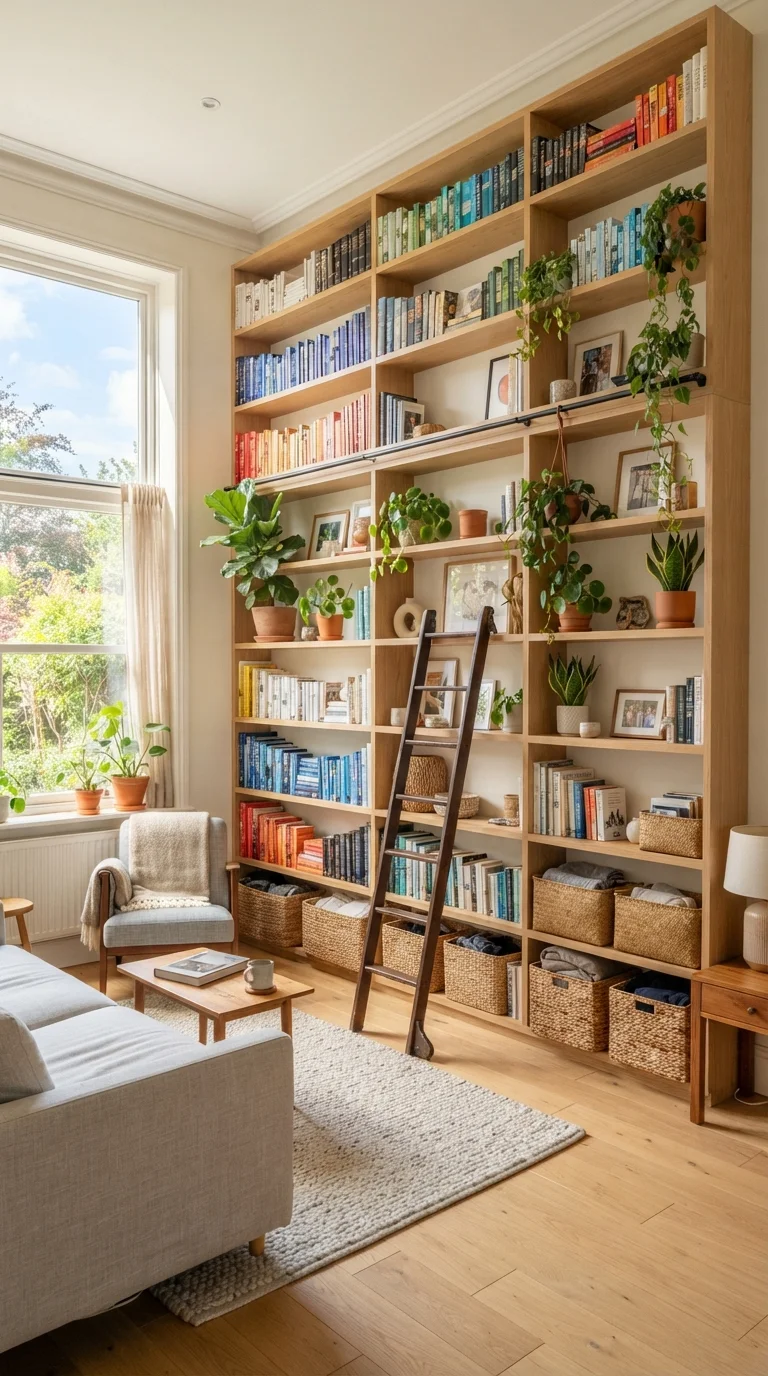
Climb the walls - install shelving at or near ceiling height to free floor space.
Most apartments use only the bottom five feet of wall space, leaving significant cubic footage idle. Ceiling-height shelving works especially well for seasonal items, archives, or anything accessed infrequently.
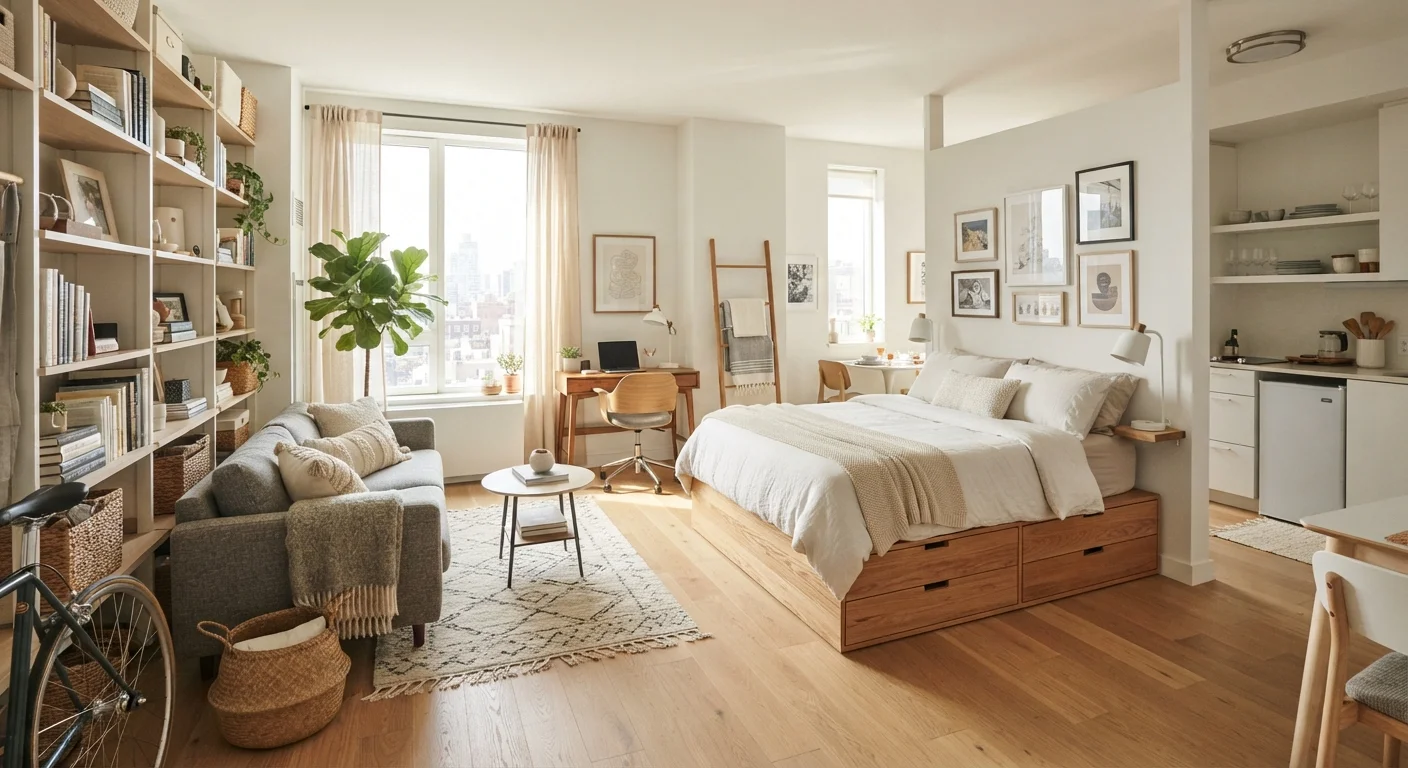
Choose furniture that serves dual storage purposes.
In compact homes, every piece of furniture that doesn't offer secondary storage is a missed opportunity. Ottomans, bed frames with drawers, and dining benches with lift tops add significant capacity without adding footprint.
Assign specific zones for categories of items, even in open-plan layouts.
Without defined zones, items migrate and accumulate wherever they're last set down. Named zones - even informal ones - create a retrieval system and a visual reset point after daily use.
Exploit dead zones: door backs, stair risers, and furniture gaps.
These overlooked surfaces add functional storage without consuming any floor area or wall display space. They're especially effective for small, frequently accessed items.
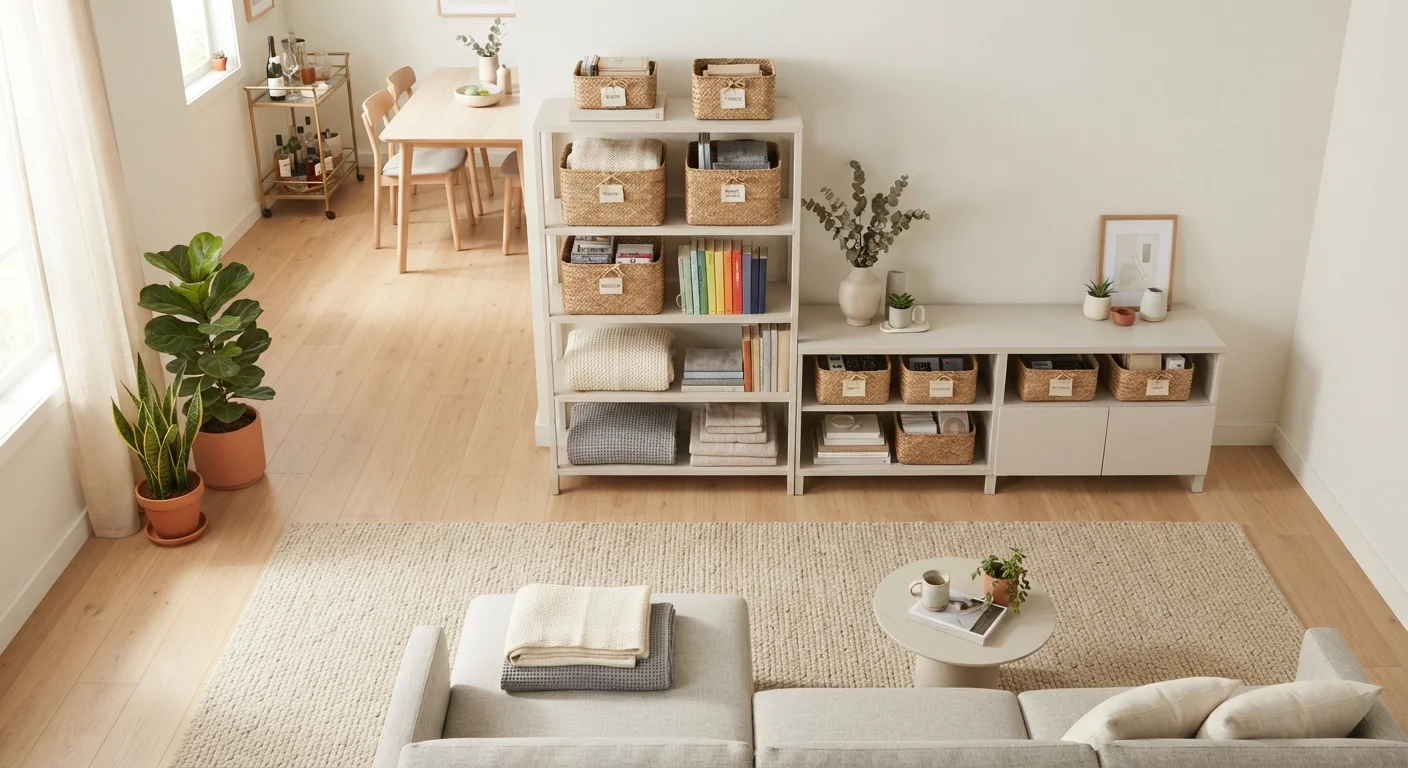
Standardize containers within each storage zone.
Mismatched bins and boxes create visual noise and inefficient stacking. Uniform containers maximize volume usage and make a small space look more intentional and calmer.
The Core Practices That Consistently Deliver Results
The following approaches are grounded in how compact spaces actually function - not idealized Pinterest versions of organization. Apply them selectively based on your layout and lifestyle rather than all at once.
Choosing and Arranging Storage That Fits Your Layout
Before purchasing any storage product, map your available vertical wall runs, measure doorway depths, and note underutilized zones (beneath beds, above refrigerators, inside closet doors). This audit prevents buying containers that don't fit and reveals opportunities you'd otherwise miss.
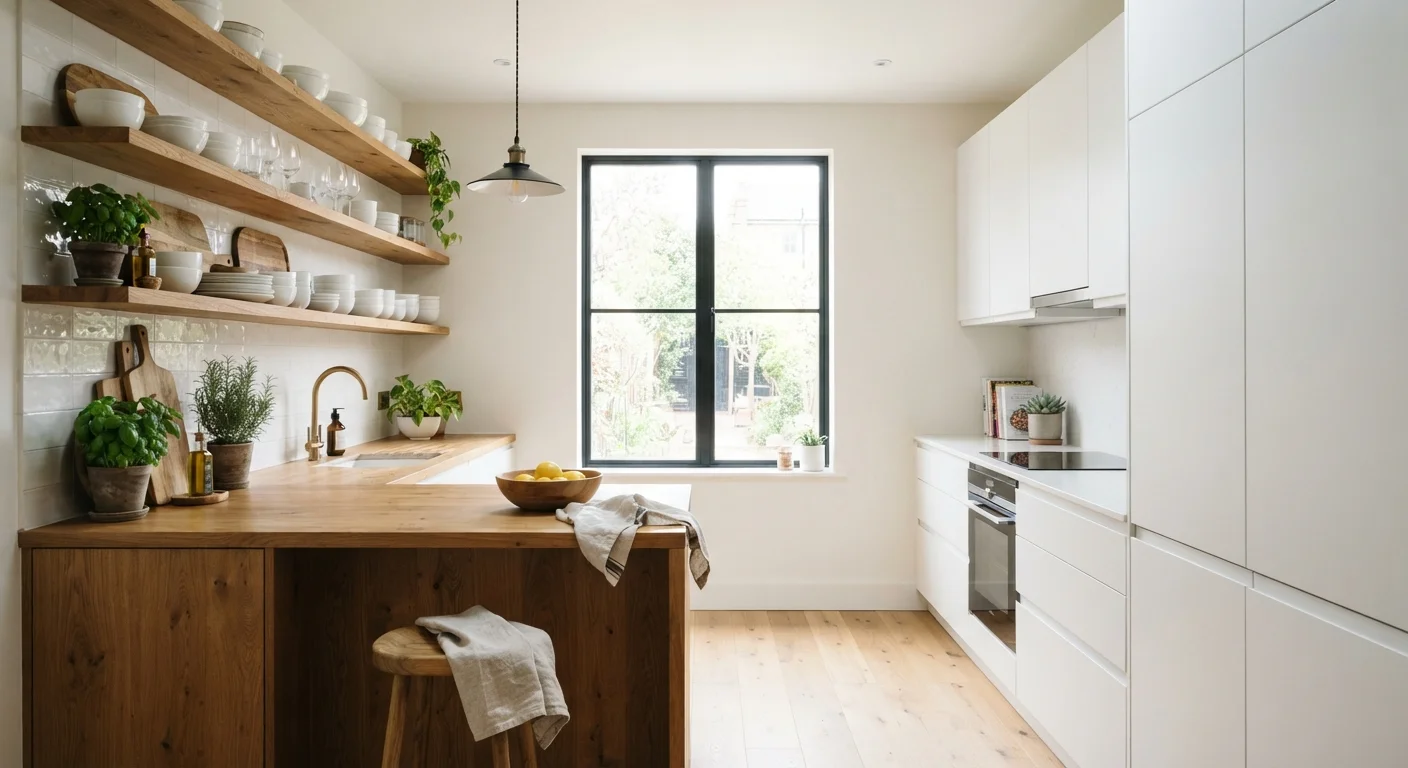
Open shelving can make a small kitchen feel larger by reducing visual bulk, but it demands consistent upkeep to avoid looking chaotic - a tradeoff worth understanding before committing. The open shelving vs. closed cabinets comparison breaks this down clearly for kitchen contexts.
For walls specifically, vertical storage strategies outline how to calculate load-bearing capacity, choose appropriate hardware for rental walls, and prioritize which rooms benefit most from climbing upward. In studios and one-bedroom apartments, the living area and bedroom typically yield the greatest gains.
A Note for Renters on Wall Modifications
Many effective storage solutions involve wall mounting, which may require landlord approval. Before drilling, check your lease terms. Removable adhesive strips, tension-mounted poles, and freestanding shelving units are widely available alternatives that deliver real storage gains without permanent changes. Some landlords do permit standard mounting with proper patching on move-out - it's worth asking directly.
A note on rentals: always review your lease before mounting shelves or installing hooks. Many landlords permit removable adhesive systems or tension-mounted rods, which offer real storage gains without permanent wall modification.
Maintaining Systems in a Small Home Over Time
Organization systems fail when they're designed for an idealized version of daily life rather than the real one. Build in a monthly or seasonal reset - a short session to return items to their zones, reassess what's working, and edit out anything that's accumulated without purpose.
Small-space living also benefits from applying a structured organizing philosophy to guide ongoing decisions. The overview of popular organizing approaches covers methods like the Container Method and FIFO (first in, first out) - both of which scale well in compact environments where overflow has nowhere to go.
~350 sq ft
Average US studio apartment size
According to US Census Bureau housing data, studio apartments typically range from 300 to 500 square feet, making intentional storage essential rather than optional.
60%
Of wall height typically unused in apartments
Home organization specialists commonly observe that most households concentrate storage in the bottom half of wall space, leaving significant vertical capacity idle.
The most durable small-space storage systems aren't the most elaborate - they're the ones consistent with how the household actually moves through the space each day.