
Why Sentimental Clutter Is Uniquely Hard to Resolve
Standard decluttering advice - keep it if you use it, donate it if you don't - breaks down completely when emotion enters the picture. Sentimental objects and 'someday' items resist the usual logic because they aren't primarily about utility. They're about identity, relationships, and the stories we tell about our past and future selves.
The result is a category of items that never quite gets addressed. They survive every clear-out because setting them aside feels like the emotionally safe choice. Over time they accumulate into a significant portion of household clutter that's physically present but psychologically unresolved.
If you're just beginning to get a handle on your home's clutter overall, this beginner-friendly walkthrough provides a grounding starting point. And if you want to surface what's actually in each room before you begin, this room audit checklist is a useful first step.
Don't Start With the Hardest Items
Jumping straight into inherited objects, childhood mementos, or grief-linked items is a common mistake that leads to emotional fatigue and abandoned sessions. Begin with lower-stakes 'someday' items - unused hobby equipment, gifts you never connected with - to build decision-making confidence before tackling the heaviest categories.
The framework below gives you a structured way to work through these items without guilt - not by eliminating sentiment, but by making your relationship to each object explicit and honest.
What You'll Need Before You Start
Having the right materials reduces friction and keeps sessions productive. Gather these before beginning:
What you will need
Smartphone camera or scanner
Photograph or digitize sentimental items before releasing them, preserving the memory without retaining the object.
Dedicated keepsake box or bin
Creates a physical boundary for what you keep, making space limitations concrete rather than abstract.
Sticky notes or masking tape
Temporarily label items during sorting sessions so decisions stay visible without permanent commitment.
Donation bags or boxes
Having containers ready lowers the friction of physically separating items you've decided to release.
For broader context on organizing philosophies that may shape how you approach this process, a grounded look at popular organizing methods covers the approaches most suited to different household types and mindsets.
Step-by-Step: Working Through Sentimental and 'Someday' Items
Avoid Making Irreversible Decisions Under Time Pressure
Decluttering during a move, estate clearance, or emotional crisis often leads to regret. If possible, box sentimental items separately and revisit them when you have more mental space. A short delay is far less costly than permanently losing something that mattered.
Identify and gather your 'someday' and sentimental items
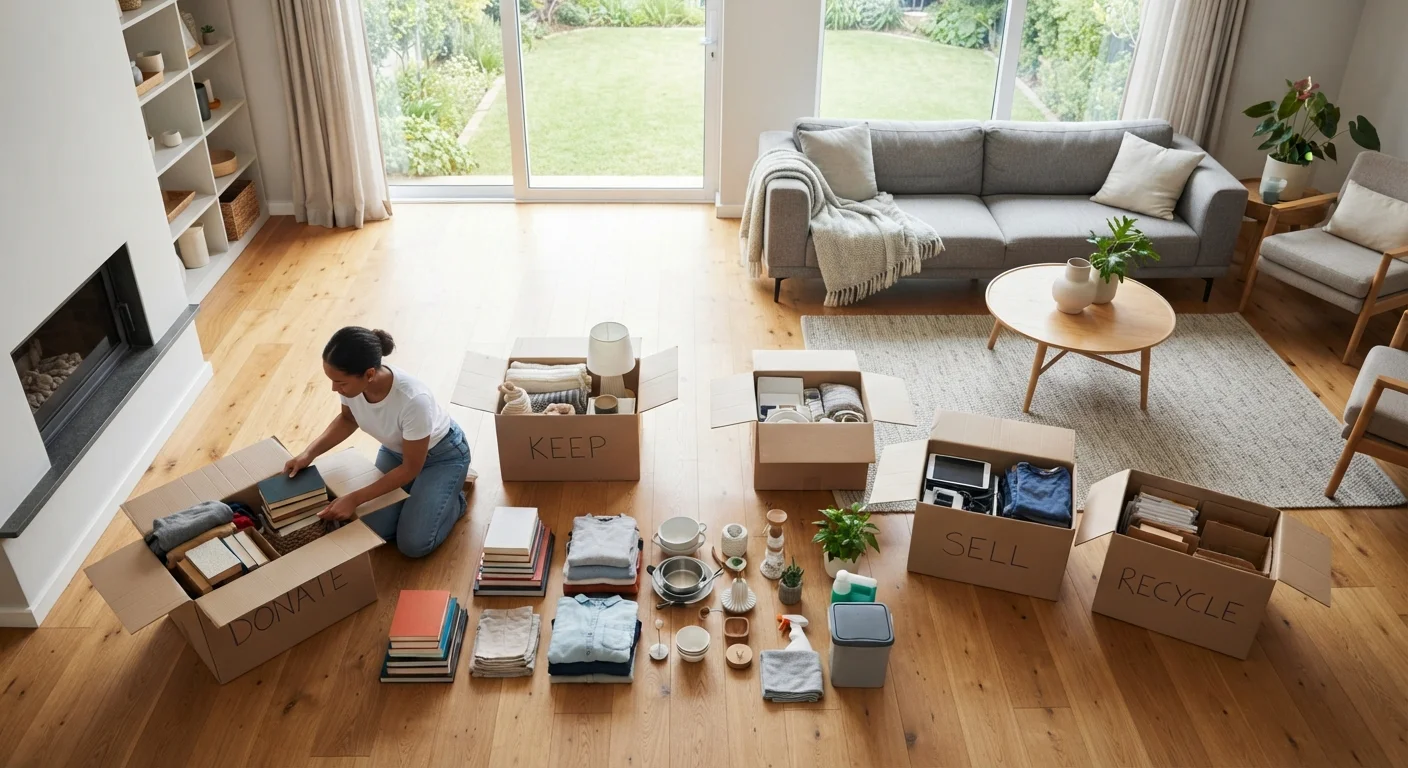
Before you can make decisions, you need visibility. Go through one category or room at a time and pull out every item you've kept because it might be useful someday, because someone gave it to you, or because it carries a memory. Place them all in one physical area - a table, the floor, a spare bed.
Resist the urge to start sorting immediately. The goal of this step is simply to see the full scope of what you're holding onto. Many people are surprised by the volume once it's all in one place.
Separate memory from object
Pick up each item and ask: Am I keeping this because it holds a memory, or because the object itself is genuinely useful or beautiful to me today? These are different reasons, and they warrant different responses.
If the item's value is purely memorial - a ticket stub, a duplicate photo, a gift you never used - the memory doesn't disappear when the object does. You can photograph it, write a short note about it, or simply acknowledge it before letting it go. If the object itself is functional or genuinely brings you satisfaction when you see it, that's a valid reason to keep it.
Apply a concrete condition to every 'someday' item
'Someday' items are those kept for a hypothetical future use: the bread maker you'll use when life slows down, the craft supplies for a project you've imagined for years. For each one, state the condition explicitly: I will use this by [specific season or event] or I will use this when [concrete circumstance].
If you cannot name a realistic condition, the item is not a 'someday' item - it's a 'never' item wearing a costume. Release it. If you can name a condition, set a calendar reminder. When the date or circumstance arrives, either use it or let it go without re-negotiating.
Document before you release
For items you've decided to part with but feel some attachment to, take a photograph before they leave. This is not a loophole to keep everything digitally - it's a genuine tool for reducing regret. A photo captures the visual memory without requiring physical storage.
You can also write a brief sentence about why you kept it and why you're releasing it. This small ritual acknowledges the item's role in your life and makes the release feel intentional rather than careless.
Set and enforce a physical limit for what stays
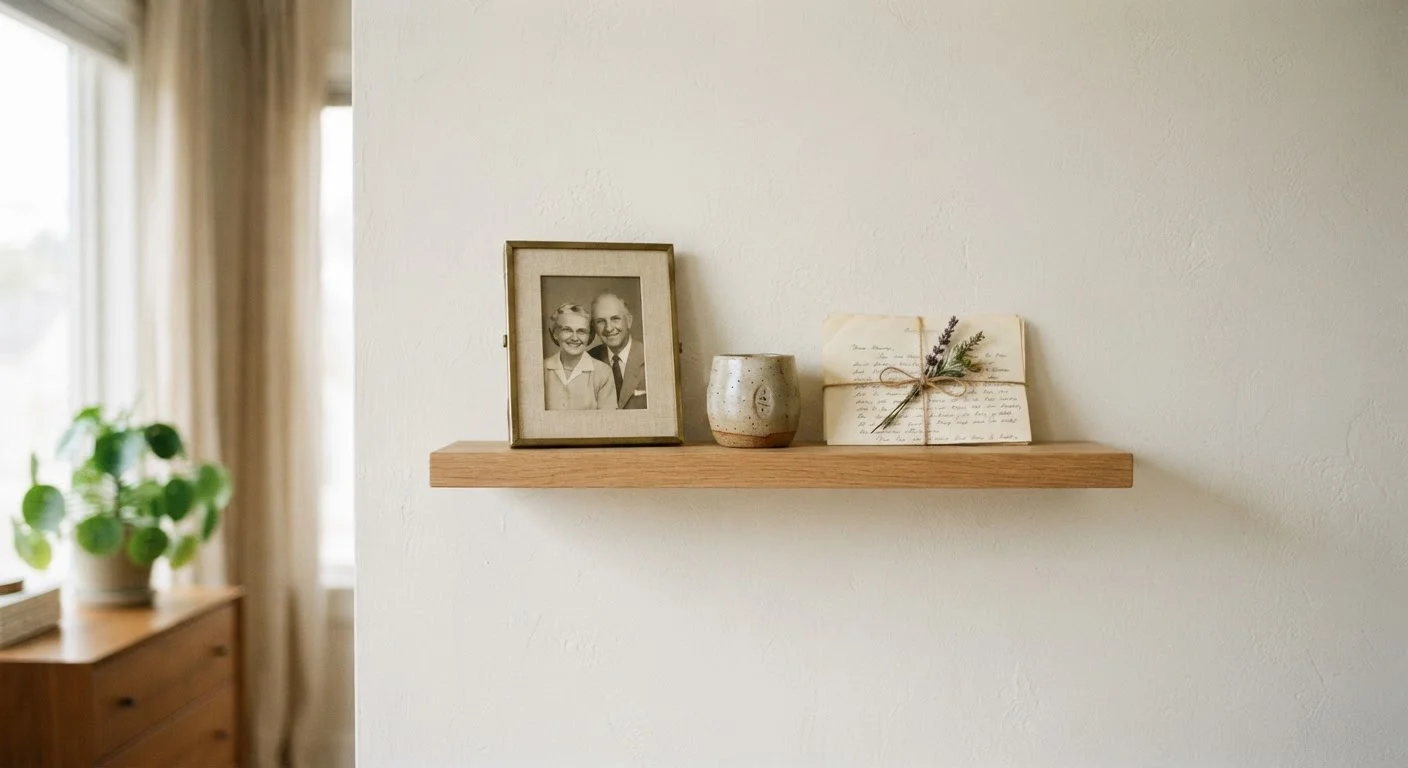
Once you've sorted through everything, the items you're keeping need a defined home. Assign a fixed container - a single box, a shelf section, a drawer - for sentimental keepsakes. Whatever fits, stays. Whatever doesn't fit requires a choice: something already inside needs to be released to make room.
This boundary does the ongoing work of prioritization for you. It removes the need to re-justify every individual item indefinitely and keeps the collection from quietly expanding again over time.
Schedule a recurring review
Sentimental clutter rebuilds gradually - through gifts, new life events, and habit drift. Plan a short annual or semi-annual review of your keepsake container. Items that felt essential a year ago sometimes feel less weighted with time, and new items may have arrived that deserve the space more.
Keeping this review on your calendar prevents the pile from silently growing back. For broader strategies on why organized homes drift back into chaos, understanding the underlying patterns is just as important as the initial clear-out.
The One-Box Rule for Keepsakes
Assign a single, fixed-size box (or shelf) to sentimental keepsakes per person in the household. When the box is full, adding something new means removing something already inside. This spatial constraint removes the need for endless case-by-case justification and makes the collection genuinely curated over time.
Working through this process once won't solve everything permanently - but it establishes a system and a mindset that makes future decisions faster and less emotionally taxing. The goal isn't a perfectly sparse home; it's a home where every kept item has earned its place.