
Why Timing Is the Most Critical Variable
Pruning at the wrong time of year is the single most common mistake home gardeners make with woody shrubs. The key rule splits along bloom time: shrubs that flower in spring - such as forsythia, lilac, and mock orange - set their buds on last year's wood. Cutting them in late winter removes the buds before they ever open. Instead, prune these plants within four to six weeks after their flowers fade.
Summer-flowering shrubs, including butterfly bush and rose of Sharon, bloom on new wood produced in the current season. These can be cut back hard in late winter or early spring without sacrificing any flowers. As a general rule, ask: did this shrub bloom before or after June? That single question will direct most pruning decisions correctly.
Evergreen shrubs - boxwood, holly, yew - are more forgiving but still benefit from late spring trimming once new growth has hardened slightly. Avoid pruning any woody shrub in late summer or early fall; new growth stimulated at that point may not harden off before frost arrives. See the seasonal garden maintenance calendar for a month-by-month pruning reference.
“Pruning is not about cutting back - it's about directing energy. Every cut you make is a decision about where the plant grows next.”
— Michael Dirr, Horticulturist and author of reference works on woody landscape plants
Choosing and Maintaining the Right Tools
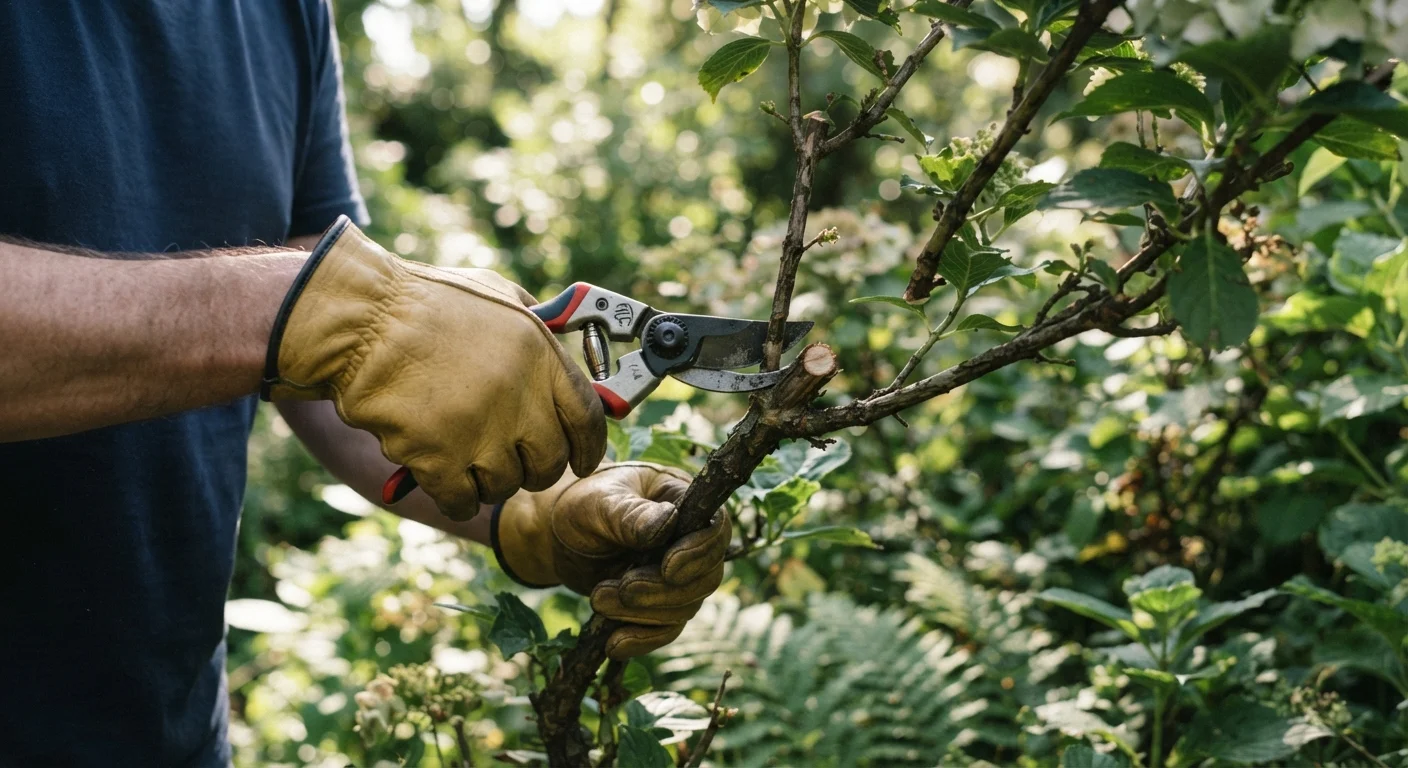
Three tools handle the vast majority of woody shrub pruning work: bypass pruners for stems up to about ¾ inch in diameter, loppers for branches up to 1½ inches, and a pruning saw for anything larger. Bypass pruners cut with a scissor-like action that produces a cleaner wound than anvil-style pruners, which crush tissue and leave more opportunity for disease entry.
Tool maintenance matters as much as tool choice. Wipe blades with a cloth after each use, oil the pivot point periodically, and sharpen blades at the start of each pruning season. Dull blades tear rather than cut, leaving ragged wounds that heal slowly. If you move between plants, particularly when removing diseased wood, wipe blades with a diluted bleach solution or isopropyl alcohol between cuts to avoid transferring pathogens.
Clean Tools Between Plants
Disease pathogens, including fungal spores and bacteria, transfer easily on pruning blades. Wiping blades with a 70% isopropyl alcohol solution between plants takes seconds and meaningfully reduces the risk of spreading problems like fire blight or powdery mildew across your garden.
Core Cutting Techniques That Protect Regrowth
Where you place each cut has a direct impact on how the plant regrows and how well the wound closes. Follow these principles consistently:
Cut just above an outward-facing bud at a 45-degree angle
Angled cuts shed water away from the bud union, reducing rot risk. Cutting to an outward-facing bud directs new growth away from the centre of the plant, improving air circulation and light penetration throughout the canopy.
Remove the three Ds first: dead, diseased, and damaged wood
Clearing non-productive wood before shaping the plant allows you to see its true structure and ensures energy goes to healthy growth rather than sustaining failing tissue. It also removes disease reservoirs before they spread.
Never remove more than one-third of total growth in a single session
Removing too much foliage at once reduces the plant's ability to photosynthesize and can trigger stress responses including excessive water-sprout production or dieback. Gradual pruning over seasons is more effective for heavy reshaping.
Make heading cuts to control size, thinning cuts to improve structure
Heading cuts shorten a branch and stimulate dense bushy regrowth near the cut - useful for maintaining a compact shape. Thinning cuts remove an entire branch back to the main stem or a junction, opening the interior without forcing new growth.
For shrubs that have been neglected for several years and grown congested or misshapen, a full rejuvenation approach - cutting all stems to within a few inches of the ground - can be effective for species that tolerate it (forsythia and lilac generally do; most conifers do not). However, spread this across two or three seasons rather than doing it all at once to avoid stressing the plant. A pre-winter garden checklist is a good place to note which shrubs are candidates for rejuvenation next spring.
Quick Actions to Improve Your Pruning Results
Even gardeners with years of experience find that a few deliberate habits consistently produce better outcomes. These quick wins apply regardless of shrub type or season:
Pairing good pruning practice with strong overall plant care pays dividends. Watering correctly around the time of pruning helps shrubs recover faster, and applying a fresh layer of mulch after pruning retains soil moisture and regulates root temperature - see our guide on mulching garden beds correctly for practical steps.