
How Each System Works
Understanding the mechanics of each system makes it easier to match the right one to your garden's needs.
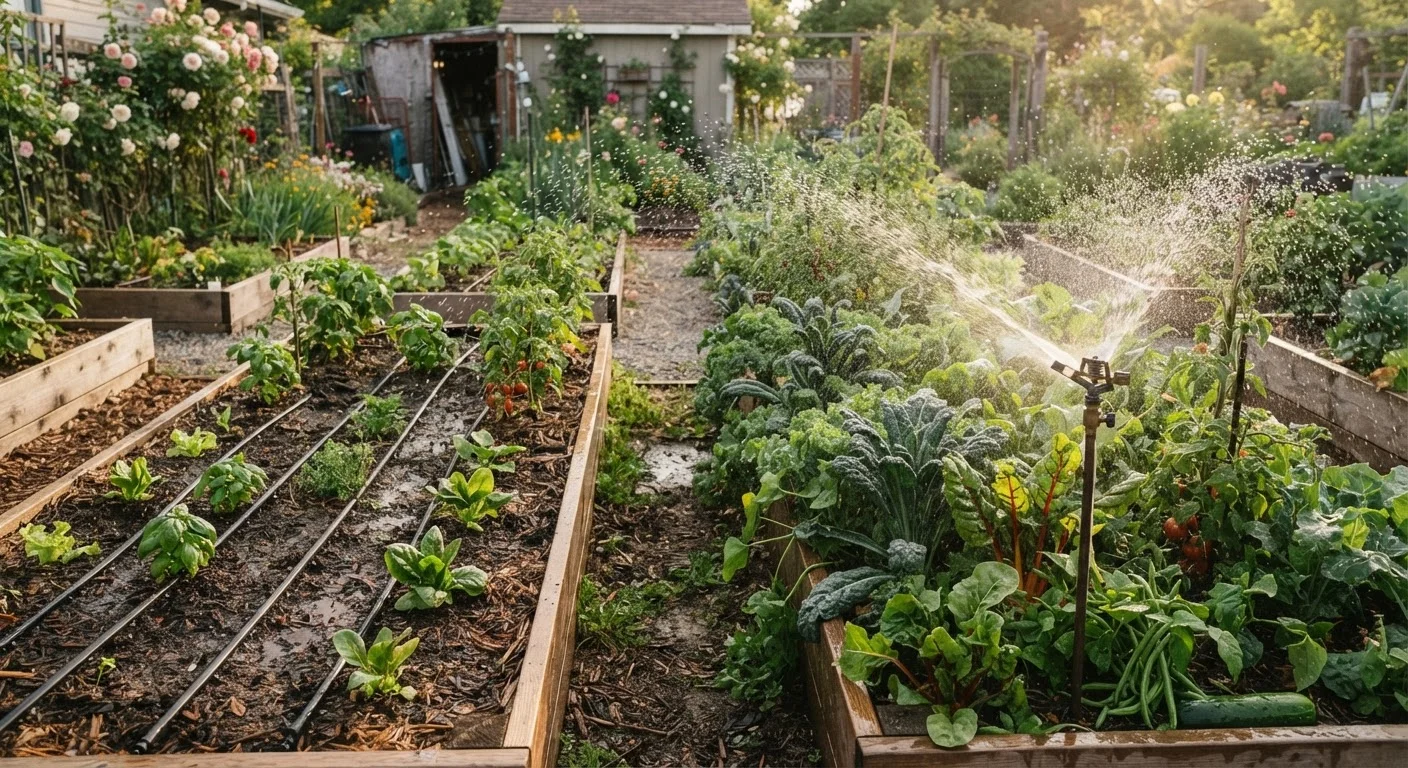
Drip irrigation uses a network of flexible tubing and small emitters to deliver water slowly and directly to the base of individual plants. Flow rates are measured in gallons per hour - far slower than sprinklers - which allows soil to absorb moisture evenly without runoff. Systems can be customized with different emitter types (drippers, micro-sprayers, soaker lines) to suit varied plant spacings and water needs.
Sprinkler systems distribute water through overhead spray heads or rotating rotors that broadcast water across a wide area. Pop-up heads are common in in-ground systems, while portable oscillating sprinklers work without permanent installation. Coverage patterns are designed for uniform distribution, which is ideal for turf but less precise for individual plants.
Both systems can be connected to a timer or smart controller for automated scheduling, a key advantage for gardeners who travel or want to reduce manual watering. If you're trying to correct poor watering habits overall, our article on common watering mistakes provides useful context before you invest in either system.
Water Efficiency and Plant Health
Water efficiency is one of the most significant differences between these two approaches.
30-50%
Water savings with drip vs. sprinklers
The EPA's WaterSense program estimates drip irrigation can use 30 to 50 percent less water than conventional overhead sprinkler systems.
50%
Outdoor water use lost to inefficiency
According to the EPA, roughly half of outdoor residential water use is wasted due to evaporation, runoff, and wind when using traditional irrigation methods.
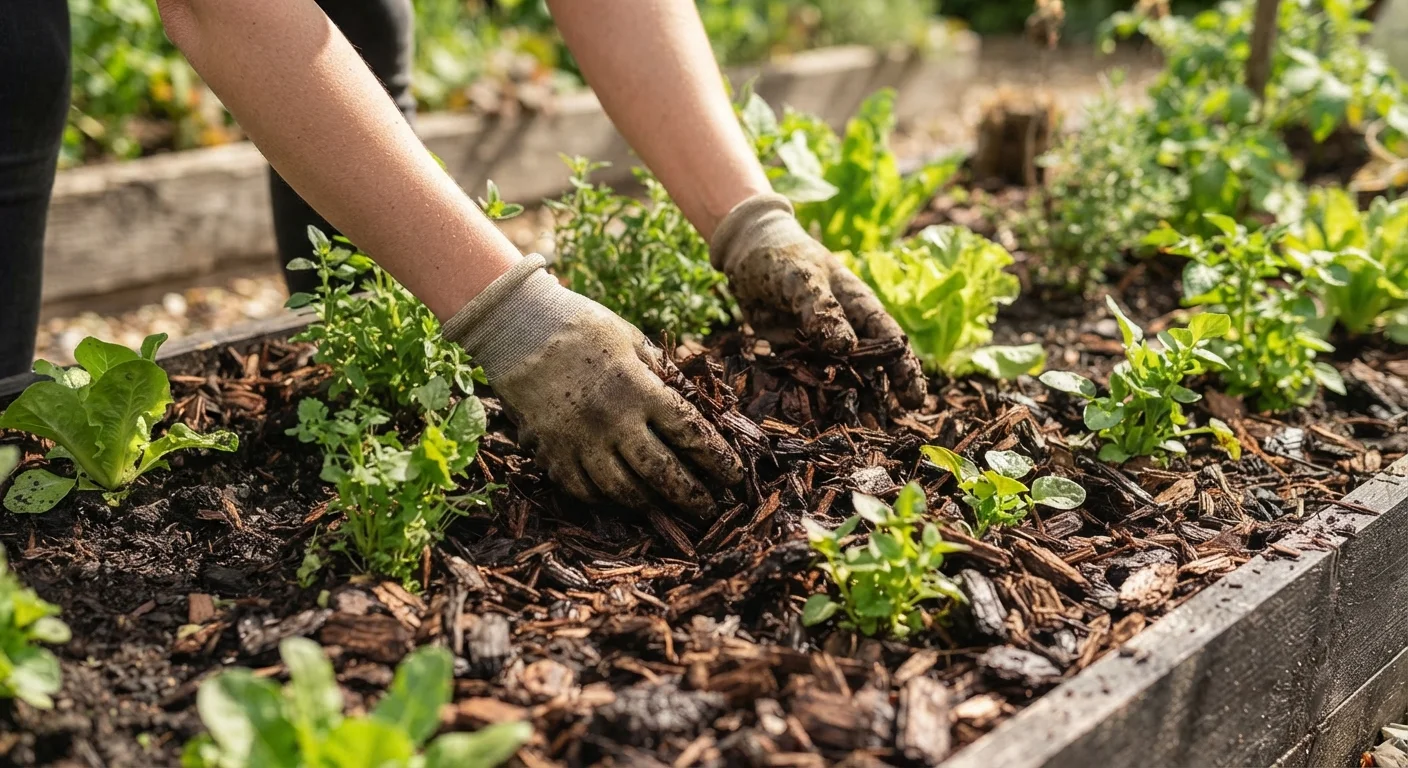
Drip systems deliver moisture precisely where roots can access it, reducing evaporation from soil surfaces and eliminating the overspray that sends water onto pathways or mulch. This precision matters especially in arid climates or where water costs are a concern. Pairing drip irrigation with a good mulch layer further reduces soil moisture loss - see our guide on mulching your garden beds correctly for details on how these two practices work together.
Overhead sprinklers wet foliage as well as soil. While plants tolerate this well in many conditions, consistent leaf moisture in humid climates or poorly ventilated beds can encourage fungal diseases like powdery mildew or botrytis. Watering in the morning allows foliage to dry before nightfall, which helps, but drip systems sidestep the issue entirely by keeping leaves dry.
For vegetable gardens and flower beds with disease-susceptible varieties - tomatoes, squash, roses - drip irrigation offers a meaningful plant health advantage. For established lawns and ground covers, sprinklers remain practical and effective.
Time Your Irrigation for Best Results
Regardless of which system you use, early morning is the most effective time to irrigate. Water pressure is typically higher, temperatures are cooler (reducing evaporation), and any moisture that reaches foliage has time to dry before nightfall. Avoid watering in the evening, especially with sprinkler systems, as prolonged leaf wetness overnight raises the risk of fungal problems.
Installation, Cost, and Maintenance
Both systems have real setup requirements, though the complexity differs considerably.
| Drip Irrigation | Sprinkler Systems | |
|---|---|---|
| Water efficiency | High - targets root zone directly | Moderate - evaporation and overspray common |
| Installation complexity | Moderate DIY with planning | Simple (portable) to complex (in-ground) |
| Upfront cost | Low to moderate for DIY kits | Moderate (portable) to high (in-ground) |
| Best plant types | Vegetables, shrubs, perennials | Lawns, ground covers, wide beds |
| Foliage disease risk | Low - leaves stay dry | Higher - wets foliage regularly |
| Ongoing maintenance | Emitter checks, filter flushing | Head adjustments, winterization |
| Automation compatibility | Excellent with timer or controller | Excellent with timer or controller |
Drip systems require planning - mapping emitter locations, calculating flow rates, and ensuring each plant zone gets the right volume of water. Kits are widely available and designed for DIY installation, but mistakes like clogged emitters or uneven pressure are common without proper setup. Emitters should be flushed periodically and inspected for blockages, especially in areas with hard water.
In-ground sprinkler systems involve trenching and connecting to a home's water supply, which typically requires a licensed plumber or irrigation contractor and may need a permit depending on local codes. Portable sprinkler setups are far simpler but lack the precision and automation of a fixed installation. Sprinkler heads are durable but can be damaged by lawn mowers or foot traffic and may need seasonal winterization in cold climates.
If you're weighing other structural garden decisions alongside your irrigation choice, our comparison of raised beds vs. in-ground planting is worth reading - bed type directly affects which irrigation approach will be easiest to implement.
Choosing the Right Fit for Your Garden
The most practical approach is to match the irrigation method to what you're growing and how your outdoor space is laid out.
- Vegetable beds and herb gardens: Drip irrigation is well-suited here. Precise delivery reduces disease risk, conserves water, and supports the intensive planting typical in kitchen gardens.
- Lawns: Sprinkler systems remain the standard for turf. Uniform coverage across grass is difficult to achieve with drip, and overhead spray aligns naturally with how lawns absorb water.
- Mixed landscapes: Many homeowners run drip lines through ornamental beds and perennial borders while using sprinklers for lawn zones - two separate systems on one controller. This hybrid setup takes more planning but delivers the best of both approaches.
- Container plants and small patios: Drip emitters or micro-spray heads attached to thin tubing work well in contained spaces where precision matters and runoff is hard to manage.
Whatever system you choose, pairing it with a thoughtful plant selection makes maintenance easier. Our guide to perennials vs. annuals can help you plan a garden layout that reduces watering demands year over year.