

What Goes Into a Vehicle History Report
Every vehicle history report starts with a VIN - the 17-character alphanumeric code that uniquely identifies a car. Report providers feed that VIN into databases aggregated from dozens of sources: state motor vehicle departments, insurance companies, auto auction records, salvage yards, rental and fleet operators, and in some cases service records from dealerships.
What comes back is a timeline of reported events. Ownership transfers show how many times a vehicle changed hands and in which states, which can flag potential title-washing - the practice of re-registering a branded title in a state with looser disclosure requirements. Reported accidents indicate whether an insurer paid a claim and, in some cases, the severity classification used. Odometer readings at key registration or auction points help identify sudden unexplained drops that suggest tampering.
Title brands are often the most consequential entries. A salvage title means an insurer wrote the car off as a total loss. A rebuilt or reconstructed title means it was repaired and passed a state re-inspection. Flood damage, lemon law buyback, and frame damage brands each carry distinct implications for safety and long-term value.
~1 in 4
Used cars with undisclosed damage history
Industry analyses of VIN-checked used-car inventories have repeatedly found that roughly one in four vehicles carries damage or title history not disclosed by the seller.
17 characters
Length of a standard VIN
Every vehicle sold in the US since 1981 carries a standardized 17-character VIN, which is the universal key for pulling any history report.
Varies by state
Threshold for a salvage title declaration
States set their own total-loss thresholds - commonly 75%-100% of a vehicle's actual cash value - meaning the same damaged car could receive different title brands depending on where it's registered.
What Reports Cannot Tell You
Understanding the gaps is just as important as reading the data. Vehicle history reports are only as complete as what gets reported - and a large slice of real-world automotive history never makes it into any database.
Cash repairs are the most common blind spot. When an owner absorbs collision or hail damage out of pocket rather than filing an insurance claim, no record is created. A car that was rear-ended and professionally repaired for $2,000 can carry a spotless history report. Similarly, routine maintenance failures - skipped oil changes, neglected timing belts, abused transmissions - produce no paper trail whatsoever.
Geography adds another layer of inconsistency. State participation in national reporting programs varies, and some older events predate electronic record-keeping entirely. Vehicles imported from other countries may arrive with thin or incomplete histories.
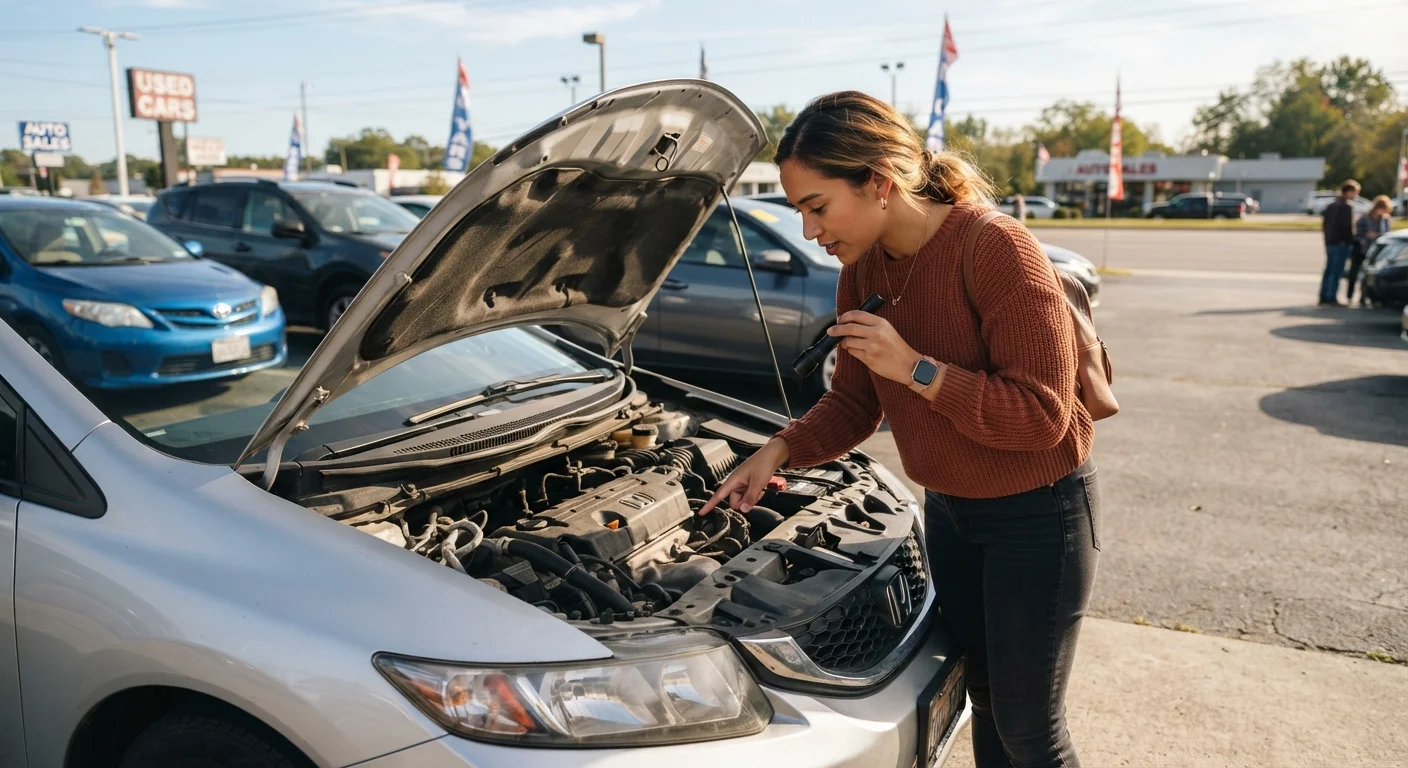
This is precisely why the pre-purchase inspection exists as a separate, essential step. A qualified mechanic evaluating the vehicle in person can detect structural repairs, fluid leaks, worn components, and evidence of flood damage that no database will surface.
Reports From Different Providers May Differ
No single history report provider has access to every data source. One service may have agreements with insurers that another lacks; a second may include more dealer service records. If a purchase is significant enough to warrant extra diligence, pulling reports from more than one provider is a reasonable step. Treat any single report as one input, not an authoritative final record.
How to Read and Use a Report Effectively
When you pull a report, work through it systematically rather than scanning for a headline pass/fail verdict.
- Check the title history first. Any salvage, flood, or rebuilt brand warrants careful scrutiny and, if you proceed, a significant reduction in what you're willing to pay.
- Count the owners and note the states. Multiple short-term owners or a sequence of different states can indicate a problem car being moved to avoid disclosure.
- Review odometer readings chronologically. Look for readings that decrease or stay flat over years of registration - both are warning signs of tampering.
- Examine accident entries in context. A fender-bender that was repaired cleanly is different from a front-end collision classified as severe structural. Note what's recorded, then verify visually.
- Look for auction history. Cars cycling repeatedly through dealer auctions can signal fleet write-offs, repeated mechanical issues, or difficulty selling.
If anything raises a question, don't dismiss it - use it to guide what you ask the seller or what you tell the mechanic to look at specifically. For a comprehensive overview of the entire used-car buying process, see our end-to-end guide for cost-conscious buyers.
The Role of History Reports When Selling
Vehicle history reports aren't only a buyer's tool. If you're selling a used car, providing a current report upfront signals transparency and tends to attract more serious, less skeptical buyers. It also creates a documented record of what was disclosed at the point of sale - a reasonable protection if a buyer later claims they weren't informed of a prior incident that's clearly listed.
Sellers should pull a report on their own vehicle before listing it, if only to confirm what buyers will see. Occasionally, errors appear in history databases - misattributed accidents, incorrect title brands, or mileage discrepancies - and it's far better to identify and dispute these before negotiations begin than to be blindsided mid-sale.
For first-time sellers and buyers alike, understanding how reports fit alongside other evaluation tools is part of becoming a smarter participant in the used-car market. If you're new to the process, what nobody tells first-time buyers covers the broader picture of what to expect. And for ongoing vehicle knowledge, the Driver Know-How hub offers practical guidance for every stage of ownership.