
How a Debt Moves Into Collections
When you stop making payments on a credit card, medical bill, or personal loan, the original creditor typically follows an escalating process. First come internal reminder notices and late fees. If the account remains unpaid - commonly between 90 and 180 days past due - the creditor may take one of two paths: transfer the account to its own in-house collections department, or sell the debt outright to a third-party debt buyer at a steep discount, often pennies on the dollar.
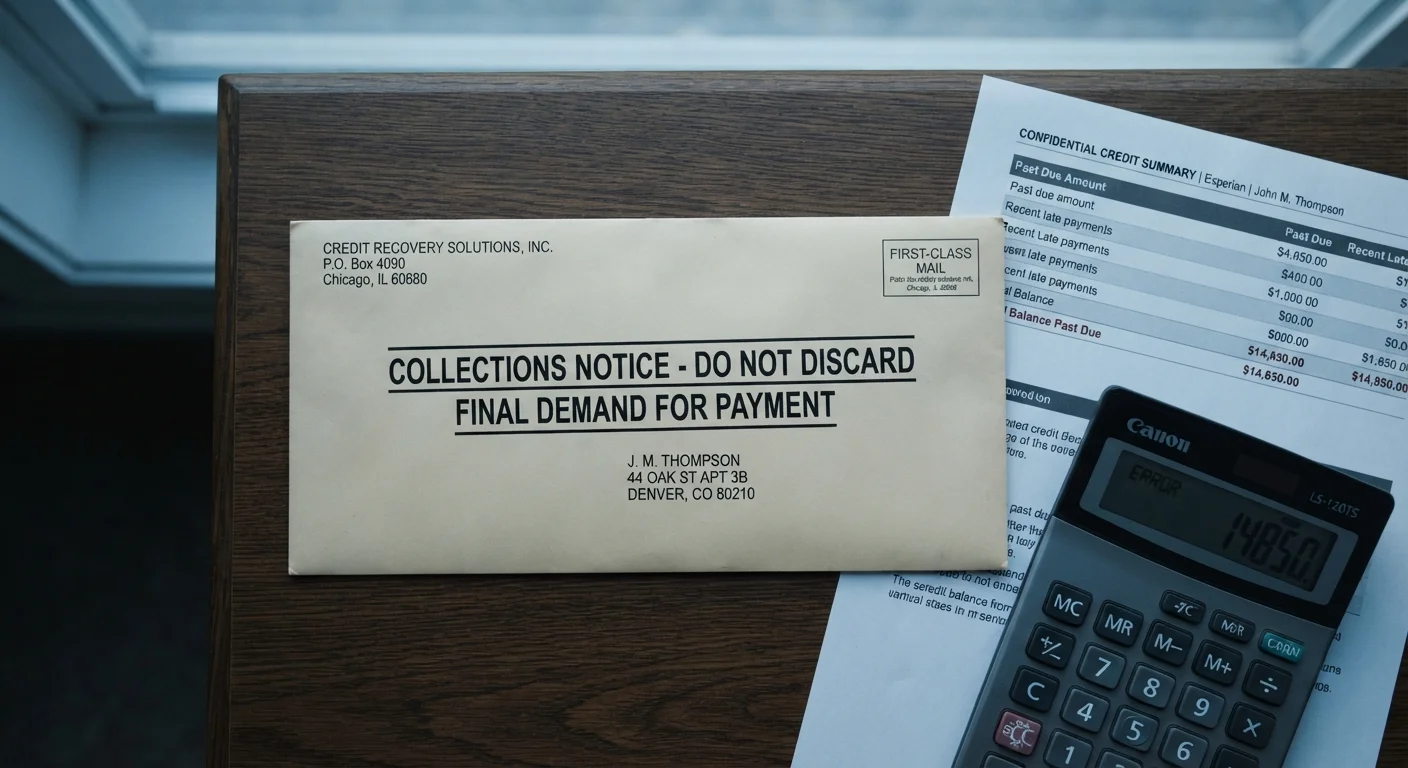
Once sold, the third-party collector owns the debt and is legally entitled to collect it. If transferred rather than sold, the original creditor retains ownership but outsources the collection work. In both cases, you will typically receive written notice identifying the collector and the amount claimed. That first written notice matters - it triggers a 30-day window during which you can request written verification of the debt.
For a plain-language breakdown of terms like charge-off, default, and delinquency, see The Debt & Credit Glossary.
Original Creditor vs. Debt Collector: A Key Distinction
Not all collection attempts come from third parties. If a creditor contacts you through its own internal collections team, the account has not necessarily been sold. In this case, FDCPA protections technically don't apply, though the creditor is still bound by other consumer protection laws. Knowing who actually owns your debt - and confirming it in writing - is an important first step before taking any action.
What Collections Means for Your Credit
A collections account is one of the most damaging entries that can appear on a credit report. The original delinquency that triggered the collection typically causes an initial score drop, and the collection account itself adds a second negative mark. Together, they can reduce a credit score substantially - the exact impact depends on your current score, the balance, and how recently the delinquency occurred.
The account stays on your report for seven years from the date of first delinquency on the original account. This clock does not reset if the debt is sold to a new collector. However, the negative weight of the account generally fades over time, and other positive credit activity - on-time payments, low credit utilization - can partially offset the damage while the account remains.
7 years
Collections account stays on credit report
Under the Fair Credit Reporting Act, most negative items including collections are removed from your credit report after seven years from the date of first delinquency.
~$0.04-$0.14
Typical cents-on-dollar price for sold debt
Research by the Consumer Financial Protection Bureau has found that debt buyers commonly purchase charged-off consumer debt portfolios for a small fraction of the face value.
30 days
Window to request debt validation
Under the FDCPA, consumers have 30 days from a collector's first written notice to request formal verification of the debt, pausing collection activity until the collector responds.
Your Rights Under Federal Law
The Fair Debt Collection Practices Act (FDCPA) establishes clear rules that third-party collectors must follow. Key protections include:
- Communication limits: Collectors cannot call before 8 a.m. or after 9 p.m. in your time zone, and cannot contact you at work if you inform them your employer prohibits it.
- Debt validation: Within five days of first contact, a collector must send you a written notice describing the debt amount, creditor name, and your right to dispute. You have 30 days to request written validation.
- Harassment prohibition: Threats, obscene language, repeated calls intended to annoy, and false statements are all prohibited.
- Cease-communication requests: A written request to stop contact requires the collector to halt communication, with limited exceptions (such as notifying you of a lawsuit).
Note that the FDCPA applies specifically to third-party collectors, not to original creditors collecting their own accounts - though many states have equivalent statutes covering both. If you believe a collector has violated your rights, you can file a complaint with the Consumer Financial Protection Bureau (CFPB) or your state attorney general's office.
If you're newer to navigating debt overall, Navigating Debt: A Complete Guide for Anyone Starting from Scratch provides useful foundational context.
Resolving a Collections Account: Your Practical Options
Once you've verified the debt is accurate, you have several paths forward. None is universally right - the best choice depends on your financial situation, how old the debt is, and your credit goals.
- Pay in full
- Satisfies the debt completely. Newer credit scoring models may ignore a paid collection, giving your score a modest lift. The account still remains on your report for seven years.
- Negotiate a settlement
- Many collectors accept less than the full balance, particularly on older debts. Get any agreement in writing before paying. Be aware that forgiven amounts may be reported to the IRS as income - consult a tax professional.
- Dispute inaccurate accounts
- If the debt is not yours, the amount is wrong, or the reporting period has passed, you can dispute directly with the credit bureaus under the Fair Credit Reporting Act (FCRA). The bureau must investigate and remove or correct inaccurate information.
If you're managing multiple debts alongside a collections account, Managing Multiple Debts: Approaches, Priorities, and Pitfalls covers prioritization frameworks worth considering. And if consolidation comes up as an option, Debt Consolidation: The Trade-Offs Worth Understanding explains both the potential benefits and the genuine risks.
This article is for general informational purposes only and does not constitute legal, financial, or tax advice. For guidance specific to your situation, consult a licensed financial advisor, attorney, or tax professional.
Always Get Agreements in Writing First
If you negotiate a settlement or payment arrangement, do not make any payment until you have a written agreement confirming the terms, the amount accepted as payment in full, and that the collector will update the account status accordingly. Verbal agreements in debt collection disputes carry very limited legal weight, and written documentation protects you if a dispute arises later.