

Why Credit Vocabulary Matters
Financial documents - loan agreements, credit card disclosures, mortgage paperwork - are dense with terminology that can obscure what you're actually agreeing to. Misreading a single term, such as confusing an interest rate with an APR, can mean underestimating borrowing costs by hundreds of dollars over a loan's lifetime.
This glossary is designed as a plain-language reference you can return to whenever an unfamiliar term surfaces. For broader financial vocabulary beyond debt and credit, see our personal finance terms glossary covering budgeting fundamentals. And if you're ready to put this vocabulary into practice, our beginner's guide to navigating debt is a logical next step.
This Content Is Educational, Not Financial Advice
The definitions and explanations in this article are provided for general informational purposes only. They do not constitute personalised financial, credit, or legal advice. For guidance tailored to your specific situation, consult a qualified financial adviser or credit counsellor.
Core Credit and Debt Terms Defined
The terms below cover the concepts most frequently encountered when managing credit accounts, applying for loans, or reviewing a credit report. Use the quick-reference facts alongside each definition to understand the relative weight each concept carries.
| Credit Score Range (FICO) | 300-850 (myFICO.com) |
| Score Impact: Payment History | ~35% of FICO score (myFICO.com score factors) |
| Score Impact: Credit Utilisation | ~30% of FICO score (myFICO.com score factors) |
| Hard Inquiry Score Impact | Typically fewer than 5 points (Consumer Financial Protection Bureau (CFPB)) |
| Delinquency First Reported | 30 days past due (CFPB guidelines) |
| Charge-Off Typical Threshold | ~180 days of non-payment (Federal Financial Institutions Examination Council standards) |
Several of these terms are closely interconnected. Your credit utilisation ratio, for instance, is calculated from your revolving credit balances - and together they account for a substantial share of your score. For a deeper look at exactly how that ratio works, see our dedicated guide to credit utilisation.
Understanding How These Terms Affect Your Credit Score
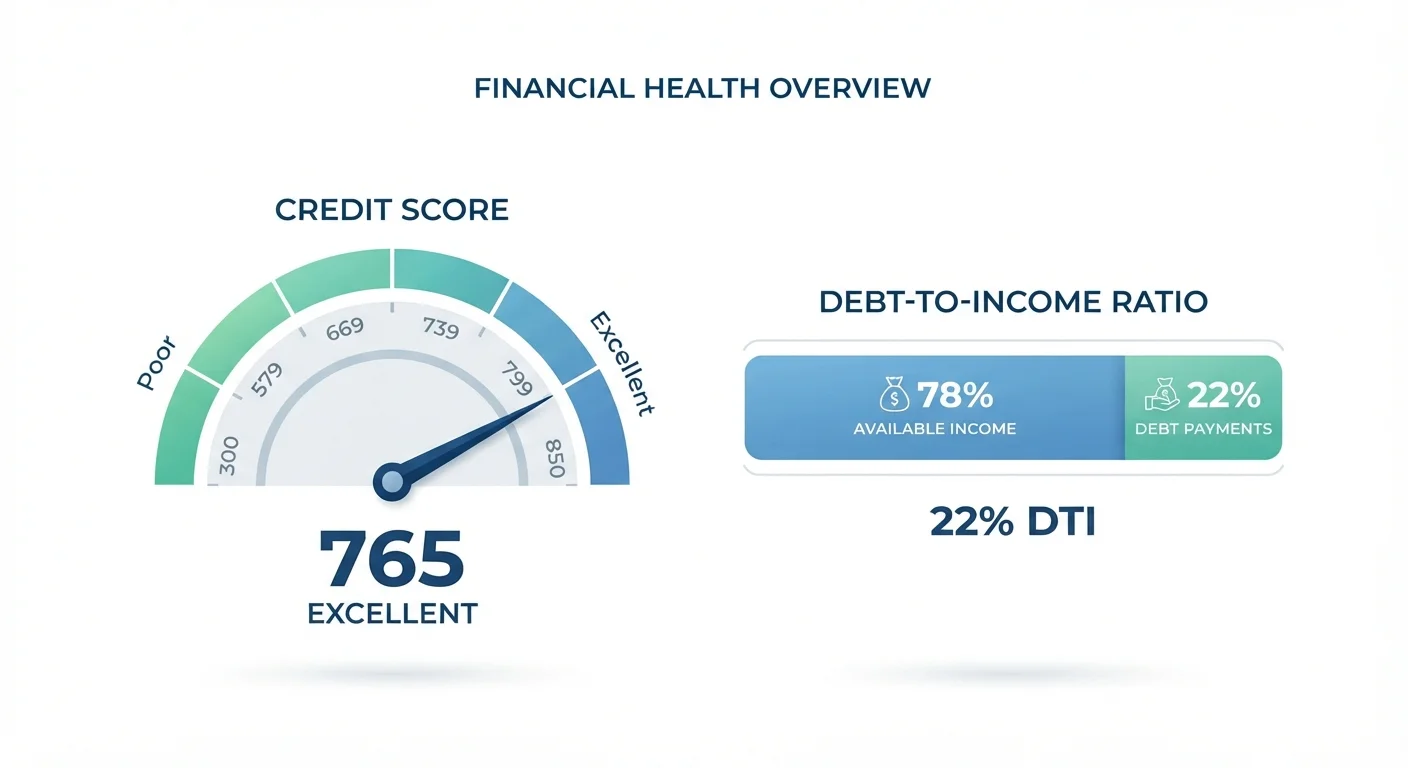
Knowing a definition is one thing; understanding how it connects to your score is another. Credit scoring models - the most widely used being FICO - weigh several factors differently.
~30%
Credit score weight: utilisation ratio
According to myFICO, amounts owed - largely driven by credit utilisation - account for approximately 30% of a FICO score.
35%
Credit score weight: payment history
Payment history is the single largest factor in a FICO score, underscoring why on-time payments are foundational to healthy credit, per myFICO.
7 years
Most negative items remain on credit report
The Fair Credit Reporting Act (FCRA) generally limits most negative credit entries - including late payments and charge-offs - to seven years.
Payment history and utilisation together account for roughly two-thirds of a typical FICO score. This means consistently paying on time and keeping balances well below your credit limits are among the most impactful habits you can build. Hard inquiries and new accounts matter too, but their effect is comparatively modest and fades over time.
One area where confusion is common: many people believe that checking their own credit report hurts their score. That's a soft inquiry and has no score impact at all. For a full breakdown of credit misconceptions like this one, visit our article on credit myths.
If you're applying this vocabulary to a specific borrowing context - such as financing a vehicle - our plain-English guide to car loan terms applies many of these same concepts to auto finance paperwork.
This article is for general informational and educational purposes only and does not constitute personalised financial, credit, or legal advice. Consult a licensed financial adviser or credit counsellor for guidance specific to your situation.